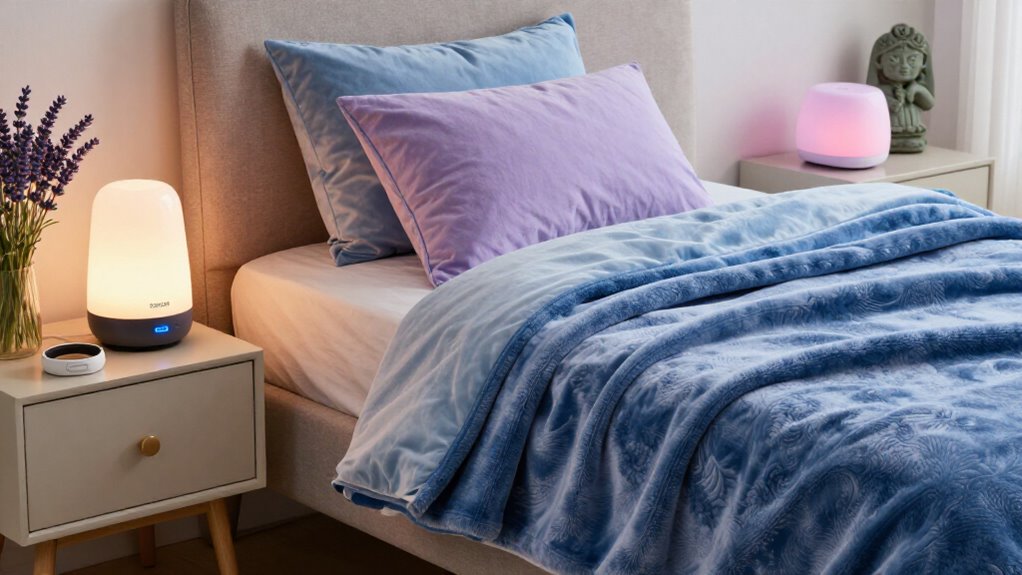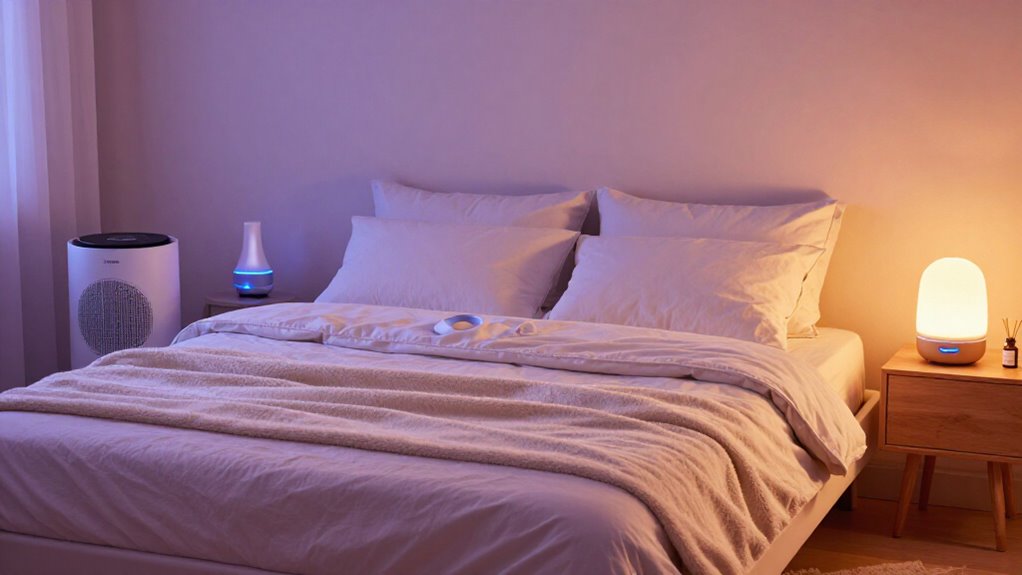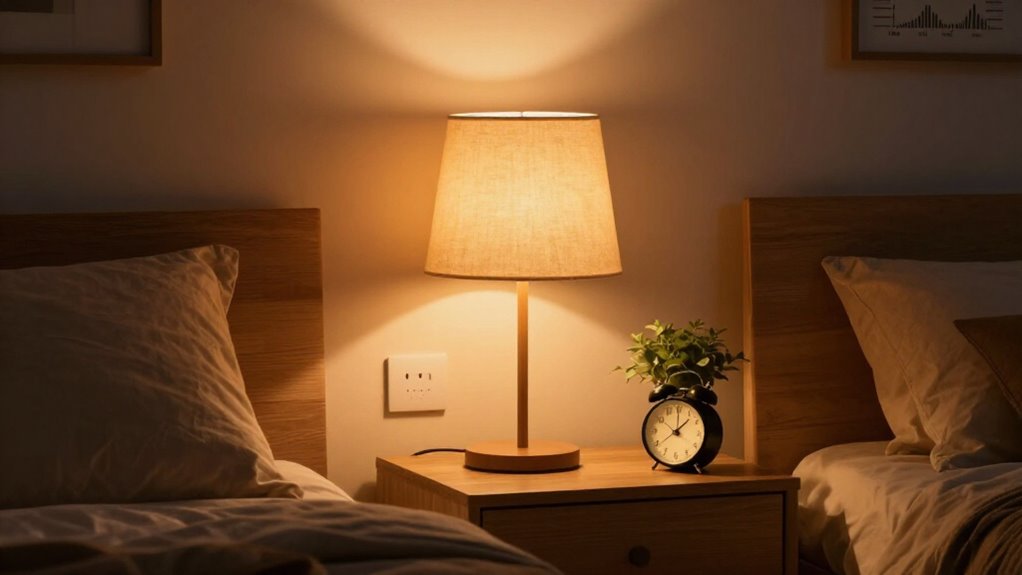
Ever tried to fall asleep in a room that feels like a Vegas casino at 2 AM? Yeah, me too—and my brain paid the price.
That’s why I stopped trusting “cozy” and started building bedrooms that actually respect your biology.
Three levers changed everything for me: spectral light, skin-level temperature, and the kind of silence that doesn’t fight back. After months of waking groggy and confused, I hacked my own setup—warm, low-blue side lighting by 8 PM, brutally bright morning light within 30 minutes of opening my eyes. My suprachiasmatic nucleus finally stopped screaming.
Thermally conductive bedding keeps the bed cool. Mass-loaded vinyl curtains kill street noise. I even ditched sleep apps for analog paper logging—no 3 AM dopamine hits from “optimizing” my REM.
At Corala Blanket, we’re pushing this further. Brands like Yuji, NatureMade melatonin research, and Dr. Till Roenneberg’s chronotype studies back the approach. Sleepmaxxing in 2026? It’s not about more gadgets. It’s about biology that finally makes sense.
Quick Takeaways
- Spectral light control in the bedroom reduces melatonin suppression, supporting a stable circadian rhythm and easier sleep onset.
- Morning bright light exposure strengthens circadian entrainment, while evening dimming and warm low-blue LEDs preserve melatonin production.
- Managing heat flux and using high thermal-conductivity bedding improves thermoregulation, reducing sleep fragmentation that disrupts body-clock timing.
- Sound dampening with mass-loaded curtains and acoustic panels lowers nighttime auditory salience, preventing arousals that desynchronize circadian signals.
- Analog, screen-free routines reduce monitoring-driven arousal, helping maintain consistent sleep-wake timing that stabilizes the internal body clock.
Design a Circadian-Friendly Bedroom (Light, Temperature, Sound)
While most sleep advice stops at “get darker” and “keep it cool,” I design bedrooms around circadian physiology—specifically the three cues your brain can’t ignore: spectral light, heat flux, and sound-induced arousal.
First, I choose warmer, low-blue LEDs off to the side, because melanopsin ganglion cells are most sensitive to short wavelengths.
Next, I manage temperature differently: not just “cool,” but steady cooling of skin via bedding with high thermal conductivity, reducing heat-storage swings that spike awakenings.
Finally, I damp sound with mass-loaded curtains and soft acoustic panels, since irregular noise fragments slow-wave sleep—think Carl Zimmer’s “quiet governance,” made literal.
Morning Light + Evening Light Rules for Better Sleep
3 simple lighting rules drive most circadian improvement: get morning light fast, protect your evening light environment, and keep the timing consistent.
When I wake, I step toward daylight within 30 minutes; this boosts melanopsin-containing retinal ganglion cells, nudging the suprachiasmatic nucleus to advance my “day” signal.
In the evening, I dim aggressively and swap to warm, low-lumen lamps, because short-wavelength light suppresses melatonin; proper air humidity levels also stabilize sleep architecture throughout the night. For the bedroom specifically, I use circadian-tunable bulbs that shift color temperature automatically throughout the day.
I also keep bedtime and wake time steady—light works best when your clock has a predictable anchor.
Researchers at Harvard’s Matthew Walker discuss this light-hygiene logic; brands like Philips Hue can help.
Reduce Night Wakes: Soundproofing, Notifications, and Alerts
To reduce night wakes, I treat noise and mental interruptions like two separate “wake-up triggers” that travel different pathways through your body—one through the ears’ auditory cortex, the other through your brain’s alert network—and I design my bedroom to block both.
I seal sound with mass-loaded vinyl or thick curtains, and I use an underlay under the door sweep; even 10–15 dB drop can reduce awakenings. Soundproof door seals installed around the door frame eliminate gaps where noise leaks through, creating a more complete acoustic barrier. For particularly sensitive sleepers, sound-absorbing curtains can further dampen environmental noise by reducing echo and reverberation within the room itself.
For notifications, I keep my phone out of the room, disable “bedtime” mirroring, and cover smart speakers. Researchers at Harvard (A. M. Lauderdale) link nighttime auditory salience to fragmented sleep.
Keep your silence intimate: calm, consistent, reliable.
Analog Bedroom Rule: Paper Logs
After I block the bedroom’s “noise highways” and shut off notification sparks, I also remove the feedback loop that keeps your brain scanning for proof: I use the Analog Bedroom Rule—paper logs.
Each morning and evening, I write two lines: wake time, and perceived calm (1–10). That’s it. No dashboards, no HRV rabbit holes.
Researchers in sleep medicine note that “monitoring-driven arousal” can worsen insomnia by amplifying threat perception. By keeping records off screens, I lower cognitive load, smooth circadian cues, and learn patterns quietly. Circadian rhythm disruption can significantly impact mood, making it all the more important to maintain consistent, screen-free routines that support natural sleep-wake cycles. A well-designed nap environment with minimal digital interference can also help you avoid post-nap grogginess and maintain sharper alertness throughout the day.
If you’ve used Whoop or Oura, you know the temptation. Paper helps me keep it human.
Product Roundup
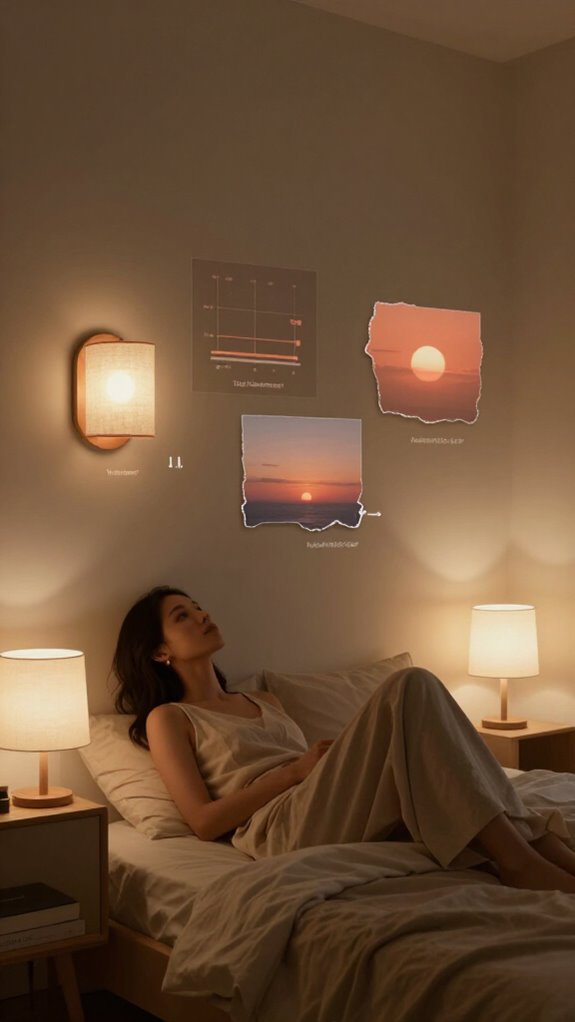
Here’s my practical product roundup for building a true Analog Bedroom, using light as the main lever: warm, dim, rhythm-synced illumination that reduces melatonin disruption and helps your nervous system “downshift” before sleep. I pick Yuji FlameWarm™ (low melanopic impact) or NorbEVERYDAY-SLEEP’s no-blue amber to mimic bonfire glow. Circadian lighting works by shifting the spectrum and intensity that your ipRGCs relay to the brain, which in turn raises or lowers melatonin at the right times. Tunable white technology allows these bulbs to adjust across the full spectrum from energizing daylight to soothing amber. Then I install dimmers on bedside lamps with linen shades, so evening fades smoothly like sunset. Cozy fixtures like these create a wrapped in softness atmosphere that signals safety to the nervous system. For full-day alignment, Legrand smart schedules or Kazzar rhythm packages shift color temperature from 4000K–5700K by day to under-1800K at night. Finally, I avoid overnight charging LEDs and non-blinking alarm glows.
“Related Research” Section Appears
When you design an Analog Bedroom around rhythm-synced illumination, the payoff isn’t just “feeling sleepy”—it shows up in measurable circadian markers.
In a pilot study in depressed patients, dynamic bedroom lighting shortened sleep onset latency, boosted sleep efficiency, and improved circadian rest-activity: the active 10-hour window shifted earlier, and least-active 5-hour timing stabilized.
Actigraphy also showed less intra-daily variability and higher inter-daily stability.
Actigraphy revealed less intra-daily variability and higher inter-daily stability, signaling a more consistent circadian rhythm.
Separate field research with 20 residents found electrochromic glass raised daytime circadian-effective light, yielding a 22-minute earlier sleep onset and tighter melatonin onset (p=.001–.05).
FAQ
Which Window Treatments Best Block Late-Night Light Without Harming Morning Light?
Block late-night light with blackout cellular shades or thick lined curtains. For morning, pair them with sheer, light-filtering panels or top-down/bottom-up lifting—so your room softens as you wake. Why fight glare when you can glide into light?
What Bedroom Temperature Range Supports Circadian Rhythm Without Causing Early Waking?
I keep my bedroom at 60–67°F (15–19°C), cool enough to prevent heat creep that wakes me early, yet not icy. I feel my circadian rhythm stay steady when I fall asleep feeling comfortably chilled.
How Can I Measure and Improve Sound Levels for Deeper Sleep?
I measure sound by placing a phone at your pillow height, using a decibel app, and logging peaks. Then I improve it: I add thick curtains, seal drafts, use a white-noise fan, and reposition the bed away from traffic.
Should I Stop Phone Alerts at Night, and What’s the Best Approach?
Yes—I stop phone alerts at night. I set Do Not Disturb, silence notifications, and keep my phone out of reach. If I need contact, I allow only essential calls, and I use a gentle alarm.
How Do I Track Chronotype Changes Using Analog Logs Effectively?
Like a bedside metronome, I log wake times, light exposure, hunger, and sleepiness on paper daily. After two weeks, I compare patterns, note delays/advances, and adjust bedtime rituals gently—no perfect scores, just you.
References
- https://store.yujiintl.com/blogs/all-about-led-strips/how-to-build-a-cozy-lighting-room-a-guide-to-circadian-harmony
- https://www.dowsingandreynolds.com/inspiration/inspiration-circadian-lighting/
- https://crownlightinggroup.com/lighting-for-better-sleep-in-hospitality-and-healthcare-spaces/
- https://www.latimes.com/spaces/decor/designers/story/circadian-alignment-lighting-tips-home
- https://thehealthyhome.shop/products/circadian-lightbulb
- https://www.legrand.us/ideas/blogs/restore-natural-circadian-rhythm
- https://store.circadian.com/the-ultimate-circadian-lighting-package
- https://www.kazzar.net/circadian-lighting
- https://norblighting.com/everyday-sleep/
- https://www.pfeifferdesign.co.uk/journal/understanding-circadian-rhythm-how-interior-design-can-support-our-natural-rhythms/