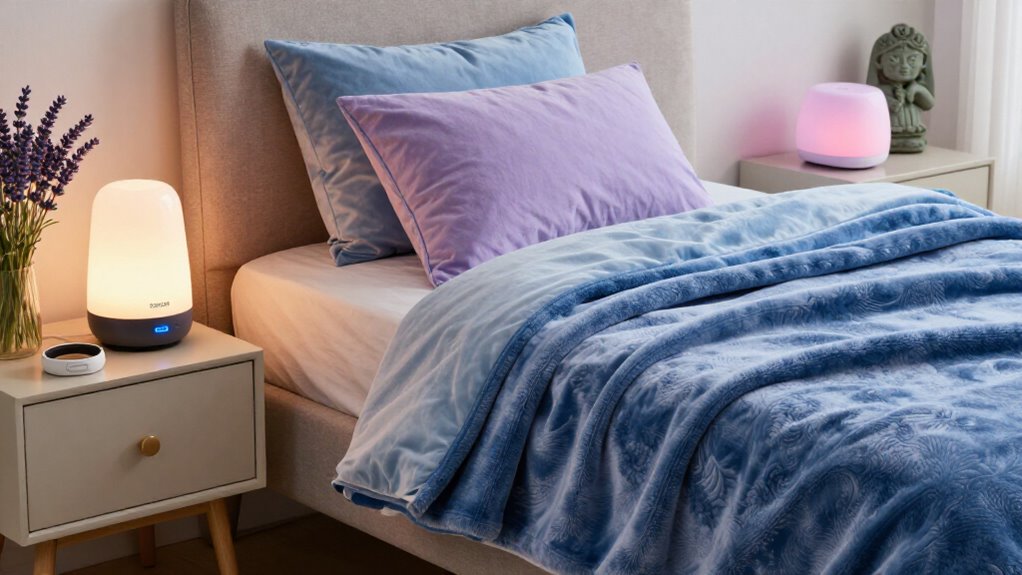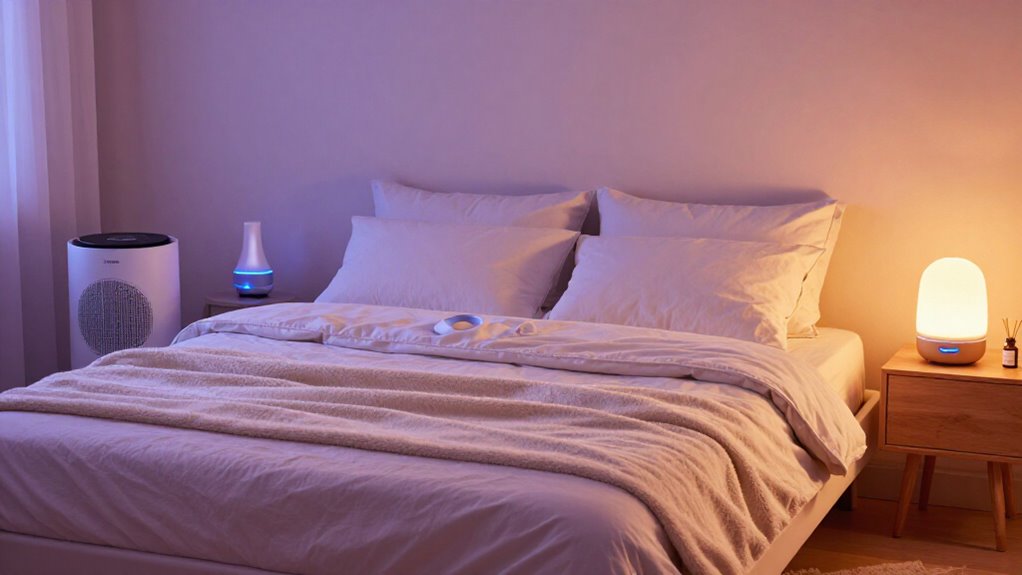
My brain’s a drama queen before coffee, honestly.
Three winters ago, I was spiraling—anxious, snappy, crying at cat videos. Turned out my “circadian thermostat” was broken. No morning sun, blue screens till 2am. My SCN couldn’t tell Tuesday from midnight.
Sound familiar?
Roenneberg’s *Internal Time* and Siegel’s sleep research basically called me out. Desperate, I tried “sleepmaxxing” before it had a name: 480nm dawn simulation, 3000K bulbs by 7pm. Within two weeks? Different human.
At Corala Blanket, we’re obsessed with this stuff. Our weighted blankets pair with Philips Hue wind-down routines—2026’s all about stackable sleep tech, not just one magic fix.
Here’s what’s non-negotiable: 10,000 lux before 9am. No negotiation. Your dopamine will thank you.
What’s your light betrayal story?
Quick Takeaways
- Morning outdoor light sets your circadian timing, supporting cortisol rhythm, focus, and steadier mood during the day.
- Delayed or missed morning light can cause afternoon “alertness backups,” increasing irritability and mental rumination.
- Bright blue-rich screens and LEDs late evening can suppress melatonin, prolonging brain arousal and worsening low mood.
- Dimming lights 3–4 hours before bed and using warmer tones promotes melatonin production and calmer nighttime processing.
- Consistent day-night light cues act like a “circadian thermostat,” improving sleep quality and downstream mental wellbeing.
How Circadian Mismatch Drives Anxiety and Low Mood
When your body clock—your circadian rhythm—drifts out of sync with day–night light cues, you don’t just feel “tired,” you often feel off in a way that looks like anxiety and low mood.
When your circadian rhythm drifts from day–night light cues, you don’t just feel tired—you may feel anxious and low.
Your suprachiasmatic nucleus misreads time, so melatonin timing and cortisol rhythm wobble.
That mismatch disrupts serotonin and dopamine signaling, nudging mood circuits toward irritability, rumination, and a drained “nothing fits” sensation.
I’ve seen this pattern in lab work summarized by Till Roenneberg at LMU Munich and in clinical discussions from Jerome Siegel.
If you scroll under bright screens late, your brain assumes it’s still daytime—quietly.
Morning Light: Cortisol, Focus, and the Best Timing
Morning light doesn’t just “wake you up”; it sets the tempo your brain uses to schedule cortisol, alertness, and attention. When I step into outdoor daylight within 30 minutes, my suprachiasmatic nucleus reliably shifts circadian timing and smooths the cortisol rise described in foundational work by researchers like Russell Foster. That early boost helps focus later, because the waking ramp is cleaner and less jittery. Think of it as warming an engine before driving, not flooring it cold. Just as optimal neck alignment depends on finding the right support for your body, your brain requires proper light exposure to function at its best. The opposite principle applies to evening routines, where cooler bedroom temperatures signal melatonin release and deepen sleep architecture.
| Habit | Timing |
|---|---|
| Light outdoors | 0–30 min |
| Cloudy window use | up to 60 min |
| Dim indoor light | after sunset |
Evening Light: What to Avoid for Calmer Nights
If you want calmer nights, I’d treat evening light like a steering wheel—small changes can redirect your nervous system before you even notice.
After sunset, I avoid bright white and blue-rich LEDs, especially within two hours of bed. They suppress melatonin and signal “day” to your retinal ganglion cells, keeping brain arousal high. Repeated exposure to these wavelengths in the evening can delay melatonin onset by shifting your circadian phase later than your intended sleep window.
I also dim overhead fixtures, use warm 2200K lamps, and limit phone/tablet glow in bed. If you use Philips Hue or follow advice from Matthew Walker, keep screens off or behind red-light filters.
Finally, I close curtains early to block streetlight spill.
For auditory masking, some people find that white noise helps maintain sleep continuity by reducing the impact of sudden environmental sounds.
Light Schedule Tweaks for ADHD, Depression, and Stress
Light doesn’t just “affect sleep”—it steers alertness, mood circuitry, and stress reactivity through retinal input to the suprachiasmatic nucleus (SCN), the brain’s master clock.
If you’ve got ADHD, depression, or stress, I tweak timing, not brightness fantasies. First, I front-load exposure: a brief outdoor walk soon after waking helps catecholamine regulation and improves daytime focus (Hellewell & colleagues’ circadian work aligns here).
If you’ve got ADHD, depression, or stress, front-load morning light exposure to steady catecholamines and sharpen focus.
Next, I dim earlier: reducing late-night blue via warm LEDs and screen tint can blunt phase delay and rumination.
For stress, I keep indoor lighting steady midmorning, avoiding abrupt bright-dark shocks. Researchers like Czeisler back the logic.
Set a 24-Hour Light Plan for Your Sleep Environment
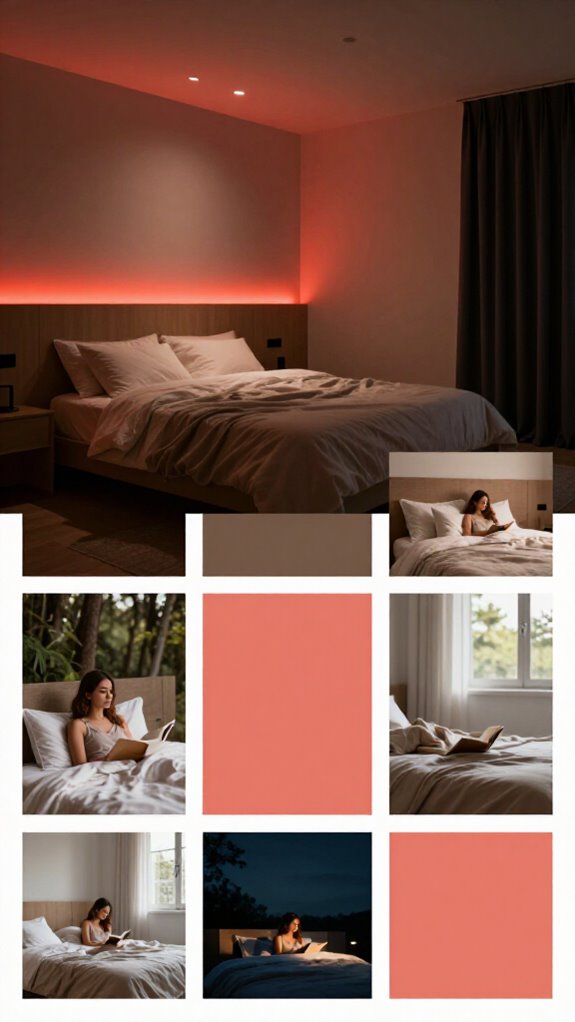
A 24-hour light plan turns your bedroom and daily routines into a kind of “circadian thermostat,” shaping when your brain feels safe to rest and when it ramps up for action.
I start by dimming overhead LEDs 3–4 hours before bed, since blue-rich spectra suppress melatonin via melanopsin pathways. I keep nights low-contrast: red or amber nightlights, plus blackout curtains to block street spill. Wearing blue light blockers during these evening hours provides an additional layer of protection against melatonin suppression from screens and indoor lighting.
During the day, I favor bright, diffuse exposure outdoors, then switch to warmer tones after sunset. If you use Philips Hue or a Circadian Optics lamp, I tune brightness gradually—no abrupt swings.
This approach transforms your sleep space into a bedroom sanctuary where soft, deliberate lighting cues signal safety throughout the night.
Morning Light Anchoring Window
After I wake, I try to get bright outdoor light into my eyes within a tight “anchor” window—ideally the first 30 minutes, and no later than about 90 minutes. Morning light influences intrinsically photosensitive retinal ganglion cells, nudging melatonin down and shifting circadian phase earlier. That shift steadies my alertness and mood tone by aligning cortisol rhythms.
Just as weighted blankets use deep pressure stimulation to calm the nervous system and support sleep architecture, precise morning light timing provides a natural anchor for your daily rhythms. Research on cool room sleep environment chronobiology confirms that temperature and light cues work together to strengthen circadian entrainment.
Here’s a simple mental map:
| Window | What I do | What shifts |
|---|---|---|
| 0–30 min | Step outside | Phase advances |
| 30–90 min | Light exposure | Less delay |
| after 90 | Indoor light | Weaker timing |
| cloud/rain | Still outside | Better than dark |
| sunrise assist | Walk near light | Stronger cue |
I also track with Philips Hue to avoid late bright screens.
Product Roundup
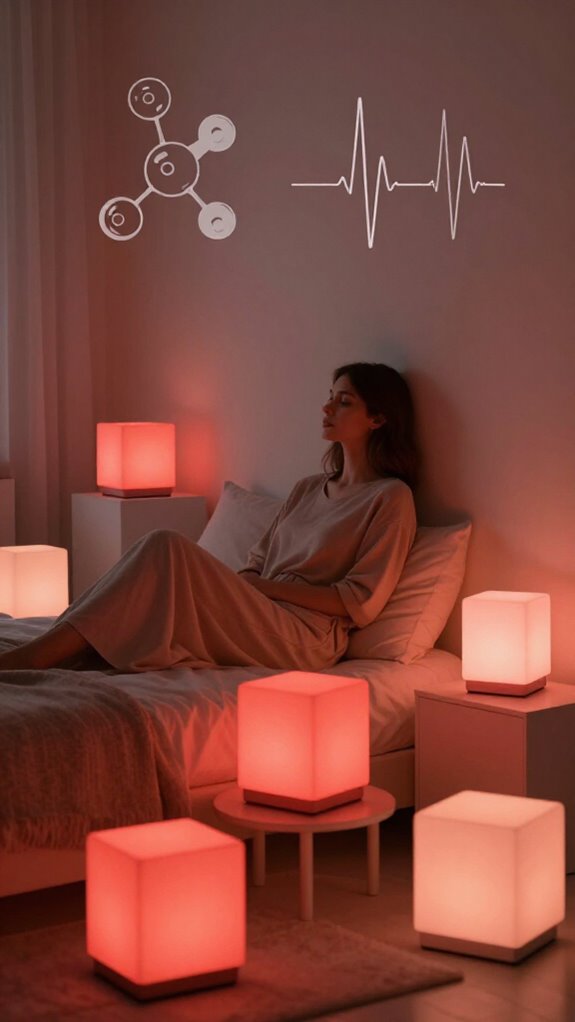
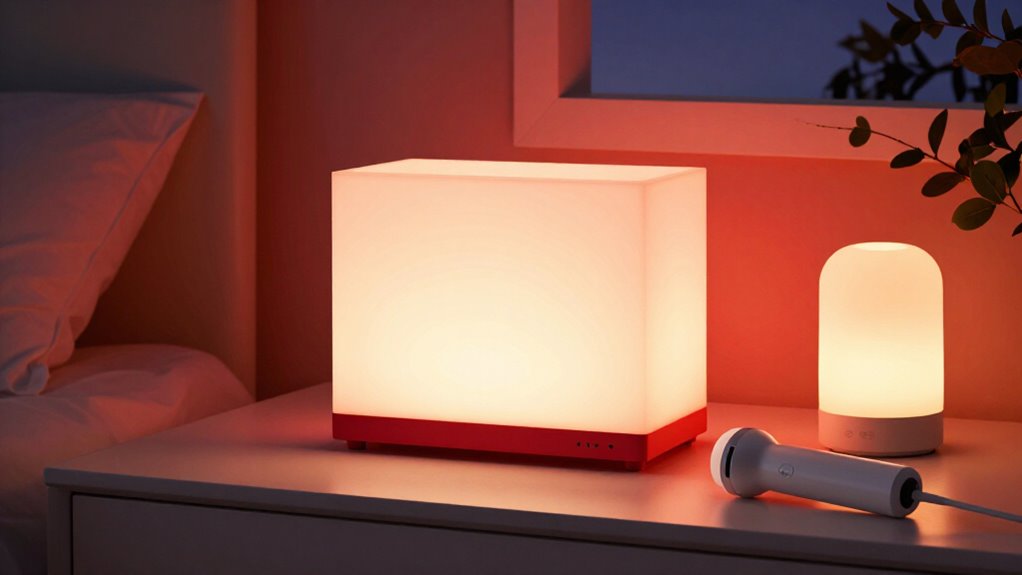
Here’s how I’d compare the current “analog-meets-ophthalmology” tools in a practical product roundup—bright light boxes, red light panels, handheld photobiomodulation devices, and smart lamps—so you can match the wavelength and timing to the problem you’re actually treating. I use bright light boxes (10,000 lux white, no UV) for 30-minute morning sessions: Harvard-linked evidence shows 40–60% symptom improvement in SAD and depression, with meta-analysis reporting 41% remission vs 23% controls. serotonin boosting through morning light is a key mechanism, which is why timing matters as much as the device itself. For evening calm, red/near-infrared panels target mitochondrial energy, raise serotonin, regulate cortisol, and support sleep quality. Handheld red units add targeted transcranial photobiomodulation. Smart lamps simply automate morning exposure with timers. For those seeking integrated bedroom solutions, built-in lighting kits offer seamless installation with circadian-optimized programming that eliminates countertop clutter while delivering clinically relevant lux levels at the pillow.
Morning Light Anchors Circadian Phase
| Time | What I notice |
|---|---|
| Within 30 min | Alertness rises |
| 5–10 min sun | Strong signal |
| Missed morning | Afternoon backup |
| 14h later | Melatonin resumes |
If you use brands like Philips or consult Dr. Till Roenneberg’s circadian work, keep it simple and consistent. Morning sunlight exposure triggers a cascade of hormonal responses that optimize your sleep-wake architecture throughout the entire 24-hour cycle. Your chronobiology system relies on these consistent light cues to maintain entrained circadian rhythms that govern sleep quality and cognitive restoration.
FAQ
Can Indoor LED Light Raise Anxiety Even Without Nighttime Screen Use?
Yes. I’ve seen indoor LED light raise anxiety even without nighttime screens, because bright, blue-rich light can suppress melatonin and keep your brain alert. If you feel wired, I’d dim LEDs, warm the color, and reduce brightness.
What Light Wavelength Best Supports Mood Regulation and Emotional Stability?
You’re probably thinking “any light works, right?” Nope. I use blue-leaning morning light around 480–500 nm to steady mood, then warmer amber/red 590–660 nm at night to soothe the brain and protect emotional stability.
How Quickly Does Morning Light Affect Serotonin and Mental Clarity?
Morning light boosts serotonin within about 15–30 minutes, and I often feel mental clarity sharpen by 1–2 hours. If I step outside soon after waking, my mood steadies and my focus feels cleaner all day.
Does Cloudy-Day Light Still Improve Circadian Timing and Reduce Stress?
Yes—cloudy-day light still helps your circadian timing and can lower stress. I look for any bright outdoor window within an hour, even through haze, because it cues your brain to wake and resets your internal clock.
Can Irregular Weekend Sleep-And-Light Shifts Worsen Depression Symptoms?
Yes—irregular weekend sleep-and-light shifts can worsen depression symptoms. I’ve felt the rollercoaster effect: late mornings and dim evenings can throw my circadian rhythm off, raise stress, and blunt mood-regulating hormones, especially if I repeat it.
References
- https://cerebral.com/blog/what-is-light-therapy-for-mental-health
- https://aspenvalleyhealth.org/healthy-journey/light-therapy-for-anxiety-depression/
- https://renewaltherapeutics.com/mental-health-red-light-therapy/
- https://www.webmd.com/depression/therapeutic-light-therapy
- https://www.psychiatry.org/news-room/apa-blogs/bright-light-therapy-beyond-seasonal-depression
- https://www.treatmentindiana.com/resources/mental-health/red-light-therapys-role-in-mental-health/
- https://www.health.harvard.edu/blog/light-therapy-not-just-for-seasonal-depression-202210282840
- https://www.uclahealth.org/news/article/5-health-benefits-red-light-therapy
- https://pmc.ncbi.nlm.nih.gov/articles/PMC11671386/
- https://www.gundersenhealth.org/health-wellness/aging-well/exploring-the-benefits-of-red-light-therapy