Ever tried to “catch up” on sleep Sunday morning, then wondered why Monday feels like emotional quicksand? Yeah, me too.
I used to brag about being a “night owl”—until my anxiety started doing parkour at 3 AM. Turns out, biology doesn’t care about my aesthetic. My cortisol was doing the cha-cha while my melatonin ghosted me entirely.
Here’s the thing: Roenneberg’s research at LMU Munich shows social jetlag hits harder than actual jetlag. And those Hopkins protocols? Brutally effective. Fixed wake times, morning light within 30 minutes—my mood finally stopped resembling a crypto chart.
We at Corala Blanket obsess over this stuff because we’ve lived the crash. No cap.
2026’s “sleepmaxxing” trend? It’s just disciplined circadian hygiene dressed in TikTok slang. Adjust 15 minutes every few days. Stabilize your environment. Your emotional signal-to-noise ratio will thank you.
Still scrolling at midnight? Your biology’s asking for a word.
Quick Takeaways
- Circadian misalignment from late light or irregular schedules is linked to higher anxiety and depression risk.
- Late and variable bedtimes worsen mood even when total sleep duration is similar.
- Stable sleep timing improves emotional recovery and reduces “noise,” enhancing emotional signal-to-noise.
- Keep wake time consistent within about ±30 minutes on weekends to anchor circadian rhythms.
- Morning bright light soon after waking helps recalibrate cortisol/melatonin rhythms and supports better sleep quality.
How Circadian Misalignment Affects Mood and Stress
When your circadian clock drifts out of sync—say, from late-night light, irregular schedules, or weekend “catch-up”—your brain doesn’t just feel tired; it changes how your body manages threat and recovery. Disrupted circadian rhythms are increasingly recognized as a contributing factor to anxiety and depression, creating a bidirectional relationship where mood disorders worsen sleep timing problems.
I want you to picture your stress system as a thermostat tied to sunlight. When timing is off, cortisol rhythms smear: morning is less reliably restoring, evening becomes more “alarm-prone.”
Research by Till Roenneberg and studies on circadian misalignment show links to higher perceived stress and irritability, not just fatigue.
If you shift wake times repeatedly, I can expect slower emotional regulation and reduced resilience.
Start by stabilizing light exposure and bedtime. Even alcohol consumption timing can disrupt sleep architecture and delay circadian phases, compounding the mood effects of misalignment.
Sleep Timing and Mental Health Outcomes Across Studies
Building on what we grasp about circadian misalignment and smeared cortisol rhythms, the research record across epidemiology, actigraphy cohorts, and controlled sleep schedules shows a consistent pattern: people who keep later, more variable bedtimes and wake times report worse mood, higher anxiety symptoms, and more irritability, even after researchers control for total sleep time.
Think of it like a dimmer switch for emotional signal-to-noise. Teams at Harvard and Johns Hopkins, plus actigraphy studies, repeatedly find this timing effect. Cooler sleep environments support this emotional regulation by preventing the restlessness that accompanies overheating.
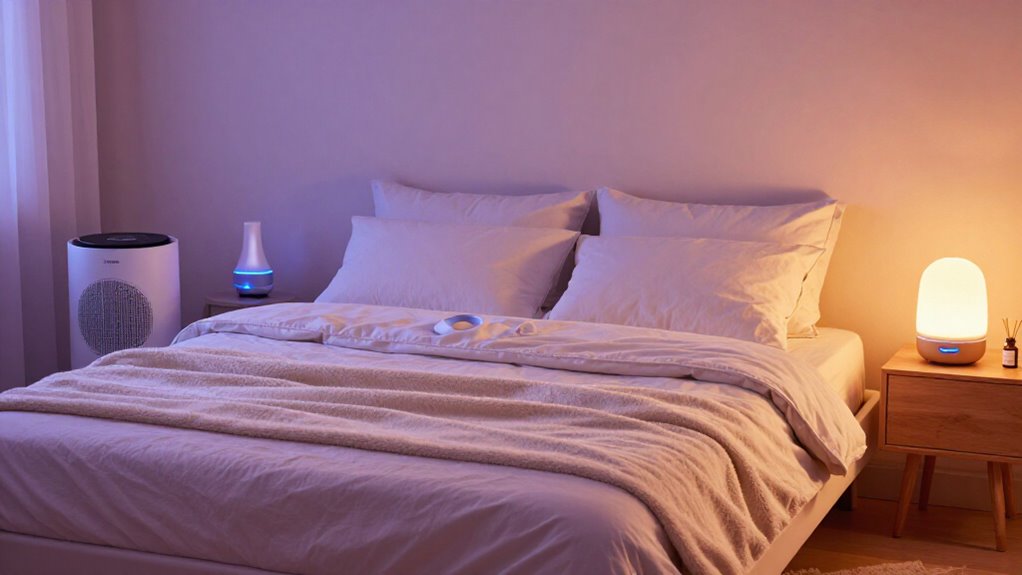
Emerging evidence suggests that optimal bedroom temperature may further modulate these circadian-driven effects by stabilizing sleep architecture and reducing nighttime awakenings that fragment emotional regulation processes.
Which Sleep Schedules Best Support Circadian Rhythm and Emotional Regulation
Which sleep schedule actually helps your circadian rhythm stay coherent and your emotions feel less “spiky” in the day?
I look for regularity first: a consistent wake time anchors the suprachiasmatic nucleus, aligning melatonin offset and cortisol rhythms.
Research from Matthew Walker and work summarized in journals like *Sleep* repeatedly links stability to better mood variability and faster emotional recovery. Bedtime routines that incorporate calming pre-sleep rituals can further reduce nighttime anxiety and support this emotional stability.
Practically, I advise you to keep wake time within ±30 minutes, even on weekends, and to time bed so you get about 7–9 hours.
If you’re a “Night Owl,” shift gradually—don’t force a sudden bedtime slam.
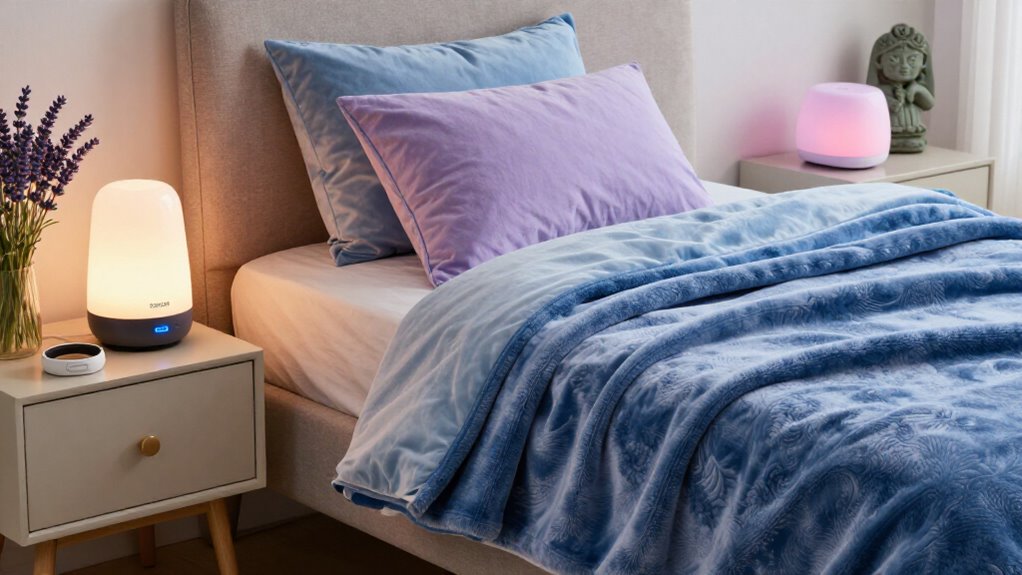
Creating a tranquil bedroom sanctuary with calming visual elements can reinforce this regularity by signaling to your brain that the sleep environment is a consistent, peaceful space dedicated to rest.
How to Shift Sleep Timing Safely Without Worsening Anxiety
- Move by 15–30 minutes every 2–3 days. This gradual approach mirrors the intentional simplicity found in Japandi design, where small, deliberate changes create lasting transformation.
- Keep wake time steady on weekdays/weekends.
- Use a fixed wind-down cue (e.g., MagneSleep-style routine).
- If anxiety rises, pause and revert 1 step.
- Optimize your sleep environment with tranquil bedroom décor to support relaxation and reduce nighttime stress.
First: Morning Light Anchoring
If your earlier goal was to shift bedtime without feeding your anxiety, I want you to start with a calmer lever: morning light anchoring.
Within 30 minutes of waking, I step into outdoor light (ideally 10,000 lux) for 5–15 minutes. This timing matters because retinal inputs reset my circadian phase via the suprachiasmatic nucleus, tightening the day-night “rails” that regulate melatonin and cortisol rhythms. Just as soft illumination at night protects sleep quality, bright morning light provides the anchoring signal your brain needs to distinguish active from rest phases.
Within 30 minutes of waking, get outdoor light for 5–15 minutes to reset circadian timing via the suprachiasmatic nucleus.
Research on light therapy and circadian biology (e.g., Michael Deacon’s work; common findings from Czeisler’s era of chronobiology) consistently shows earlier light can advance sleep timing.
Exposure to morning sunlight triggers serotonin production that converts to melatonin later in the day, creating a self-reinforcing cycle for sleep quality.
I pair it with steady wake times, then let bedtime follow.
Product Roundup
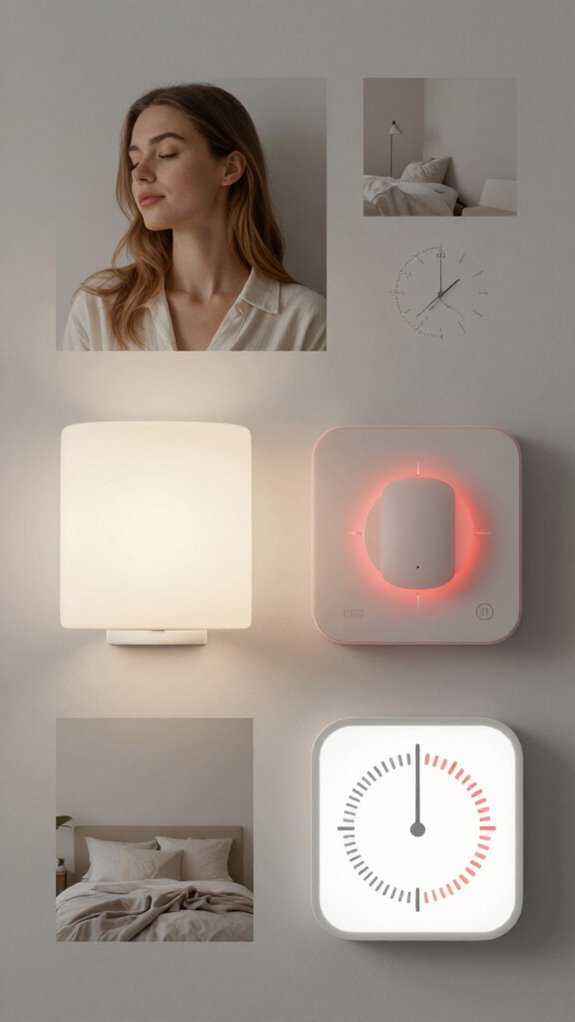
In 2026, I treat sleep products less like “sleep hacks” and more like tools for tuning timing—because the evidence keeps pointing to when you sleep, not just how long. Here’s my calm shortlist, grounded in findings: sleep midpoint outside 2–4 a.m. links to higher depressive symptoms in women 60–72, and irregular timing worsens depression/anxiety (e.g., β = −0.21; β = 1.77). In other words, sleep regularity looks to matter for mood as much as sleep duration does.
- Morning light lamps (30-min anchoring)
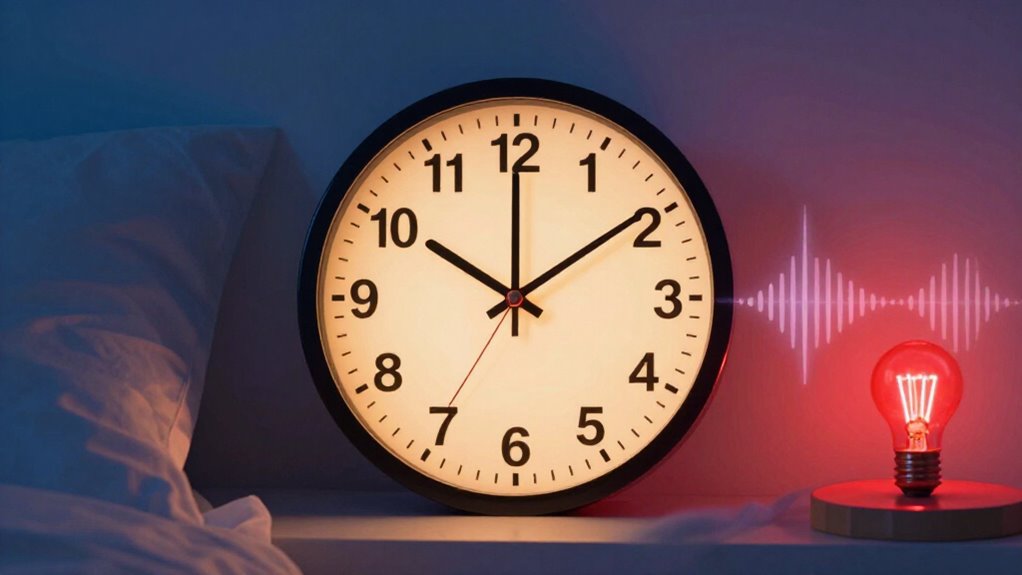
- Red-light evening switchers
- Acoustic pacing apps (pre-sleep downshift)
- Clock-first “analog bedroom” timers (reduce tracker anxiety)
For those on rotating schedules, circadian entrainment strategies can help preserve mental health by stabilizing sleep windows despite shift demands. I pair these with chronotype-aware schedules—night owls truly pay a mental-health price.
Home Apnea Screening Devices
| Device type | What I measure |
|---|---|
| Wireless patches (Onera) | CNN sleep scoring; 250 Hz |
| Contactless (suprasternal) | Flow/effort/snore; central vs obstructive |
| PAT/wearables (WatchPAT One) | PAT signals + stage proxies |
| Rings (Happy/Bllun) | PPG-based estimation |
| Bluetooth HSAT (Nox T3, Falcon) | Nasal pressure, RIP, position |
Onera correlates strongly with PSG AHI; suprasternal sensors report ~89% sensitivity and ~92% specificity for AHI>15.
FAQ
Does Irregular Bedtime Increase Anxiety the Next Day, Even Without Sleep Loss?
Yes—irregular bedtimes can nudge next-day anxiety, even if you didn’t lose sleep. I feel my nervous system stays “uncertain” when my schedule shifts. Your brain hates ambiguity; consistent timing steadies stress hormones and mood.
What’s the Mental Health Impact of Shift-Work Circadian Disruption?
Shift-work circadian disruption feels like living out of sync, like a lover tugging your watch every night. I see higher anxiety, irritability, and depressive symptoms, plus worse stress recovery. Your mood steadies only when schedules stabilize.
Are Weekends Sleeping-Ins Linked to Depression or Irritability?
Yes—sleeping in on weekends can link to more depression or irritability, especially if it wildly shifts your circadian rhythm. I notice your mood dips when Sunday night wake times drag, so keep weekend timing closer to weekday.
How Long Does It Take to Shift Clocks Without Triggering Anxiety Rebound?
I usually see circadian shift start within 2–3 days, with steadier adjustment by 1–2 weeks; I ease it by moving bedtime and wake time 15–30 minutes daily, plus consistent morning light, so anxiety rebound stays low.
Can Morning Light Therapy Replace Melatonin for Mood Stability?
Yes—I use morning light therapy as my melatonin alternative for mood stability: brightening my system before the day starts feels calmer than dosing at night. Pair it with darkness later, and you’ll help your circadian rhythm, not fight it.
References
- https://pmc.ncbi.nlm.nih.gov/articles/PMC10478033/
- https://pmc.ncbi.nlm.nih.gov/articles/PMC4794596/
- https://www.pnas.org/doi/10.1073/pnas.2214756121
- https://www.psychiatry.org/news-room/apa-blogs/timing-of-sleep-can-be-important
- https://med.stanford.edu/news/all-news/2024/05/night-owl-behavior-could-hurt-mental-health–sleep-study-finds.html
- https://www.health.harvard.edu/blog/why-your-sleep-and-wake-cycles-affect-your-mood-2020051319792
- https://aasm.org/advancements-in-home-sleep-apnea-tests-bridging-convenience-and-clinical-effectiveness/
- https://www.science.org/doi/10.1126/sciadv.adg9671
- https://pmc.ncbi.nlm.nih.gov/articles/PMC10887466/
- https://pmc.ncbi.nlm.nih.gov/articles/PMC12673496/