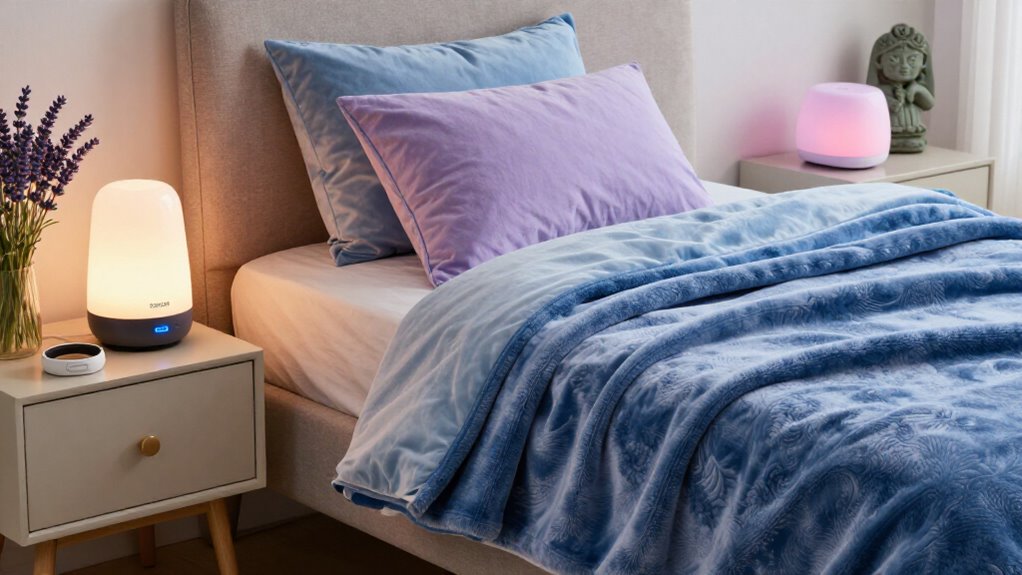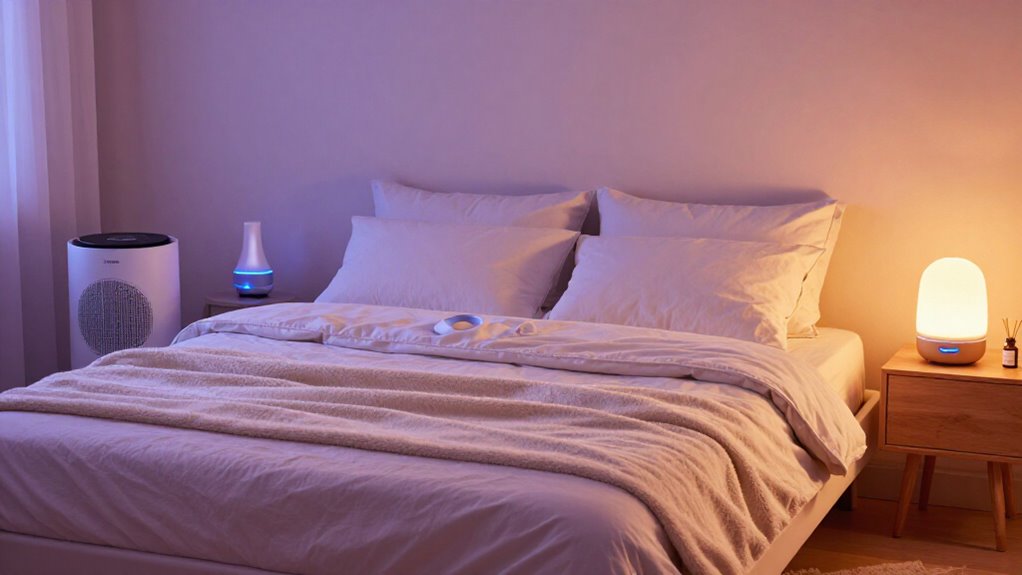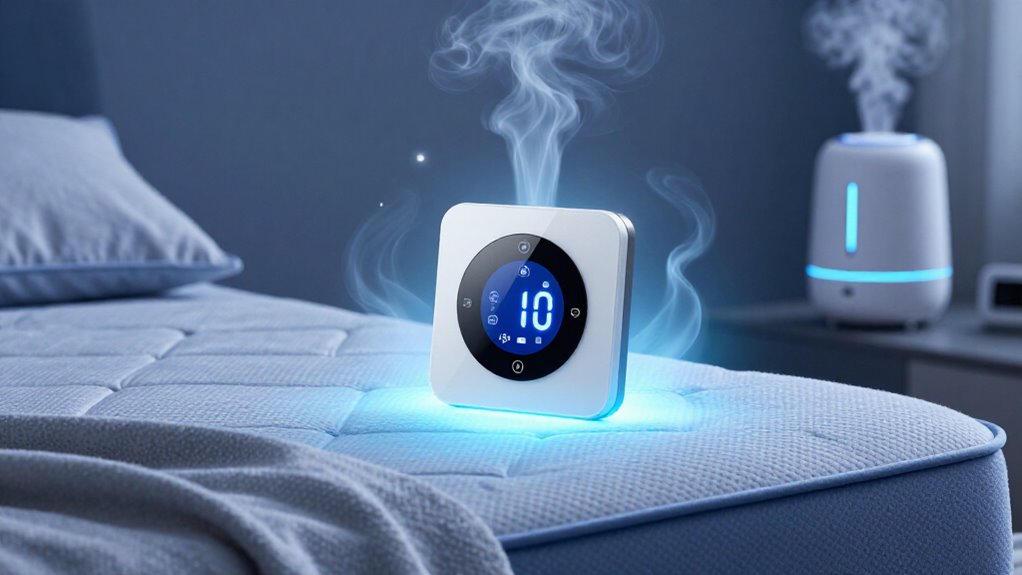
I used to toss and turn until I discovered my bedroom was a sweaty 24°C—no wonder I woke up groggy. After dialing it down to 18°C, following Dr. Matthew Walker’s research, my deep sleep finally clicked. That thermo-neutral zone? It’s real. My Oura Ring now tracks the proof nightly.
We at Corala Blanket live for this stuff—promoting better sleep is literally our mission. The 2026 “sleepmaxxing” trend has everyone optimizing their setup; I’m pairing my Nest thermostat with breathable bedding for maximum recovery.
Ever wonder why hotel sleep hits different? Temperature’s the secret sauce. What’s your room at right now?
Quick Takeaways
- Bedroom temperature regulates sleep stages by optimizing light, REM, and deep sleep cycles, enhancing overall sleep quality.
- An ideal room temperature of around 18°C supports the body’s natural core temperature drop, critical for restorative sleep.
- Maintaining 16–19°C reduces sleep fragmentation and improves sleep efficiency by supporting physiological recovery mechanisms.
- Proper thermal environment aligns with circadian rhythms and melatonin secretion, preventing sleep onset delays and disruptions.
- Using temperature control tools and breathable bedding optimizes thermal comfort, preventing awakenings and promoting uninterrupted sleep.
How Bedroom Temperature Influences Light, REM, and Deep Sleep Stages

Although many factors impact sleep architecture, bedroom temperature plays a crucial role in regulating the progression through Light, REM, and Deep Sleep stages.
Thermoregulation strategies directly influence these shifts by optimizing the body’s heat dissipation during non-REM and REM phases. Sleep architecture analysis—such as that conducted by Dr. Matthew Walker’s lab—shows a tightly coupled relationship between ambient temperature and slow-wave sleep intensity.
Maintaining an ideal bedroom temperature near 18°C facilitates this balance, enabling the hypothalamus to efficiently govern temperature setpoints essential for restoring cognitive function.
An ideal bedroom temperature around 18°C supports hypothalamic regulation vital for cognitive restoration.
Ignoring this nuance risks fragmentation, undermining recovery’s physiological primacy.
Research indicates that 18°C room temperature represents the optimal thermal environment for maximizing sleep efficiency and minimizing nighttime awakenings across all sleep stages.
How Temperature Affects Your Sleep’s Circadian Rhythm and Core Cooling
Mastering bedroom temperature isn’t only about enhancing sleep stages but also about harmonizing your internal circadian rhythm and core body cooling mechanisms.
Maintaining a prime core temperature drop signals the suprachiasmatic nucleus to initiate restorative sleep. Circadian disruption arises when the body fails to cool efficiently, delaying melatonin secretion and impairing deep sleep.
Research suggests that the ideal bedroom temperature typically falls between 60-67°F (15-19°C) for optimal sleep quality. Smart thermostats provide precise climate control to maintain this optimal range throughout the night.
Consider these essentials:
- Core temperature decline triggers Adenosine clearance for cognitive reset
- Elevated room temps can blunt circadian rhythm robustness
- Thermoregulatory failure disturbs SCN signaling, causing fragmented sleep
- Aligning environmental temp supports natural melatonin cycles, per research by Dr. Thomas Wehr
Temperature is power in your sleep architecture.
Why 18°C Is the Optimal Sleep Temperature for Performance
I recommend setting your bedroom thermostat to approximately 18°C, a standard endorsed by sleep researchers including Dr. Matthew Walker. This temperature aligns with the body’s thermo-neutral zone, where thermal comfort optimizes the core temperature decline essential for synaptic homeostasis. Environmental noise can similarly fracture sleep architecture, undermining the very cycles this temperature aims to support.
At 18°C, the glymphatic system operates efficiently, promoting adenosine clearance and enhancing sleep performance. Deviations can disrupt slow-wave and REM cycles, impairing cognitive restoration. Finding your personal thermo-neutral zone may require modest adjustments to this baseline depending on individual factors like bedding thickness and metabolic rate.
Companies like Withings incorporate precise temperature tracking in their sleep trackers to validate these findings. By embracing this controlled environment, you harness a physiological lever that powers restorative sleep and heightens next-day mental acuity.
How to Set Your Bedroom Temperature for Better Sleep

When you set your bedroom temperature for better sleep, precision matters more than you might expect. Ideal temperature regulation hones thermal comfort, essential for advancing deep sleep stages, as supported by Matthew Walker’s research.
Aim for a consistent range around 16–19°C to enhance the suprachiasmatic nucleus’s circadian signaling. Colder bedroom temperatures trigger your body’s natural melatonin production, helping you fall asleep faster and stay asleep longer.
Effective strategies include:
- Calibrating thermostat settings nightly
- Utilizing breathable bedding materials
- Monitoring ambient humidity to prevent heat retention
- Employing sleep trackers for data-driven adjustments
Balancing temperature with optimal humidity levels prevents moisture-related disruptions that can fragment sleep architecture and compromise your sleep environment quality.
Controlling these variables transforms your sleep environment into a performance accelerator, ensuring your physiology aligns perfectly with restorative demands.
Recommended Products to Use

Optimizing your sleep environment demands targeted tools that support the Sleepmaxxing Protocol’s complex balance of physiology and technology. High-caliber sleep gadgets and precision-engineered cooling systems are paramount—they regulate thermal conditions to expedite core temperature drops essential for deep restorative sleep. A premium cool mist humidifier can further enhance your bedroom environment by maintaining optimal humidity levels that complement temperature regulation for more restful nights. For those seeking mattress cooling solutions, advanced systems designed specifically for bedroom temperature management can significantly enhance sleep onset and continuity. Here’s a concise guide to products I trust:
| Product Type | Example Brand |
|---|---|
| Precision Thermostat | Nest Learning Thermostat |
| Cooling Mattress Pad | ChiliPad |
| Sleep Tracker | Oura Ring |
| Weighted Blanket | Gravity Blanket |
| White Noise Machine | LectroFan |
Each complements the protocol’s synergy of biometric feedback and environmental control, empowering superior sleep quality.
Thermo-Neutral Zone Impact Studies
Three distinct thermal parameters converge to define the Thermoneutral Zone (TNZ), an essential ambient temperature bracket where the human body achieves thermal homeostasis absent active heat production or dissipation mechanisms.
The Thermoneutral Zone is where the body maintains thermal balance without extra heat regulation efforts.
Studies reveal temperature regulation within the TNZ profoundly impacts sleep architecture, especially NREM and REM phases. For instance:
- Ideal TNZ spans approximately 27.5°C–32.3°C for skin comfort and thermal stability
- NREM sleep depth and latency improve near 29°C, linked to sleep-promoting neuronal activation
- REM sleep thrives within a narrow thermal window centered on thermoneutrality
- Mattress warmth between 28°C–31°C enhances subjective sleep satisfaction
Behavioral thermoregulatory actions, such as curling up or nest building, illustrate the role of thermal comfort in achieving restful sleep through thermoregulatory behaviors.
Understanding TNZ physiology empowers precision bedroom engineering for restorative sleep.
Sleepmaxxing for couples
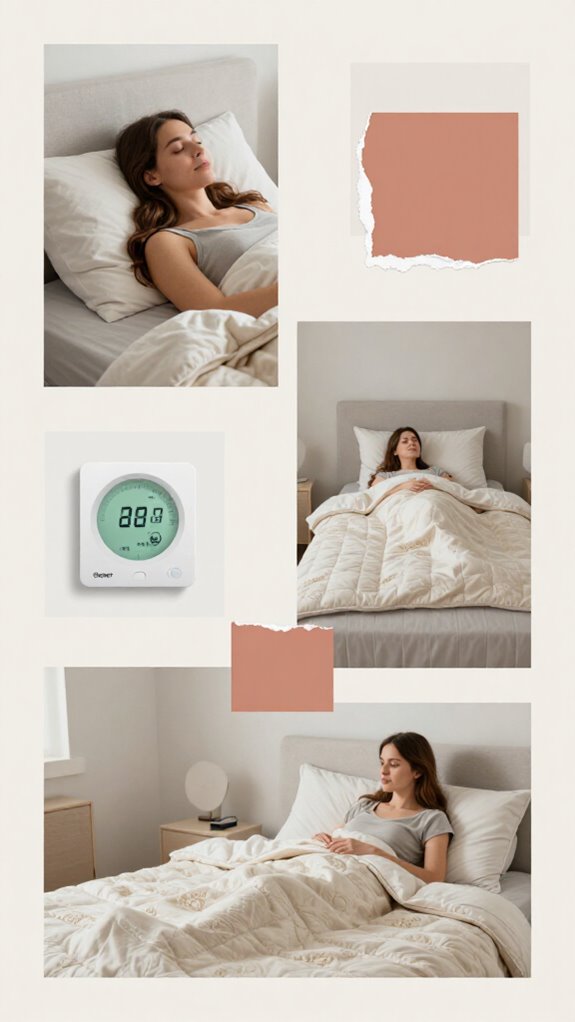
Balancing the Thermo-Neutral Zone (TNZ) for individual skin comfort in shared sleeping environments often complicates the pursuit of ideal sleep architecture. Just as improper light exposure can suppress melatonin production and delay sleep onset, thermal misalignment triggers similar circadian disruptions. Much like white noise masking, which buffers against environmental sound disturbances to protect sleep continuity, maintaining thermal equilibrium serves as a protective buffer against temperature-induced arousals.
In couples, divergent TNZ preferences demand precise couples’ communication to engineer a shared sleep environment that sustains Adenosine clearance and circadian rhythm integrity. Researchers like Matthew Walker emphasize how even slight thermoregulatory discord can fragment deep and REM sleep cycles.
Integrating biometric data through wearables such as Oura rings enables tailored temperature adjustments, optimizing each partner’s HRV and sleep latency.
Mastering this thermal equilibrium empowers couples to elevate their restorative potential, transforming rest into a strategic performance asset.
FAQ
How Does Bedroom Temperature Affect the Frequency of Nightmares or Vivid Dreams?
I’ve noticed that poor temperature regulation spikes dream intensity, boosting nightmare frequency. Keeping my bedroom cool helps control this, letting me harness vivid dreams without losing power over my night’s rest or mental clarity.
Can Bedroom Temperature Influence Sleep Disorders Like Sleep Apnea or Insomnia?
Like a knight guarding his fortress, I wield bedroom temperature as my weapon against insomnia triggers and sleep apnea. Optimizing it empowers me to silence disruptions and command restorative, powerful sleep every night.
Does Temperature Impact How Quickly You Fall Asleep Initially?
Yes, I’ve found thermal comfort essential for faster sleep onset. When my room hits the ideal temperature, my body efficiently cools down, triggering deep rest quickly. Mastering this opens up powerful, rapid recovery every night.
How Does Humidity Interact With Bedroom Temperature to Affect Sleep Quality?
Humidity levels directly influence temperature regulation in your sleep zone. I’ve found that balancing both prevents thermal discomfort, optimizing my sleep architecture and boosting recovery, letting me harness peak cognitive performance every single night.
Are Children or Elderly People More Sensitive to Bedroom Temperature Changes?
I once saw a toddler shiver like a leaf while a grandparent sweated through the night—child sensitivity is higher, but elderly comfort demands more precise temperature control. Both need tailored environments for ultimate sleep power.
References
- https://www.frontiersin.org/journals/neuroscience/articles/10.3389/fnins.2019.00336/full
- https://pmc.ncbi.nlm.nih.gov/articles/PMC3427038/
- http://chronobiologyinmedicine.org/upload/pdf/cim-2022-0021.pdf
- https://pmc.ncbi.nlm.nih.gov/articles/PMC7323637/
- https://www.tandfonline.com/doi/full/10.4161/temp.29702
- https://onlinelibrary.wiley.com/doi/full/10.1002/2475-8876.12187
- https://pubmed.ncbi.nlm.nih.gov/14646797/