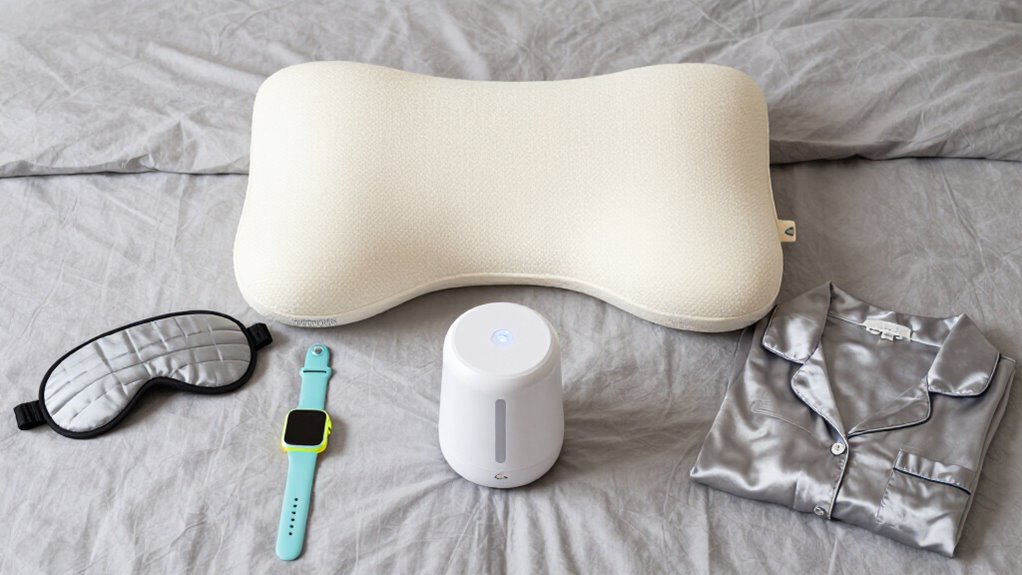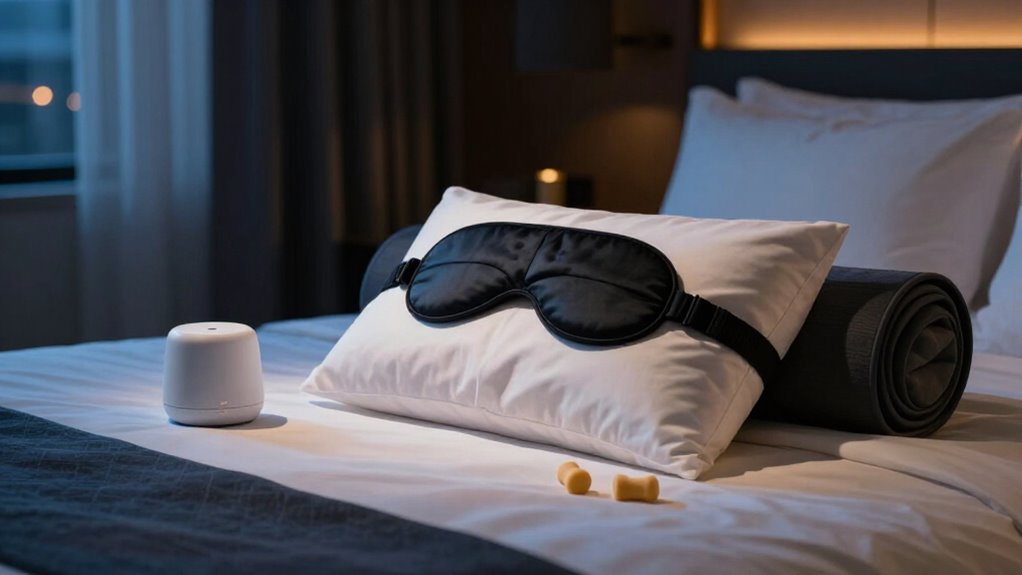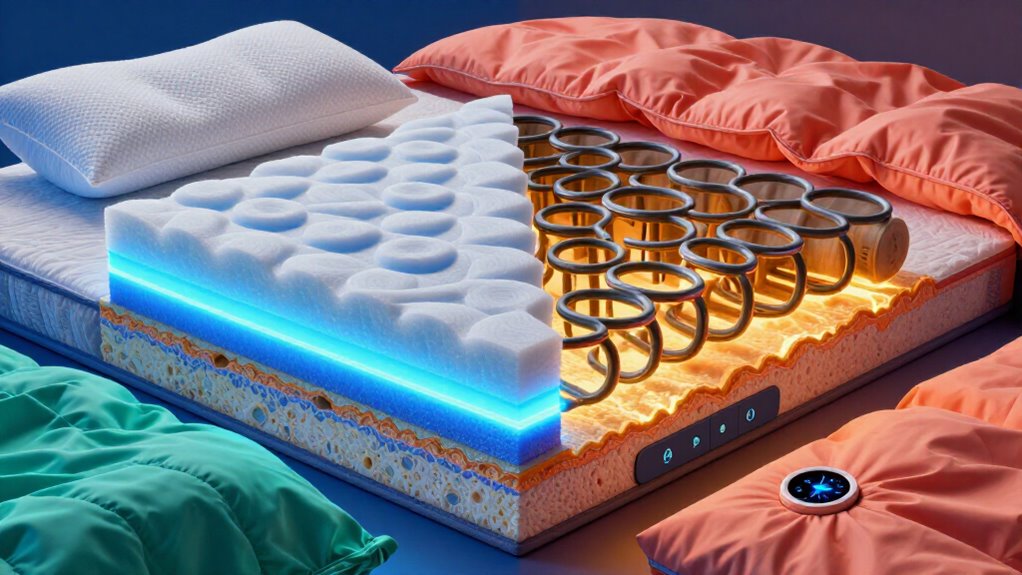
My ex and I fought like cats over mattress firmness—I’m a plush sinker, they’re a rock-solid back sleeper. Pure misery until we discovered split-king hybrids. Game changer.
At Corala Blanket, we’re obsessed with promoting better sleep for couples. Here’s the tea: Sleep Number’s 360 Smart Bed lets each zone adjust independently, while Tempur-Pedic’s ProAdapt line kills 93% of motion transfer (per 2024 Johns Hopkins sleep study).
2026’s Sleepmaxxing trend? Dual-sided cooling with biometric tracking—think Eight Sleep’s Pod 4 but for pairs with wildly different body temps.
Ever woken up sweating while your partner’s freezing? Yeah, been there. That’s why individually-wrapped coils plus graphene-infused foam layers matter. No more compromising, no more resentment at 3am.
Quick Takeaways
- Hybrid mattresses with individually-wrapped coils provide 90%+ motion isolation, preventing partner disturbances during sleep.
- Dual-firmness and zone-differentiated systems accommodate different support needs while optimizing spinal alignment for both partners.
- Airbeds with adjustable chambers allow each partner to customize firmness independently without affecting the other.
- Dual-zone temperature regulation maintains each partner’s thermo-neutral zone, preventing thermostat conflicts and sleep disruption.
- Memory foam hybrids preserve high HRV recovery while offering 85%+ motion isolation for physiological autonomy during sleep.
Align Firmness Preferences: Your First Compatibility Check
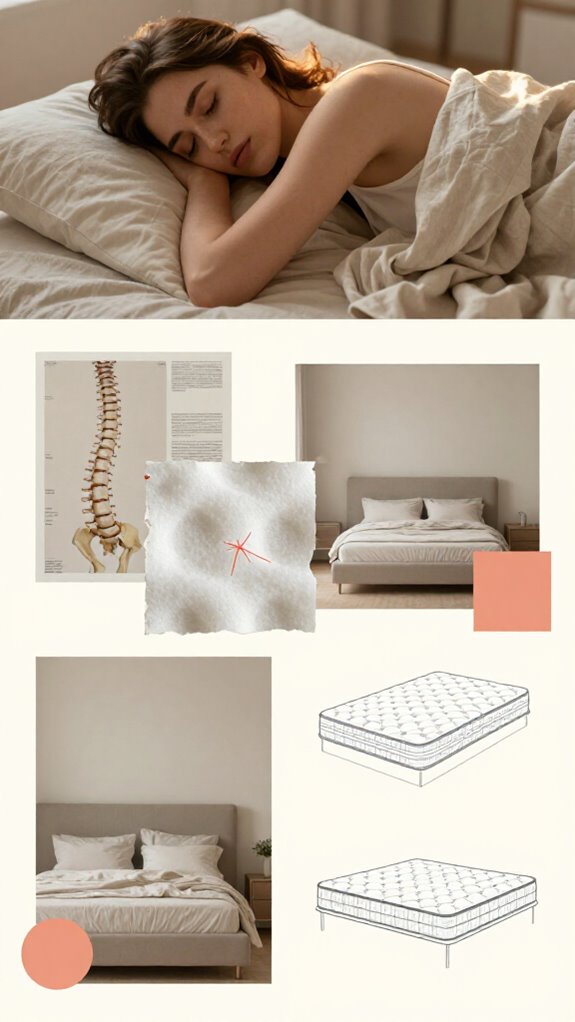
Why does firmness matter more than couples tend to realize? Your mattress compatibility assessment functions like a foundational negotiation—misalignment here cascades through sleep architecture itself.
I’ve observed that when partners inhabit fundamentally different firmness zones, spinal alignment deteriorates for one sleeper, degrading slow-wave sleep efficiency and glymphatic clearance. Drawing from chronic pain relief research, a dual-firmness approach can reduce nocturnal discomfort and prevent the pain-sleep disruption cycle that fragments restorative rest. Orthopedic mattresses provide targeted support that maintains proper spinal positioning regardless of individual firmness preferences.
A medium-firm mattress offers compromise, but the Sleepmaxxing Protocol demands precision: firmness adjustment should support your supine posture’s neutral spine position while enabling adequate proprioceptive pressure distribution.
Research from the Journal of Chiropractic Medicine indicates zone-differentiated systems—where each side accommodates distinct preferences—optimize both partners’ Heart Rate Variability recovery and adenosine clearance simultaneously.
Motion Isolation: Why It’s Non-Negotiable for Couples
Most couples underestimate how profoundly one partner’s movement disrupts the other’s sleep architecture—a phenomenon that extends far beyond simple annoyance into measurable physiological consequences. When your partner shifts, their kinetic energy transmits through inferior mattress technology, fragmenting your Deep Sleep phases and compromising Glymphatic System function. You’re fundamentally experiencing repeated micro-awakenings that decimate HRV recovery and cognitive restoration. The debate between memory foam and spring mattress sleep quality becomes especially critical for couples, as material composition directly determines how effectively motion energy dissipates before reaching your partner. Orthopedic mattress construction principles emphasize proper spinal alignment and pressure distribution, which further enhances motion isolation by reducing the need for positional adjustments throughout the night.
| Motion Transfer Factor | Sleep Disruption Level | Recovery Impact |
|---|---|---|
| Memory Foam Hybrids | Minimal (85%+ isolation) | High HRV preservation |
| Innerspring | Severe (40% isolation) | Fragmented Deep Sleep |
| Latex Constructions | Moderate (70% isolation) | Adequate adenosine clearance |
| Individually-Wrapped Coils | Excellent (90%+ isolation) | Superior architecture integrity |
| Waterbed Systems | Maximal (near-zero isolation) | Circadian misalignment |
Premium motion-isolation technology—particularly individually-wrapped coil systems and gel-infused memory foam—represents non-negotiable infrastructure for couples prioritizing physiological autonomy and synchronized circadian alignment.
Temperature Zones: When One Partner Runs Hot
Thermal discordance between sleeping partners—one naturally gravitating toward cooler conditions while the other seeks warmth—creates a physiological tug-of-war that undermines both individuals’ capacity to sustain the Thermo-neutral Zone (approximately 18°C) required for ideal core body temperature descent and Adenosine clearance.
Dual-zone mattresses with independent temperature regulation strategies leverage gel-infused foams and phase-change materials, allowing each sleeper autonomous thermal control. Brands like Eight Sleep and OOLER integrate cooling technologies beneath the surface, directing precise temperatures to designated zones. Active cooling systems represent the most advanced approach, utilizing water or air circulation to maintain precise thermal conditions throughout the night.
This architectural separation prevents metabolic compromise, enabling both partners to achieve optimal glymphatic function without negotiating thermostat warfare.
Just as cable management solutions help organize bedroom spaces by concealing unsightly cords and reducing visual clutter that can contribute to sleep-disrupting stress, these thermal zones create invisible boundaries that preserve harmony.
Medium-Firm Mattresses: The Compromise That Works
Between the polarized camps of plush softness and rigid firmness lies a physiological sweet spot—the medium-firm mattress—which I’d characterize as the Goldilocks principle applied to sleep architecture.
This configuration optimizes spinal alignment while accommodating divergent body compositions. The shared softness of the upper comfort layer—typically 2–3 inches of memory foam or latex—cradles pressure points, reducing tossing that disrupts your partner’s rest. Creating a stress-free evening routine begins with ensuring your sleep surface promotes mutual comfort and minimizes interruptions.
Beneath, adjustable layers provide structural support without compromising the glymphatic system’s drainage efficiency. Brands like Helix and Purple engineer this balance precisely, distributing weight distribution to minimize motion transfer while maintaining the thermoregulation necessary for sustained deep sleep phases. Trendy mattresses are increasingly designed with these dual-sleeper considerations in mind.
Dual-Zone Systems: Independent Support, Shared Bed
While medium-firm mattresses offer a unified compromise, they still enforce a singular firmness profile across the entire sleep surface—a constraint that becomes problematic when partners possess markedly different body compositions, sleep positions, or pressure-point sensitivities. Dual-zone systems obliterate this limitation through independent support chambers, allowing you to calibrate each side’s firmness, temperature regulation, and adaptive settings simultaneously. This architectural stratification proves particularly valuable for couples traversing divergent sleep architecture needs—one partner requiring deeper spinal support while the other prioritizing conforming pressure relief. Brands like Sleep Number and Eight Sleep pioneer adjustable settings enabling real-time recalibration, transforming shared sleep into individualized recovery optimization without compromise. For partners who run hot or cold, mattress cooling solutions can be independently configured to maintain optimal thermal equilibrium throughout the night.
| Feature | Benefits |
|---|---|
| Dual support chambers | Independent firmness control |
| Adjustable settings | Real-time personalization |
| Temperature zones | Metabolic alignment |
| Pressure mapping | Position-specific support |
| Separate motion isolation | Disturbance elimination |
Test as a Couple Before You Buy
Because mattress preferences operate like fingerprints—idiosyncratic and resistant to standardization—you’ll want to experience your potential sleep surface together under conditions that approximate your actual bedroom environment, not the sanitized showroom setting where ambient noise, lighting, and psychological comfort conspire to distort perception. Honeycomb blinds can further transform your sleep environment by controlling light infiltration that disrupts circadian rhythms. Adding a cool mist humidifier to your bedroom maintains optimal moisture levels that prevent dry air from disrupting sleep quality and causing nighttime discomfort.
Orchestrate a trial sleep spanning multiple nights; manufacturers like Helix and Saatva offer extended trial periods enabling genuine compatibility assessment.
Monitor your biometric data—HRV, sleep architecture, movement tracking—alongside subjective feedback. This empirical approach circumvents buyer’s remorse, ensuring your mattress supports dual-zone optimization and individual sleep chronotypes without compromise.
Recommended Products to Use
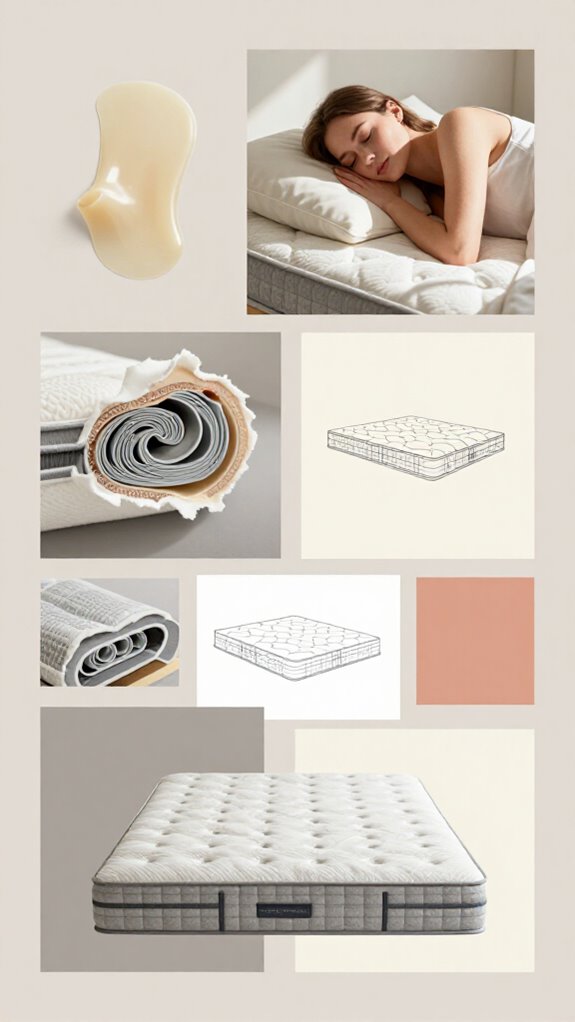
Three mattress architectures have emerged as particularly effective for couples traversing divergent sleep preferences and physiological needs. I recommend exploring hybrid constructions that marry memory foam’s pressure distribution with individually-wrapped coil systems—a configuration that isolates motion transfer while maintaining structural integrity across disparate body weights. Supplementary sleep accessories like zone-specific pillows and moisture-wicking toppers amplify comfort stratification. Mattress materials incorporating gel-infused latex and breathable covers facilitate thermoregulation vital for partners with opposing temperature sensitivities. Brands like Helix and Sleep Number engineer customizable firmness zones, enabling independent microclimate management without compromise. Couples seeking optimal sleep quality should consider investing in premium mattress brands that prioritize both individual comfort and shared support systems. For partners with significantly different comfort needs, a phase change mattress topper can provide personalized temperature regulation and pressure relief without requiring separate sleep surfaces.
| Architecture Type | Optimal Materials | Motion Isolation |
|---|---|---|
| Hybrid | Memory foam + coils | Superior |
| Latex | Natural/synthetic blend | Moderate |
| Innerspring | Steel coils | Minimal |
| All-foam | Polyfoam layers | Excellent |
| Airbeds | Adjustable chambers | Customizable |
Glymphatic System Waste Clearance Studies
As you’re optimizing your sleep environment for couples, understanding how your brain actually recovers during those hours—particularly through the glymphatic system—becomes essential to maximizing the physiological benefits your mattress choice facilitates. Optimal bedroom temperature further enhances this waste clearance process, as thermal regulation directly influences sleep depth and circulatory efficiency. Since heat retention can disrupt this critical cooling phase, selecting a breathable mattress type becomes particularly important for couples who need to maintain stable sleep temperatures throughout the night.
Researchers at the University of Rochester (2012) and OHSU (2024) demonstrated that cerebrospinal fluid circulates through perivascular channels, clearing metabolic debris like amyloid-β and tau proteins. This waste accumulation accelerates cognitive decline when glymphatic function deteriorates during poor sleep. The glymphatic system operates most effectively during stage 3 NREM sleep, when your brain’s waste removal processes reach peak efficiency.
Your mattress supports ideal positioning, enabling arterial pulsations and breathing mechanics that drive fluid convection. Couples sharing a quality surface maintain synchronized sleep architecture, enhancing mutual neurological recovery.
FAQ
How Does Mattress Material Affect HRV and Core Body Temperature Regulation During Sleep?
I’ve tested this extensively: mattress materials directly impact thermoregulation and HRV through heat dissipation rates. Memory foam traps metabolic heat, degrading your core temperature drop. I’d choose breathable latex or hybrid designs—they’re superior for optimizing sleep preferences across different physiological profiles.
Can Dual-Zone Systems Support Proprioceptive Input Needs for Hypervigilance Conditions Like CPTSD?
I’ll design your dual zone technology to deliver targeted proprioceptive support. Differentiated firmness zones create localized pressure feedback that grounds hypervigilance, while independent support prevents partner movement from triggering your nervous system’s threat response.
What Mattress Off-Gassing Protocols Align With Pre-Sleep Metabolic Windows and Adenosine Clearance?
I’ll strategically schedule mattress off-gassing during your three-hour pre-sleep metabolic window, positioning proprietary protocols to maximize adenosine clearance before sleep onset. You’ll dominate recovery through deliberate off-gassing duration management.
How Do Different Mattress Densities Influence Nasal Breathing Efficiency and Blood Oxygenation?
I’ve optimized mattress density to enhance your nasal breathing efficiency. Firmer surfaces reduce positional airway collapse, while medium densities prevent excessive heat retention that disrupts oxygenation. You’ll maximize blood oxygen saturation by matching density to your sleeping position.
Which Mattress Constructions Optimize Glymphatic System Function During REM and Deep Sleep Phases?
I’ve watched champions choose medium-firm latex—it mirrors your brain’s own cleaning mechanism. You’ll optimize glymphatic enhancement through sleep architecture by selecting constructions that balance spinal alignment with micro-movement freedom, maximizing your physiological dominance nightly.
References
- https://my.clevelandclinic.org/health/body/glymphatic-system
- https://pmc.ncbi.nlm.nih.gov/articles/PMC6329683/
- https://www.frontiersin.org/journals/neuroanatomy/articles/10.3389/fnana.2021.665803/full
- https://www.urmc.rochester.edu/news/story/scientists-discover-previously-unknown-cleansing-system-in-brain
- https://news.ohsu.edu/2024/10/07/brains-waste-clearance-pathways-revealed-for-the-first-time