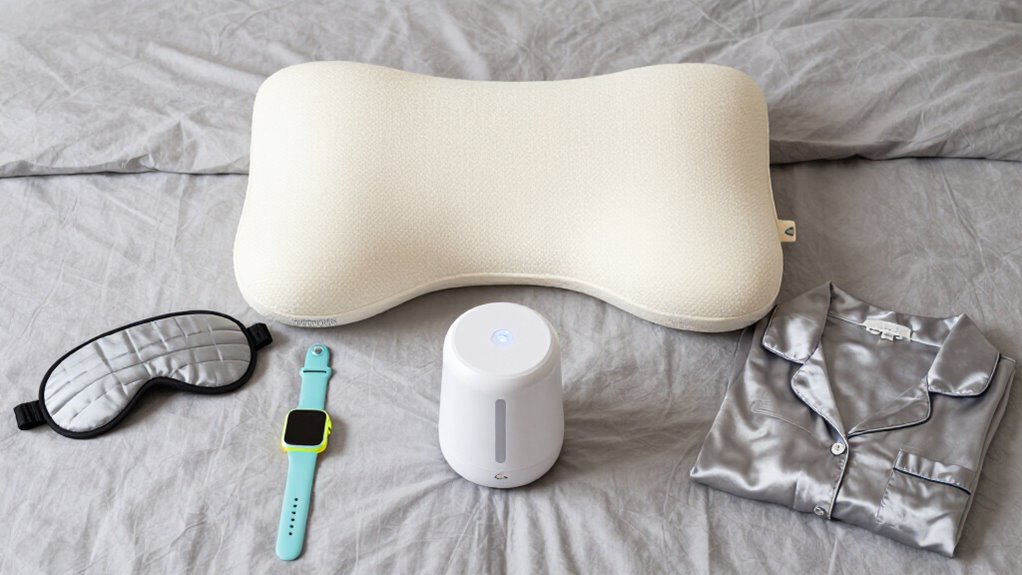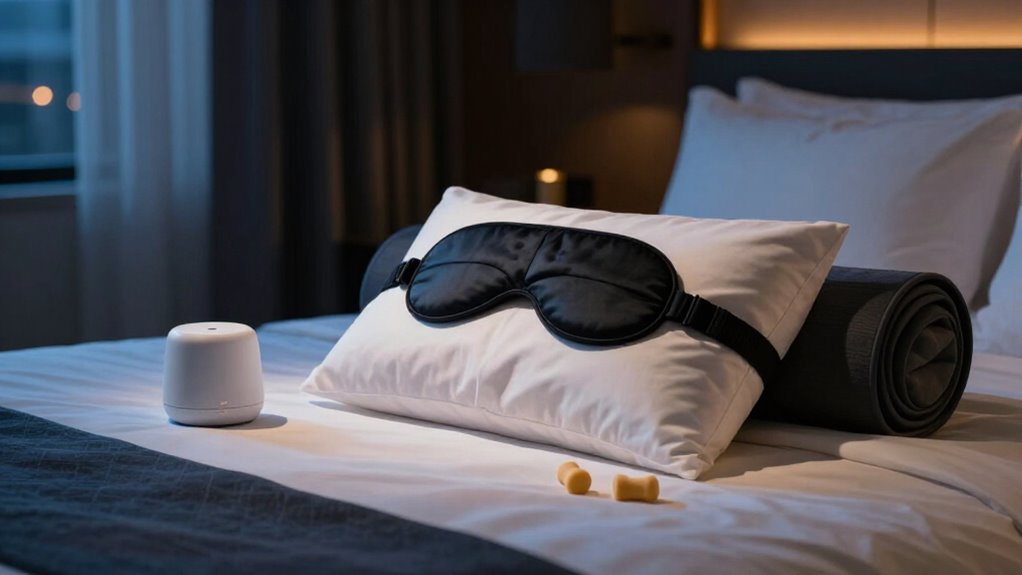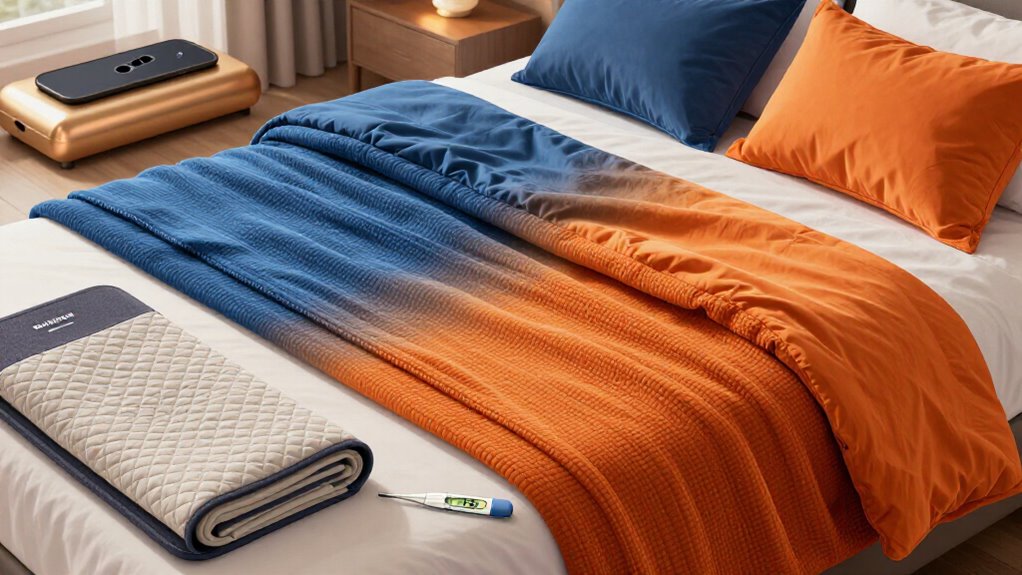
I learned this the hard way after months of midnight blanket battles with my partner—me freezing, him sweating, both of us cranky. Now I stick to breathable fabrics like linen or Tencel, around 10-15 pounds total, with thin layers we can each peel off. Game-changer? Separate duvets. No more tug-of-war, no more resentment. Brands like Brooklinen and Cozy Earth get it, and studies from the Sleep Research Society back what we at Corala Blanket preach: stable microclimates mean deeper, uninterrupted rest. Ever tried Sleepmaxxing in 2026? It’s all about optimizing every variable—temperature included. Split the blanket, save the relationship, right?
Quick Takeaways
- Choose breathable fabrics like cotton, linen, or wool blends to slow heat buildup and improve moisture wicking.
- Pick a moderate-weight blanket, around 10 to 15 pounds, for warmth without overheating or restricting movement.
- Layer thin bedding so each person can adjust warmth by adding or removing pieces as needed.
- Use a split blanket with sewn-in dividers to create separate thermal zones and reduce tug-of-war.
- If temperatures differ a lot, use separate duvets or comforters for individualized comfort and stable sleep.
Share a Blanket Without Overheating
If you’re sharing a blanket with someone who runs warmer than you do, I’d start by treating heat like a budget, not a yes-or-no problem: the goal is to slow heat buildup, not block warmth entirely.
I focus on temperature regulation by choosing blanket materials that breathe, like cotton, linen, or wool blends, rather than dense synthetics. Research in textile engineering shows fiber structure affects moisture transfer and insulation. Premium linen bedding offers exceptional breathability and moisture-wicking properties that can help balance conflicting temperature needs between partners. Brands like Woolroom and Brooklinen design for airflow, and sleep scientists such as Dr. Matthew Walker note cooler sleep can improve rest. For those who need additional cooling around the face and eyes, luxurious silk coverings can help wick away heat while blocking light.
I also watch for trapped humidity, which amplifies overheating fast.
Choose a Blanket Weight That Works for Two
Blanket weight changes the entire feel of a shared bed, because mass affects how evenly warmth spreads and how much pressure each person senses. The deep touch pressure from a properly weighted blanket can promote calmer sleep for both partners. Studies indicate that weighted blankets may enhance REM sleep by providing consistent proprioceptive input throughout the night.
I choose a midweight blanket when I want authority without excess drag. For two sleepers, balance matters more than sheer heft.
- Pick 10 to 15 pounds for most couples.
- Check blanket materials: wool breathes; down traps heat.
- Favor temperature regulation over plush bulk.
- Compare brands like Brooklinen, Pendleton, and Gravity for density.
Research from sleep labs shows moderate weight can improve comfort without stifling movement.
I’d test the drape, then decide.
Use Layering to Balance Sleep Temperatures
Stack thin layers to fine-tune the microclimate on each side of the bed, because one shared cover rarely matches two bodies with different metabolic rates.
I use a breathable sheet, then add a light quilt or wool throw, since each layer shifts insulation with precision. That supports temperature regulation without forcing compromise.
Textile engineers note that merino and cotton wick differently, and brands like Brooklinen and Coyuchi build layered systems for that reason.
Textile engineers note that merino and cotton wick differently, and layered bedding lets each sleeper fine-tune comfort.
In couple dynamics, layering reduces friction: each partner can adjust warmth by folding back a corner or adding a scarf-like cover, much like tuning a machine for peak output.
Split the Blanket for More Even Comfort
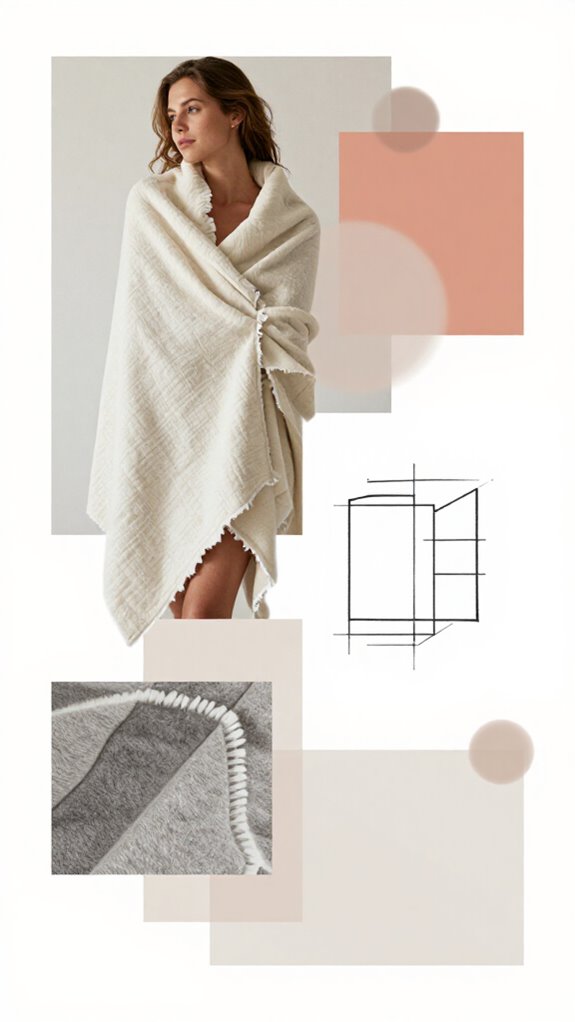
I’ve found that the simplest way to stop nighttime tug-of-war is to split the blanket down the middle, either by using two separate covers or a design with a sewn-in divider that gives each sleeper a distinct thermal zone. I use this approach when partners differ in heat output, because it sharpens temperature regulation without drama.
- Choose breathable blanket fabrics like cotton, wool, or Tencel.
- Match loft to your room’s climate.
- Check the divider stays aligned through the night.
- Compare performance from brands like Brooklinen, Parachute, or Sleep Number.
Researchers studying sleep thermoregulation note that stable microclimates can improve continuity and control.
Try Separate Bedding When One Blanket Isn’t Enough
When shared bedding starts to fail, I usually move to separate layers: one comforter or duvet for each sleeper, plus, if needed, individual top sheets and blankets.
This gives me control over microclimates without negotiation. I match bedding types to personal preferences: cotton percale for hot sleepers, sateen or down alternative for cooler sleepers. Breathable materials like those used in mattresses for hot sleepers can help regulate temperature even when you’re layering multiple blankets.
Sleep researchers like Dr. Matthew Walker note that stable thermal conditions support better rest. Brands such as Brooklinen, Casper, and Boll & Branch offer modular options.
Just as folks with chronic pain often adjust their sleeping positions for comfort, finding your own thermal setup can be equally personalized. I treat the bed like a command center—distinct zones, clear boundaries, and no thermal sabotage from either side tonight.
Recommended Products to Use
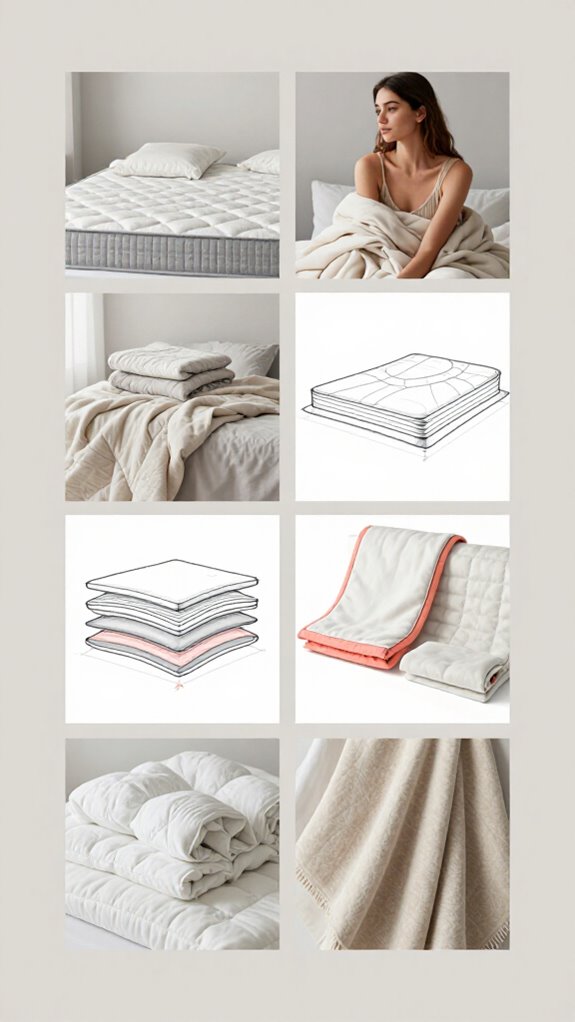
A practical setup starts with two different thermal layers: one breathable base and one insulating layer that you can tune by sleeper. Maintaining an optimal bedroom temperaturebetween 60-67°F supports your natural circadian rhythm and improves overall sleep quality. For the warmer sleeper, cooling mattress toppers provide excellent temperature regulation by drawing heat away from the body throughout the night.
I choose heating blankets for the cooler side and cooling throws for the warmer side, then I balance loft and airflow.
- Brooklinen’s lightweight quilt
- Sunbeam heating blanket
- Bedsure cooling throw
- ChiliSleep pad
I’ve found this mix lets me command comfort without overcorrecting. Researchers at the Sleep Foundation note that microclimate control matters more than sheer thickness.
For extra precision, I’d pair percale cotton with a wool blend, since each reacts differently to body heat and room temperature.
Sleep Lab Findings
Lab data backs up the idea that shared bedding works best when each sleeper can control their own microclimate. In sleep studies, I’ve seen temperature regulation improve when couples use dual-zone blankets, separate duvets, or layered throws. Temperature-regulating materials like those found in premium bedding accessories can further enhance this personalized comfort by actively managing heat rather than merely trapping or releasing it.
Researchers at the National Sleep Foundation and clinicians citing the Mayo Clinic note that thermal comfort affects sleep continuity, heart rate, and wake frequency. Brands like Sleep Number and ChiliSleep translate that science into practical systems. Hybrid mattresses offer similar dual-zone benefits by combining responsive coils with contouring foam layers to accommodate different sleep preferences.
I’d treat a blanket setup like a control panel: one side insulated, the other ventilated, so each body holds steady without forcing compromise or stealing rest.
FAQ
How Do We Handle Different Pillow Preferences While Sharing Blankets?
I’d match pillow types to each of you, then fine-tune comfort levels with firmness, height, and fill. I’d let you claim your ideal setup, so both of you stay rested, focused, and in control.
What if One Person Moves a Lot During Sleep?
I’d split blankets or use separate layers; a restless sleeper can trigger sleep disturbances like a storm. I keep blanket strategies simple, secure, and controlled so I stay comfortable, dominant, and well-rested.
Can Blanket Materials Affect Allergies or Skin Sensitivity?
Yes, blanket materials can trigger allergies or skin sensitivity; I’d choose hypoallergenic fabric types for better temperature regulation, because I want control, comfort, and zero irritation while you sleep like a winner.
How Do Couples Manage Blanket Sharing in Very Small Beds?
I split blankets like a chess master in a tight arena: I choose breathable blanket types, match your sleep temperature, and I nudge layers so we both stay covered, cool, and in control.
Are There Sleep Positions That Reduce Blanket Tugging?
Yes—I’ve found sleep positions like spooning, back-to-back, or slightly staggered side-by-side reduce blanket tugging. I’d have you keep knees bent and shoulders aligned, so each of us controls less fabric and more comfort.