Ever stayed at a hotel where someone’s 2 AM corridor convo yanks you from deep sleep?
Same. Last year in Chicago, HVAC hum and door slams left me wrecked—cortisol spiked, recovery shot. Now I never travel without 3M foam earplugs, a Loop Quiet pair for low-frequency drone, and a Manta Sleep contour mask. Researcher Mathias Basner proved nighttime noise fragments REM; I felt it.
At Corala Blanket, we’re all about promoting better sleep, and 2026’s “sleepmaxxing” trend? It’s about optimizing every variable. White-noise apps, strict acoustic control—your kit’s your armor. What’s your non-negotiable?
Quick Takeaways
- Sleep essentials help block intermittent hotel noises like snoring, hallway sounds, and traffic that disrupt sleep continuity.
- Earplugs, eye masks, and white noise reduce micro-arousals and support deeper, more restorative sleep.
- Choosing compact, comfortable gear makes it easier to sleep well in unfamiliar hotel environments.
- Different noise types need different tools, such as foam earplugs for sharp sounds and silicone plugs for low-frequency hums.
- A small, tactical sleep kit improves recovery, mood, and alertness when hotel rooms are noisy.
Why Hotel Noise Disrupts Sleep
Three kinds of hotel noise usually do the most damage to sleep: intermittent sounds, low-frequency hums, and abrupt spikes.
I see them erode sleep quality because my brain keeps auditing the room instead of powering down. Environmental factors like hallway traffic, HVAC vibration, and elevator thumps trigger micro-arousals, even when I don’t fully wake.
Research from the World Health Organization and Harvard sleep experts links nighttime noise to lighter sleep and higher stress hormones.
In practice, a room can feel quiet yet still sabotage recovery, much like static on a secure radio channel.
Best Sleep Essentials for Hotel Noise
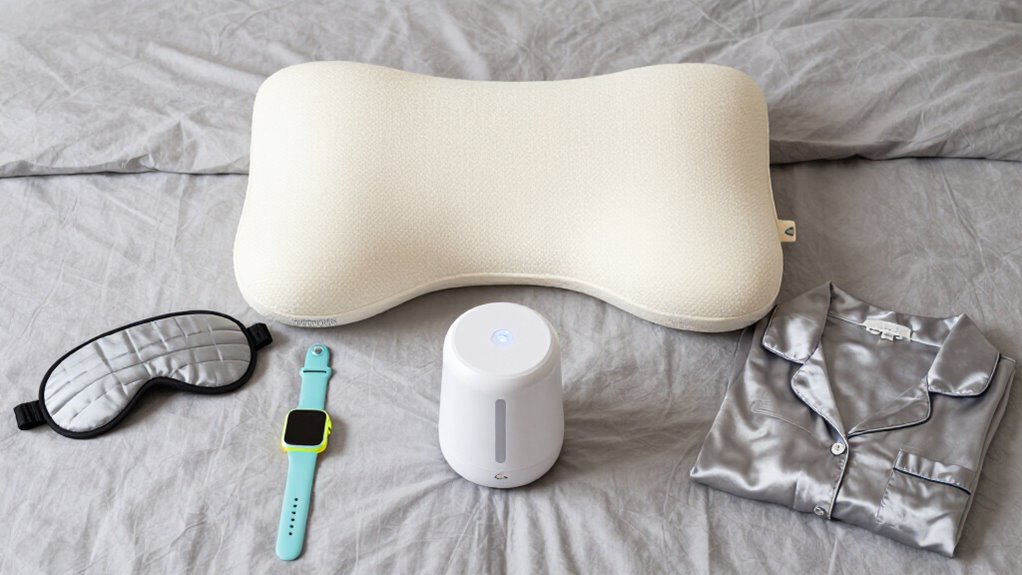
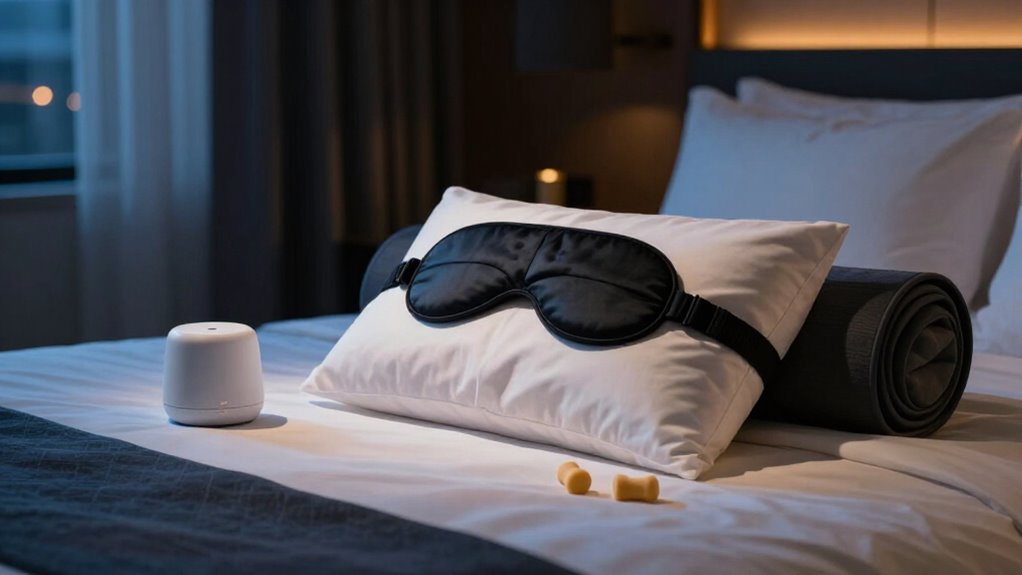
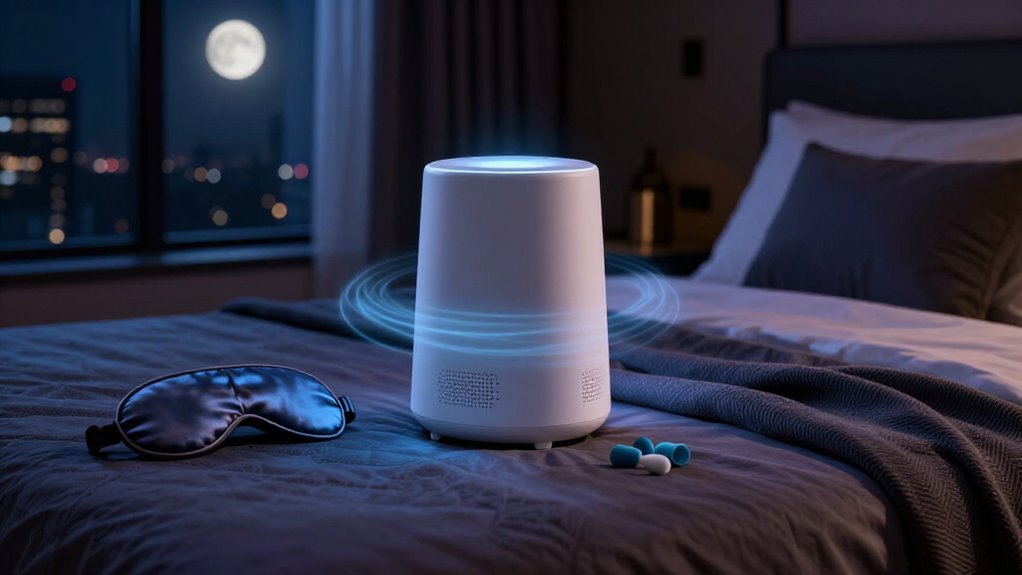
When hotel noise keeps tugging me out of deeper sleep, I rely on a small toolkit that targets sound at its source, in the air, and inside the ear.
- Foam or silicone earplugs: their earplugs benefits are simple—lower decibels and protect sleep continuity.
- White noise from apps or devices: steady masking can blur corridors, elevators, and traffic. For travelers seeking sound absorption in their temporary space, hexagon acoustic tiles can be packed flat and mounted temporarily to dampen reverberation.
- A compact sleep mask with soft seals: it limits light that can amplify alertness.
- A portable fan or speaker: brands like LectroFan and Yogasleep create stable acoustic cover.
Researchers such as Mathias Basner note that masking and attenuation work best together.
Using white noise tools consistently can create the peaceful sleep environment travelers need, even in the busiest hotels.
How to Choose the Right Sleep Gear
How do I choose the right sleep gear for a noisy hotel? I start with fit, attenuation, and comfort, because travel sleep depends on all three. I prefer noise solutions with documented decibel reduction, like Loop or 3M earplugs, and a contour eye mask that seals light without pressure. Consistent sleep schedule management helps the brain anticipate rest even in unfamiliar environments, making your gear more effective.
I also check material quality; memory foam and soft silicone usually outperform stiff plastics. Research from the CDC and sleep scientist Matthew Walker supports reducing sensory input before bed. For total sound masking, top-rated white noise machines designed for bedroom use create consistent ambient sound that neutralizes unpredictable hotel noise.
I pack compact, durable gear, so I can sleep with precision, not guesswork, even in demanding environments.
What to Pack for Snoring, Traffic, and HVAC Noise
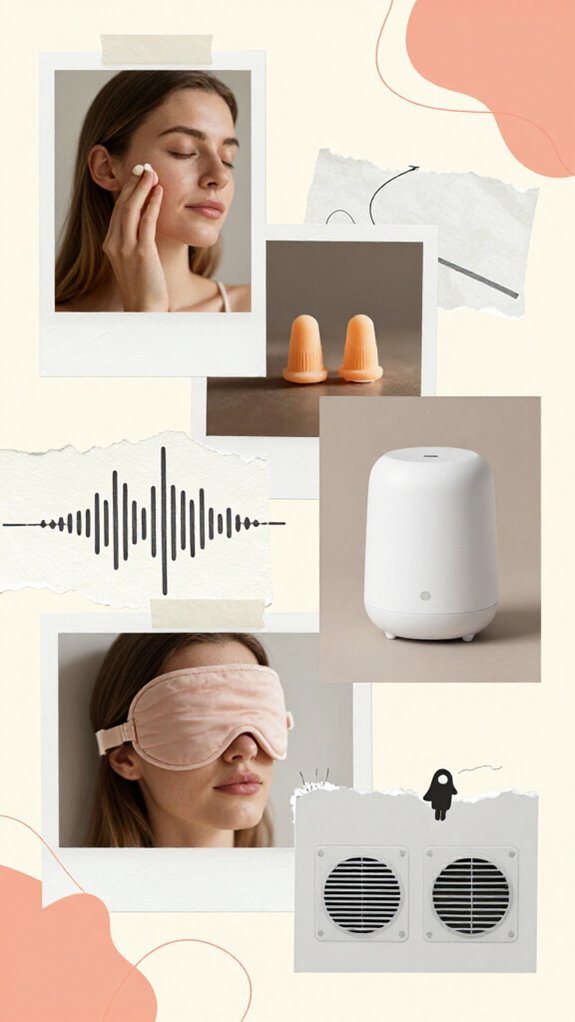
A practical hotel sleep kit has to match the kind of noise you’re facing, because snoring, traffic, and HVAC hum behave very differently.
I pack four essentials:
- Foam ear plugs for sharp, intermittent snoring; Howard Leight or Mack’s work well.
- Sleep masks with a contoured seal to block corridor light and support melatonin.
- Silicone ear plugs for lower-frequency traffic rumble, which travels like a distant engine.
- White-noise app or compact machine to mask HVAC cycling; researchers like Dr. Mathias Basner note masking improves perception.
I keep my kit lean, tactical, and ready.
How to Set Up Sleep Essentials in Hotels
I start by treating the hotel room like a small sound system I need to manage, not just a place to sleep. First, I map the noisiest edges: door seams, vents, and the wall beside the corridor.
Then I build my sleep environment by sealing gaps, muting alerts, and lowering light before I touch the bed. I want the room’s hotel ambiance to work for me, not against me. Research from the National Sleep Foundation indicates that ambient sound consistency promotes deeper rest stages throughout the night.
Harvard Sleep Medicine notes that steady sound masking can reduce awakenings. White noise improves sleep quality by creating a consistent auditory backdrop that masks disruptive sounds. I also position my pillow away from shared walls, because distance is leverage.
Calm setup turns chance into control, and control improves recovery.
Recommended Products to Use
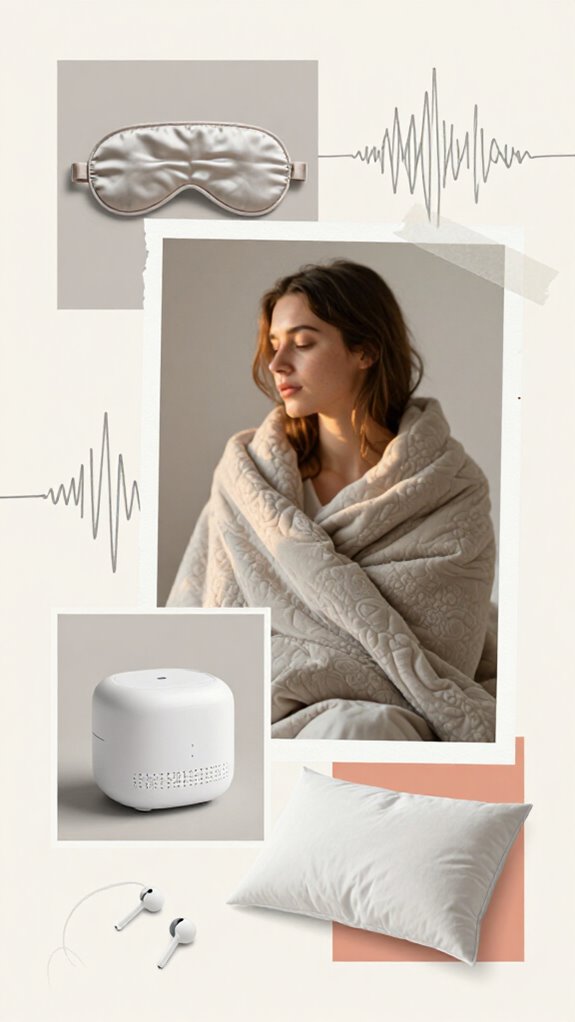
For noisy hotels, I reach for products that solve distinct problems rather than one oversized gadget. I keep the kit lean, tactical, and effective.
- Sleep masks: contoured silk or memory-foam models from MZOO or Alaska Bear block stray light without pressing on eyelids.
- White noise: LectroFan or Dohm machines create steady masking sound; I prefer fan-like spectra over looping tracks. White noise machines can effectively reduce bedroom noise by creating a consistent acoustic environment that masks disruptive sounds.
- Earplugs: reusable silicone pairs from Loop or Etymotic cut peaks from hallways and elevators.
- Weighted travel blanket: a compact option steadies the body and supports deeper rest.
Noise Sleep Studies
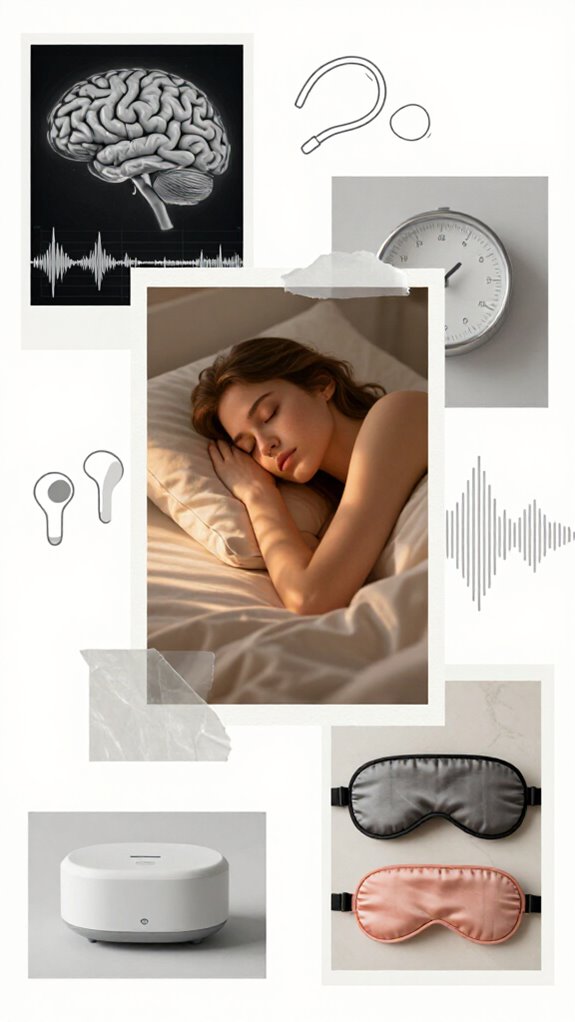
Although hotel noise can feel subjective, sleep research gives us a fairly crisp picture of what’s happening: intermittent sound is usually more disruptive than a steady hum, and the danger rises when noise fragments slow-wave sleep and REM cycles. Sleep stage fragmentation occurs when environmental sounds repeatedly interrupt the natural progression through sleep phases, leaving you with the hours logged but little of the restoration you need.
I read studies from WHO, Basner, and Stansfeld as a map for my sleep environment. They show that even modest peaks can trigger micro-awakenings, especially with sound sensitivity.
Think of it like cracking a load-bearing beam in a bridge: the structure holds, but efficiency drops. That’s why I trust earplugs, white-noise devices, and blackout protocols before I travel.
For travelers with ADHD, the challenge intensifies because racing thoughts at bedtime can amplify the perception of every hallway sound and extend the time needed to fall asleep.
FAQ
Are Sleep Essentials Allowed in Carry-On Luggage?
Usually, I can bring sleep essentials in my carry-on, but travel restrictions vary. I’d check packing tips for airlines, because rules on liquids and tools differ. Pack smart: discretion beats force, and power favors preparation.
Can Sleep Gear Help With Jet Lag Too?
Yes, I use sleep gear as jet lag remedies, and it boosts my sleep hygiene. You can control light, noise, and comfort, recover faster, and stay sharp, focused, and powerful.
How Do I Clean Reusable Earplugs While Traveling?
I clean reusable earplugs with mild soap, warm water, then air-dry them completely. I keep up earplug maintenance and travel hygiene daily, so you stay sharp, disciplined, and ready wherever you land.
Do Sleep Masks Work With Glasses?
Yes, I find some sleep masks work with glasses if you choose a roomy design; sleep mask benefits include stronger focus and recovery, but glasses compatibility matters, so I’d test fit before relying on it.
Are White Noise Apps Enough Without Earplugs?
Not always; I’d use white noise apps, but I won’t trust them alone. A stitch in time saves nine: for better sleep quality, hotel comfort, and sound isolation, I pack earplugs too.