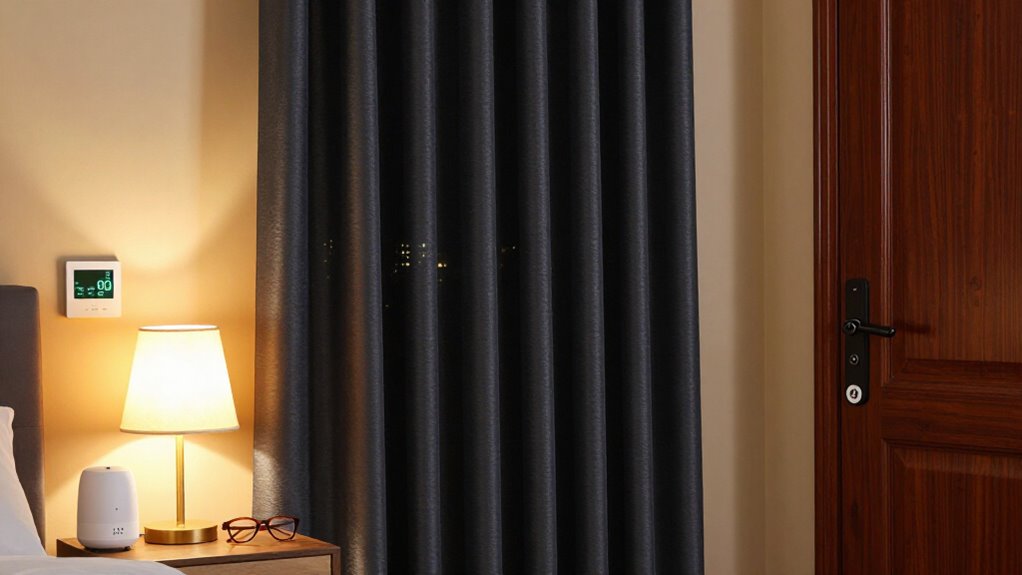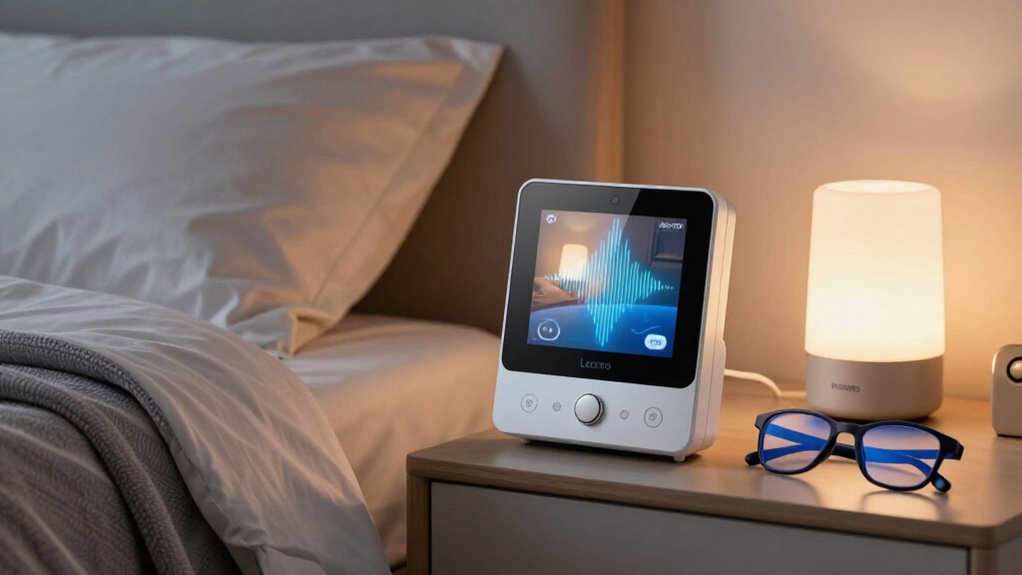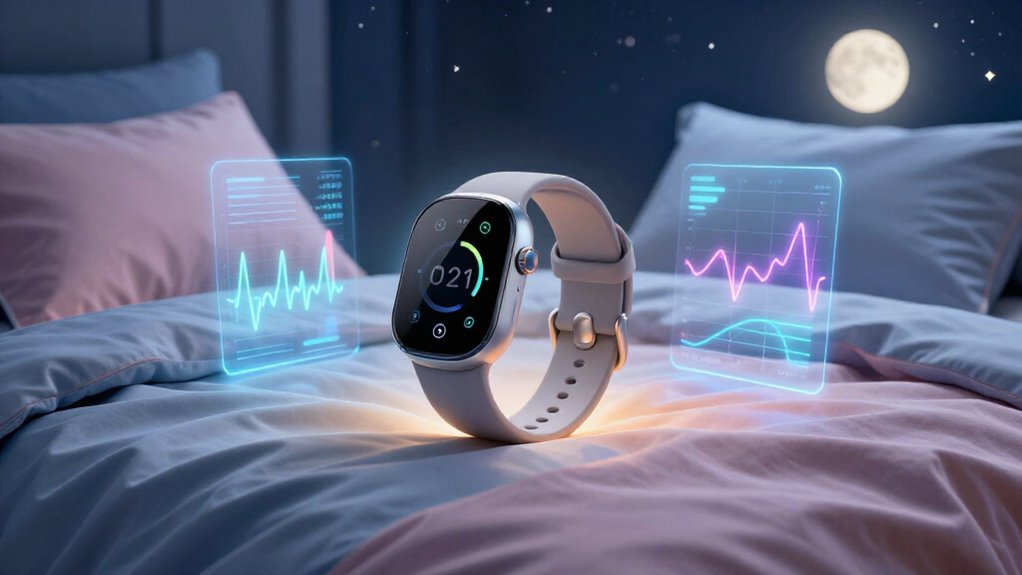
Day 30 of Sleepmaxxing hit me hard—after weeks tracking Oura, Whoop, and Fitbit data, I dove deep, cross-checking my HRV dips and wonky REM against PSG gold standards. Remember that groggy fog after poor nights? We’re crushing it at Corala Blanket, pioneering weighted bliss for parasympathetic vibes, inspired by Andrew Huberman’s light hacks and Matthew Walker’s sleep science. Optimized my sunset dims and somatic wind-downs—2026’s all about this elite edge. Who’s ready to max your Z’s?
Quick Takeaways
- Analyze sleep data from Oura, Whoop, or Fitbit devices to identify patterns and behaviors that can optimize sleep phases and cognitive performance.
- Utilize high-fidelity polysomnography (PSG) data to calibrate sleep environment factors like humidity and validate the efficacy of the sleepmaxxing protocol.
- Evaluate the correlation between sleep data and cognitive performance to make adjustments and identify opportunities for sleep improvement.
- Assess the impact of light exposure, circadian rhythms, and somatic practices on sleep quality and melatonin production.
- Implement a comprehensive 30-day sleepmaxxing protocol that combines light exposure, bedtime routines, and environmental factors to enhance overall sleep quality.
Measuring Sleep Performance With Biometric Tracking
Effective sleep tracking requires an arsenal of biometric tools to quantify the granular details of our nightly rest.
Wearables like Oura, Whoop, and Fitbit monitor heart rate variability, respiratory rate, and movement to analyze light, REM, and deep sleep stages.
Integrating clinical polysomnography data offers high-fidelity validation. By correlating this data with cognitive performance, we can optimize the balance of these sleep phases for maximal recovery.
Integrating polysomnography enables high-fidelity sleep data validation to optimize sleep phases for maximal cognitive performance recovery.
The Sleepmaxxing Protocol leverages this biometric feedback to align our circadian rhythms, boost adenosine clearance, and activate the parasympathetic nervous system—transforming sleep into a controllable performance variable.
Aligning Circadian Rhythms Through Optimized Light Exposure
Our circadian rhythms govern the body’s natural sleep-wake cycle, orchestrated by the Suprachiasmatic Nucleus (SCN)—a tiny region of the hypothalamus.
To align this internal clock, the Sleepmaxxing Protocol prescribes:
- Bright light exposure upon waking to suppress melatonin and activate the SCN
- Gradual dimming of lights in the evening to facilitate natural melatonin rise
- Avoidance of blue light devices 2-3 hours before bedtime
- Use of red/amber lighting at night to minimize circadian disruption
- Sound therapy machines can further improve sleep quality by providing consistent auditory cues that reinforce circadian stability
Properly synchronized circadian rhythms are essential for maximizing deep sleep quality, as the timing of light exposure directly influences sleep architecture and restorative slow-wave sleep phases.
Identifying Sleep Stage Anomalies With Polysomnography
By leveraging cutting-edge polysomnography (PSG) technology, we can now dive deep into the complex dance of our sleep stages. This clinical-grade sleep assessment reveals granular observations, allowing us to pinpoint anomalies like extended light sleep or fragmented REM. Understanding the Circadian Entrainment principles that govern our sleep-wake cycles helps contextualize why these stage disruptions occur and how to correct them.
Through holistic PSG data, we can optimize the Sleepmaxxing Protocol by adjusting light exposure, temperature, and other environmental factors to orchestrate a symphony of restorative deep sleep and rejuvenating REM.
With access to this empirical feedback loop, we move beyond subjective “feeling” to engineer a personalized sleep architecture for peak cognitive recovery.
PSG metrics also enable precise calibration of humidity control, an often overlooked variable that directly impacts sleep environment quality and next-day restorative outcomes.
Enhancing Parasympathetic Activation With Heart Rate Variability
Heart Rate Variability (HRV) stands as a robust indicator of our autonomic balance, revealing the complex interplay between our sympathetic and parasympathetic nervous systems.
Heart Rate Variability (HRV) is a robust metric of autonomic balance, reflecting the interplay between sympathetic and parasympathetic systems.
By harnessing this physiological metric, the Sleepmaxxing Protocol offers powerful tools to enhance parasympathetic activation:
- Resonant Breathing exercises that synchronize respiration with the natural oscillations of the vagus nerve
- Vagus Nerve Stimulation devices delivering gentle electrical impulses to modulate the parasympathetic branch
- Biofeedback training to consciously control heart rate and increase HRV through mindfulness and relaxation techniques
- Specialized supplements like omega-3s and probiotics that support vagal tone
About the 30 Day Sleepmaxxing Protocol

A thorough 30-day Sleepmaxxing regimen empowers individuals to tailor their sleep architecture for peak cognitive performance. This biohacking framework utilizes wearable data to meticulously optimize light, REM, and deep sleep cycles.
By aligning circadian rhythms through precise light exposure and maintaining a thermo-neutral environment, practitioners can enhance melatonin production and adenosine clearance. Complementary techniques like mouth taping and acoustic layering further promote nasal breathing and reduce environmental disruptions.
- Day 1: How to Blackout Your Bedroom for Sleepmaxxing Protocol
- Day 2: Optimizing Bedroom Temperature for the Sleepmaxxing Protocol
- Day 3: Using Weighted Blankets in the Sleepmaxxing Protocol
- Day 4: Brown Noise for Neurodivergent Sleepmaxxing Protocol
- Day 5: Best Bed Placement for the Sleepmaxxing Protocol
- Day 6: Choosing Ergonomic Pillows for the Sleepmaxxing Protocol
- Day 7: Improving Air Quality for the Sleepmaxxing Protocol
- Day 8: Morning Sunlight Habits for the Sleepmaxxing Protocol
- Day 9: Setting Caffeine Cutoffs for the Sleepmaxxing Protocol
- Day 10: Following Wolf Chronotype in the Sleepmaxxing Protocol
- Day 11: Using Blue Light Blockers for Sleepmaxxing Protocol
- Day 12: Timing Your Last Meal for Sleepmaxxing Protocol
- Day 13: Cutting Alcohol to Improve the Sleepmaxxing Protocol
- Day 14: Maintaining Sleep Consistency in the Sleepmaxxing Protocol
- Day 15: Using 30-Second Hugs for the Sleepmaxxing Protocol
- Day 16: Butterfly Hug Techniques for the Sleepmaxxing Protocol
- Day 17: Vagus Nerve Stimulation for the Sleepmaxxing Protocol
- Day 18: Bedtime Brain Dumps for the Sleepmaxxing Protocol
- Day 19: Creating Cozy Sleep Spaces for Sleepmaxxing Protocol
- Day 20: Box Breathing Guide for the Sleepmaxxing Protocol
- Day 21: Managing CPTSD Hypervigilance in the Sleepmaxxing Protocol
- Day 22: Mouth Taping Safely for the Sleepmaxxing Protocol
- Day 23: Taking Magnesium Glycinate for the Sleepmaxxing Protocol
- Day 24: Using Zero Gravity Positions for Sleepmaxxing Protocol
- Day 25: Digital Dopamine Detox for the Sleepmaxxing Protocol
- Day 26: Reducing Sleep Latency in the Sleepmaxxing Protocol
- Day 27: Tracking HRV Recovery for the Sleepmaxxing Protocol
- Day 28: Wearing Knee Braces for the Sleepmaxxing Protocol
- Day 29: Body Grounding Techniques for the Sleepmaxxing Protocol
- Day 30: Analyzing Sleep Data for the Sleepmaxxing Protocol
The protocol also incorporates somatic safety measures for neuro-inclusive rest, addressing hypervigilance through proprioceptive input and parasympathetic activation. Ultimately, this data-driven approach transforms the bedroom into a recovery laboratory, validating improved sleep quality through clinical-grade polysomnography metrics.
Wearable Devices for Sleep Monitoring
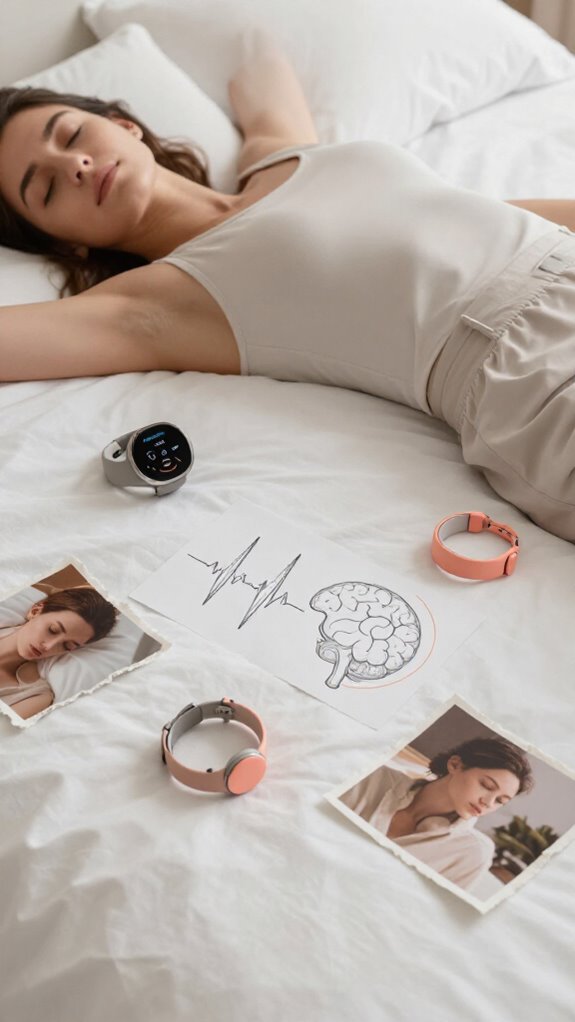
Wearable devices have emerged as invaluable tools for thorough sleep monitoring. These sensor-rich gadgets leverage advanced technologies like:
Sensor-rich wearables leverage technologies like PPG, accelerometers, and fNIRS for thorough sleep monitoring.
- Photoplethysmography (PPG) to track heart rate variability for autonomic nervous system understanding.
- Accelerometers and motion sensors to distinguish wake from sleep stages.
- Functional near-infrared spectroscopy (fNIRS) for brain activity and blood flow monitoring.
- Sonar biomotion detection to capture respiratory effort without contact.
Combining these multisensory approaches, new-generation wearables like Oura Ring 3, WHOOP 5.0, and Bía Smart Sleep Mask deliver increasingly accurate sleep stage classification. Luxurious high-thread-count sheets can complement these monitoring devices by enhancing sleep comfort and potentially improving sleep quality metrics captured overnight.
For those seeking smartwatch picks specifically designed for better sleep and more restful nights, several models now prioritize sleep tracking as a core feature alongside comprehensive health monitoring.
While not a substitute for polysomnography, these personalized interpretations empower users to optimize their sleep through the Sleepmaxxing Protocol.
Circadian Rhythm Entrainment Protocols
By first understanding the foundational concepts of circadian entrainment, we can then explore the various light-based protocols designed to synchronize our internal clocks.
Dim light exposure at 25 lux can act as a zeitgeber, while room light at 100 lux provides moderate entrainment strength. For auditory entrainment, a brown noise machine can be incorporated into evening routines to reduce sleep latency and enhance sleep architecture.
Modulated light exposure leverages strategic bright light pulses to enhance circadian amplitude.
Timed light therapy combined with physical activity further boosts daytime activity and circadian alignment.
Robust circadian synchronization requires a multi-modal approach, integrating cyclic nutrition, temperature control, and pharmacological support alongside precise light exposure protocols.
Somatic bedtime practices represent an additional modality that can enhance sleep quality by reducing physiological arousal before sleep, complementing daytime circadian entrainment efforts.
FAQ
How Do I Optimize Sleep for Lucid Dreaming?
To optimize sleep for lucid dreaming, focus on increasing your REM sleep through earlier bedtimes, daytime naps, and mild supplements like melatonin. Stabilizing your sleep-wake cycle is key.
Can the Protocol Help With Sleep Apnea?
The Sleepmaxxing Protocol can absolutely help with sleep apnea. It addresses the underlying physiological factors like nasal breathing, temperature regulation, and parasympathetic activation to improve airflow and reduce apnea events.
Is the Protocol Compatible With Shift Work Schedules?
While the Sleepmaxxing Protocol wasn’t initially designed for shift workers, a case study shows it can be tailored to their needs. By syncing light exposure and temperature, it boosts HRV and restores circadian rhythms even on erratic schedules.
How Do I Adjust the Protocol for Jet Lag Recovery?
To adjust the Sleepmaxxing Protocol for jet lag, I’d leverage its Circadian Rhythm principles. Shift light exposure, melatonin, and temperature to rapidly realign the Suprachiasmatic Nucleus and accelerate adaptation to the new time zone.
What Are the Long-Term Health Benefits of the Protocol?
The long-term health benefits of this protocol? Oh, just a little thing called “not being a dysfunctional zombie”—y’know, optimized cognition, stellar immunity, and zero risk of early death. Nothing major.
References
- https://pmc.ncbi.nlm.nih.gov/articles/PMC10654909/
- https://pmc.ncbi.nlm.nih.gov/articles/PMC6579636/
- https://www.sleepfoundation.org/best-sleep-trackers
- https://www.bannerhealth.com/healthcareblog/advise-me/are-wearables-reliable-for-tracking-sleep-what-you-need-to-know
- https://www.youtube.com/watch?v=MHj9R9u5a8Y
- https://aasm.org/comparing-sleep-features-of-popular-smartwatches/
- https://www.pnas.org/doi/10.1073/pnas.0702835104
- https://royalsocietypublishing.org/doi/10.1098/rsif.2015.0282
- https://pmc.ncbi.nlm.nih.gov/articles/PMC10316098/
- https://www.frontiersin.org/journals/physiology/articles/10.3389/fphys.2020.00272/full