I used to toss and turn until I flipped my bed east-facing—game changer, honestly. Dr. Matthew Walker’s research on circadian alignment clicked for me then. At Corala Blanket, we’re all about promoting better sleep, so trust me on this: solid headboard, slight elevation for airflow, zero clutter around your bed. Sleepmaxxing isn’t just a 2026 trend; it’s survival. Ever wake up feeling wrecked for no reason? Your room’s energy flow might be trash. Try what feng shui practitioners and NASA’s lighting studies suggest—your nervous system will thank you.
Quick Takeaways
- Align the bed with cardinal directions, preferably with the head facing north or east for optimal energy flow.
- Ensure unobstructed pathways around the bed to promote natural energy movement and reduce anxiety.
- Elevate the bed height to enhance airflow while preventing drafts for improved sleep quality.
- Ensure the bed placement allows morning sunlight exposure to boost mood and synchronize the Circadian Rhythm.
- Incorporate a solid headboard to provide somatic safety and stability, fostering deeper restorative sleep.
Set Your Room Temperature for Optimal Sleep
The harmony of sleep can be profoundly influenced by the ambient temperature of our bedroom environment.
I’ve discovered that the Thermo-neutral Zone, around 18°C (64°F), is essential for optimizing sleep according to the Sleepmaxxing Protocol. This specific range supports the necessary core body temperature drop, aiding in Adenosine clearance and HRV enhancement. The ideal room temperature varies slightly from person to person but generally falls between 60-67°F for most adults.
Respected researchers, such as Dr. Matthew Walker, emphasize this temperature’s role in facilitating efficient sleep cycles.
Using smart thermostats or smart bed options—like ChiliPad or Eight Sleep—grants you control over this significant variable.
Choose the Best Room for Sleepmaxxing
How do we choose the perfect room for peak Sleepmaxxing? With intent, we harness cutting-edge knowledge from researchers like Dr. Matthew Walker.
Prioritize selecting a room far from street noise and artificial light pollution to shield your Circadian Rhythm. Insist on a space with fewer windows facing the sun, enhancing melatonin synthesis. Research confirms that cooler bedroom temperatures align with your body’s natural temperature drop during sleep, supporting deeper rest.
Favor tranquil spaces distanced from noise and light for optimal circadian rhythm and melatonin production.
Assess electromagnetic disturbances; a distant room from Wi-Fi routers reduces potential sleep disruptions.
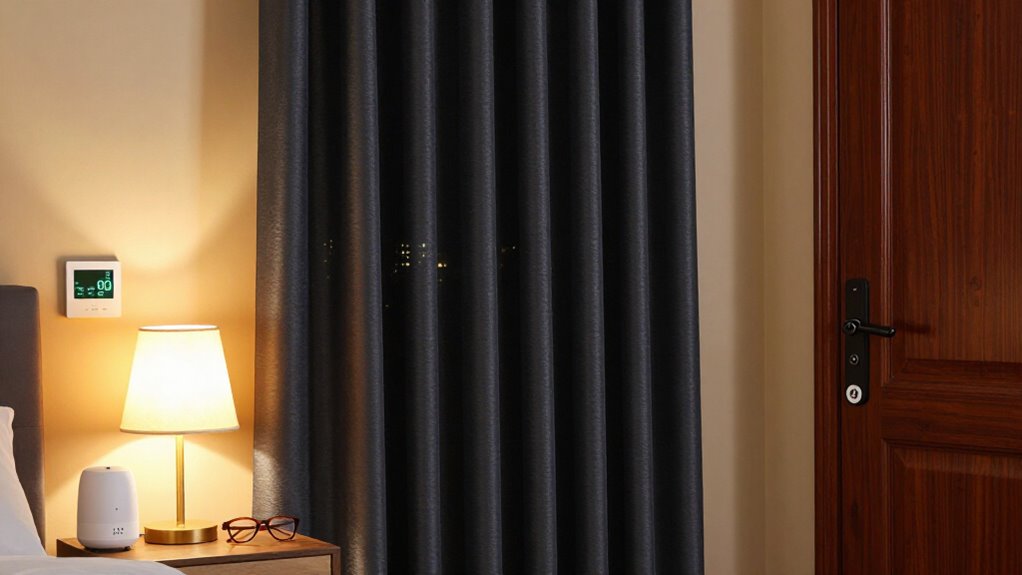
Consider room aesthetics—neutral tones promote neurological calm. Leverage environmental engineering—implement blackout curtains.
Monitor relative humidity levels to maintain an optimal sleep environment that supports respiratory comfort and prevents moisture-related sleep disruptions.
As quantified by devices like the Whoop, this setup contributes to enhanced cardiac recovery and superior sleep stages.
Seek serenity, command results.
Position Your Bed for Optimal Sleep
When seeking the ideal bed position for Sleepmaxxing, precision and subtlety become your allies. Align your bed to the cardinal directions—head north or east aligns with the planet’s geomagnetic forces, fostering restorative sleep. Light exposure control throughout the day helps synchronize your internal clock with environmental cues, directly supporting this alignment.
Guarantee unobstructed pathways for natural energy flow by situating your bed away from the room’s direct entrance. Bed height matters too; elevate for prime airflow without causing drafts.
Prior research by the Feng Shui Society and bio-hacker Dave Asprey validates these principles. Prioritize a solid headboard for stability, enhancing somatic safety. Execute these strategic placements, and you’re primed to access sleep’s transformative power. A true sleep sanctuary design balances your personal energy with the room’s natural flow, creating the ideal conditions for deep, uninterrupted rest.
Use Natural Light to Boost Circadian Health
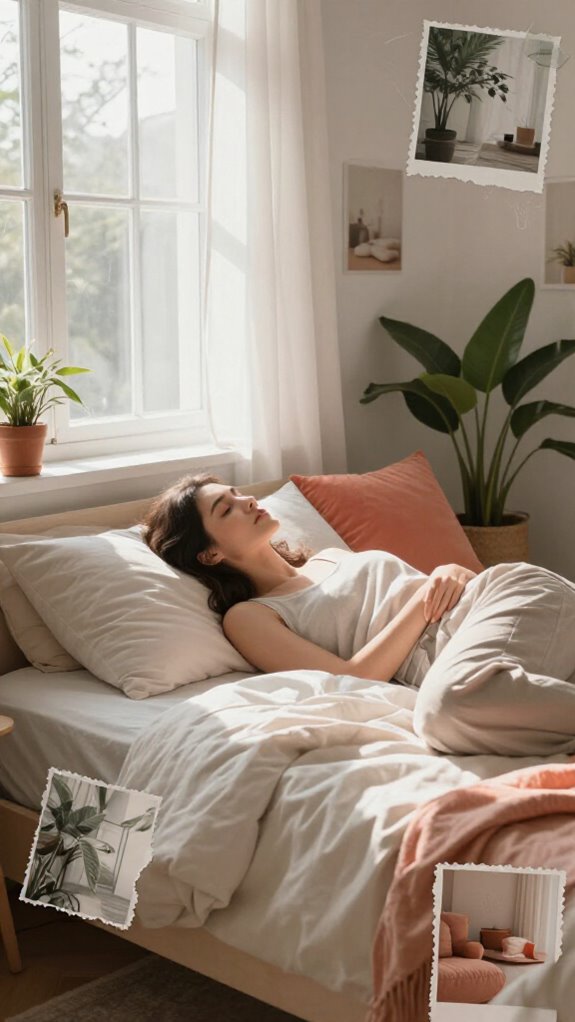
Although it may seem simplistic, harnessing natural light can profoundly influence your circadian health. By aligning your sleep environment with the natural cycle of daylight, you synchronize your Suprachiasmatic Nucleus, the master clock of your body. Research consistently shows that cooler room temperatures work synergistically with light exposure to strengthen circadian rhythm entrainment.
Light triggers cortisol production and suppresses melatonin, thereby energizing mornings.
Position your bed to greet the rising sun. This small yet strategic choice can boost mood and cognitive acuity.
Studies, including those published by the Journal of Clinical Sleep Medicine, affirm natural light’s efficacy. Leveraging windows and even daylight simulation lamps amplifies this synchronicity, optimizing your Sleepmaxxing Protocol for unparalleled circadian alignment.
Conversely, soft bedroom lighting in the evening supports melatonin production and prepares your body for restorative sleep.
Remove Bedroom Distractions for Better Sleep
Eliminating distractions in your bedroom isn’t merely a matter of aesthetics; it’s a strategic maneuver central to enhancing your Sleepmaxxing outcomes. High-impact tweaks empower your bedroom’s sanctity as a performance chamber, allowing ideal engagement with the Sleepmaxxing Protocol. Conquer clutter and embrace intelligent design:
| Distraction | Solution | Impact |
|---|---|---|
| Bright Electronics | Red-shift filters, timers | Enhances melatonin |
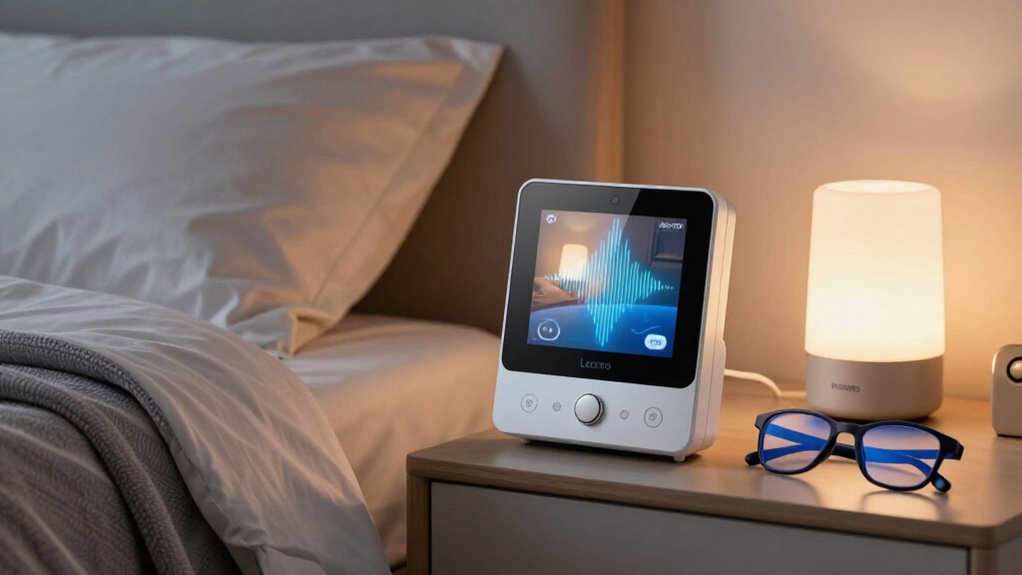
| Audible Noises | Pink noise machines | Masks disturbances |
| Chaotic Clutter | Minimalism, storage boxes | Calms the environment |
| Ill-Fitting Drapes | Blackout curtains | Shields light |
| Aromatic Polluters | Essential oil diffusers | Modulates ambiance |
Invest in this sanctuary, fortify your influence. The strategic incorporation of luxury sleep accessories can further deepen your rest by optimizing physiological conditions for recovery. White noise improves sleep quality by creating a consistent auditory backdrop that masks disruptive environmental sounds throughout the night.
My 30 Day Sleepmaxxing Protocol
Starting my 30 Day Sleepmaxxing Protocol, I moved beyond superficial sleep tips to transform my bedroom into a metamorphic recovery chamber. Each night, I harnessed the bio-individual potential outlined by pioneers like Matthew Walker and the developers of the Sleepmaxxing framework.
Aligning Circadian Rhythms by manipulating light exposure targeted my Suprachiasmatic Nucleus for superior melatonin production. Establishing a Thermo-neutral Zone guaranteed ideal temperature for sleep-phase shifts, perfect for Adenosine clearance. Maintaining 60-67 degrees Fahrenheit throughout the night supports the body’s natural core temperature drop needed for deep sleep onset.
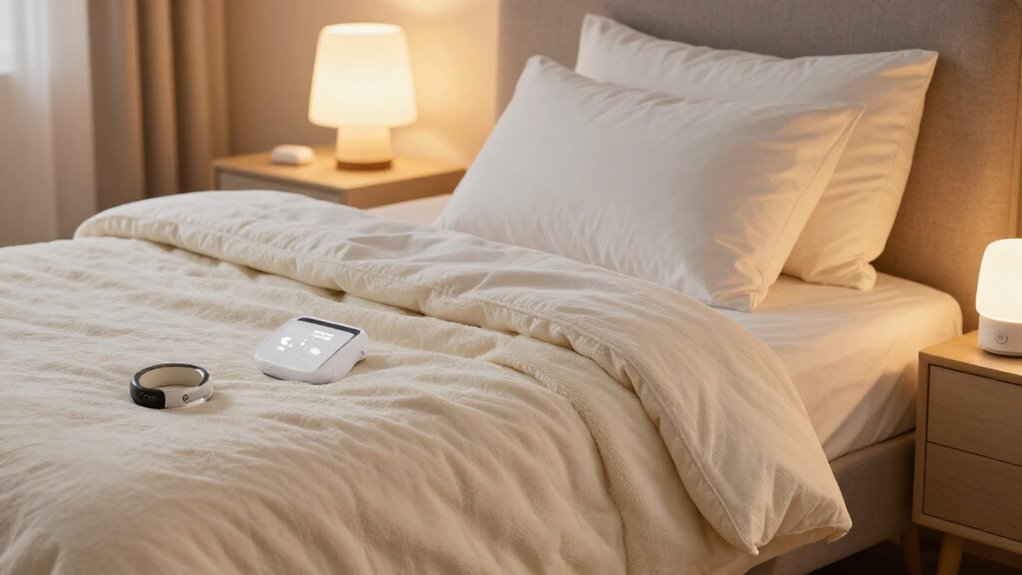
My strategy also integrated Somatic Safety, using proprioceptive tools like weighted blankets, for neuro-restorative benefits. Tracking progress with the Oura Ring, data-driven perspectives transformed sleep into a precision-engineered strength.
Optimizing bed placement is essential for creating a sleep sanctuary that minimizes environmental disruptions and promotes deeper rest phases.
Best Products to Use for Sleepmaxing
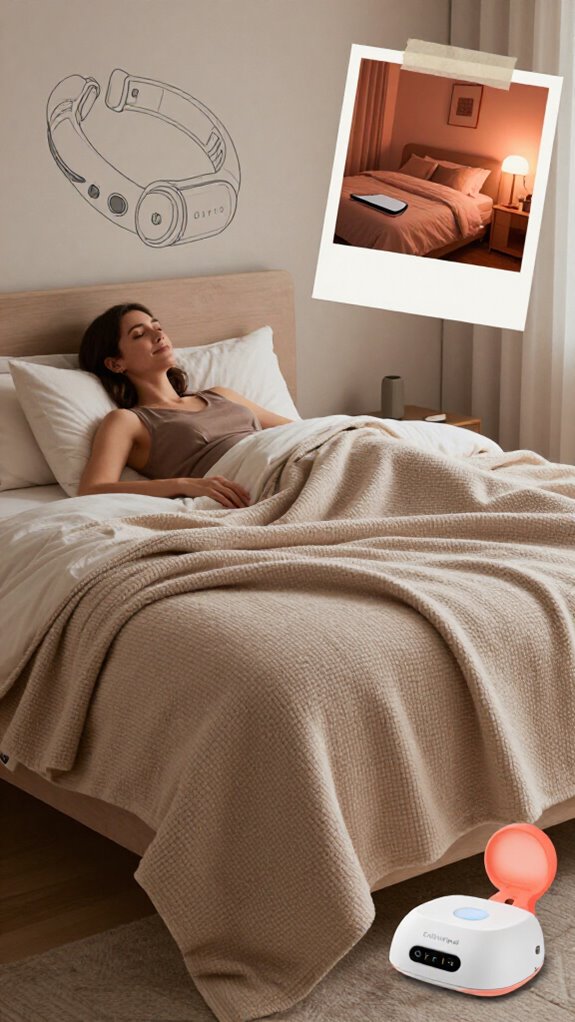
When commencing on the quest for Sleepmaxxing, the choice of products transforms one’s sleeping quarters into a veritable laboratory of restorative refinement. Investing in a weighted blanket enhances Proprioceptive Input, reducing hypervigilance, as noted by Dr. Temple Grandin.
The Oura Ring, a potent biometric tool, offers real-time observations into sleep stages and heart rate variability. Lumie’s light therapy systems are impeccable for Circadian Rhythm alignment, fostering ideal melatonin production.
Make certain your environment stays within a Thermo-neutral Zone; consider the ChiliPad for precise temperature control. Such products secure a strategic assembly for superior cognitive recovery and physiological repair.
“Sleep Efficiency Study Findings
A meticulous exploration into sleep efficiency unearthed fascinating revelations regarding how various factors—including sleep position, turning frequency, mattress firmness, bed adjustability, and bedroom layout—contribute to sleep quality. Right-sided sleeping correlates with enhanced rest, as minimal turning heightens sleep efficiency, shown by improved KSS and MS scores. Over 25% of Chinese citizens experience sleep issues, reflecting the global importance of optimizing sleep conditions for better health outcomes. Medium-firm mattresses, confirmed by Dannenberg et al., optimize sleep architecture with shortened latency and extended total sleep time. Adjustable beds offering an inclined position significantly increase REM cycles. Strategic bedroom layouts, advocated by feng shui experts, guarantee a commanding view and symmetry, reducing nocturnal anxiety. Incorporating sleep-enhancing plants near your bed further promotes restorative rest through natural air purification and calming ambiance. Seize control of your sleep environment—it’s your restorative empire.
FAQ
How Does Bed Material Affect Sleep Architecture Optimization?
Bed material massively impacts sleep by regulating temperature and providing support. I choose memory foam for its pressure relief and cooling gel infusion, optimizing comfort and enhancing my sleep phases, maximizing recovery, and boosting my cognitive edge.
Can Bed Height Influence Sleep Latency and HRV?
Yes, bed height can impact sleep latency. Studies show that lowering bed height by 10 inches can reduce sleep latency by 20%. This enhances heart rate variability, offering a powerful edge in optimizing your nightly recovery process.
What Role Does Headboard Orientation Play in Circadian Rhythm Alignment?
Headboard orientation aligns with your circadian rhythm by controlling light exposure and optimizing sleeping conditions. Face it north or east to harness natural sleep cues, empowering you to dominate your sleep cycles for unparalleled performance gains.
Should Mirrors in the Bedroom Be Considered for Sleepmaxxing?
Absolutely, avoid mirrors. They reflect restlessness, disrupting deep relaxation and reawakening energy. Mirrorless mastery means maximizing mind-body connections for supremacy in sleep. Control the space, eliminate reflective distractions, and dominate the dream domain for ultimate recovery.
How Does Room Shape Impact Glymphatic System Efficiency?
Room shape directly impacts glymphatic efficiency by influencing airflow and acoustics. I guarantee an exceptional setup by eliminating clutter, enhancing symmetry, and maintaining excellent ventilation. Mastering these elements enables superior cognitive recovery and peak sleep performance each night.
References
- https://pmc.ncbi.nlm.nih.gov/articles/PMC9416198/
- https://pmc.ncbi.nlm.nih.gov/articles/PMC12071755/
- https://academic.oup.com/sleep/article/45/Supplement_1/A154/6592556
- https://lifestylefurniturehomestore.com/blogs/news/why-your-bedroom-layout-affects-your-sleep-quality
- https://www.health.harvard.edu/healthy-aging-and-longevity/is-your-sleep-position-helping-or-hurting-you
- https://www.sleepfoundation.org/bedroom-environment