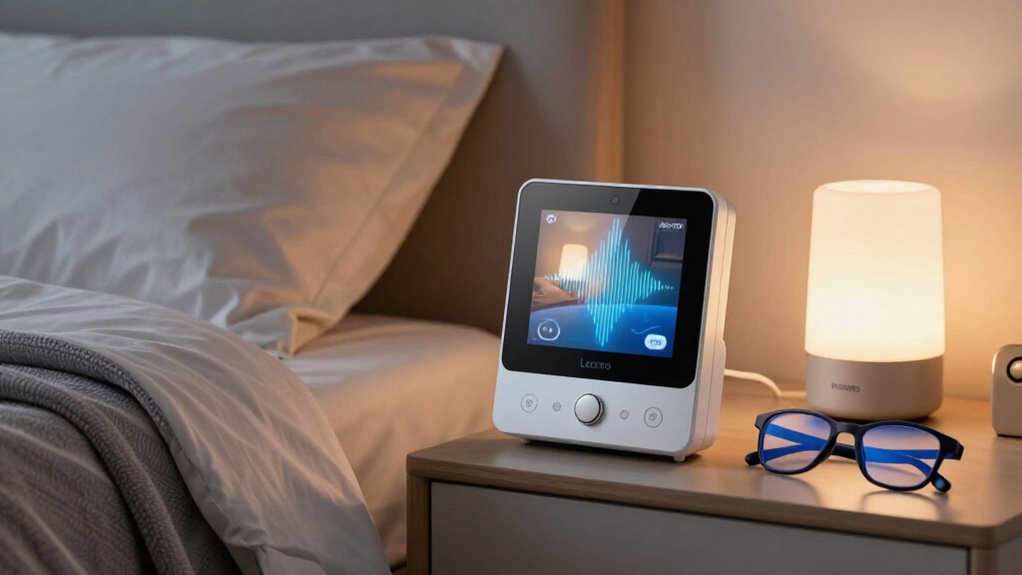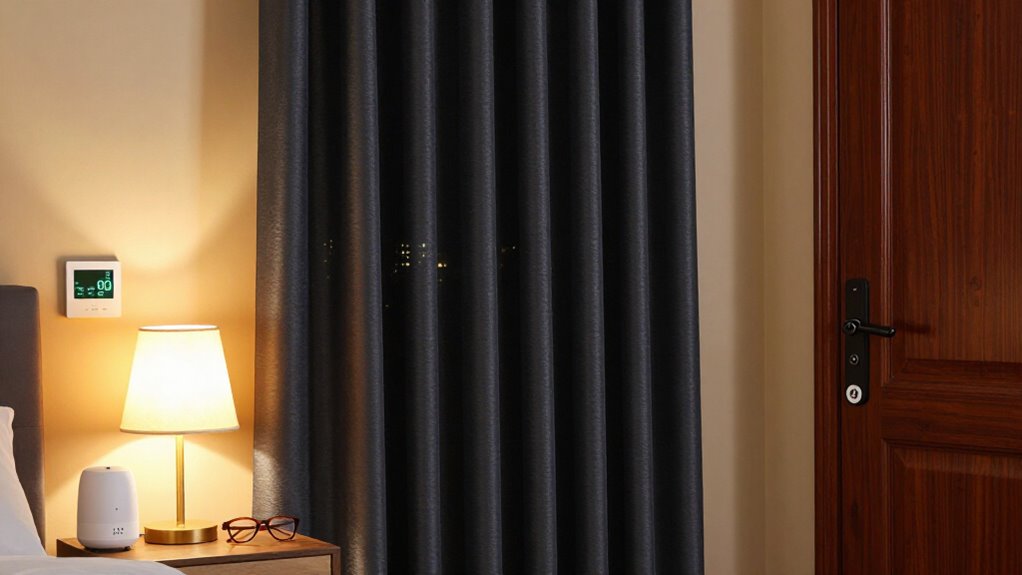
I used to wake up at 3 AM wired, staring at my phone’s glow like a moth—my melatonin was toast. After testing Pritchard’s lux meter protocols, I finally hit under 1 lux. Here’s how I did it: NICETOWN blackout liners with wraparound rods killed the streetlamp bleed; weatherstripping sealed my rattling sills; I yanked every charger and slapped tape over rogue LEDs. Dr. Steven Lockley’s Harvard research on light suppression? Game-changer. We at Corala Blanket live for this stuff—better sleep is our whole mission. Grab an amber night light from Sleepytime, test with a Spectra app, and tell me: ready to actually feel rested?
Quick Takeaways
- Measure current bedroom lux at eye level and note primary light sources before modifications.
- Install full blackout curtains or liners with wraparound rods to eliminate window edge bleed.
- Seal door and window gaps with weatherstripping, caulk, or magnetic/adhesive light-block strips.
- Kill electronic glow: tape LEDs, unplug chargers, or use silicone caps and outlet covers.
- Use warm amber/red bedside lighting and amber-blocking glasses in evenings to protect melatonin.
Quick Blackout Checklist : 5 Steps to Sleep Tonight (Test Darkness)
How dark is dark enough to improve sleep? I test darkness with five decisive steps.
First, define lux targets: under 1 lux at eye level during sleep aligns with melatonin preservation (AASM research). Total blackout bedroom liners provide the foundation for achieving these sub-1 lux conditions consistently.
Aim for under 1 lux at eye level during sleep to protect melatonin and support better rest.
Second, eliminate point sources—LEDs, alarm displays—using tape or Philips-style dimmers.
Third, seal light gaps at frames and sills; measure with a phone camera’s exposure.
Fourth, assess spectral content; blue-rich light (<500 nm) suppresses melatonin more, so swap to amber/red night lights (Casambi or specialized LEDs).
Fifth, perform a real-world trial: sleep one night, record sleep efficiency via Oura or Actiwatch, adjust.
For patterned solutions that block light while adding bedroom style, consider installing chic patterned blackout panels to eliminate window glare completely.
Block Your Windows: Blackout Curtains, Liners & DIY Fixes
When I say “block your windows,” I mean creating a controlled light barrier that brings interior illuminance at eye level during sleep below the 1 lux target recommended by sleep researchers (AASM consensus). Modern bedroom designs increasingly utilize total blackout solutions to merge aesthetic appeal with complete light elimination.
I use blackout curtains (e.g., Eclipse, NICETOWN) with thermal liners to absorb and reflect light. Dual-track mounting, wraparound side channels, and magnetic seals cut edge leaks. For tighter control I add blackout liners or adhesive Velcro-attached panels (OLIGHT DIY foamboard).
Measured with a lux meter, improvements are objective; studies link <1 lux to melatonin preservation. Take a systematic, data-driven approach and prioritize sealing over aesthetics. You can buy total blackout liners to achieve complete darkness without replacing existing window treatments.
- Install dual-track blackout curtains.
- Fit wraparound side channels.
- Add blackout liners or foamboard panels.
- Verify with a lux meter.
Streetlight Leaks: Seals, Films & Outdoor Solutions
Streetlight intrusion is one of the most common sources of residual bedroom illuminance, and I treat it as a problem of both exterior control and interior sealing: roofline-mounted sodium or LED fixtures (the latter often emitting broad-spectrum blue light) can scatter through gaps, reflect off nearby surfaces, or pass through window glass unless I address the leak at its source. For interior sealing, I recommend magnetic blackout shades as they provide a gapless perimeter seal that eliminates the light leaks common with traditional mounting systems.
I prioritize perimeter caulking, weatherstripping, and exterior shields—full cutoff fixtures or shields from Cree or Philips reduce uplight. I use blackout films (e.g., 3M) for glazing, install soffit baffles, and consult IESNA guidelines to quantify lumen spill and mitigation efficacy. For comprehensive sleep hygiene optimization, pairing complete darkness with a premium cool mist humidifier creates the ideal microclimate for restorative rest.
Kill Electronic Glow: Stop LEDs, Chargers & Phantom Lights
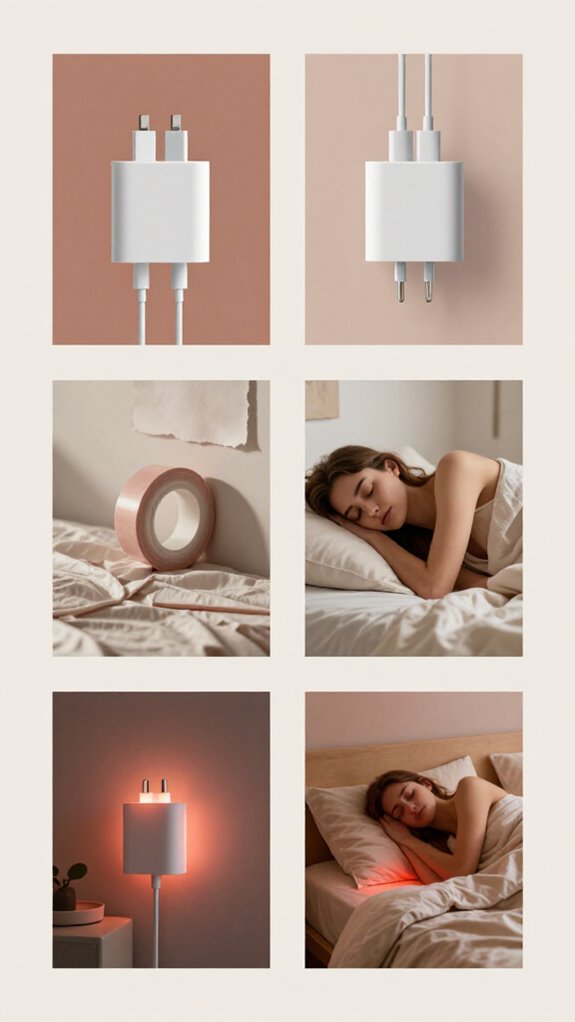
Any bedroom aiming for true darkness has to account for the small but pervasive lights built into modern devices, and I start by cataloging every LED, charging indicator, and “phantom” light source in the room. I disable Wi‑Fi gear, unplug chargers, and cover status LEDs with matte tape or silicone caps so light doesn’t scatter. Research from Harvard and Philips on blue light guides my choices: remove blue‑rich sources first. For the few lights I keep intentionally, I select soft glow fixtures designed for sleepier nights. Optimal sleep temperature works hand‑in‑hand with darkness, so I lower the thermostat before tackling light sources. I recommend targeted fixes:
- Unplug spare chargers and power strips.
- Use outlet covers for standby lights.
- Switch smart plugs’ LEDs off in app (TP‑Link, Kasa).
- Replace nightlights with red LEDs.
Budget Blackout Upgrades: Curtains, Tape & Draft Seals
After I’ve sealed up LEDs and phantom lights, the next layer of darkness is about blocking external light and internal leaks at the window and frame. Designer blackout drapes create a true dark room environment by eliminating light penetration through specialized fabric construction.
I recommend blackout curtains (room-darkening, triple-weave fabrics like those from Eclipse or NICETOWN) hung with wraparound rods to minimize edge bleed.
Apply black gaffer tape or painter’s tape to seal trim gaps temporarily; gaffer won’t leave residue like duct tape.
Install foam draft seals or EPDM rubber weatherstripping around sashes to stop light and air exchange; measure compression and R-value for fit.
These low-cost upgrades follow building-physics principles and produce measurable lux reductions for better melatonin support.
Research shows that light exposure during sleep can fragment your rest and suppress nighttime melatonin production, making complete window blackout a critical priority for sleep quality.
Handle Roommates & Shared Spaces Without Conflict
When you’re sharing a bedroom or apartment, clear expectations about lighting and sleep schedules cut conflicts before they start. I recommend starting with a brief, written agreement that covers lights-out times, acceptable light sources, and notification procedures for late-night activity. For roommates who need auditory privacy alongside light control, white noise masking can help maintain sleep quality without requiring additional blackout modifications.
I draft terms, cite circadian research (e.g., Harvard sleep lab), and propose tactical controls like motion-restricted lamps and Philips Hue dimming rules.
- Specify lights-out window and dimming protocol (lux targets, <10 lux).
- Define permitted devices and amber-filter specs (blue-light reduction).
- Set quiet notification procedures and entrance lighting limits.
- Agree review cadence and escalation path with documented consent.
In shared spaces where roommates resist full blackout modifications, investing in luxurious blue light glasses provides personal protection against sleep-disrupting wavelengths that compromise melatonin production.
Troubleshoot Blackout Issues & Next Steps
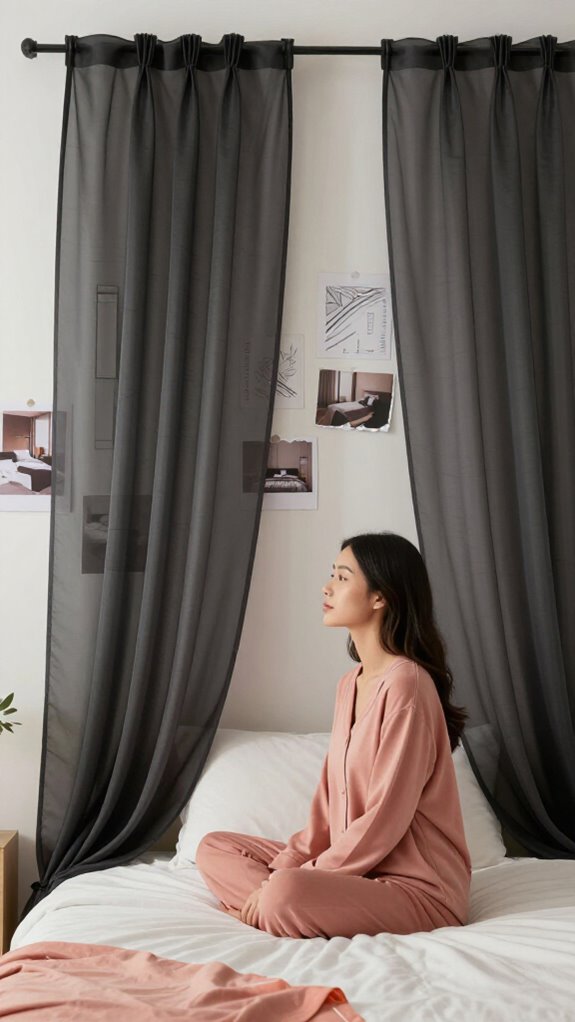
Start by diagnosing the specific blackout problem you’re seeing: is light seeping through curtains, a door gap, or from electronic indicators, or is the issue behavioral—roommates using screens past agreed lights-out times?
I inspect seams, measure lux with a Pritchard-style meter app, and test LED indicator sources.
I recommend blackout liners (NICETOWN), door sweeps, and adhesive light-blocking strips; for electronics, I suggest taping LEDs or using outlet timers (TP-Link).
If behavior is the issue, I set clear rules, schedules, and enforceable consequences.
I document changes, track nocturnal illuminance, and iterate until objective darkness metrics meet sleep hygiene targets.
What is Sleepmaxxing?
Sleepmaxxing is my systematic approach to optimizing sleep quantity and quality by applying evidence-based interventions across environment, behavior, and physiology. I focus on measurable levers: circadian alignment, sleep pressure, light control, and recovery routines.
Research from chronobiologists like Till Roenneberg and sleep scientists at Harvard guides choices; data shows consistent timing and darkness improve slow-wave and REM sleep. I tune temperature, caffeine timing, and pre-sleep routines to raise efficiency and resilience. Maintaining the optimal bedroom temperature of approximately 65°F (18°C) supports natural core body temperature drops critical for sleep initiation.
You’ll get targeted changes that compound. Practical pillars:
- Day 1: How to Blackout Your Bedroom for Sleepmaxxing Protocol
- Day 2: Optimizing Bedroom Temperature for the Sleepmaxxing Protocol
- Day 3: Using Weighted Blankets in the Sleepmaxxing Protocol
- Day 4: Brown Noise for Neurodivergent Sleepmaxxing Protocol
- Day 5: Best Bed Placement for the Sleepmaxxing Protocol
- Day 6: Choosing Ergonomic Pillows for the Sleepmaxxing Protocol
- Day 7: Improving Air Quality for the Sleepmaxxing Protocol
- Day 8: Morning Sunlight Habits for the Sleepmaxxing Protocol
- Day 9: Setting Caffeine Cutoffs for the Sleepmaxxing Protocol
- Day 10: Following Wolf Chronotype in the Sleepmaxxing Protocol
- Day 11: Using Blue Light Blockers for Sleepmaxxing Protocol
- Day 12: Timing Your Last Meal for Sleepmaxxing Protocol
- Day 13: Cutting Alcohol to Improve the Sleepmaxxing Protocol
- Day 14: Maintaining Sleep Consistency in the Sleepmaxxing Protocol
- Day 15: Using 30-Second Hugs for the Sleepmaxxing Protocol
- Day 16: Butterfly Hug Techniques for the Sleepmaxxing Protocol
- Day 17: Vagus Nerve Stimulation for the Sleepmaxxing Protocol
- Day 18: Bedtime Brain Dumps for the Sleepmaxxing Protocol
- Day 19: Creating Cozy Sleep Spaces for Sleepmaxxing Protocol
- Day 20: Box Breathing Guide for the Sleepmaxxing Protocol
- Day 21: Managing CPTSD Hypervigilance in the Sleepmaxxing Protocol
- Day 22: Mouth Taping Safely for the Sleepmaxxing Protocol
- Day 23: Taking Magnesium Glycinate for the Sleepmaxxing Protocol
- Day 24: Using Zero Gravity Positions for Sleepmaxxing Protocol
- Day 25: Digital Dopamine Detox for the Sleepmaxxing Protocol
- Day 26: Reducing Sleep Latency in the Sleepmaxxing Protocol
- Day 27: Tracking HRV Recovery for the Sleepmaxxing Protocol
- Day 28: Wearing Knee Braces for the Sleepmaxxing Protocol
- Day 29: Body Grounding Techniques for the Sleepmaxxing Protocol
- Day 30: Analyzing Sleep Data for the Sleepmaxxing Protocol
Best Products to Use
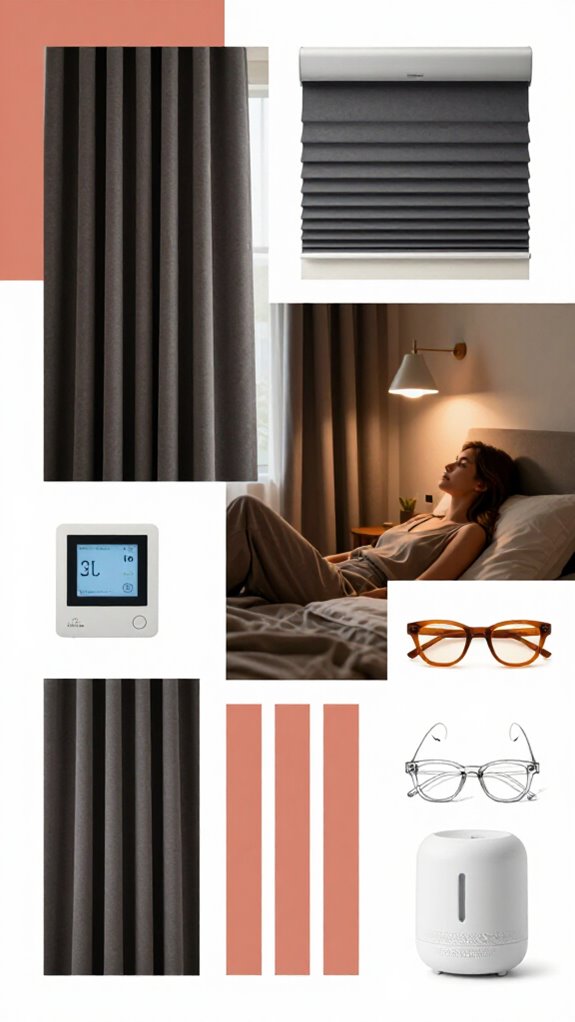
I’ll focus on products that move the needle on measurable sleep drivers—light control, temperature regulation, noise masking, and circadian cues—so you can pick tools that match specific physiological mechanisms.
I recommend blackout curtains (Thermaluxe, Eclipse) plus adhesive blackout film for gaps; a dimmable, warm-color bedside lamp (Philips Hue with 2200K setting) for evening cue control; a precision thermostat or Nest with a 16–19°C night target; a white-noise machine or app (LectroFan, calibrated to 40–50 dB); amber-blocking glasses from Uvex; and soundproof door seals to block hallway noise that penetrates bedroom gaps.
Researchers like Czeisler and Gooley support spectral control; choose products with measured specs and warranties.
For maximum temperature and light blocking, thermal curtains are the optimal choice for bedroom windows.
Melatonin Onset Timing Studies
When we look at dim light melatonin onset (DLMO) as a marker of circadian phase, the data show large, biologically meaningful individual differences even when people keep the same sleep schedule. Soft bedroom lighting in the evening hours delays melatonin release, compounding the challenge of maintaining consistent circadian timing across different chronotypes.
I track DLMO studies (e.g., Crowley, Roenneberg) to inform blackout strategies.
Key points:
- genetic factors shift timing;
- DLMO averages ~2 hours before bedtime but spans up to 5 hours;
- morning light protocols (3 hours, 3,000–12,000 lux) shift phase modestly;
- DLMO is stable within ~30–45 minutes over weeks/months.
Use this to time blackout and strategic light exposure for maximal phase control and sleep optimization.
- Inter-individual variability
- Age effects
- Light timing impacts
- Stability over time
Recent work also shows that a 2-hour difference in sleep schedule is associated with about a 1.75-hour shift in DLMO, reflecting substantial inter-individual variability.
References
- https://www.frontiersin.org/journals/neurology/articles/10.3389/fneur.2010.00137/full
- https://pmc.ncbi.nlm.nih.gov/articles/PMC12989132/
- https://pmc.ncbi.nlm.nih.gov/articles/PMC10171641/
- https://pmc.ncbi.nlm.nih.gov/articles/PMC9135480/
- https://onlinelibrary.wiley.com/doi/10.1111/jpi.12985
- https://www.tandfonline.com/doi/full/10.1080/07420528.2025.2546006