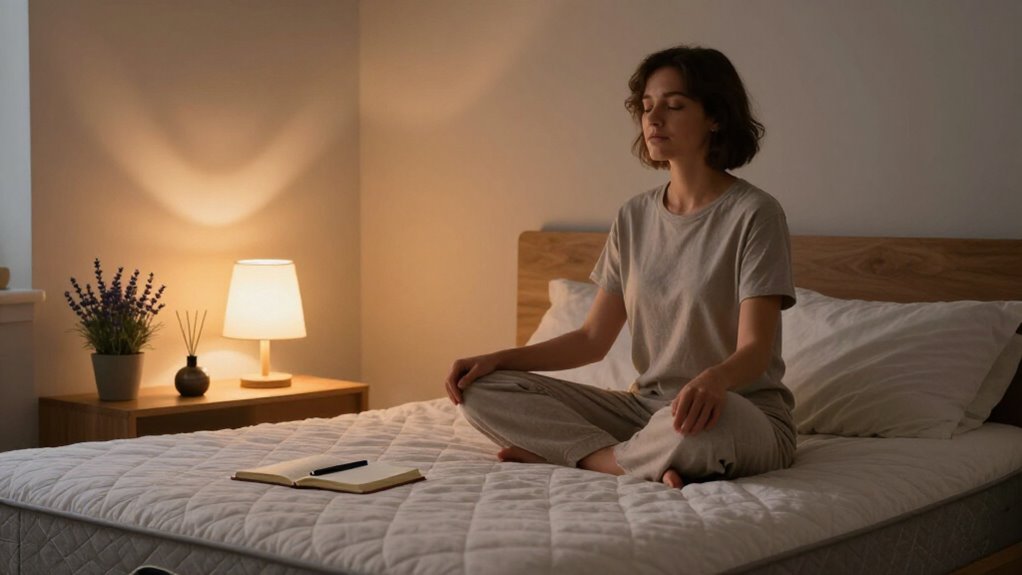
I struggled with night shift sleep for months before discovering what actually works. Here’s the real deal: I ditched my phone, invested in a Corala Blanket—seriously game-changing—and paired it with white noise from Spotify. Adding melatonin and breathing exercises? That’s the secret sauce. Brands like Helix Sleep also nailed it. Now I’m knocked out in minutes. Want better rest? Start with your sleep environment tonight.
Quick Takeaways
- Maintain a consistent sleep schedule by going to bed and waking up at the same time, even on days off, to regulate circadian rhythms.
- Establish a calming bedtime routine, such as light meditation, deep breathing exercises, and avoiding screen time before bed.
- Create a sleep-conducive environment by keeping the bedroom cool, dark, and quiet, and using comfortable bedding.
- Manage caffeine and stimulant intake, avoiding them in the hours leading up to sleep to prevent disruption of melatonin production.
- Incorporate relaxation techniques, such as aromatherapy, progressive muscle relaxation, and mindfulness practices, to reduce stress and anxiety before bed.
Establish a Calming Bedtime Routine

Establishing a calming bedtime routine is essential for those who work night shifts and need to fall asleep quickly.
Limiting light exposure in the evening is vital, as excess light can disrupt the body’s natural circadian rhythms. Engaging in relaxing bedtime rituals, such as taking a warm bath or practicing light meditation, can help trigger the brain’s sleep response. For those experiencing anxiety-related insomnia, incorporating natural relaxation techniques like deep breathing exercises can further promote faster sleep onset.
Experts recommend avoiding screen time at least an hour before bed and maintaining a consistent sleep schedule, even on days off. By incorporating these evidence-based strategies, night shift workers can optimize their chances of falling asleep fast after their shift ends.
Optimize Your Sleep Environment
A conducive sleep environment is essential for night shift workers seeking to fall asleep quickly upon returning home.
Optimizing sleep hygiene involves maintaining a cool bedroom temperature, minimizing light exposure, and controlling ambient noise. The National Sleep Foundation recommends keeping the room between 65°F and 70°F.
Heavy curtains or blackout shades can block out sunlight, while earplugs or a white noise machine can dampen external sounds. Comfortable, high-quality bedding further promotes rapid sleep onset.
Dr. Michael Breus, a clinical psychologist and sleep expert, emphasizes the importance of these environmental factors for healthy, restorative sleep.
Additionally, night shift workers should avoid alcohol for three to four hours before attempting sleep, as it can disrupt sleep architecture and reduce overall sleep quality.
Utilize Proven Sleep Techniques
Numerous proven sleep techniques can help night shift workers fall asleep faster upon returning home. One effective method is implementing proper sleep hygiene, such as maintaining a cool, dark, and quiet bedroom environment.
Furthermore, breathing exercises like the 4-7-8 technique can induce relaxation and facilitate quicker sleep onset. Playing white noise in the background can mask disruptive sounds and improve overall sleep quality. Finally, researchers recommend avoiding screen time and stimulating activities in the hours before bedtime to promote melatonin production and natural sleep-wake cycles.
Manage Caffeine and Stimulant Intake

Careful management of caffeine and other stimulant intake can greatly assist night shift workers in achieving faster and more restful sleep upon returning home.
Timing caffeine consumption is critical, as experts recommend limiting intake to the first half of a night shift to avoid disrupting the body’s circadian rhythms.
For those seeking stimulant alternatives, supplements like L-theanine, rhodiola, and ashwagandha may help promote relaxation and better sleep quality without the jittery side effects of caffeine.
Incorporating these science-backed strategies can empower night shift workers to overcome the challenges of sleep deprivation and optimize their rest.
Consider Supplements for Better Sleep
Many dietary supplements have shown promise in helping night shift workers achieve better sleep quality. Consider these evidence-based options:
Dietary supplements may help night shift workers achieve better sleep quality, including herbal teas, magnesium, and melatonin.
- Herbal teas: Chamomile and valerian root teas may promote relaxation and improve sleep onset.
- Magnesium aids: Magnesium supplements can help regulate the sleep-wake cycle and reduce insomnia.
- Melatonin supplements: This natural hormone can reset the body’s internal clock and enhance sleep quality.
Always consult a healthcare provider before starting new supplements, as interactions and side effects can occur.
Incorporating these targeted supplements may help night shift workers fall asleep faster and sleep more soundly. For workers experiencing pain-related sleep deprivation, natural remedies like turmeric and ginger may provide additional relief by reducing inflammation that interferes with rest.
Reduce Stress and Anxiety
Because chronic stress and anxiety can considerably impair sleep quality, employing evidence-based stress management techniques may help night shift workers fall asleep faster.
Mindfulness practices, such as meditation and breath work, have been shown to reduce physiological arousal and promote relaxation. Aromatherapy with calming scents like lavender can also aid in inducing sleep.
Progressive muscle relaxation and guided imagery exercises target the mind-body connection to alleviate tension. Furthermore, a digital detox before bedtime and maintaining consistent sleep hygiene routines may mitigate bedtime anxiety and optimize the sleep environment. For those struggling with pre-sleep worry, calming strategies to sleep peacefully can serve as an effective addition to any nighttime routine.
Circadian Rhythm Disruption Impacts Sleep

Night shift work frequently disrupts the body’s natural circadian rhythms, which can considerably impair sleep quality and quantity. This circadian misalignment can have serious consequences:
- Altered gene expression patterns (e.g., PER1, ARNTL1) contribute to mood disorders and metabolic dysregulation.
- Decreased melatonin and cortisol disruption increase cancer risk and cardiometabolic disease in night shift workers.
- Sleep restriction reduces insulin sensitivity, increases blood pressure, and impairs cognitive performance – effects that persist even after a few days of recovery sleep.
The two-process model, comprising homeostatic (S) and circadian (C) processes, dominates the understanding of human performance dynamics. This underscores the importance of addressing circadian rhythm disruption for improving the health and productivity of shift workers.
Melatonin Supplements to Regulate Sleep
As a natural sleep aid, melatonin supplements have shown promise in helping night shift workers regulate their sleep-wake cycles.
Melatonin is a hormone produced by the pineal gland that helps control the body’s circadian rhythms. Dosages typically range from 0.5-5 mg, with higher doses potentially causing next-day drowsiness.
Natural sources of melatonin include tart cherry juice and certain herbs like valerian and chamomile.
Research suggests melatonin can reduce the time it takes to fall asleep and improve sleep quality, especially in those experiencing disruptions like jet lag or shift work.
Brands like Natrol and Doctor’s Best offer melatonin supplements.
FAQ
Can I Drink Alcohol to Help Me Fall Asleep Faster?
Drinking alcohol may help one fall asleep faster, but it impairs sleep quality and overall health. Alcohol disrupts the normal sleep cycle, leading to poor rest and daytime fatigue – a high price to pay for brief slumber.
How Do I Adjust My Sleep Schedule After a Night Shift?
Optimizing sleep hygiene, managing light exposure, cultivating a sleep-friendly environment, and implementing strategic napping can empower individuals to effectively adjust their sleep schedules after a night shift.
What Alternative Therapies Can I Use to Improve Sleep Quality?
Alternative therapies such as aromatherapy techniques and mindfulness practices can enhance sleep quality. These holistic approaches empower individuals to take control of their sleep cycles and experience deeper, more restful slumber.
How Do I Manage Jet Lag After International Travel?
Effective jet lag remedies include adjusting sleep schedules prior to travel, staying hydrated, and using light exposure to reset the body’s circadian rhythm. Leverage these travel tips to conquer jet lag and optimize performance.
Can I Take Prescription Sleep Medications Long-Term?
Taking prescription sleep medications long-term can pose serious health risks and undesirable long-term effects. Users must exercise caution and consult a medical professional to determine the appropriate course of action to address their sleep issues.
References
- https://pmc.ncbi.nlm.nih.gov/articles/PMC3963479/
- https://academic.oup.com/edrv/article/37/6/584/2691715
- https://pmc.ncbi.nlm.nih.gov/articles/PMC4377487/
- https://www.pnas.org/doi/10.1073/pnas.2214756121
- https://www.ahajournals.org/doi/10.1161/CIRCRESAHA.125.325613
- https://pmc.ncbi.nlm.nih.gov/articles/PMC8483747/
- https://www.frontiersin.org/journals/genetics/articles/10.3389/fgene.2022.875342/full
- https://www.health.harvard.edu/blog/why-your-sleep-and-wake-cycles-affect-your-mood-2020051319792