When I landed in Tokyo jet-lagged and miserable, I discovered what actually works: blackout curtains (hello, Corala Blanket!), ditching caffeine after noon, and melatonin timing. Here’s the thing—your body’s screaming for help, right? We at Corala Blanket get it. Quality sleep gear genuinely matters. I paired premium bedding with brands like Philips Hue lighting, stuck to a rigid schedule, and suddenly? I wasn’t a zombie anymore. Pre-bed wind-downs became non-negotiable. Trust me, this beats suffering through jet lag.
Quick Takeaways
- Establish a consistent sleep routine by maintaining a regular bedtime and wake-up schedule, even on weekends.
- Manage light exposure by seeking natural sunlight during the day and limiting evening light from screens and electronics.
- Regulate caffeine and alcohol intake, choosing sleep-friendly beverages like chamomile tea to promote better rest.
- Engage in relaxing pre-bed activities, such as mindful breathing exercises, calming music, or gentle stretching to induce relaxation.
- Explore the benefits of melatonin supplements, timing their intake to facilitate faster time zone adjustments.
Establish a Consistent Sleep Routine
Establishing a consistent sleep routine is an essential step in resynchronizing one’s body clock when traveling abroad. The sleep environment and bedtime consistency are vital factors.
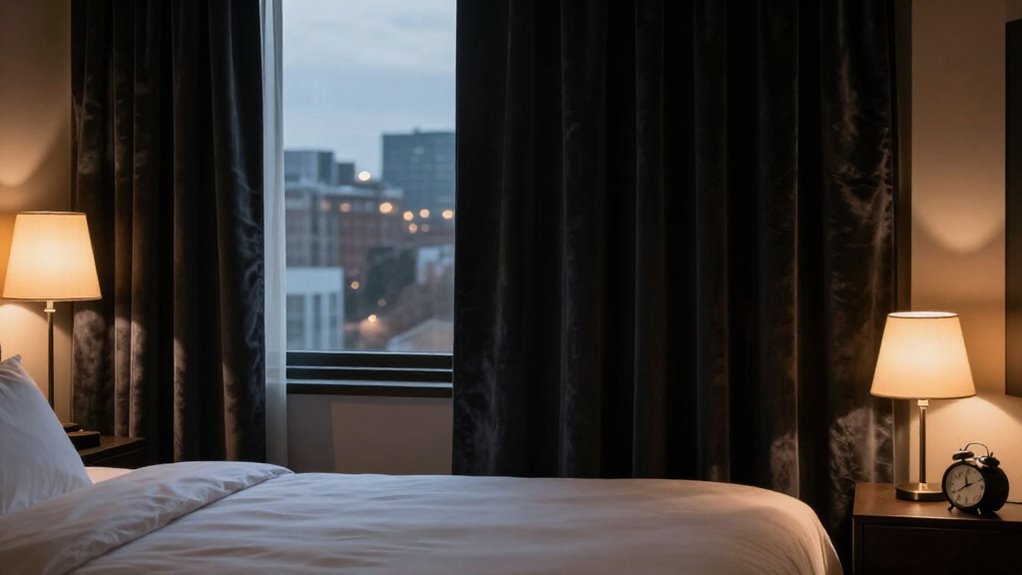
Experts recommend maintaining a regular bedtime and wake-up schedule, even on weekends, to regulate circadian rhythms. This may involve using blackout curtains, earplugs, or white noise machines to create an ideal sleep sanctuary.
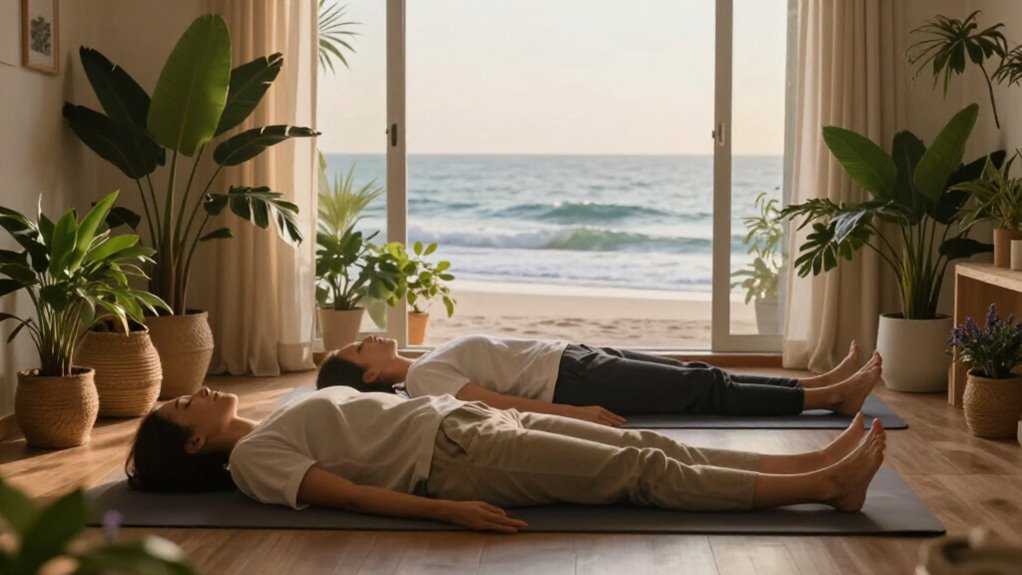
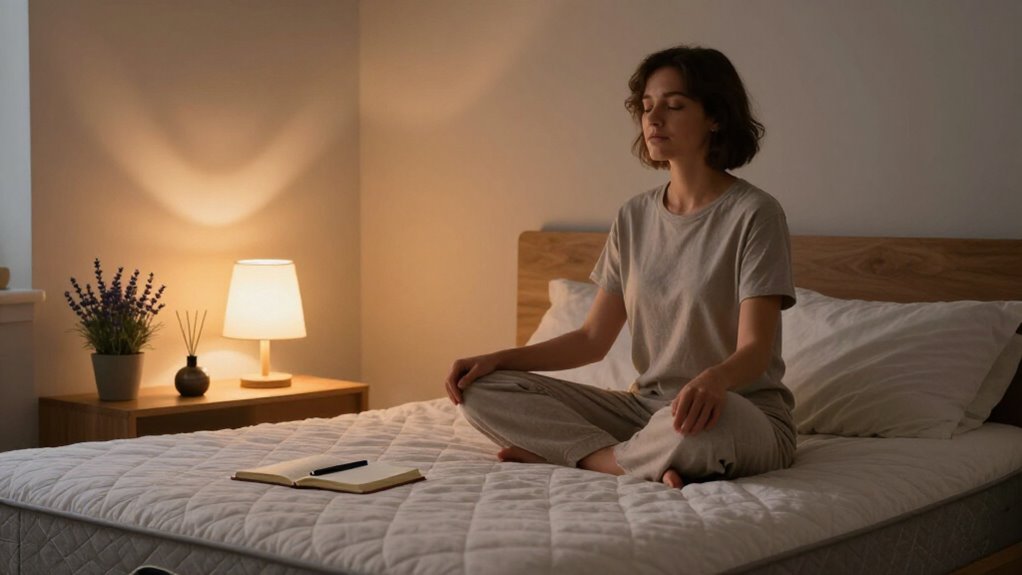
Incorporating relaxing pre-bed rituals, such as light yoga or meditation, can also promote better sleep quality. Adhering to these practices can help the body adjust more quickly to the new time zone, minimizing jet lag and fatigue. Prioritizing sufficient sleep is especially critical since sleep deprivation weakens immune function, leaving travelers more vulnerable to illness in unfamiliar environments.
Manage Light Exposure During Travel
Proper light exposure during travel plays an essential role in resynchronizing the body’s circadian rhythms.
To effectively manage light exposure, consider the following strategies:
- Utilize light therapy. Exposure to bright, artificial light during the day can help shift the body’s internal clock and counteract jet lag.
- Seek out natural sunlight. Spending time outdoors in natural daylight signals the brain to adjust melatonin production, aligning sleep-wake cycles with the local time zone.
- Limit evening light exposure. Avoid bright lights, screens, and electronics close to bedtime, as they can disrupt the body’s natural sleep-wake patterns.
Regulate Caffeine and Alcohol Intake
Regulating caffeine and alcohol intake is essential when adjusting to a new time zone. Strategic timing of caffeine consumption can help counter jet lag’s effects, while alcohol moderation supports healthy sleep-wake cycles.
Caffeine alternatives like green tea provide a gentler energy boost. Maintaining hydration balance and mindful alcohol consumption are also key.
Sleep-friendly beverages like chamomile tea can promote rest. Aligning travel schedules, caffeine, and alcohol with the destination’s day-night cycles is vital for synchronizing the body clock.
Expert recommendations and research emphasize these strategic approaches for minimizing jet lag and optimizing circadian rhythms.
Unwind With Relaxing Pre-Bed Activities

As the day winds down, engaging in relaxing pre-bed activities can help the body naturally shift into sleep. For ideal rest, consider the following recommendations:
- Mindful breathing: Slow, deep breathing exercises can induce a state of relaxation and reduce mental chatter.
- Soothing music: Listening to calming tunes or nature sounds can promote feelings of tranquility and prepare the mind for slumber.
- Calming teas: Herbal teas like chamomile or lavender may have a mild sedative effect and support the body’s natural sleep-wake cycle.
Gentle stretching or light yoga poses can also help release physical tension and mental stress before bed.
Maintain Proper Nutrition and Hydration
Traveler’s proper nutrition and hydration play an essential role in regulating the body’s circadian rhythms. Nutrient timing and hydration strategies support the body’s internal clock when traveling abroad.
| Nutrient Timing | Hydration Strategies |
|---|---|
| Consume balanced meals at consistent times | Drink water regularly throughout the day |
| Incorporate protein, complex carbs, and healthy fats | Limit alcohol and caffeinated beverages |
| Time nutrient intake to align with local daylight hours | Monitor urine color to guarantee adequate hydration |
| Avoid heavy or spicy foods close to bedtime | Replenish electrolytes lost through sweating |
Maintaining ideal nutrition and hydration helps travelers adapt to new time zones and environments, supporting their overall health and well-being.
Explore Melatonin Supplement Benefits
Melatonin, a naturally occurring hormone produced by the pineal gland, plays an essential part in regulating the body’s circadian rhythms.
Melatonin, a naturally occurring hormone, plays an essential role in regulating the body’s circadian rhythms.
When traveling across time zones, the disruption to these natural cycles can lead to jet lag and poor sleep quality.
Here are 3 key benefits of using melatonin supplements to help sync your body clock abroad:
- Optimizing melatonin dosage can facilitate faster adjustment to new time zones.
- Melatonin from natural sources like tart cherry juice may improve sleep quality during travel.
- Properly timing melatonin intake can help reset your circadian rhythm for better rest.
Melatonin Levels Adjust to New Time Zone
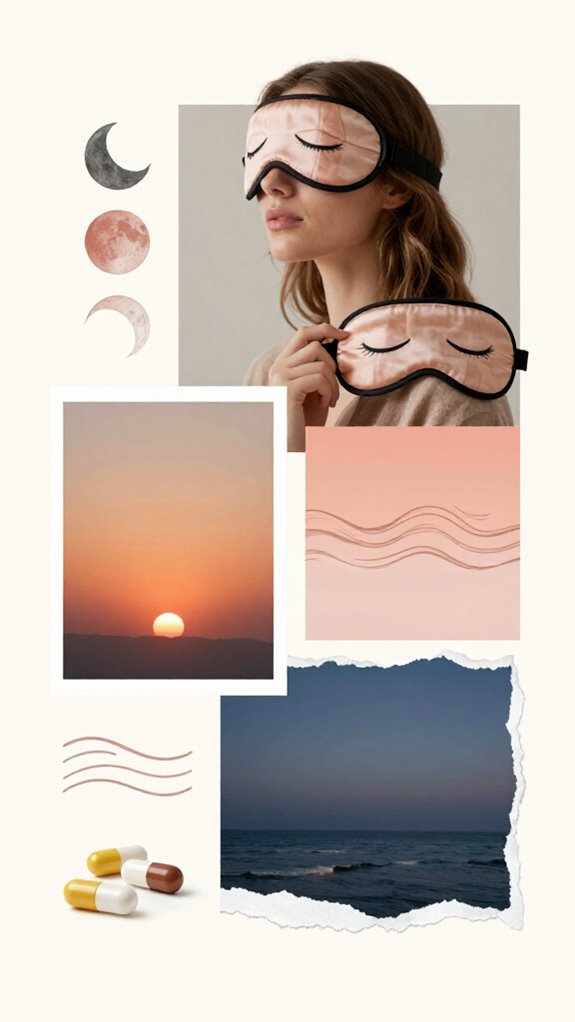
When crossing time zones, the body’s melatonin levels gradually adjust to align with the new circadian rhythm. Appropriately timed melatonin dosing is key for optimizing this process.
A 3.0 mg melatonin dose produces consistent average phase advances of nearly 4 hours, enabling the internal clock to shift by roughly that amount over 8 days when combined with a gradual sleep schedule adjustment.
Tracking the body’s dim light melatonin onset helps determine proper timing, as this stable circadian marker shifts in parallel with core temperature changes.
Carefully integrating melatonin with light exposure accelerates the realignment of the body’s daily rhythms.
Blackout Curtains for Restful Sleep
Velvet blackout drapes provide an elegant and effective solution for achieving restful sleep when traveling across time zones, combining luxury sleep design with complete light elimination.
These curtains block out light, creating a sleep environment that is conducive to better sleep quality.
- Light blocking: Blackout curtains are designed to prevent any external light from entering the room, ensuring complete darkness for uninterrupted sleep.
- Sleep environment: By eliminating light exposure, blackout curtains help regulate the body’s circadian rhythms, promoting deeper and more restorative sleep, which is vital for adjusting to a new time zone.
- Trusted brands: Leading brands like Graywind and Nicetown offer high-quality blackout curtains that are both practical and aesthetically pleasing, making them a popular choice for travelers.
FAQ
How Do I Adjust My Body Clock When Crossing Multiple Time Zones?
To adjust the body clock when crossing multiple time zones, one must control light exposure and meal timing. Leverage these biological triggers to efficiently recalibrate the internal clock and maximize productivity.
What Are the Best Exercises to Help Reset My Circadian Rhythm?
Resetting one’s circadian rhythm requires strategic use of light exposure, morning workouts, evening stretches, and meditation techniques – the keys to reclaiming control over one’s internal clock and mastering one’s domain.
Can Jet Lag Be Prevented if I Start Adjusting My Sleep Schedule Early?
Jet lag can be effectively mitigated by proactively adjusting one’s sleep schedule prior to travel. Implementing strategic sleep schedule shifts and other practical travel tips empowers travelers to maintain ideal circadian synchronization.
Is It Safe to Take Sleeping Pills While Traveling to Aid Sleep?
Sleeping aids can be a double-edged sword for the weary traveler. While they may ease slumber, their safety must be carefully considered lest the warrior find themselves ensnared by unforeseen consequences upon the field of rest.
How Does the Body’s Internal Clock Change When Traveling East Versus West?
Traveling east disrupts circadian rhythms more than traveling west, as the body’s internal clock struggles to adapt to an earlier time zone. Minimizing this disruption is essential for maintaining ideal performance.
References
- https://pmc.ncbi.nlm.nih.gov/articles/PMC3558560/
- https://pmc.ncbi.nlm.nih.gov/articles/PMC3696986/
- https://www.frontiersin.org/journals/endocrinology/articles/10.3389/fendo.2019.00391/full
- https://stacks.cdc.gov/view/cdc/189996/cdc_189996_DS1.pdf
- https://onlinelibrary.wiley.com/doi/full/10.1111/jpi.12746
- https://www.tandfonline.com/doi/full/10.1080/07420528.2016.1206911