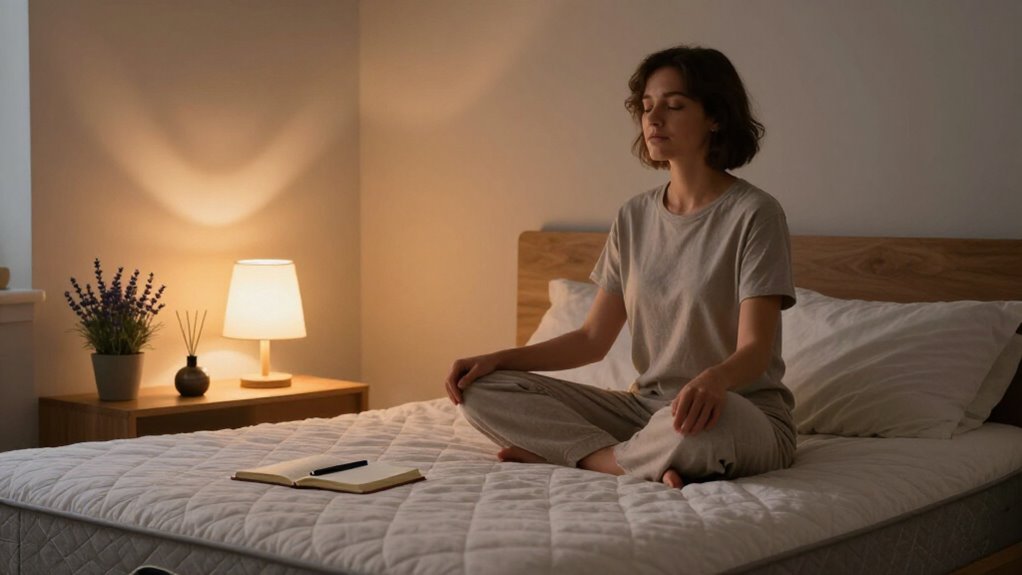
I used to lie awake for hours, mind spinning like crazy. Nothing worked—until I tried mindful breathing. Seriously, it changed everything for us at Corala Blanket. We realized that triggering your parasympathetic nervous system? Game changer.
Here’s what actually helped me. Meditation with body scans hit different. Yoga too. Even aromatherapy (I’m obsessed with lavender) made a real dent in my tension. But here’s the thing—your environment matters, you know?
We’re all about promoting better sleep, and honestly? A quality blanket paired with soothing sounds and melatonin supplements does wonders. Brands like Brooklinen and Parachute get it. They understand what we do at Corala Blanket: rest isn’t luxury. It’s essential.
What’s holding your mind hostage tonight?
Quick Takeaways
- Practice mindful breathing to activate the parasympathetic nervous system and induce relaxation, reducing stress and anxiety.
- Incorporate meditation techniques like body scans and mantra repetition to enhance emotional regulation and mental clarity.
- Engage in yoga practices that combine mindful movement and breathing to release physical and mental tension.
- Use calming essential oils like lavender and chamomile to elicit therapeutic effects on mood and promote relaxation.
- Establish a sleep-friendly environment with controlled lighting, temperature, and sound to optimize sleep quality and prepare the mind for rest.
Discover the Stress-Relieving Benefits of Mindful Breathing
One of the most effective natural remedies for quieting a racing mind is the practice of mindful breathing.
Mindful awareness of one’s breath can trigger the parasympathetic nervous system, promoting physiological relaxation and reducing the body’s stress response. Deep breathing exercises, such as those practiced in yoga and meditation, have been shown to lower cortisol levels and boost feelings of calm.
Mindful breathing triggers the parasympathetic nervous system, promoting relaxation and reducing stress. Deep breathing lowers cortisol and boosts calm.
Clinical studies indicate that just a few minutes of mindful breathing per day can enhance focus, improve sleep quality, and cultivate a greater sense of well-being.
Incorporating this simple technique into one’s daily routine can be a powerful antidote to an overactive mind.
Unlock the Power of Meditation for Relaxation
Meditation presents a powerful antidote to an overactive mind. By cultivating mindfulness techniques, individuals can access the restorative benefits of meditation for relaxation. This ancient practice quiets the chatter of the mind, allowing one to enter a state of focused calm.
| Meditation Rituals | Benefits |
|---|---|
| Breath awareness | Reduces stress and anxiety |
| Body scan | Increases emotional regulation |
| Mantra repetition | Enhances concentration |
| Guided imagery | Promotes mental clarity |
| Loving-kindness | Fosters compassion |
Research shows meditation can activate the parasympathetic nervous system, counteracting the physiological effects of stress. By incorporating these mindfulness techniques into daily life, individuals can reclaim a sense of control and inner peace.
Stretch Into Calm: Gentle Yoga for Stress Relief
While meditation offers a powerful means of quieting the mind, gentle yoga can also provide an effective way to alleviate stress and promote relaxation.
Through mindful movement and breathing techniques, yoga poses and restorative practices can induce a state of deep calm and self-awareness. Flow sequences engage the body while cultivating focus, releasing physical and mental tension.
Researchers have found that regular yoga practice enhances overall body awareness and flexibility, enabling greater stress release.
Harness the Aromatic Advantages of Aromatherapy

In addition to the calming physical movements of yoga, the aromatic compounds in essential oils can also play a significant role in quieting a racing mind.
Quality essential oils and their unique scent profiles can elicit therapeutic effects, influencing mood and promoting relaxation through fragrance meditation. Diffusing calming aromas like lavender, chamomile, or bergamot can help lower physiological markers of stress.
Quality essential oils can elicit therapeutic effects, influencing mood and promoting relaxation through fragrance meditation.
Holistic wellness experts recommend experimenting with different aromatic blends to discover which natural fragrances work best for elevating your state of mind and restoring a sense of inner peace.
Leveraging the power of essential oils is a proven, evidence-based path to tranquility.
Unplug and Unwind: Disconnect From Technology Before Bed
Given the significant impact that digital devices can have on cognitive function and sleep quality, health professionals often encourage unplugging from technology in the hours leading up to bedtime. Establishing a calming, tech-free evening routine can facilitate the shift to restful sleep. Anxiety-related insomnia can be significantly worsened by blue light exposure and mental stimulation from screens, making digital disconnection particularly important for those with racing thoughts.
| Activity | Duration | Effect |
|---|---|---|
| Reading a physical book | 30 minutes | Promotes relaxation |
| Gentle yoga or stretching | 20 minutes | Reduces muscle tension |
| Mindfulness meditation | 10 minutes | Quiets the mind |
| Writing in a journal | 15 minutes | Processes thoughts |
| Sipping herbal tea | 10 minutes | Triggers drowsiness |
Implementing these device-free relaxation techniques can help quiet a racing mind and improve sleep hygiene.
Journaling for Stress Management: Explore the Benefits
Journaling has long been recognized as a beneficial practice for managing stress and promoting emotional well-being. The process of reflective writing can provide an emotional release, allowing individuals to express and process their thoughts and feelings.
Journaling also supports goal setting, serving as a mindfulness practice that cultivates self-discovery and personal growth. Research indicates that regular journaling can boost creativity and offer cognitive clarity, helping individuals gain deeper understanding into their lives.
Established brands like Moleskine and academic studies have validated the value of journaling as a tool for stress management and overall wellbeing.
Soothe Your Senses With Relaxing Music and Nature Sounds

Relaxing music and nature sounds have emerged as powerful tools for soothing the senses and quieting a racing mind. Music therapy research indicates that soothing, ambient music can lower stress hormones and promote relaxation. Similarly, nature immersion studies demonstrate the calming effects of natural soundscapes like bird songs and flowing water.
| Relaxing Music | Nature Sounds |
|---|---|
| Ambient, instrumental | Bird songs |
| Classical | Ocean waves |
| Meditation music | Forest ambience |
| Binaural beats | Rainfall |
Relax From Head to Toe With Progressive Muscle Relaxation
Progressive muscle relaxation is a versatile technique that can help individuals unwind and achieve a deeper state of calm.
By systematically tensing and releasing muscle groups throughout the body, this method promotes body awareness and releases mental tension. Clinical research associates progressive relaxation with stress reduction, enhanced focus, and improved sleep quality.
Developed by Dr. Edmund Jacobson in the 1920s, this technique teaches practitioners to actively control muscle tension and become more attuned to physical sensations. Controlled breath work and mental imagery further facilitate deep physical and mental relaxation.
Integrating progressive muscle relaxation into a self-care routine can cultivate whole-body calm and resilience.
Natural Remedies for Stress: Herbal Solutions to Try
Several herbal remedies have shown promise in managing stress and promoting relaxation through natural means. Herbal teas made from adaptogenic herbs like valerian root, lemon balm, and passionflower extract can help calm the mind.
Ashwagandha, an Ayurvedic herb, may offer anxiety-reducing benefits. CBD oil, derived from the hemp plant, has also gained attention for its stress-relieving properties.
Furthermore, chamomile, kava kava, and ginseng roots have been studied for their ability to soothe the nervous system and support a sense of tranquility.
These herbal solutions offer a gentle, natural approach to combating the effects of everyday stress. Sleep-friendly herbs like these natural roots have been traditionally used to promote better rest and deeper relaxation.
Create a Peaceful Sanctuary: Optimize Your Sleep Environment
A well-designed sleep environment can profoundly influence one’s ability to unwind and achieve restful slumber.
Enhancing sleep hygiene involves controlling sensory elements like temperature, lighting, and sound to create a peaceful sanctuary. Clinical research shows that exposure to blue-wavelength light disrupts the body’s natural circadian rhythms, so dimming electronics and installing blackout curtains can facilitate melatonin production.
Soft, white noise from a sound machine may also drown out disruptive noises.
Investing in a high-quality mattress and pillows tailored to individual needs further enhances the quality of sleep by providing ideal comfort and support.
For those who enjoy reading before bed, consider incorporating cozy reading nooks into your bedroom design to create a dedicated space that signals relaxation and helps transition the mind toward sleep.
Brain Waves During Sleep
During sleep, the brain exhibits distinct patterns of electrical activity known as brain waves. These brain wave patterns correspond to different sleep stages. In the lighter stages of sleep, the brain produces beta and alpha waves.
As the body shifts into deeper sleep, the brain generates slower theta and delta waves. This change in brain wave activity is associated with the physiological changes that occur during sleep, including decreased heart rate, blood pressure, and body temperature.
Scientists have identified these characteristic brain wave patterns through electroencephalography (EEG), providing observations into the neural mechanisms underlying the restorative functions of sleep. The timing of these deep sleep stages is strongly influenced by the body’s internal clock, which regulates when the most physically restorative sleep occurs.
Melatonin Supplements for Restful Sleep
Because melatonin is a naturally occurring hormone that regulates the sleep-wake cycle, many people consider using melatonin supplements to promote more restful sleep.
Melatonin plays a key role in controlling the body’s circadian rhythms, signaling the brain when it’s time to sleep and wake up. Numerous studies have found that melatonin supplements can improve sleep quality and reduce the time it takes to fall asleep, especially for those experiencing sleep disturbances.
Brands like Nature Made and researchers at the University of Pennsylvania have provided evidence that melatonin is a natural, effective solution for achieving high-quality, natural sleep. You can buy melatonin gummies as a convenient and tasty option for better sleep.
FAQ
Can Natural Methods Improve Concentration and Focus?
Natural methods such as mindful breathing and cognitive exercises can indeed improve concentration and focus. These techniques help the mind remain centered and disciplined, empowering the user to maximize their cognitive potential.
How Do Different Types of Meditation Affect the Mind?
Different meditation techniques can transform the mind: mindfulness quiets the chattering monkey, transcendental lifts one to the heavens, guided visualization paints serene scenes, and loving kindness floods the soul with compassion.
What Are the Long-Term Benefits of a Regular Yoga Practice?
A regular yoga practice promotes long-term benefits through mindfulness techniques that improve holistic health, empowering individuals to achieve greater focus, flexibility, and balance in their lives.
Can Essential Oils Help Manage Anxiety and Panic Attacks?
Essential oils may promote relaxation through the aromatherapy benefits of oil blends, assisting in the management of anxiety and panic attacks for those seeking greater dominance over their emotional state.
How Can Technology-Free Time Before Bed Improve Sleep Quality?
Technology-free time before bed enables the practitioner to engage in mindfulness techniques and evening rituals, which can improve sleep quality and foster a sense of control over one’s mental state.