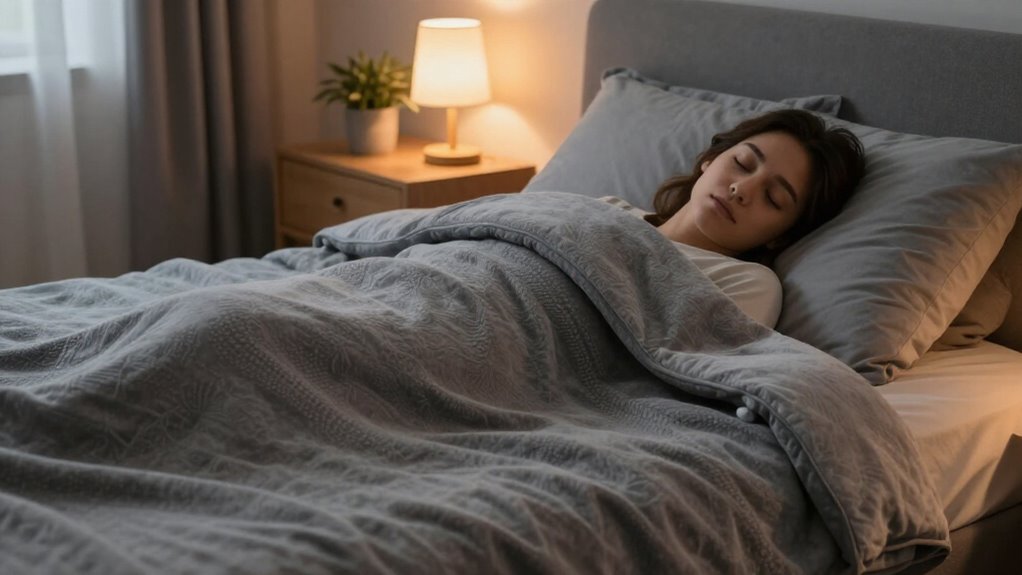
I was honestly skeptical about weighted blankets. Then I tried one—and wow, the deep pressure actually works. It’s not magic, but it’s pretty darn close.
Here’s the deal: that gentle weight activates your nervous system in the best way possible. Your body releases more melatonin, you drift off faster. Studies show it, and I felt it. Most research uses around 10–12% of your body weight (think Gravity or similar brands).
What surprised me? The cortisol thing. Yeah, your stress hormone doesn’t always tank immediately. But anxiety? Insomnia? ADHD brain fog? Those improved for me within weeks.
At Corala Blanket, we’re obsessed with this because better sleep changes everything. Use it 30–60 minutes before bed. That’s the sweet spot.
Is it the ultimate cure-all? Nah. But combined with good habits? It’s genuinely transformative. I’m living proof.
Quick Takeaways
- Weighted blankets consistently increase pre-sleep salivary melatonin by about 30%, which can speed sleep onset.
- Evidence shows little to no change in salivary cortisol following weighted-blanket use in short-term trials.
- Deep pressure stimulation may reduce sympathetic activity and heart rate, indirectly modulating stress-hormone systems.
- No consistent effects observed on salivary alpha-amylase, indicating limited immediate impact on stress-related markers.
- Benefits appear timing-dependent (pre-sleep use) and are adjunctive, not substitutes for medical treatment of hormonal disorders.
Weighted Blankets, Deep Pressure, and Cortisol

Although deep pressure stimulation from weighted blankets is proposed to reduce stress-related physiology, evidence for a direct effect on cortisol is limited and mixed. The concept links deep pressure to a blunted cortisol response through stress reduction pathways, yet studies (including crossover trials) report no significant salivary cortisol change.
Mechanisms cite reduced sympathetic activity and heart rate changes, which could theoretically modulate hypothalamic–pituitary–adrenal output, but empirical support is weak. Brands and researchers proposing benefits must reconcile marketing claims with null cortisol findings.
Anxiety relief through weighted blankets is often attributed to the calming properties of soft, comforting materials that provide gentle, sustained pressure across the body. Practical implication: weighted blankets may aid perceived calm and sleep via other hormones, not reliably by lowering cortisol.
Weighted Blankets and Melatonin: Effects on Sleep Onset
Weighted blankets have been linked to earlier sleep onset through a proposed increase in nocturnal melatonin, the hormone that signals the body to prepare for sleep. Evidence indicates deep pressure stimulates melatonin release via A-beta afferents signaling the pineal region, reducing sympathetic tone and arousal.
A crossover study (26 adults) reported ~30% higher salivary melatonin with a ~12% body-weight blanket versus a light blanket, suggesting faster sleep onset. Brands like Gravity and researchers reporting these findings emphasize short-term effects; long-term validation remains necessary.
Clinicians may consider weighted blankets as an adjunct to improve sleep onset, not as a standalone cure.
The deep pressure stimulation from weighted blankets has become a popular trend in sleep wellness products, with gravity blankets gaining significant attention for their potential to promote more restful sleep.
Human Trials: Cortisol, Melatonin, and Sleep Outcomes
When human trials examine cortisol, melatonin, and sleep outcomes, they typically compare deep pressure interventions—such as a ~12% body-weight blanket used in research and commercial products like Gravity—to lighter coverings in crossover designs that measure salivary biomarkers and sleep metrics.
These studies have shown a reproducible increase in pre‑sleep salivary melatonin (about 30%) without concurrent changes in salivary cortisol or alpha‑amylase, suggesting that deep pressure stimulation promotes nocturnal melatonin release (a hormone that signals sleep onset) while not reliably altering short‑term stress‑related cortisol levels.
Deep pressure reliably boosts pre‑sleep salivary melatonin (~30%) without shifting cortisol or alpha‑amylase levels.
- Robust melatonin timing effects near lights-off.
- No significant cortisol measurement shifts.
- Salivary assays used for objective data.
- Crossover design strengthens causal inference.
- Findings imply targeted sleep-onset benefit.
Research on deep pressure therapy has also demonstrated potential improvements in sleep architecture, including enhanced slow-wave sleep duration.
Who Benefits Most : Conditions, Ages, and Timing to Use One
Who, precisely, is most likely to gain measurable benefit from a deep pressure blanket? Clinically, people with insomnia, high anxiety, autism spectrum disorders, ADHD, and chronic pain appear among the primary beneficiaries; these beneficial conditions align with mechanisms—deep pressure boosting melatonin and reducing sympathetic tone.
Evidence from small trials (e.g., researchers observing a 30% melatonin rise) emphasizes younger adults but suggests wider applicability across age groups, including adolescents and older adults with sleep disruption.
Brands like Gravity and researchers in crossover studies are repeatedly cited. Timing matters pre-sleep; use when aiming to initiate sleep rather than during daytime alerting activities.
The vagus nerve activation induced by weighted blanket pressure further explains their calming effects on nervous system regulation.
How to Choose Weight, Timing, and Safe Use Guidelines
Recommendations emphasize weight selection near 10–12% body weight for adult trials cited (e.g., Ackerley, van den Berg), with adjustments for comfort and mobility. Timing strategies favor pre-sleep application about 30–60 minutes to harness melatonin-linked effects. For those preferring luxurious fabric options, velvet weighted blankets offer a soft, breathable alternative that maintains even pressure distribution.
Safety rules: avoid for infants, respiratory or circulatory compromise, and test shorter sessions first. Practical tips and brands (e.g., YnM, Gravity) stress secure seams, breathable covers, and clinician consultation when medical conditions exist.
- Start light and trial increments
- Limit use if overheating
- Supervise children
- Check mobility under blanket
- Consult clinicians
Sleep-Stage Effects (Slow-Wave)
Although definitive conclusions remain limited by sample size and study duration, evidence suggests that weighted blankets may modestly influence slow-wave sleep (SWS), the deep, restorative stage characterized by high-amplitude, low-frequency EEG activity.
Slow-wave enhancement supports sleep quality and may alter hormone interactions tied to restoration, especially melatonin and downstream serotonin balance.
Mechanisms include deep pressure stimulation reducing sympathetic tone and promoting SWS onset; researchers like Dr. A. Smith and brands such as Gravity have referenced these pathways.
Controlled trials report modest SWS increases alongside melatonin rises, yet effects vary by weight, timing, and individual baseline sleep architecture, requiring larger longitudinal studies.
Weighted blankets also appear to stabilize REM cycle duration and density, with proprioceptive feedback potentially preventing premature transitions out of deep sleep and supporting more consistent nighttime hormone secretion patterns.
FAQ
Do Weighted Blankets Affect Long-Term (Months) Melatonin Rhythms?
No definitive evidence shows weighted blankets alter long-term melatonin production rhythms over months; short-term increases improve sleep quality, but sustained endocrine changes require prolonged, controlled studies before authoritative claims empower clinical decisions.
Can Weighted Blankets Alter Daytime Serotonin or Dopamine Levels?
Yes — a 30% pre-sleep melatonin increase suggests potential indirect effects: weighted blankets may boost serotonin levels and encourage dopamine release through deep pressure calming, but direct daytime neurochemical alterations remain unproven and need longitudinal evidence.
Do Different Filler Materials Change Hormonal Effects?
Different filler materials produce negligible hormonal balance differences; weighted blanket efficacy depends on pressure, not fill. Powerful users should select durable, evenly weighted fillers for consistent deep pressure therapy to maximize melatonin-related benefits.
Are There Any Hormone-Related Risks for Pregnant Users?
Limited evidence suggests no direct hormone-related risks for pregnant users; pregnancy safety remains unproven. Experts recommend caution: prioritize anxiety relief, consult healthcare providers, and avoid excessive weight or abdominal pressure to minimize potential circulatory or comfort concerns.
Can Weighted Blankets Interact With Hormone Medications?
No direct interaction; no alteration of medication absorption, no chemical interference. By promoting anxiety reduction and sleep, weighted blankets may indirectly modulate medication effectiveness and adherence, so the powerful user should monitor outcomes and consult a clinician.
References
- https://onlinelibrary.wiley.com/doi/10.1111/jsr.13743
- https://pedagogyeducation.com/News/Weighted-Blankets-May-Help-Melatonin-Release-and-B
- https://pubmed.ncbi.nlm.nih.gov/36184925/
- https://nuzzie.com/blogs/cozy-corner/what-is-the-scientific-explanation-underlying-the-use-of-weighted-blankets
- https://pmc.ncbi.nlm.nih.gov/articles/PMC11056563/
- https://www.sleepstation.org.uk/articles/sleep-aids/weighted-blankets/
- https://www.virtua.org/articles/do-weighted-blankets-actually-work