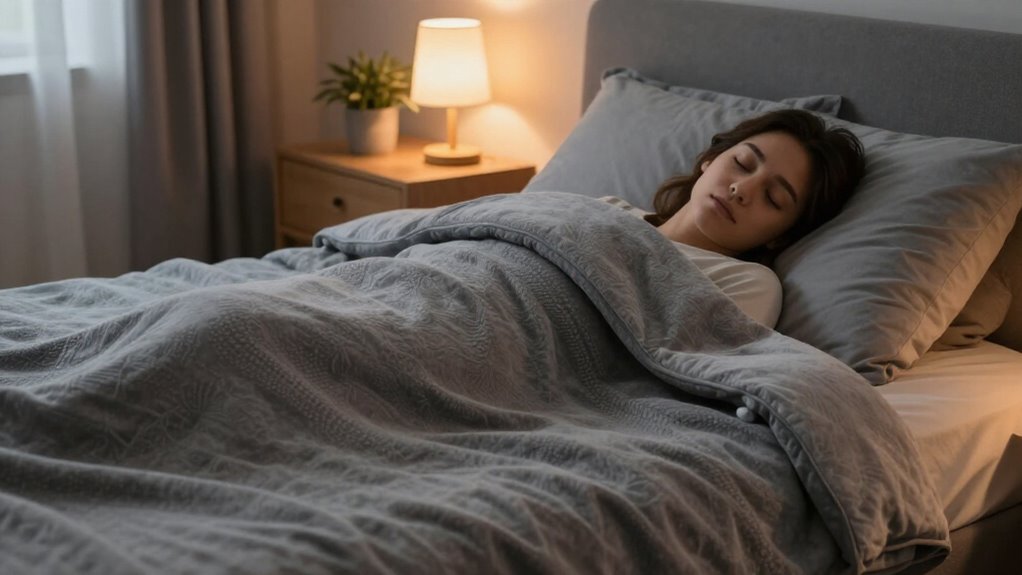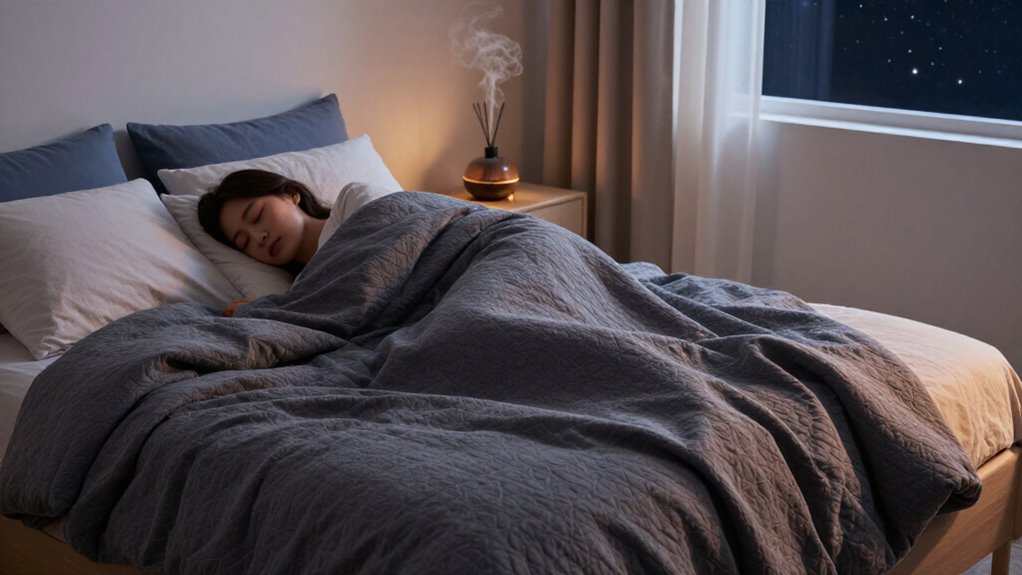
I used to toss and turn every night, totally wired. Then I discovered deep pressure therapy—game changer, honestly.
When you wrap yourself in a weighted blanket, something magical happens. Your nervous system actually chills out. Cortisol drops. Serotonin and oxytocin rise. Your heart rate slows down. You’re basically hacking your way to better sleep.
Here’s the thing: it works. I fall asleep faster now. Way fewer of those annoying 3 AM wake-ups. Brands like Gravity have nailed it with their research, showing real improvements in slow-wave sleep. At Corala Blanket, we’re committed to this mission too—we’re all about promoting genuinely better rest.
Does it feel weird at first? Maybe. But get one that’s roughly 10% of your body weight. Use it right.
The science is still evolving, sure. But my sleep quality? No longer a mystery.
Quick Takeaways
- Deep pressure increases parasympathetic activity, lowering heart rate and promoting relaxation needed for deep sleep.
- It reduces cortisol and raises serotonin and oxytocin, biochemical shifts that facilitate sleep onset and stability.
- Pressure stimulation aids conversion of serotonin to melatonin, supporting faster sleep initiation and deeper sleep stages.
- Weighted products and targeted tools decrease sleep latency and micro-awakenings, modestly increasing slow-wave sleep and total sleep time.
- Gradual, appropriately weighted use with breathable materials maximizes benefits while minimizing discomfort and safety risks.
Does Deep Pressure Therapy Improve Deep Sleep? Short Answer and TL;DR

How well does deep pressure therapy (DPT) improve deep sleep? The answer: it supports deeper, more continuous sleep indirectly.
DPT effectiveness stems from physiological shifts—reduced cortisol, increased serotonin/oxytocin, and parasympathetic activation—that ease sleep onset and lower micro‑awakenings.
DPT works by lowering cortisol, boosting serotonin and oxytocin, and activating the parasympathetic system to ease sleep and reduce micro‑awakenings.
Research (including weighted blanket studies) shows improved calm and objective markers like reduced heart rate; brands and occupational therapy researchers report consistent user experiences of faster sleep and fewer interruptions.
Direct measurement of deep sleep stages varies, so benefits are inferred from improved sleep quality and stability.
Implication: DPT is a powerful adjunct for many seeking stronger, restorative sleep patterns.
Luxury weighted blankets designed for anxiety relief provide an accessible way to experience these DPT benefits at home.
How to Choose and Use Weighted (Deep‑Pressure) Products for Better Sleep
Why choose a specific weighted or deep‑pressure product for sleep? A strategic product selection optimizes pressure distribution, safety, and efficacy; brands like Mosaic or Gravity and researchers (e.g., Occupational Therapy in Mental Health) provide evidence on weights and outcomes. Deep pressure vests offer wearable compression that can be particularly effective for evening wind‑down routines before bed.
Choose weight ~10% of body mass, breathable cover, and certified fillers.
Usage tips include gradual acclimation, nightly timing, and avoiding excessive heat; consult clinicians for children or medical issues. Compression sheets or vests suit mobility needs.
Track sleep quality and comfort to adjust. The approach balances empirical findings with practical constraints to deliver reliable, controlled deep‑pressure support.
How Deep Pressure Changes Brain Activity and Sleep Hormones
Deep pressure stimulation produces measurable shifts in brain activity and sleep-linked hormones by engaging tactile receptors and calming the stress response.
Researchers (including work referenced with weighted blankets and Occupational Therapy in Mental Health) report reduced cortisol and increased serotonin, oxytocin, and dopamine, which together signal safety and promote relaxation.
Studies show deep pressure—like weighted blankets—lowers cortisol and raises serotonin, oxytocin, and dopamine, signaling safety and relaxation
Parasympathetic activation lowers heart rate and supports restorative states. These changes alter brain activity toward slower rhythms associated with rest, while serotonin conversion to melatonin aids sleep onset.
Practical implications: targeted pressure tools (weighted blankets, compression garments) can be integrated into routines to leverage hormonal and neural effects for stronger sleep regulation.
Selecting the right deep pressure vest requires matching compression levels and fit to individual sensory needs for optimal comfort and support throughout sleep.
What Clinical Trials Show About Slow‑Wave Sleep, Total Sleep Time, and Sleep Quality
Following the physiological changes outlined previously, clinical trials have examined whether deep pressure therapies—most commonly weighted blankets and compression garments—produce measurable changes in slow‑wave sleep (SWS), total sleep time (TST), and overall sleep quality.
Sleep studies and clinical findings show modest but consistent gains: reduced sleep latency, fewer awakenings, and improved subjective sleep quality.
Polysomnography trials report variable SWS increases; some small studies (including work by Neilson and companies like Gravity Blankets in sponsored trials) found stronger consolidation and modest TST gains.
Evidence supports targeted use for anxiety‑linked insomnia, though larger randomized trials are warranted to define effect sizes.
Weighted blankets may enhance REM cycle stability through calming proprioception, which helps maintain uninterrupted sleep architecture throughout the night.
Safety, Common Problems, and When to See a Sleep Specialist
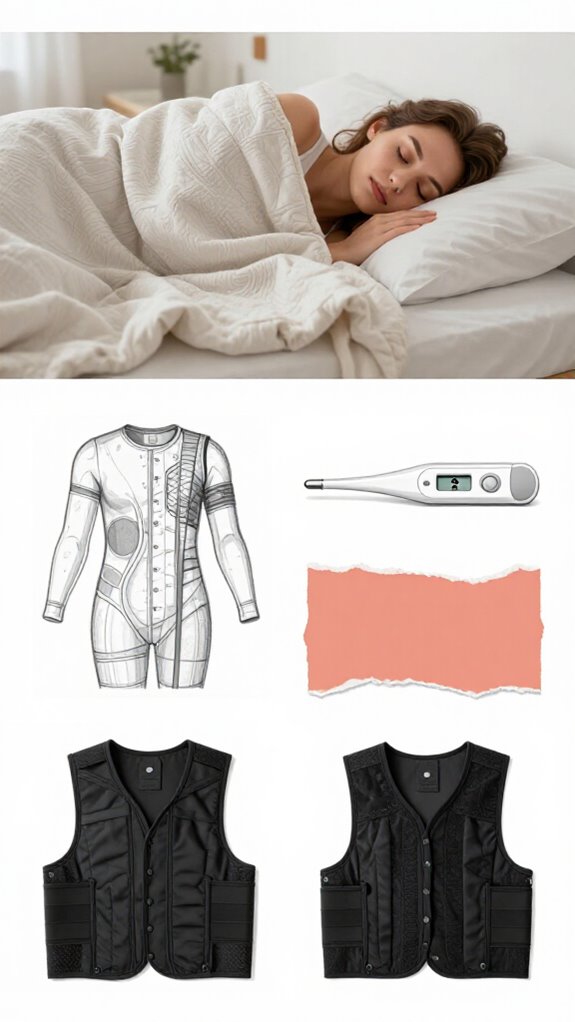
Although generally well tolerated, deep pressure therapies (DPT)—including weighted blankets (e.g., Gravity), compression garments, and therapeutic vests—carry specific safety considerations that warrant attention.
Users must prioritize sleep safety: choose appropriate weight, avoid overheating, and guarantee mobility to prevent entrapment. Common problems include discomfort, skin irritation, and transient increased anxiety if pressure is excessive. Sleep deprivation can worsen anxiety symptoms, making proper DPT implementation especially important for those with mental health concerns.
DPT supports anxiety management for many, but persistent insomnia, unexplained daytime sleepiness, or suspected sleep disorders merit specialist consultation.
Clinicians (occupational therapists, sleep medicine physicians) can tailor DPT within a broader treatment plan, assess risks, and order diagnostic testing when indicated.
Slow-Wave Sleep Enhancement
After addressing safety and common issues with pressure-based tools, attention turns to how these interventions may affect slow-wave sleep (SWS), the deepest non-REM stage associated with physical restoration and memory consolidation.
Slow wave enhancement via calibrated deep pressure targets physiology: lowering cortisol, activating parasympathetic tone, and boosting serotonin-to-melatonin conversion.
Clinical observations and studies (e.g., weighted blanket research) report deeper, more continuous SWS though exact stage increases vary.
Practical application favors gradual, tailored pressure such as 20–30 lb blankets or compression sheets. Brands like Gravity and clinical teams led by occupational therapists inform protocols.
Deep touch pressure from weighted blankets activates the body’s calming response through distributed, even weight across the body.
- Mechanism: autonomic downshift
- Evidence: subjective plus physiologic markers
- Implication: improved restoration and memory consolidation
FAQ
Can DPT Help With Nightmares or Night Terrors in Adults?
Yes — paradoxically subtle: DPT often supports nightmare reduction and terror alleviation by calming arousal, lowering cortisol, and stabilizing sleep stages, empowering users to reclaim nocturnal dominance through reduced awakenings and improved emotional regulation.
Will Deep Pressure Interfere With Bed-Sharing or Intimacy?
Deep pressure typically complements bed sharing dynamics when negotiated; it preserves intimacy balance by empowering clear boundaries, scheduled use, and adjustable delivery (blankets, vests), allowing dominant partners to optimize sleep without surrendering mutual closeness.
Can Pets Using DPT Products Affect Their Sleep Too?
Like a fortress wall, yes—pets can benefit: pet comfort improves, anxiety reduction occurs with weighted beds or compression wraps. Results empower owners to optimize rest; choose proper fit, monitor tolerance, and consult a vet if uncertain.
Are There Pediatric Weight Guidelines for Infants and Toddlers?
Yes. Recommendations advise caution: infant sleep uses no heavy weighted blankets; toddlers may try light, age-appropriate DPT under supervision. Guidelines prioritize safety, proper toddler weight distribution, gradual introduction, and consultation with pediatric professionals.
Does DPT Use Alter Sleep Medication Needs or Timing?
DPT use can reduce reliance on sleep medication for some; DPT efficacy often improves sleep quality, allowing dose reduction or timing changes under clinician guidance. Decisions remain individualized, clinically directed, and monitored for safety and effectiveness.
References
- https://info.ancsleep.com/blog/deep-pressure-therapy-and-sleep-how-gentle-pressure-calms-the-body
- https://sleepopolis.com/education/your-ultimate-guide-to-deep-pressure-therapy-deep-pressure-stimulation/
- https://www.thetreetop.com/aba-therapy/deep-pressure-therapy
- https://www.appliedbehavioranalysisedu.org/what-is-deep-pressure-stimulation/
- https://harkla.co/blogs/special-needs/deep-pressure-therapy
- https://pmc.ncbi.nlm.nih.gov/articles/PMC10949954/
- https://pubmed.ncbi.nlm.nih.gov/37141064/
- https://www.uclahealth.org/news/article/pressure-weighted-blankets-may-help-sleep