I used to be absolutely wrecked by insomnia. Night after night, I’d lie there, exhausted yet wired. That’s when I discovered CBT-I—basically cognitive restructuring meets stimulus control over a handful of sessions. Game changer.
Sleep Restriction Therapy? That’s the real MVP. It bumped my sleep efficiency from a pathetic 67% up to 87%. Sounds wild, but it actually works.
Here’s the thing though—these methods dig into root causes instead of just masking the problem like meds do. And honestly? The results stick around long-term.
We at Corala Blanket get it. Better sleep isn’t just about technique. It’s about creating the whole vibe. Pairing quality blankets with proven strategies—that’s where the magic happens. Even brands like Brooklinen and Helix understand that sustainable recovery takes real commitment.
Want to actually fix your sleep, not just band-aid it?
Quick Takeaways
- Recovery sleep involves restoring normal sleep patterns through evidence-based interventions like CBT-I and Sleep Restriction Therapy.
- CBT-I addresses root causes of chronic insomnia with cognitive restructuring and relaxation techniques over 6-8 sessions.
- Sleep Restriction Therapy rapidly improves sleep efficiency by limiting sleep opportunity to match actual sleep duration.
- Tracking cortisol patterns and sleep metrics indicates successful recovery and normalized HPA-axis function during treatment.
- Long-term recovery requires ongoing stimulus control adherence, regular sleep logs, and continued follow-up care to prevent relapse.
Why CBT-I Is the Gold Standard for Chronic Insomnia Recovery

The scientific consensus surrounding cognitive behavioral therapy for insomnia (CBT-I) reflects decades of rigorous research demonstrating its superiority as a treatment for chronic sleep disorders. Major medical institutions, including the American College of Physicians, Cleveland Clinic, and Mayo Clinic, recognize CBT-I as the first-line treatment for chronic insomnia.
Meta-analytic evidence shows treatment effect sizes of 1.0–1.2, with 70–80% of patients experiencing significant improvements in sleep onset, total sleep time, and nighttime awakenings. CBT-I effectiveness surpasses medications long-term, producing sustained gains beyond three months without dependency risks. Sleep studies play a crucial role in identifying underlying conditions like sleep apnea that may interfere with CBT-I success, ensuring accurate diagnosis enhances treatment outcomes.
The approach restructures thoughts, behaviors, and insomnia misconceptions through stimulus control and relaxation techniques across typically 6–8 sessions. Unlike pharmaceuticals that mask symptoms, CBT-I addresses root causes, promoting genuine learning of natural sleep mechanisms and lasting recovery.
Sleep Restriction Therapy: Rebuilding Sleep Efficiency Fast
While cognitive behavioral therapy for insomnia addresses the psychological foundations of sleep disorders, sleep restriction therapy (SRT) offers a complementary approach that rapidly improves sleep efficiency by realigning the time patients spend in bed with the time they actually sleep.
SRT works by limiting sleep opportunity to match actual sleep duration, thereby increasing homeostatic sleep pressure and strengthening circadian regulation. This consolidation process reduces sleep onset latency and wake time after sleep onset within weeks. Unlike prescription sleep aids that may alter natural sleep architecture, SRT works with the body’s endogenous systems to restore healthy sleep patterns.
Treatment begins with a two-week baseline assessment, followed by adjusting prescribed bedtime based on weekly sleep efficiency measurements. Clinical studies demonstrate sleep efficiency improvements from 67% to 87%, with gains sustained through 36-week follow-up. Research indicates that reduction in arousal represents one of the documented mechanisms through which SRT produces its therapeutic benefits.
SRT’s evidence-based effectiveness establishes it as a first-line intervention for chronic insomnia recovery.
Track Your Progress: Cortisol Drops Signal Real Recovery
As sleep efficiency improves through structured interventions like sleep restriction therapy, measurable changes in cortisol patterns emerge as reliable indicators that the body’s stress-response system is normalizing.
Cortisol tracking provides concrete recovery indicators by monitoring three key metrics.
Evening cortisol decline signals restored HPA-axis function and improved stress regulation. Morning cortisol normalization against baseline demonstrates recovery from sleep deprivation effects. Reduced frequency of 3am awakenings reflects strengthened circadian rhythm restoration, a pattern that mirrors why nocturnal anxiety intensifies when HPA-axis dysfunction keeps stress hormones elevated rather than declining at night.
These measurable shifts work together systematically. As nighttime cortisol drops, deeper restorative sleep stages increase, enhancing emotional regulation and cognitive recovery. Lower overall cortisol reduces inflammation markers like CRP and IL-6, confirming systemic healing.
Tracking these cortisol metrics transforms recovery from abstract hope into quantifiable progress, helping individuals recognize when their bodies genuinely break free from the high cortisol-insomnia cycle. Incorporating simple stress relief techniques before bedtime can accelerate this cortisol-lowering process and support the body’s natural transition into restorative sleep.
Sustaining Long-Term Recovery: How to Avoid Relapse
Chronic insomnia often returns after initial treatment success because the underlying vulnerabilities that created the sleep disorder—stress sensitivity, racing thoughts, and conditioned arousal—remain dormant rather than eliminated.
Sustaining recovery requires ongoing commitment to relapse triggers awareness and strategic recovery strategies. Individuals benefit from continued lifestyle adjustments, including consistent sleep schedules and stress management practices learned during treatment.
Monitoring symptoms through sleep logs helps identify early warning signs before full relapse occurs. Regular follow-up care with sleep specialists, even after formal therapy concludes, provides accountability and early intervention opportunities.
Research from cognitive behavioral therapy for insomnia (CBT-I) programs demonstrates that maintenance behaviors—particularly stimulus control and sleep restriction adherence—significantly reduce recurrence rates.
Long-term success depends on treating recovery as an ongoing practice rather than a completed destination. Optimizing bedroom lighting supports the sleep hygiene habits essential for preventing relapse.
Deep Pressure Tactile Stimulation
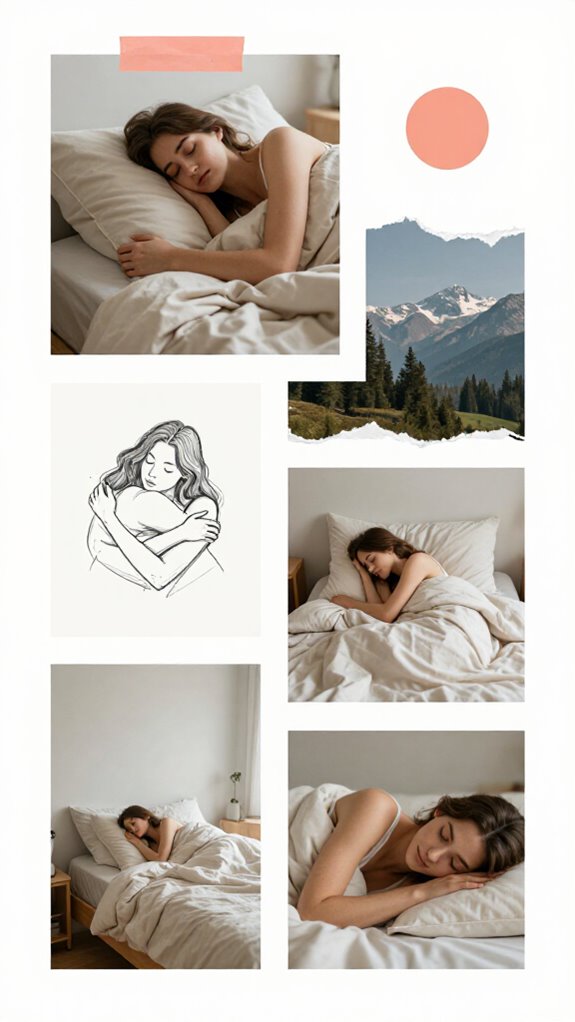
A weighted blanket draped across the body activates the same calming response as a reassuring hug, triggering the parasympathetic nervous system to downregulate stress and prepare the body for sleep. This deep pressure tactile stimulation provides proprioceptive input—sensory feedback about body position and pressure—that organizes the central nervous system for relaxation techniques.
Research supports its effectiveness: a 2011 study in the Journal of Medical and Biological Engineering documented reduced heart rate and blood pressure with weighted blankets. A 2023 study on compression vests showed decreased anxiety biosignals during stress. Weighted sleep products have become essential tools for those seeking overnight anxiety relief through consistent deep pressure application.
Deep pressure stimulation boosts serotonin by 28%, dopamine by 31%, and oxytocin while reducing cortisol by 31%. These neurochemical shifts enhance sensory regulation, lower anxiety interfering with sleep onset, and improve deep sleep duration.
Products like Sleep Pod Move deliver portable options for consistent bedtime support, making recovery sleep accessible for those managing chronic insomnia. This therapeutic approach mirrors deep touch pressure principles that have been clinically validated for calming the nervous system and promoting restful sleep.
FAQ
How Long Does Recovery Sleep Typically Take After Starting Treatment for Chronic Insomnia?
Intensive sleep retraining achieves remarkable results: 96% of patients fall asleep within 25 minutes post-treatment.
Recovery from chronic insomnia typically requires three to six months for sustained improvement, though initial benefits appear within the first week.
Treatment duration varies based on severity, but maintaining sleep consistency through behavioral techniques accelerates progress.
Extended recovery periods reflect the accumulated neurophysiological changes from prolonged sleep disruption, requiring patient adherence to reestablish healthy sleep patterns.
Can Recovery Sleep Occur Without Professional Treatment or Medication Intervention?
Recovery sleep can occur without professional intervention through self-directed behavioral strategies.
Sleep restriction therapy, stimulus control, and consistent sleep schedules improve sleep quality when individuals maintain discipline.
Online CBT-I programs and apps provide structured guidance independently.
However, chronic insomnia persisting three months typically benefits from professional assessment, as underlying causes—medical conditions, medications, or mental health factors—often require evaluation to guarantee sustained improvement.
What Distinguishes Recovery Sleep From Normal Sleep in Chronic Insomnia Patients?
Recovery sleep in chronic insomnia patients demonstrates distinct physiological differences from normal sleep. The brain prioritizes deep sleep (N3) and REM stages, increasing slow-wave activity by up to 50% during the first recovery night.
This enhanced sleep quality reflects the body’s concentrated repair efforts. Sleep latency shortens, facilitating faster onset.
Recovery sleep typically extends 1-2 hours beyond baseline duration, driven by stronger homeostatic pressure that insomniacs’ bodies generate to restore ideal function.
Are There Specific Sleep Stages or Architecture Changes During Recovery Sleep?
Recovery sleep involves distinct architectural changes.
Deep sleep (stage 3 NREM) concentrates early in recovery nights, lasting 20-40 minutes per cycle as the body prioritizes physical restoration.
Stage 2 NREM expands to approximately 45% of total sleep time.
REM sleep increases during later cycles, supporting memory consolidation and emotional regulation.
These coordinated stage shifts maximize restorative benefits, with sleep intensity improving measurably across extended recovery opportunities.
How Do Underlying Health Conditions Affect the Timeline for Recovery Sleep Achievement?
Like medieval physicians once treating insomnia with bloodletting, modern clinicians recognize that underlying health conditions greatly complicate recovery timelines.
Sleep apnea, arthritis, and anxiety disorders extend achievement of consolidated sleep patterns beyond standard three-month expectations. Untreated respiratory issues reduce CBT-I effectiveness by approximately 20-30 percent.
Pain-triggered awakenings sustain fragmented sleep architecture. Neurological medications exacerbate insomnia symptoms.
Thorough evaluation of comorbid health conditions becomes essential for accurate recovery projections and treatment planning success.
References
- https://www.sleepmanatee.net/blog/1387911-the-different-types-of-insomnia-acute-vs-chronic
- https://www.healthline.com/health/chronic-insomnia
- https://my.clevelandclinic.org/health/diseases/12119-insomnia
- https://www.ama-assn.org/public-health/prevention-wellness/what-doctors-wish-patients-knew-about-insomnia
- https://www.sleepfoundation.org/insomnia/types-of-insomnia
- https://pmc.ncbi.nlm.nih.gov/articles/PMC1978319/
- https://www.mayoclinic.org/diseases-conditions/insomnia/symptoms-causes/syc-20355167
- https://www.nhs.uk/conditions/insomnia/
- https://sleeplessinarizona.com/how-effective-is-cbt-i-for-treating-insomnia/
- https://www.sleepfoundation.org/insomnia/treatment/cognitive-behavioral-therapy-insomnia
- https://pmc.ncbi.nlm.nih.gov/articles/PMC10002474/
- https://pmc.ncbi.nlm.nih.gov/articles/PMC6796223/
- https://www.frontiersin.org/journals/neurology/articles/10.3389/fneur.2023.1180339/full
- https://my.clevelandclinic.org/health/treatments/cognitive-behavioral-therapy-insomnia
- https://www.mayoclinic.org/diseases-conditions/insomnia/in-depth/insomnia-treatment/art-20046677
- https://pubmed.ncbi.nlm.nih.gov/30177248/
- https://www.isrctn.com/pdf/10974094
- https://www.med.upenn.edu/cbti/assets/user-content/documents/BTSD Spielman Chapter on SRT.pdf
- https://www.sleepfoundation.org/insomnia/treatment/sleep-restriction-therapy
- https://esrs.eu/news/sleep-science-friday/sleep-compression-therapy-vs-sleep-restriction-therapy-which-therapy-works-best-for-insomnia/