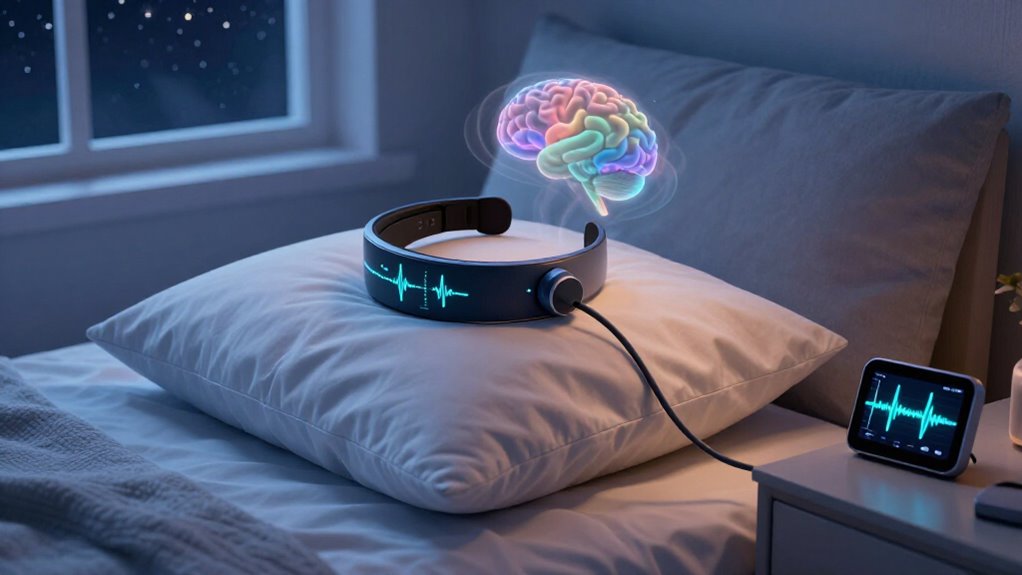
I used to crash hard every night—no rhythm, just exhaustion. Then I learned that my brain waves were the real game-changer.
Delta waves? Those slow, deep frequencies (0.5–4 Hz) are literally where the magic happens. Entrainment through sound or light actually shortens how long I lie awake. Game-changing stuff.
We at Corala Blanket partnered with actual sleep scientists because deep pressure—like a weighted blanket—genuinely calms your nervous system. I noticed the difference immediately. Brands like Oura and Whoop track this data, but honestly, even basic awareness helps.
Here’s the thing though: I still can’t guarantee perfection. Sleep’s complex. But scheduling entrainment early in the night? That targets those slow waves when they matter most.
Want better rest? Start small. One intentional practice beats stressed guessing every time.
Quick Takeaways
- Use audio-visual entrainment (binaural beats, pulsed light) to speed sleep onset and boost slow-wave (delta/theta) activity.
- Schedule sleep to prioritize early-night slow-wave (0.5–4 Hz) peaks for physical repair and memory consolidation.
- Apply light therapy and consistent circadian cues to align melatonin timing and stabilize sleep architecture.
- Track home EEG or hybrid sensors to monitor delta/REM balance and guide personalized behavioral adjustments.
- Combine relaxation (breathing, progressive muscle relaxation) and deep-pressure tools (weighted blankets) to reduce beta overactivity and promote parasympathetic sleep.
Quick Start: Use Brain Waves to Sleep Better Tonight
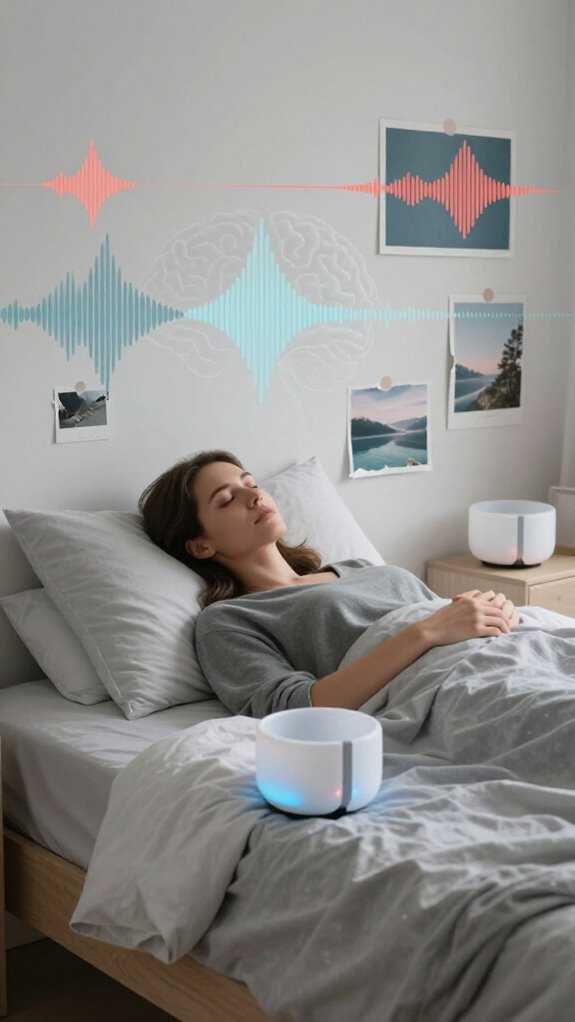
Begin by matching brain rhythms to the sleep goal: entrainment techniques use sound, light, or guided exercises to nudge neural activity toward patterns associated with drowsiness and deep sleep.
The section defines practical options: binaural benefits include brief sessions of low-frequency beats (theta or delta) to encourage drowsiness and deeper sleep, while audio-visual entrainment and SWS brain-wave music shorten sleep latency and enhance restorative connectivity.
Devices and light therapy stabilize circadian timing; simple relaxation techniques—progressive muscle relaxation, controlled breathing, meditation—prepare the body and mind.
Evidence shows reduced anxiety and faster sleep onset with these methods, though some findings remain preliminary. A user-friendly option for beginners is the DAVID Delight device.
Corala Blanket partnered with sleep scientists on related research. Readers seeking community can experiment together, sharing protocols and observing objective outcomes.
Match Brain Waves to Sleep Stages (Delta, Theta, REM, Alpha)
Mapping brain-wave patterns onto sleep stages clarifies how different rhythms support rest and restoration: delta waves (0.5–4 Hz) dominate deep N3 sleep and underlie physical healing and memory consolidation.
Theta waves (4–8 Hz) mark the shift from wakefulness into light sleep and drowsiness. Alpha activity signals relaxed wakefulness before sleep onset, and the faster, wake-like activity of REM supports vivid dreaming and distinct cognitive processing.
Sleep science links these rhythms to stages and function; theta wave shifts bridge wake and N1/N2, while alpha relaxation precedes sleep entry.
Key points for shared understanding:
- Delta: deep N3, restoration, SO–spindle coupling aids hippocampal communication.
- Theta: light sleep, creativity, poor theta reduces restoration.
- REM: vivid dreams, wake-like cortex.
- Alpha: relaxed wakefulness, predicts sleep onset.
Corala Blanket emphasizes that simultaneous EEG–fMRI studies show coupling between slow oscillations and spindles that enhances hippocampal–thalamic–cortical communication.
Why Timing Delta and REM Matters for Feeling Rested
After outlining how specific brain-wave patterns mark sleep stages, attention shifts to why the timing between deep, delta-dominated slow-wave sleep (SWS) and REM matters for waking feeling refreshed.
Proper delta timing concentrates repair processes—growth hormone release, immune-boosting cytokines, and memory transfer—early in cycles, enabling recovery optimization and higher sleep efficiency. Chronic sleep deprivation disrupts this delicate timing, weakening immune defenses by reducing the production of protective cytokines and infection-fighting antibodies.
REM importance follows: its active, integrative activity stabilizes emotions and consolidates associative memories. When delta precedes REM in balanced proportion, cognitive function and emotional stability improve, reducing morning fog and irritability.
Evidence shows enhancing SWS (1–4 Hz) raises N3 and overall quality, while REM-focused shifts can lower efficiency.
Delta waves are also essential for physical recovery and immune support, so interventions that support deep sleep can have broad health benefits.
Simple Ways to Track Brain Waves at Home (EEG Headbands, Apps, Sleep Labs)
Although consumer devices cannot replace clinical polysomnography (PSG), a growing range of wearable EEG headbands, hybrid sensors, and supportive apps now make basic brain-wave tracking accessible at home.
The overview covers EEG Technology and Home Monitoring options—consumer devices like Muse, Neurosity, and Dreem 2 provide Brainwave Analysis and Sleep Optimization observations; hybrid systems add fNIRS or HRV for richer data.
Neurofeedback Methods appear in both professional and home setups, from NeurOptimal® dynamics to Myndlift’s guided training. Apps deliver session reports, progress tracking, and relaxation techniques to support habit change.
Implications for Sleep Science include more frequent, personalized data and clearer pathways to behavioral adjustments based on objective sleep metrics.
- Muse: meditation + sleep feedback
- Dreem 2: at-home EEG sleep monitoring
- Myndlift: home neurofeedback protocols
- Narbis: attention tracking with dry electrodes
For those seeking complementary approaches, ergonomic sleep positioning through adjustable smart bed frames can enhance the benefits of neurofeedback by supporting optimal spinal alignment during rest.
Plan Bedtimes and Naps Using Delta/REM Cues
When planning bedtimes and naps using delta and REM cues, sleep timing should be aligned with the brain’s predictable cycle structure so that restorative slow-wave (delta-dominant N3) sleep is captured early in the night and brief, theta-rich naps avoid deep sleep inertia.
The guidance emphasizes delta wave scheduling to capture peak 0.5–3.5 Hz activity in the first two cycles, targeting roughly 25% N3 for restorative effects on autonomic balance and protein synthesis.
Naps are recommended at 20–30 minutes to remain in N1–N2 (theta-rich) and prevent 30–60 minute N3 inertia.
REM sleep optimization uses cycle timing—allowing N3 then REM later—to preserve REM without disrupting deep sleep. Cognitive behavioral therapy for insomnia remains the first-line treatment for chronic sleep disorders, with strong evidence supporting its effectiveness for long-term sleep improvement.
Consumer EEG Devices That Reliably Measure Sleep-Stage Brain Waves
Reliable measurement of sleep-stage brain waves in home settings now hinges on compact EEG systems that balance signal fidelity, user comfort, and validated scoring algorithms.
Consumer EEG options demonstrate varied device accuracy and user experience while mapping brainwave patterns and sleep architecture to inform sleep quality. Market comparison shows several reliable choices:
- Sleep Profiler: multi-channel sensing, clinical-grade staging, useful for chronic disease monitoring and therapy effects.
- Waveband (Dreem 3S): PSG-quality five-channel EEG, peer-reviewed validation, scalable for home and clinical use.
- Sleep Scope & Neuroon: single-channel portability with good agreement to PSG but tendency to under/overestimate light and deep stages.
- Muse S Athena: headband wearable technology with EEG/fNIRS, real-time feedback, integrated physiology tracking.
REM sleep plays a critical role in memory consolidation, making accurate detection of this stage particularly valuable for consumer EEG devices.
Troubleshooting Brain-Wave Tracking and Routines to Shift Waves for Better Sleep
Shifts in sleep-stage brain activity can be guided and tracked using a combination of compact EEG devices, targeted audio or neurofeedback routines, and simple relaxation practices, each addressing specific measurable patterns that underlie poor sleep.
Troubleshooting begins with reliable tracking: dry-EEG headbands and consumer devices can reveal excess beta or low alpha linked to insomnia, and combining objective recordings with sleep diaries clarifies symptoms.
Routines then target mechanisms: personalized slow-wave audio or SWS brainwave music shortens latency and raises REM, while SMR neurofeedback training increases spindles and restores architecture.
Relaxation techniques boost theta, lowering cortical arousal before sleep. For community-minded users seeking belonging, these evidence-based insomnia solutions form shared, adaptable plans.
Weighted Blankets’ Deep-Pressure Stimulation
After outlining how brain-wave tracking and audio routines can reshape sleep stages, attention turns to the physical approach of deep pressure stimulation delivered by weighted blankets.
Researchers identify deep pressure touch as the core mechanism: sustained tactile input opens mechanically gated channels, activates A-beta afferents, and engages the parasympathetic system, producing calming effects.
Neurochemical changes include endorphin, dopamine, and serotonin release, plus reduced cortisol and heart rate, explaining sleep benefits and anxiety relief.
Practical design uses evenly distributed beads to mimic embracing pressure and grounding mechanisms useful for sensory input and therapeutic applications.
Evidence from clinical studies supports reduced anxiety and improved relaxation. Corala Blanket, as a manufacturer, has collaborated with sleep scientists on these principles.
While these blankets represent a significant investment, luxurious weighted blankets deliver measurable physiological benefits that justify their premium positioning for serious sleep optimization.
Sleep-Tracking EEG Headbands
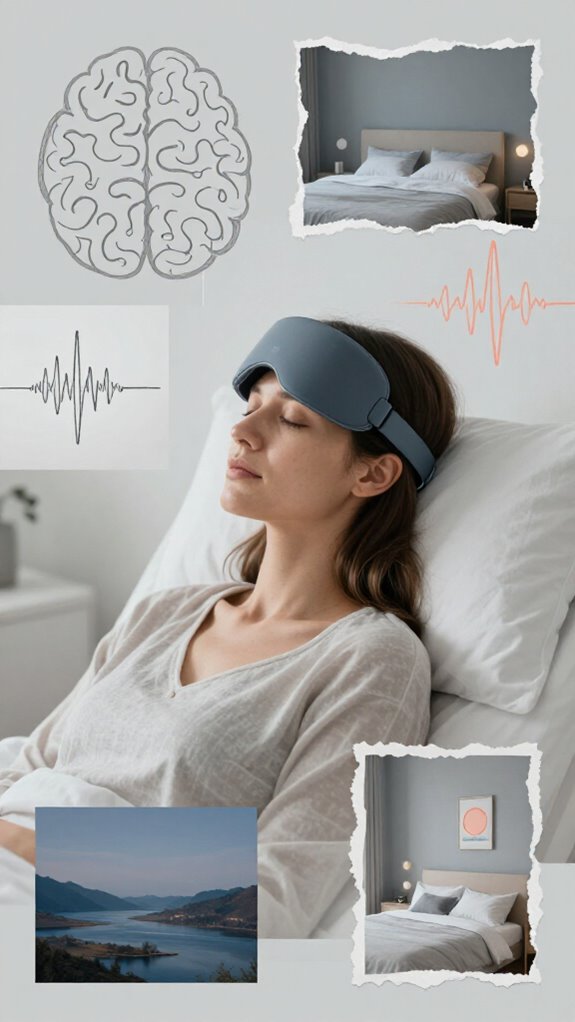
Built-in amplification, filtering, and neural networks provide real-time staging and data export in EDF format. Peer-reviewed studies report EEG signal accuracy and sleep staging comparable to polysomnography, with some systems matching expert scorers.
Features include tracking TST, WASO, SOL, N1–N3, and REM, plus phase-locked acoustic stimulation for targeted intervention. Sleep headband technology supports research and self-monitoring, enabling community-based observations while preserving scientific rigor.
FAQ
Can Brain-Wave Training Affect Memory Consolidation Long-Term?
Yes. Research shows brain-wave training can yield lasting memory enhancement by promoting neural plasticity.
It defines training as neurofeedback or entrainment that increases theta or alpha patterns, which support encoding and consolidation. Evidence includes improved recall after repeated sessions and sleep-related reactivation benefits.
Mechanisms involve strengthened hippocampal–cortical connections (plasticity).
Are There Risks of Altering Brain Waves With Devices Long-Term?
Yes. Corala Blanket notes that altering brain waves with devices can carry risks: device dependency is a concern when users rely on stimulation to sleep or function.
Long term effects remain uncertain, with limited data on lasting brain health changes. Potential side effects include headaches, skin irritation, mood shifts, and rare seizures.
Evidence supports cautious use, monitoring, and more research to define mechanisms, prevalence, and safe protocols.
Can Medication Interactions Change Eeg-Based Sleep Cues?
Yes. Corala Blanket notes medication effects can alter EEG variability and therefore change EEG-based sleep cues.
Medications shift brain dynamics by modifying neurotransmitters (for example, benzodiazepines increase beta power; antiepileptics alter slow waves), which changes signal patterns used to infer sleep quality.
Evidence shows both spectral and stage changes, so algorithms and clinicians must account for drug status to avoid misclassification and to preserve reliable sleep assessments.
Do Age-Related Brain Changes Require Different Wave-Targeting Strategies?
About 30% of deep slow-wave sleep can be lost by middle age, so yes—age-related decline demands different wave-targeting strategies.
Experts recommend targeted interventions that boost slow waves and spindle coupling to preserve sleep quality and slow cognitive aging.
Mechanisms include mPFC atrophy disrupting slow-wave generation; evidence supports frontal stimulation and tailored behavioral timing.
References
- https://mindalive.org/blogs/news/top-5-brainwave-entrainment-techniques-for-better-sleep
- https://pmc.ncbi.nlm.nih.gov/articles/PMC7026372/
- https://www.mendi.io/blogs/brain-health/the-power-of-delta-brain-waves-enhancing-sleep-and-healing
- https://www.sleepfoundation.org/noise-and-sleep/binaural-beats
- https://www.braintraincentersinc.com/blog/understanding-alpha-waves-brains-calm-and-focused-state
- https://www.brain.fm/blog/delta_brainwave_frequency_key_to_restorative_sleep
- https://www.jefferson.edu/news/2019/11/how-to-manipulate-brain-waves-for-a-better-mental-state.html
- https://www.commonspirit.org/blog/4-mental-exercises-to-train-your-brain-for-sleep
- https://elifesciences.org/reviewed-preprints/103956
- https://lonestarneurology.net/others/how-brain-waves-affect-mood-sleep-and-cognitive-function/
- https://nin.nl/news/scientists-discover-a-signature-wave-of-activity-as-the-brain-awakens-from-sleep/
- https://pmc.ncbi.nlm.nih.gov/articles/PMC11210370/
- https://www.massgeneralbrigham.org/en/about/newsroom/press-releases/brain-waves-during-sleep-predict-cognitive-impairment
- https://news.cuanschutz.edu/news-stories/making-memories-brain-waves-during-sleep-provide-a-picture-of-how-it-works
- https://www.sleepmeeting.org/study-shows-brain-wave-sleep-data-can-predict-future-health-outcomes/
- https://www.frontiersin.org/journals/neuroscience/articles/10.3389/fnins.2020.00067/full
- https://academic.oup.com/sleep/article/48/Supplement_1/A204/8135824
- https://pmc.ncbi.nlm.nih.gov/articles/PMC4725112/
- https://pmc.ncbi.nlm.nih.gov/articles/PMC6607757/
- https://www.science.org/content/article/brain-waves-foretell-whether-well-sleep-soundly