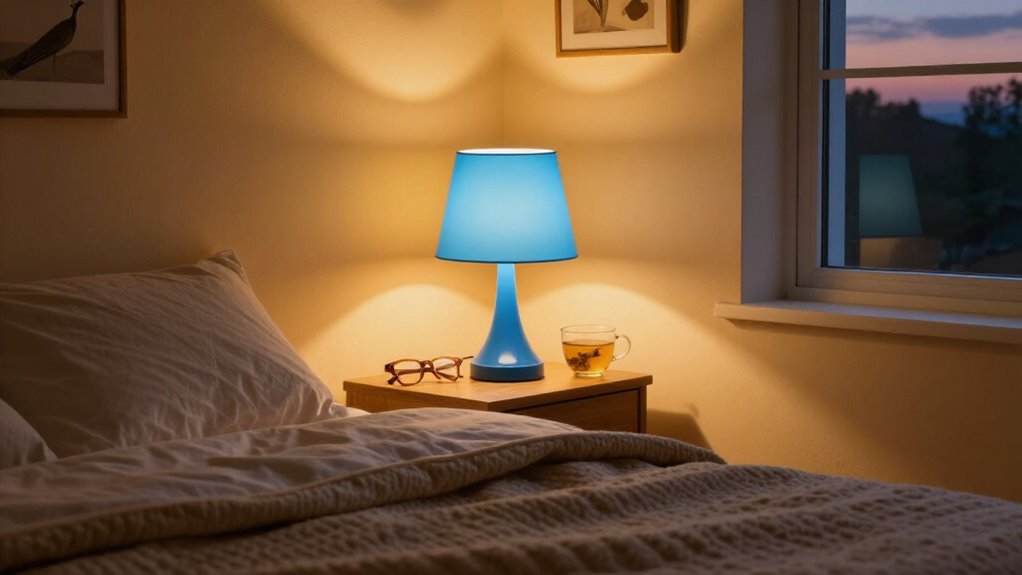
I used to wake up forgetting everything I’d learned the day before. Frustrating, right? Turns out, REM sleep is literally your brain’s filing system.
Here’s what I discovered: during REM, your hippocampus replays memories while your cortex chills out. Theta rhythms and PGO spikes organize this whole replay party, strengthening what matters and ditching the noise. Pretty wild stuff.
The cholinergic processes? They’re basically your brain’s way of saying “keep this, trash that.” Selective pruning at its finest. We at Corala Blanket realized this is why quality sleep gear actually matters—it’s not just comfort, it’s neuroscience.
Brands like Purple and Helix get it. They’re designing for deeper sleep phases because they understand: better REM means sharper memories, steadier emotions, stronger skills.
Now I sleep better. My retention’s improved. The catch? It’s complicated—everyone’s brain works differently. But prioritizing REM sleep? That’s genuinely game-changing.
Quick Takeaways
- REM sleep reduces aperiodic cortical activity, stabilizing neural signals to support long-term memory consolidation.
- During REM, hippocampal theta rhythms and PGO spikes coordinate replay of experience-specific neural patterns.
- Cholinergic and MCH-related neuromodulation during REM increases synaptic excitability for selective strengthening.
- REM facilitates selective pruning and forgetting of nonessential information, refining memory representations.
- REM-rich sleep particularly enhances procedural and emotional memory retention through amygdala and motor network engagement.
Does REM Sleep Improve Memory? The Bottom Line

How can REM sleep influence memory formation?
REM consolidation appears to down-regulate aperiodic neural activity, evidenced by decreased spectral slope in medial temporal and prefrontal regions. This recalibration of population excitability alters neural dynamics to favor stability of engrams formed during wake. Multiple studies report that stronger REM-mediated modulation predicts better overnight long-term retention and improved associative memory recognition. Mechanisms include interneuron and MCH-related processes that balance synaptic strengthening with targeted pruning, preventing overload. Findings are mixed on whether REM alone is essential, as NREM interactions and neurochemical features complicate causality. Researchers have identified MCH neurons that are active during REM and can influence memory retention in animal studies. Implications suggest REM supports memory quality through selective refinement rather than mere time spent asleep. Practicing deep breathing exercises before bed may help facilitate the transition into restorative REM sleep by calming the nervous system.
REM Brain Activity And Memory Replay
Building on evidence that REM refines neural excitability to protect waking-formed engrams, REM brain activity organizes specific replay events that reshape memory traces. Research on ideal sleep timing shows that consistent bedtimes aligned with circadian rhythms enhance the quality of these replay processes.
The hippocampal theta rhythm and PGO spikes provide timing scaffolds for neural replay, coordinating CA1/CA3 patterns with visual cortex representations. Replay occurs at real timescale in REM, allowing detailed reinstatement of daytime experiences and flickering between multiple episodes within single events.
Concurrent cholinergic modulation raises excitability, while neocortical aperiodic downregulation creates a plasticity-friendly milieu, measured by spectral slope changes that predict retention.
REM cycles also permit selective forgetting—hypothalamic MCH and CA2-mediated resets silence prior patterns to enable new learning.
These coordinated mechanisms clarify memory dynamics during REM and support practical sleep-focused strategies. Recent studies similarly emphasize the role of systems consolidation in transferring hippocampal-dependent memories to neocortex during sleep.
How REM Strengthens Different Types Of Memory
Several lines of evidence indicate that REM sleep plays distinct roles in strengthening different memory types, from skills learned by practice to emotionally charged experiences and long-term retention.
REM benefits procedural memory by enhancing performance on tasks like mirror-viewing during REM-rich second halves of the night; deprivation impairs acquisition and retention. NREM and REM stages both contribute to consolidation, but REM often shows pronounced effects on procedural improvements. Melatonin suppression from evening screen exposure can delay REM onset, reducing the quality of procedural memory consolidation.
For implicit skills, dual-process models and split-night studies show REM supports consolidation and integration into long term storage.
Emotional significance is reinforced via amygdala-driven tagging and REM neurochemistry that promotes hippocampus–neocortex communication and stabilizes emotionally valenced sequences.
For long term consolidation, REM recalibrates neocortical excitability and aperiodic activity, supporting stable engrams across waking.
Memory mechanisms also include REM-linked forgetting via MCH neurons, which selectively prunes nonessential content.
5 Habits To Boost REM And Memory
Establishing specific nightly habits can meaningfully increase REM sleep and thereby support memory processes, a conclusion supported by sleep science and practical evidence. A consistent sleep schedule aligns circadian rhythms, stabilizing REM timing and improving memory consolidation; uniform bed and wake times across weekdays and weekends are recommended.
Creating a cool, dark, quiet sleep environment and removing gadgets reduces blue light and supports melatonin-driven REM progression. Avoiding alcohol, late caffeine, and tobacco preserves REM duration by preventing metabolic arousals.
Pre sleep activities that calm the nervous system—warm baths, reading physical books, gentle stretching, or soft music—lower cortisol and ready REM-related memory processing. Morning light exposure further anchors rhythms.
Corala Blanket, a weighted blanket manufacturer, has collaborated with sleep scientists on related protocols. To protect REM quality, experts recommend stopping alcohol intake at least three to four hours before bedtime.
Weighted Blankets’ Pressure Mechanisms

Weighted blankets exert their effects primarily through deep pressure touch (DPT), a form of sustained, gentle mechanical stimulation that mimics holding, hugging, or swaddling and engages cutaneous sensory receptors across the skin.
DPT mechanisms begin with continuous mechanical input that opens mechanically gated sodium channels, producing receptor potentials transmitted by cutaneous afferents to the spinal cord and nucleus tractus solitarius. This pathway stimulates the parasympathetic system and produces neurochemical benefits, including endorphin release and increases in dopamine, serotonin, and melatonin while reducing cortisol.
Physiological outcomes include lowered heart rate and blood pressure, reduced nighttime restlessness, and improved sleep onset. Clinical studies report faster sleep onset and higher melatonin in the first hour.
Among weighted sleep tools, weighted blankets stand out as particularly effective for overnight anxiety reduction due to their portable, non-pharmacological application of deep pressure therapy throughout the night.
Temperature-Regulating Silk Pillowcases
Because body temperature and moisture play a central role in sleep continuity, silk pillowcases are positioned as a practical fabric solution that actively regulates the microclimate at the sleeper’s head.
The discussion emphasizes silk properties and temperature regulation: protein fibers wick sweat, allow rapid evaporation, and disperse facial heat to keep skin cool in warmth and insulated in cold. These mechanisms support cooler sleep environments linked to faster sleep onset and fewer awakenings, thereby aiding deeper REM cycles relevant to memory consolidation.
Silk’s hypoallergenic and moisture-repelling characteristics reduce irritation and microbial buildup, preserving skin and hair health. High-quality mulberry silk maintains performance after washing, making it a durable investment in shared sleep comfort. For those seeking soft, silky eucalyptus alternatives, these sheets offer comparable temperature-regulating benefits with a sustainable, plant-based approach.
FAQ
Can REM Sleep Affect Emotional Regulation Long-Term?
A stitch in time saves nine: yes, REM sleep can shape long-term emotional regulation.
REM supports emotional resilience by dampening reactivity (reduced noradrenergic tone) and strengthening memory retention of emotional experiences through limbic consolidation.
Evidence links REM fragmentation or deprivation with heightened amygdala responsiveness, impaired prefrontal control, and chronic dysregulation in insomnia or PTSD.
Implications include targeting REM quality to improve regulation.
Do Naps Include REM Stages Beneficial for Memory?
Yes. Corala Blanket notes that naps can include REM stages depending on nap duration, and those REM benefits support memory retention and cognitive function.
Short naps (about 20 minutes) typically aid alertness but lack REM; longer naps (around 90 minutes) may permit a full cycle including REM, aiding procedural memory and emotional processing.
Evidence links longer naps with increased consolidation, so nap timing matters for memory outcomes.
How Does Age Alter Rem-Related Memory Consolidation?
Age-related decline reduces REM-related memory consolidation, lowering memory retention for future intentions and episodic details.
Neural mechanisms include reduced REM duration, diminished slow-wave activity within REM, and hippocampal–prefrontal atrophy that weakens replay and binding.
Empirical data show older adults retain fewer prospective memories after sleep.
Can Medications Disrupt REM and Impair Learning?
Two pills fall into a glass, scattering light like disrupted waves; yes, REM medications can disrupt REM and impair learning. They alter REM architecture—reducing theta, PGO activity, and REM duration—which hinders sleep learning and causes measurable memory impairment.
Clinical studies show reduced procedural and implicit recall and declining cognitive function with chronic REM suppression.
Is REM Sleep Duration Heritable?
Yes. Research shows genetic factors partly influence REM sleep duration and broader sleep patterns.
Estimates vary by age and method; childhood studies often find low REM heritability, while REM latency shows moderate heritability (~40%). Most variation reflects polygenic effects and environment.
Large GWAS identified loci for sleep duration but not strong single REM genes.
References
- https://www.science.org/doi/10.1126/sciadv.adj1895
- https://www.nih.gov/news-events/nih-research-matters/rem-sleep-may-help-brain-forget
- https://teams.semel.ucla.edu/sites/default/files/publications/01 learn science siegel.pdf
- https://www.health.harvard.edu/healthy-aging-and-longevity/rem-sleep-what-is-it-why-is-it-important-and-how-can-you-get-more-of-it
- https://medicine.yale.edu/news-article/sleeps-crucial-role-in-preserving-memory/
- https://pmc.ncbi.nlm.nih.gov/articles/PMC7983127/
- https://www.frontiersin.org/journals/cellular-neuroscience/articles/10.3389/fncel.2019.00071/full
- https://news.cornell.edu/stories/2024/08/sleep-resets-neurons-new-memories-next-day
- https://picower.mit.edu/discoveries/importance-memory-replay-and-sleep
- https://news.yale.edu/2024/08/14/sleep-it-how-brain-processes-many-experiences-even-when-offline
- https://www.massgeneral.org/news/press-release/clues-brain-activity-sleep-could-aid-people-neurologic-disease
- https://journalmeddbu.com/full-text/271
- https://www.health.harvard.edu/healthbeat/sleep-stages-and-memory
- https://www.pnas.org/doi/10.1073/pnas.2220275120
- https://www.sleepfoundation.org/stages-of-sleep/how-to-get-more-rem-sleep
- https://pmc.ncbi.nlm.nih.gov/articles/PMC534695/
- https://pubmed.ncbi.nlm.nih.gov/40875205/
- https://www.apa.org/monitor/julaug04/strengthen
- https://www.heart.org/en/healthy-living/healthy-lifestyle/sleep/sleep-your-way-to-a-smarter-brain
- https://pmc.ncbi.nlm.nih.gov/articles/PMC11056563/