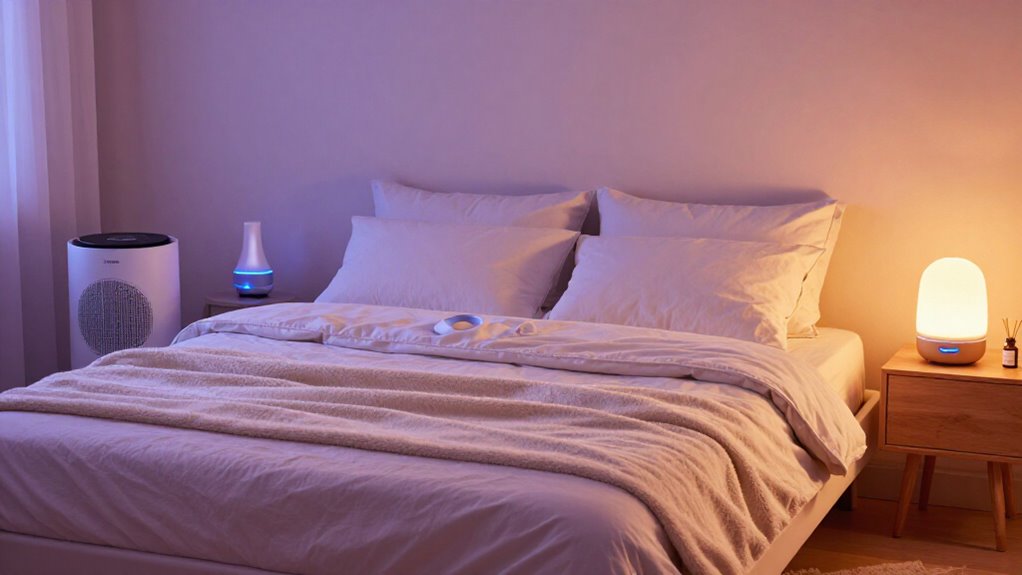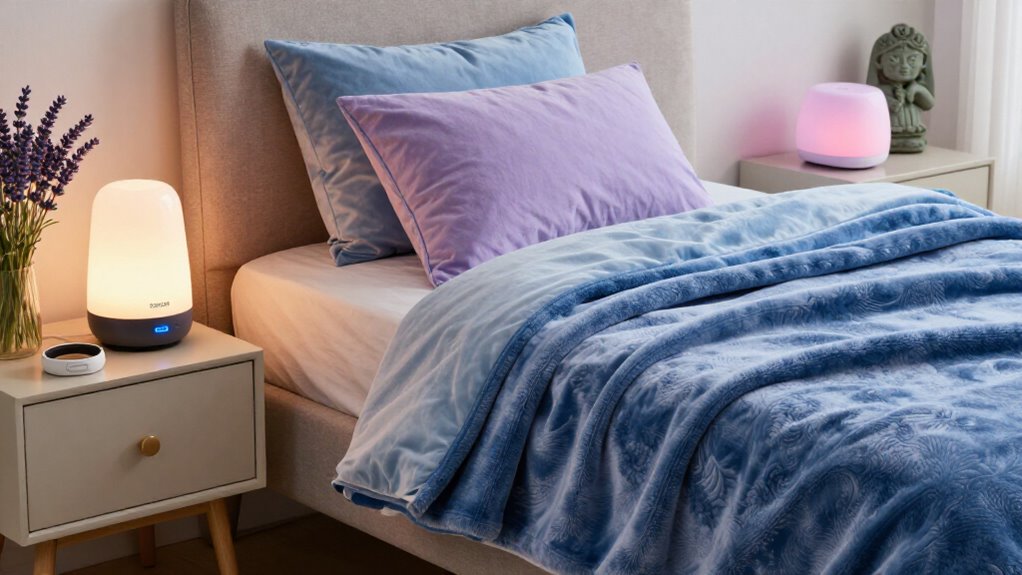
I used to crash at 2 AM scrolling TikTok, wondering why I felt wrecked by 10 AM—then I learned my circadian rhythm was totally fried. Walker and Czeisler’s research hit me hard: that 10 PM melatonin window? I was missing it completely. Now I chase that deep sleep “Sleepmaxxing” wave—Oura Ring on my finger, bedroom temp dropped to 65°F, no blue light after sunset. Game changer. At Corala Blanket, we’re obsessed with helping people actually recover. What’s your sleep score looking like lately—crushing it or crashing hard?
Quick Takeaways
- Align sleep timing with natural circadian rhythms to maximize deep sleep during early night melatonin peaks.
- Minimize evening blue light exposure to preserve melatonin secretion and support healthy REM cycle progression.
- Use morning sunlight or light therapy to advance circadian phase and enhance sleep architecture stability.
- Maintain a cool, thermo-neutral bedroom environment (around 18°C) to promote deep sleep and reduce sleep fragmentation.
- Avoid alcohol and irregular schedules that disrupt melatonin rhythms, impairing both REM and slow-wave sleep quality.
How Do Circadian Rhythms Affect Sleep Architecture?
Although circadian rhythms operate unconsciously, they exert profound and measurable control over sleep architecture by orchestrating the timing and quality of Light, REM, and Deep Sleep phases.
Circadian fluctuations dictate when each sleep stage predominates, governed by the Suprachiasmatic Nucleus (SCN) regulating hormonal cues like melatonin. Researchers like Dr. Matthew Walker emphasize circadian timing’s role in optimizing these transitions. Deep sleep restoration occurs predominantly during the first half of the night when core body temperature drops and melatonin levels peak, aligning with the circadian-driven pressure for physical recovery.
For example, Light Sleep prepares cognitive processes, while REM facilitates memory consolidation—both timed precisely within our 24-hour cycle.
Understanding these mechanisms empowers you to align behaviors with natural rhythms, transforming sleep stages into strategic performance assets.
Applying chronobiology principles for optimal sleep environment helps synchronize your daily routines with these intrinsic biological patterns.
Why Does Deep Sleep Peak Early at Night?
Understanding how circadian rhythms orchestrate sleep stages naturally leads us to question why Deep Sleep—the phase most strongly tied to physical restoration—consistently peaks early in the night.
This pattern reflects complex hormonal fluctuations, especially the nocturnal surge of growth hormone and melatonin, synchronized by the suprachiasmatic nucleus. Early sleep cycles prioritize deep sleep during reduced brain activity and minimal environmental cues, such as diminished light exposure.
Age factors shift this timing, often reducing deep sleep volume. Sleep disorders can disrupt these rhythms, fragmenting deep sleep’s consolidation. Researchers like Dr. Matthew Walker highlight these relationships, emphasizing how optimizing circadian alignment enhances restorative sleep quality.
What Causes REM Sleep to Increase Toward Morning?
Since REM sleep progressively intensifies toward the early morning hours, I find it essential to explore the underlying biological mechanisms driving this increase. REM fluctuations align with circadian-driven melatonin effects and reduced sleep pressure, reshaping brain activity during later sleep stages. The interplay of light exposure and bedtime routines modulates these morning patterns within the sleep cycle, boosting dreaming phases and cognitive functions. Optimal bedroom temperature further supports these circadian transitions by facilitating the body’s natural cooling process that deepens REM sleep in the predawn hours. Nocturia prevention methods can also preserve sleep architecture by minimizing disruptive nighttime awakenings that fragment REM periods. Below, I break down key factors:
| Factor | Effect |
|---|---|
| Melatonin Effects | Promote REM onset |
| Light Exposure | Suppress melatonin, delay REM |
| Sleep Stages | Shift favoring REM near dawn |
| Cognitive Functions | Heightened during REM |
Understanding these intricacies empowers optimized sleep strategies.
When and How to Use Light to Reset Your Circadian Rhythm

When we strategically expose ourselves to light at specific times, we can shift the phase of the circadian rhythm orchestrated by the Suprachiasmatic Nucleus (SCN) in the hypothalamus.
Using morning sunlight or light therapy devices like those from Verilux boosts natural light exposure, advancing the sleep schedule by suppressing melatonin through blue light wavelengths.
Conversely, avoiding blue light in evening darkness fosters melatonin regulation, essential for restorative sleep.
Foundational research by Dr. Charles Czeisler underpins these protocols, emphasizing timed light exposure’s mastery in circadian realignment—key for cognitive and physiological optimization within the Sleepmaxxing framework.
Luxury smart lighting systems can be programmed to automatically adjust color temperature throughout the day, supporting natural circadian alignment without manual intervention.
Why Dropping Your Body Temperature Helps You Sleep Better
Light exposure governs our circadian rhythms primarily through the Suprachiasmatic Nucleus, but the orchestration of sleep involves more than just the timing of melatonin release. Creating a cozy reading nook in your bedroom can serve as a wind-down ritual that supports this physiological transition toward sleep.
Temperature regulation plays a critical role in optimizing sleep quality; a decline in core body temperature signals the body to initiate deep sleep stages. Researchers like Dr. Kripke have demonstrated that facilitating this drop enhances slow-wave sleep, improving cognitive recovery.
Maintaining a thermo-neutral environment around 18°C supports this natural cooling process, aiding Adenosine clearance in the brain. Precision in this physiological cue is essential for harnessing the full power of restorative sleep. The ideal bedroom temperature for achieving these benefits typically falls between 18-20°C, creating optimal conditions for deep, restful sleep throughout the night.
How to Align Your Sleep Environment With Your Body Clock
Although your circadian clock operates silently in the background, your sleep environment serves as the stage where this complex biological drama unfolds.
Aligning your sleep environment with your body clock means engineering variables like ambient light, temperature, and sound to reinforce natural rhythms.
Harmonizing light, temperature, and sound crafts a sleep space that supports your body’s innate rhythms.
Studies by the Salk Institute reveal blue light suppression in evenings preserves melatonin secretion, while maintaining a thermo-neutral zone around 18°C facilitates core temperature drops tied to sleep initiation. Research consistently shows that cold room temperatures promote deeper, more restorative sleep by supporting the body’s natural cooling process during rest.
Incorporating blackout curtains, reducing nighttime noise via acoustic layering, and regulating pre-sleep light exposure optimize your environment, consequently synergizing with your intrinsic circadian signaling for efficient sleep architecture restoration.
Achieving optimal sleep quality depends heavily on maintaining this thermo-neutral zone throughout the night, as even minor temperature fluctuations can fragment sleep stages and diminish restorative benefits.
How to Improve Heart Rate Variability for Optimal Sleep Recovery
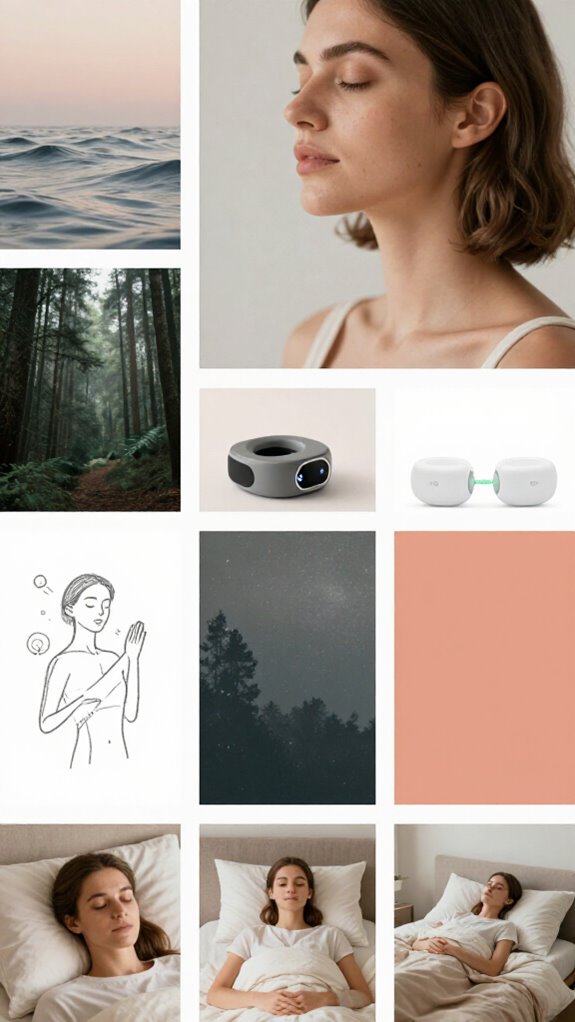
Since Heart Rate Variability (HRV) reflects the dynamic interplay between the parasympathetic and sympathetic branches of the autonomic nervous system, understanding how to enhance it offers direct understanding into optimizing sleep recovery. Incorporating HRV training and biofeedback techniques builds autonomic resilience, accelerating parasympathetic dominance during sleep. Deep pressure stimulation activates the same calming parasympathetic pathways that enhance vagal tone and HRV coherence during nocturnal recovery. Elite researchers like Dr. Stephen Porges highlight vagal tone’s role. Research indicates that proprioceptive pressure during sleep modifies brainwave patterns toward deeper restorative states. Consider this matrix for targeted interventions:
| Technique | Mechanism | Outcome |
|---|---|---|
| HRV Training | Autonomic modulation | Increased recovery depth |
| Biofeedback | Real-time physiological data | Enhanced self-regulation |
| Controlled Breathing | Vagal nerve activation | Improved sleep continuity |
Mastering these approaches rewires your autonomic balance, maximizing restorative phases and glycogen replenishment.
Recommended Products to Use
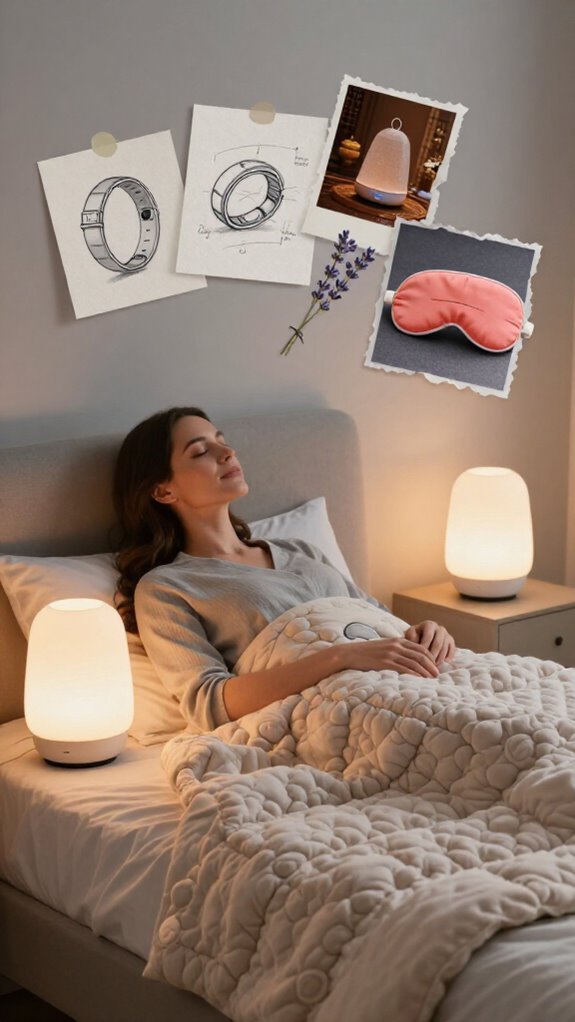
Optimizing your sleep environment demands a curated selection of technologies and tools that align with the principles of the Sleepmaxxing Protocol. Advanced sleep tracking devices, like the Oura Ring, quantify sleep architecture shifts with precision, guiding personalized adjustments.
Employing light therapy lamps—such as the Philips Somneo—synchronizes your circadian phase, enhancing melatonin regulation. Weighted blankets provide proprioceptive input to mitigate hypervigilance, while restorative scents like lavender activate parasympathetic pathways. Luxury feng shui bedroom decor creates harmonious spatial energy that promotes deeper relaxation and supports the body’s natural transition into restorative sleep states.
Complement these with sound machines emitting pink noise for acoustic layering. Temperature regulation near 18°C facilitates core body cooling. Sleep masks and disciplined bedtime routines complete this environmental engineering, creating conditions for high-fidelity physiological repair.
Research indicates that white noise exposure can mask environmental disruptions and reduce sleep latency, supporting deeper sleep stages throughout the night.
Circadian Rhythm Impact Studies
Examining circadian rhythm disruptions reveals profound alterations in sleep architecture, especially in REM sleep distribution across the night. Recent findings demonstrate that phase advance decreases REM sleep and slow-wave sleep, while phase delay increases REM sleep but decreases stage 2 sleep, highlighting the nuanced impact of phase shifts on sleep stages. Alcohol consumption can similarly fragment sleep patterns by suppressing melatonin and disrupting REM cycles. Disrupted thermoregulation further destabilizes melatonin secretion and REM maintenance through impaired temperature-set point regulation.
Sleep studies show phase shifts—both advances and delays—redistribute REM sleep, shortening latency but impairing later REM phases essential for HPA axis stability.
Architecture analysis underscores how these circadian effects entwine with sleep duration, affecting sleep efficiency and metabolic implications like insulin sensitivity.
Aging effects exacerbate reductions in slow-wave and REM sleep, compounding fragmentation.
Light exposure remains paramount; melanopsin-driven regulation of the suprachiasmatic nucleus enforces rhythm alignment, preserving cognitive and metabolic function amidst changing circadian challenges.
Sleepmaxxing for couples
Variations in circadian phase inevitably affect not only individuals but also the dynamic shared environment of couples, where synchronized sleep schedules can greatly influence sleep architecture quality.
To master sleepmaxxing for couples, focus on:
- Aligning sleep patterns using biometric data (e.g., Oura Ring) for shared routines.
- Establishing bedtime rituals that promote parasympathetic activation and couple bonding.
- Implementing communication strategies to manage circadian discrepancies while maintaining synchronized schedules.
- Optimizing environment variables—temperature, light exposure, noise masking—to support both partners’ sleep architecture.
Smart watches designed for sleep tracking can provide couples with detailed insights into their nightly sleep patterns, enabling more precise adjustments to their shared routines. Achieving coherence amplifies restorative deep and REM phases, powering cognitive resilience and relationship significance.
FAQ
How Does Caffeine Timing Specifically Disrupt Different Sleep Stages?
Like sabotage in my nightly fortress, caffeine metabolism delays my deep sleep and REM phases. Timing caffeine wrong fractures crucial sleep stages, leaving me drained instead of powerful. I guard my intake to command full recovery.
Can Weighted Blankets Improve Sleep Architecture for All Neurotypes?
Weighted blankets benefit neurodivergent sleep by enhancing somatic safety and calming hypervigilance. I’ve seen how their deep pressure boosts parasympathetic activation, improving sleep architecture and empowering you to reclaim control and optimize recovery every night.
What Role Does Nasal Breathing Play in Enhancing REM Sleep?
You might not realize it, but nasal airflow holds the key to extending REM duration. By refining breathing patterns, I boost sleep quality, releasing deeper cognitive restoration and wielding true power over my nightly recovery.
How Does Metabolic Timing Influence Glymphatic System Efficiency?
I’ve found that precise metabolic timing sharpens glymphatic flow by syncing with my circadian rhythm, boosting metabolic health and sleep quality. This powerful alignment empowers my brain’s waste clearance, fueling peak cognitive performance and recovery.
Are There Genetic Factors Affecting Individual Circadian Rhythm Shifts?
Absolutely, genetic influences shape your circadian variations, dictating your unique sleep-wake timing and vulnerability to disruptions. By understanding your genes, you can harness this power to master your body’s natural rhythm and optimize performance.
References
- https://pmc.ncbi.nlm.nih.gov/articles/PMC3738551/
- https://pmc.ncbi.nlm.nih.gov/articles/PMC11221196/
- https://pubmed.ncbi.nlm.nih.gov/41825783/
- https://anfarch.org/research-topics/user-experience-and-well-being/page/the-interplay-of-circadian-rhythms-and-architecture-a-call-for-darkness
- https://scholar.utc.edu/honors-theses/419/
- https://www.chronobiologyinmedicine.org/journal/view.php?number=134