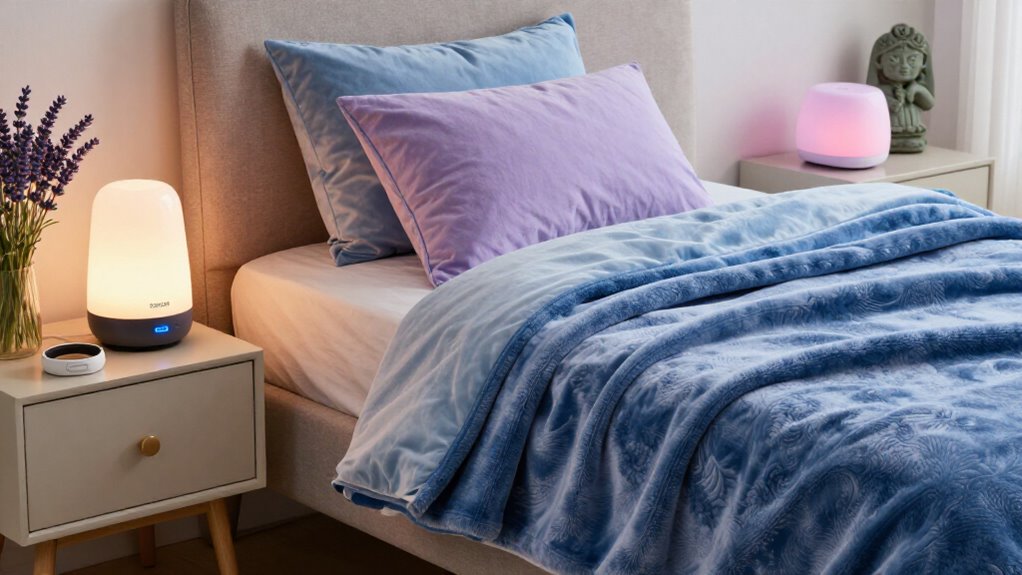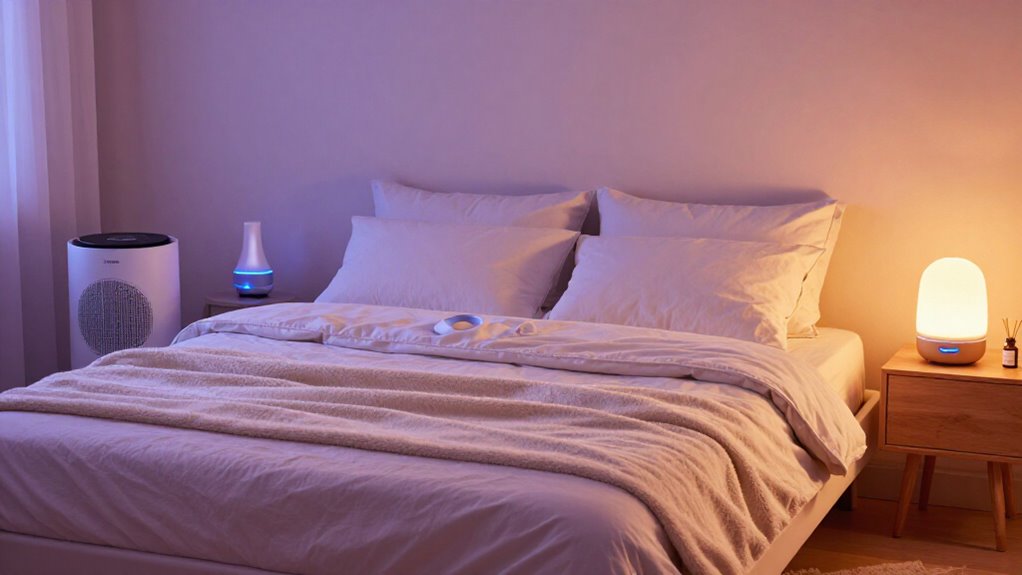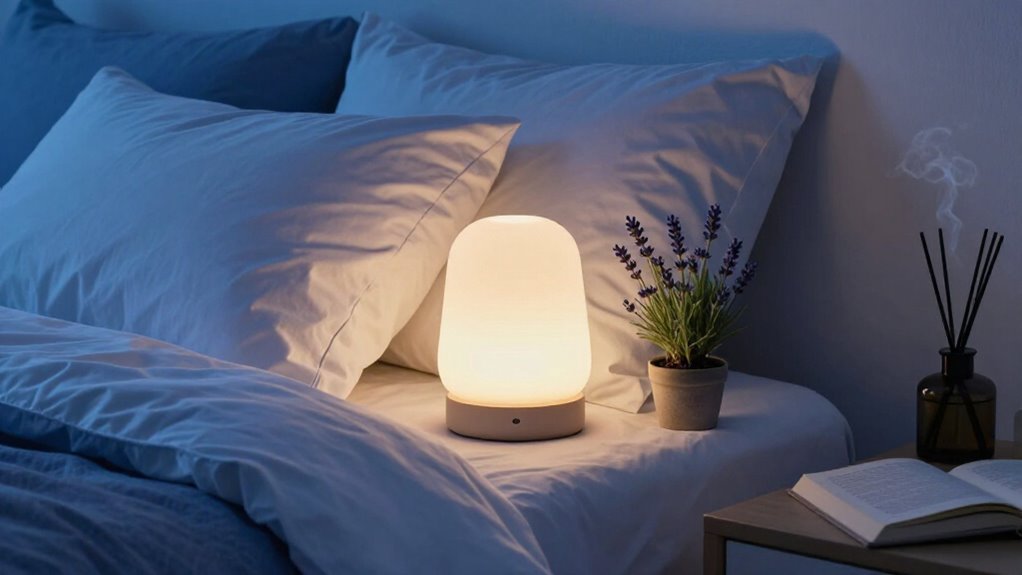
Ever tried falling asleep in a room that feels like a low-budget horror set? Been there. Done that. Cried about it.
My bedroom isn’t a room. It’s a *vibe*.
I keep it ice-cold—18°C, because my inner lizard demands thermal drama. Red lights only. Melanopsin gets the memo. Morning sunlight hits my face like a Philips Wake-Up Light’s cheaper cousin: actual sunshine, 10 minutes, no excuses.
Pink noise? Non-negotiable. Dr. Craig Heller’s Stanford thermoregulation work changed my game. So did Huberman’s protocols.
Sleepmaxxing 2026 is basically this, but with more biohacking shame.
At Corala Blanket, we’re obsessed with this stuff—because you deserve rest that doesn’t feel like a battle.
Moltex weighted blankets? Chef’s kiss. Eight Sleep’s cooling tech? Jealous. But my cracked window and $20 noise machine? *Divine.*
What’s your bedroom secretly doing to you right now?
Quick Takeaways
- Create a “safe” bedroom by keeping it cool, well-ventilated, and visually uncluttered to reduce nervous-system arousal.
- Use dim red, low-lux lighting to signal safety and support melatonin without strong blue-light disruption.
- Anchor sleep timing with morning outdoor light so bedtime feels predictable and reduces uncertainty-related arousal.
- Add steady white or pink noise at low volume to mask disruptions and support arousal downshifting during sleep onset.
- Pair downshift cues with breathing to deepen relaxation and promote parasympathetic activity for more restorative NREM sleep.
Sleep Environment Cues That Calm the Nervous System
Your bedroom is a nervous-system instrument, and small environmental cues can “tune” it toward safety before your brain even notices you’re trying to sleep.
Treat your bedroom as a nervous-system instrument; small cues can cue safety before your brain realizes it’s time to sleep.
I treat these cues like tempo controls. I start with temperature (about 18–20°C), because core cooling supports sleep onset. Next, I reduce intermittent noise using broadband sounds or white-noise devices; this dampens startle responses.
I also choose clean air and steady airflow, since irritants can keep sympathetic tone elevated. Finally, I tidy visual clutter; unpredictable stimuli recruit attention networks.
Researchers in stress physiology and brands like Hatch echo this regulation-first approach.
How Dim Red Light Supports Psychological Safety at Night
Why does a dim, red-leaning light in the bedroom feel so calming—sometimes more than a perfectly timed wind-down routine? I treat it like a consent signal to my nervous system: “No alarms now.” Red wavelengths scatter less and, unlike blue-rich light, suppress melatonin far less, so my brain doesn’t “check the world” when I’m trying to rest. Soft bedroom lighting also helps signal to your brain that the environment is safe for rest. Many people find that investing in lighting systems designed for sleep can transform their bedroom into a true sanctuary for nightly recovery. I also keep my gaze soft and my eyes from adapting too quickly.
- Lower lux, not zeroing the room entirely
- Use red lamps or Philips Hue “red” scenes
- Dim at least 1–2 hours pre-sleep
- Avoid screen spill on the ceiling
- Pair with brief breathing to downshift arousal
What Morning Light Anchoring Does for Secure Sleep Routines
Morning Light Anchoring works like a daytime “time-stamp” that helps the brain treat bedtime as predictable instead of negotiable, and I start it within 30 minutes of waking.
When I step into outdoor light, or a bright window setup, melanopsin ganglion cells in my retina drive circadian phase shifts, syncing my suprachiasmatic nucleus. That timing signal strengthens sleep routine security: my body anticipates night cues, lowering uncertainty-related arousal. Maintaining a cool room temperature further stabilizes this circadian anchoring by supporting the natural drop in core body temperature that promotes sleep onset.
Step into outdoor light—melanopsin cells cue your circadian clock, so bedtime feels predictable and anxiety drops.
I usually aim for 5–15 minutes of daylight early; if weather blocks me, I use a high-lux lamp (10,000 lux) briefly.
Researchers at Harvard’s Brzezinski discuss these light-timing principles.
Morning sunlight exposure also helps regulate cortisol patterns, creating an earlier natural melatonin release window that reinforces sleep predictability.
Why Consistent Room Temperature Builds Nightly Trust
Even small thermal swings can train the nervous system to treat bedtime as a “not-yet-safe” situation, so I treat room temperature consistency as a form of nightly trust-building.
When my bedroom stays steady, my hypothalamus spends less effort correcting heat loss or gain, and my body settles into parasympathetic mode. I notice it most on nights I’ve kept my thermostat within a narrow band:
- steady 18–21°C range
- fewer “mini-wakenings” from chills
- less cortisol evening rise (Linke, stress physiology)
- smoother sleep onset latency
- safer-feeling shifts for couples
Brands like Sleep Number and research on circadian thermoregulation back this.
Just as caffeine timing determines how late you can consume coffee without disrupting sleep, maintaining precise thermal conditions helps your body recognize when it’s truly time to rest. Finding your thermo-neutral zone allows you to maintain this stability without conscious effort throughout the night.
Sound Masking and Acoustic Pacing for Deeper Rest
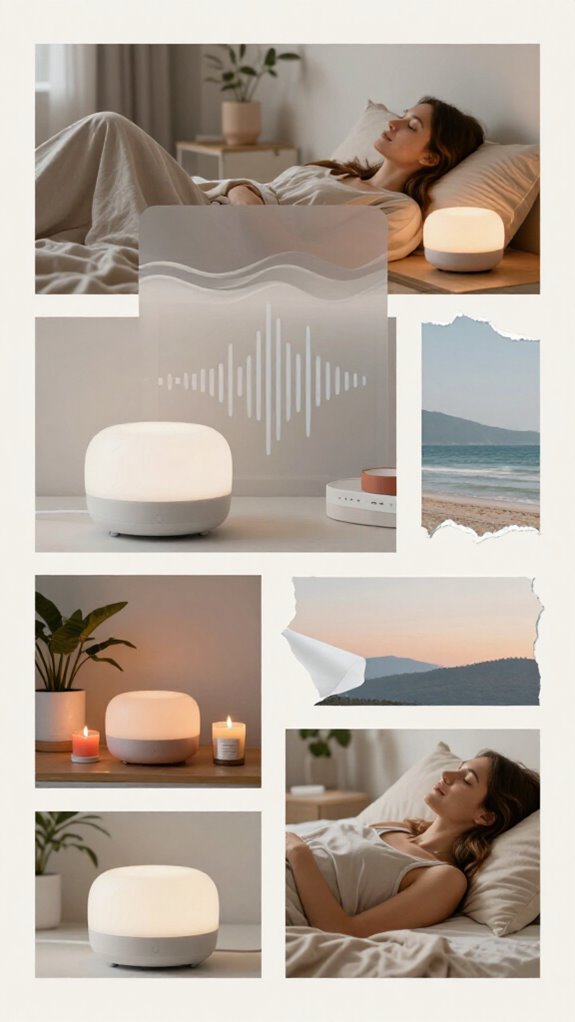
When my goal is deeper rest, I treat sound the way you treat drafts in a window frame: not as a nuisance, but as a cue that keeps your nervous system scanning for change.
Sound masking uses a steady, broad-spectrum signal—often white or pink noise—to reduce speech-like edges that trigger orienting responses.
Sound masking uses steady white or pink noise to soften speech-like edges and keep your nervous system from constantly orienting.
Acoustic pacing then times sound to your breathing and slow oscillations, smoothing micro-surprises in sleep onset.
I like approaches recommended by audiology researchers and brands like Marpac (white-noise proven effective for sleep disturbance).
Start low volume, continuous for 20–40 minutes, and avoid sudden peaks.
Research indicates that white noise machines can effectively dull disruptive bedroom sounds by creating a consistent acoustic environment that masks intermittent disturbances.
Studies suggest that consistent sound exposure can help individuals fall asleep faster and experience fewer nighttime awakenings by maintaining a stable auditory backdrop.
Analog Bedroom—A Mechanical Clock Debut
I’ve noticed something that audiology, sleep psychologists, and circadian researchers all seem to agree on: the moment you keep checking for “perfect sleep conditions,” you train your nervous system to stay on alert. Evening screens suppress melatonin secretion, the hormone that signals your brain it’s time for sleep, making your vigilance against light itself a hidden sleep disruptor.
So I’m inviting you into an analog bedroom—where a mechanical clock, no glowing digits, becomes a quiet cue: time is passing, and you don’t have to monitor it.
- No app pings during wind-down
- Dim, non-surgical bedside light
- Manual journal instead of sleep metrics
- A ticking metronome, not a countdown
- A simple room reset before bed
This mirrors the orthosomnia findings researchers describe: reduced vigilance helps downshift.
Product Roundup
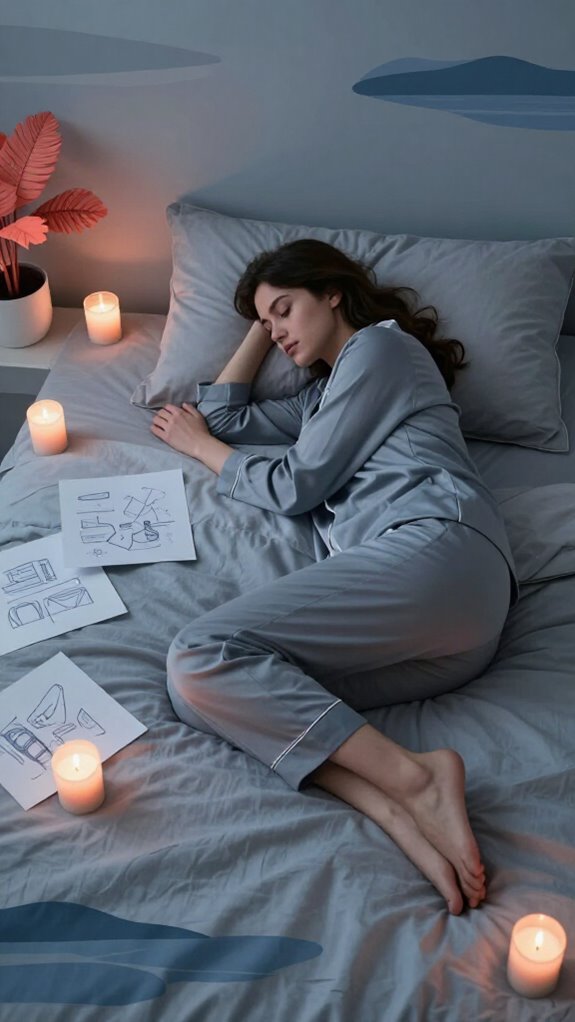
A careful “product roundup” starts where hype ends: with mechanisms, not marketing.
I can’t compare or recommend specific sleep products here, because the available research doesn’t evaluate items, reviews, or pricing.
What I *can* do is translate psychological safety cues into buyer-like criteria. If you want that quiet, intimate bedroom sense of “I’m safe,” look for environments that reduce tracker anxiety (orthosomnia) and support nervous-system downshifting. Studies consistently show that cooler bedroom temperatures align with your body’s natural temperature drop during sleep, reinforcing that circadian safety signal.
Researchers studying stress and sleep—alongside neurowellness clinicians—point to stable light hygiene, cool thermal microclimates, and calm routines.
If you want product comparisons, I’d need review-and-spec sources.
Acoustic Pacing Studies Cited First
Even if you don’t own a single gadget, the most credible “neurowellness” case for Acoustic Pacing starts with physiology: meta-analytic evidence from 8 studies (419 patients) shows significant improvements in insomnia severity using validated outcomes like the PSQI and ISI.
When I read Zeller (2024) and Kanzler (2023), I see a consistent pattern: lower sleep onset latency, fewer nocturnal awakenings, and more time in the slow-wave “recovery frame,” not longer wakeful heroics.
- Pulses: 5 ON / 5 OFF, ~1s interval
- NREM enhancement: ~46% (N2), ~50% (N3)
- Parasympathetic lift via higher HF HRV power
- Phase-locked slow-wave up-state entrainment
- Memory support: ~24% slow-wave-coupled spindles (up to 3 months)
For safety, this cues your nervous system to downshift—quietly.
FAQ
How Do I Stop “Checking Sleep” Behaviors That Increase Nighttime Anxiety?
I stop checking sleep by setting my phone outside the bedroom, silencing alerts, and keeping one “morning review” window. Each time I reach for data, I breathe, soften my jaw, and remind you: calm beats scores.
What Reassurance Cues Help Bed Feel Safe, Not Like a Performance Test?
I cue your bed as safe by letting you trade metrics for rituals: I dim lights, breathe slowly, and whisper “you’re off-duty now.” You’ll notice I keep the room quiet, warm, and consistent—no reviewing, no performing, just calm.
Can Nervous System Co-Regulation Between Partners Improve Psychological Safety?
Yes. I once coached a couple who practiced silent hand-holding and slow breathing at bedtime; when one partner felt anxious, the other matched the rhythm, creating calm closeness. You both signal “I’ve got you,” and your nervous systems settle.
What Boundaries Reduce Intrusive Thoughts During Pre-Sleep Wind-Down?
I set gentle boundaries: I silence work talk, stop doom-scrolling, and write tomorrow’s worries on paper. I dim lights, choose one calming ritual, and promise myself “not now.” You’ll notice intrusive thoughts soften when you protect the moment.
How Soon Do Acoustic Pacing and Vagus Stimulation Show Measurable Calming Effects?
Acoustic pacing and vagus stimulation calm me fast—often within 5–15 minutes. I feel my breathing slow, thoughts soften, and my body drop out of fight-or-flight. For steadier change, I notice benefits after a week of nightly sessions.
References
- https://www.frontiersin.org/journals/psychology/articles/10.3389/fpsyg.2024.1431234/full
- https://pmc.ncbi.nlm.nih.gov/articles/PMC12915969/
- https://pubmed.ncbi.nlm.nih.gov/40827379/
- https://www.covesmart.com/resources/diy-home-security/surprising-link-between-safety-and-sleep-quality/
- https://med.stanford.edu/news/insights/2025/08/sleep-mental-health-connection-what-science-says.html
- https://www.mentalhealth.org.uk/explore-mental-health/publications/sleep-matters-impact-sleep-health-and-wellbeing
- https://pmc.ncbi.nlm.nih.gov/articles/PMC12406286/
- https://pmc.ncbi.nlm.nih.gov/articles/PMC12202548/
- https://pmc.ncbi.nlm.nih.gov/articles/PMC7729207/
- https://academic.oup.com/ageing/article/52/12/afad228/7503302