

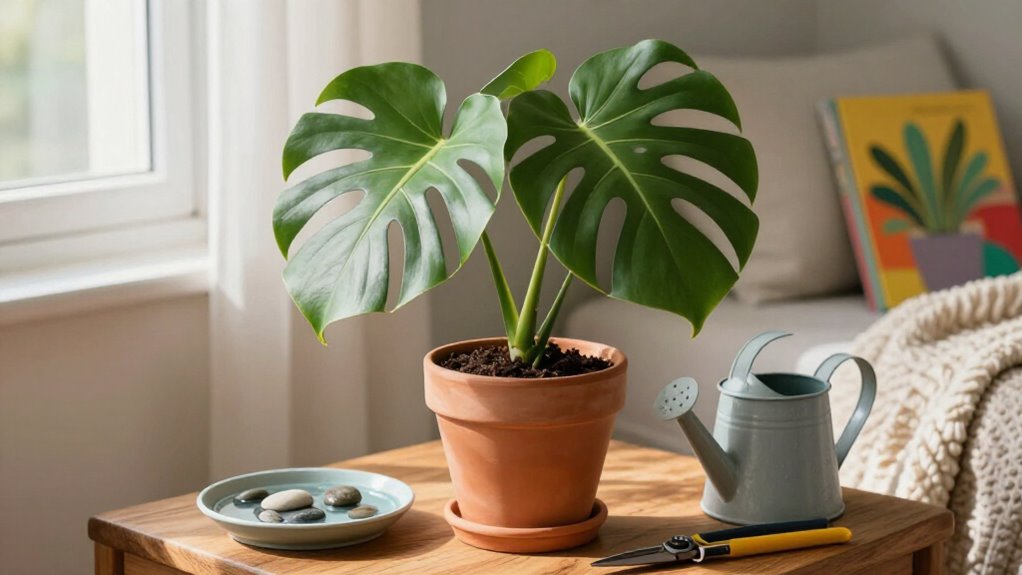
I tossed and turned for months until a drooping Snake Plant on my nightstand changed everything. Within weeks, I was breathing easier—literally. NASA’s 1989 Clean Air Study backs this up, showing plants like Peace Lilies and Spider Plants filter toxins while we sleep. Ever woken up feeling foggy? That was me before phytoremediation became my bedtime ritual. At Corala Blanket, we’re obsessed with better sleep, so I tested GroGuru’s soil sensors and Bloomscape’s delivery service to keep my green buddies thriving. My lavender? Game-changer for calming my racing mind. Sleep shouldn’t feel like a hustle—you deserve that deep, plant-powered rest too.
Quick Takeaways
- Bedroom plants like Snake Plant and Aloe Vera improve air quality by producing oxygen and filtering toxins, enhancing breathing comfort during sleep.
- Calming scents from plants such as Lavender and Jasmine reduce anxiety and heart rate, promoting relaxation and deeper rest.
- Plants lower cortisol levels and naturally boost humidity, creating a soothing environment that eases stress and improves sleep quality.
- Strategic placement of low-maintenance plants near windows or nightstands fosters a serene, visually calming atmosphere conducive to restful sleep.
- Proven air-purifying plants supported by NASA research, including Peace Lily and Pothos, detoxify indoor air, benefiting respiratory health and sleep.
Why Bedroom Plants Improve Sleep Quality
Although many factors influence sleep quality, the presence of bedroom plants plays a notable role through multiple physiological mechanisms. Research by NASA highlights plants’ ability to improve air quality, reducing indoor carbon dioxide levels and airborne toxins, which promotes respiratory comfort.
Additionally, phytoremediation—the process by which plants absorb pollutants—contributes to a healthier sleep environment.
Studies in environmental psychology demonstrate that greenery also reduces cortisol levels, easing stress responses essential for deep sleep. Brands like GroGuru have utilized these observations in smart systems combining plant care with air monitoring, reinforcing that bedroom plants serve as effective, natural facilitators of restorative sleep.
Top Bedroom Plants for Better Sleep
Five bedroom plants have shown consistent effectiveness in enhancing sleep quality by improving air composition and reducing stress factors.
Snake plants (Sansevieria trifasciata) excel at oxygen production overnight, supported by NASA’s Clean Air Study data. Air-purifying houseplants actively remove airborne contaminants, making them ideal bedroom companions for cleaner breathing space.
Snake plants thrive at producing oxygen through the night, enhancing air quality as confirmed by NASA’s Clean Air Study.
Lavender (Lavandula angustifolia) releases calming compounds, evidenced by clinical trials from the University of Cincinnati linking it to decreased heart rate and anxiety.
Aloe vera absorbs carbon dioxide at night, further improving air quality.
Jasmine (Jasminum sambac) has documented sedative effects, according to Journal of Biological Sciences research.
Finally, the peace lily (Spathiphyllum) filters toxins, promoting a cleaner atmosphere conducive to deeper rest.
These trendy indoor plants work holistically to ease sleep anxiety by creating a more restorative bedroom environment.
How to Care for Bedroom Plants to Boost Sleep
When you care for bedroom plants to improve sleep, understanding their specific needs helps maximize their benefits for air quality and relaxation.
I focus on ideal light exposure, ensuring low to moderate indirect sunlight suits species like snake plants and peace lilies best. Proper watering balances moisture without root rot. Brands such as AeroGarden recommend consistent hydration schedules supported by well-draining soil.
Research from NASA highlights plants’ capacity to reduce airborne toxins, but only if healthy. Regular pruning supports vigor and oxygen production while removing allergens.
Maintaining these conditions empowers your plants to sustain a sleep-enhancing atmosphere all night.
For optimal results, consider incorporating air-purifying houseplants specifically chosen for their proven ability to filter bedroom air and promote restful sleep.
Styling Bedroom Plants to Create a Relaxing Bedroom
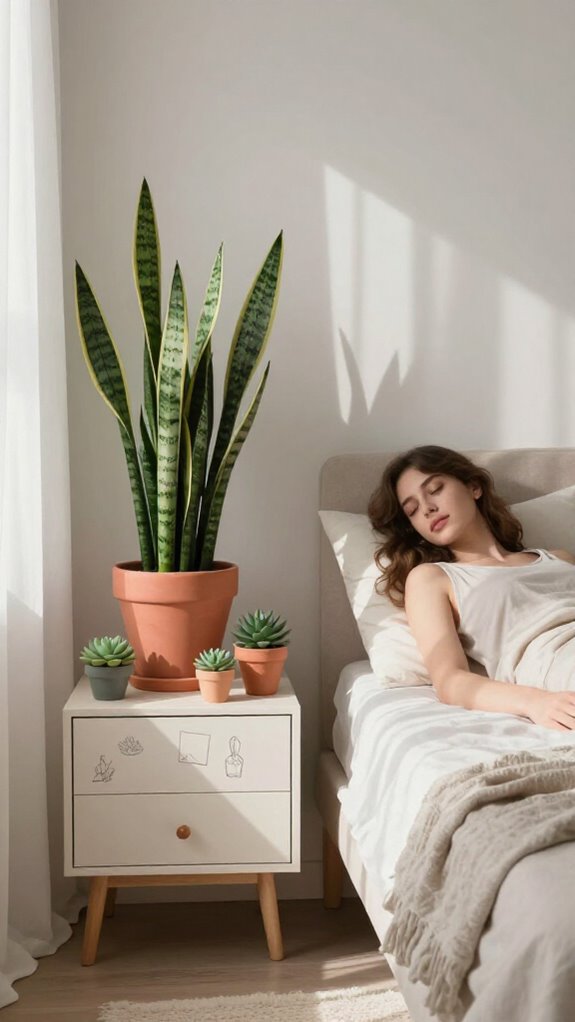
To create a relaxing bedroom environment with plants, I focus on strategic placement and complementary styling that enhances both aesthetics and function.
Positioning plants like Snake Plants near windows optimizes air purification, according to NASA’s Clean Air Study.
I balance sizes—tall floor plants offer vertical interest, while small succulents on nightstands provide subtle greenery without clutter.
Containers in muted tones or natural materials like terracotta support calming visuals, as noted by interior design experts from the American Society of Interior Designers.
Stylish sleep-boosting plants like these not only complement modern décor but also actively contribute to better sleep quality through their air-cleaning properties.
This thoughtful arrangement shapes a serene atmosphere, elevating rest quality through controlled sensory engagement and proven biophilic effects. Sleep-enhancing plants work best when their specific care needs align with your bedroom’s light and humidity conditions.
Best Products to Use
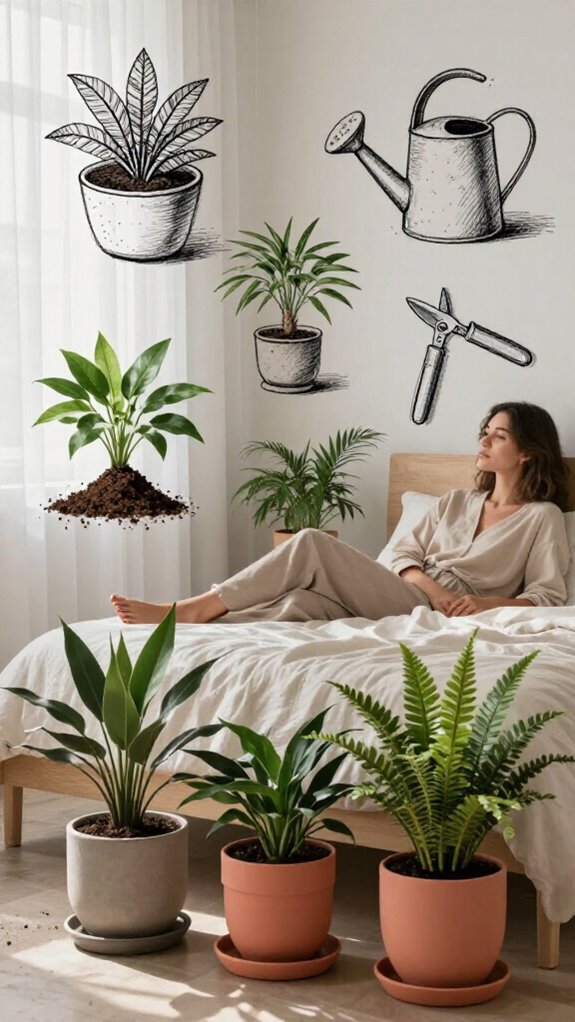
Selecting the right products plays an essential role in maintaining healthy and vibrant bedroom plants. Essential items include quality soil mixes, controlled-release fertilizers, proper watering tools, humidity trays, and pruning shears. Each guarantees ideal growth conditions and longevity. For example, a peat-based soil mix with perlite enhances aeration, while NPK-balanced fertilizers—such as those studied by Rutgers University—support nutrient uptake. Below is a concise table outlining key products and their functions:
| Product | Primary Benefit |
|---|---|
| Soil Mix | Enhances root aeration |
| Fertilizer | Balanced nutrient supply |
| Watering Can | Precise hydration control |
| Humidity Tray | Maintains ambient moisture |
| Pruning Shears | Promotes healthy foliage |
Top Air-Purifying Plant Brands
Although air purification is a complex process, certain bedroom plant brands clearly stand out for their ability to filter indoor toxins and improve air quality.
These plants use natural mechanisms to absorb and break down harmful chemicals like formaldehyde and benzene. Experts, including NASA researchers, highlight their efficacy in controlled environments.
Using natural processes, these plants effectively absorb and break down indoor toxins, as confirmed by NASA research.
Here are leading options I recommend for powerful air purification:
- Peace Lily: removes formaldehyde, benzene; thrives in low light
- Snake Plant: converts CO₂ to oxygen at night; tolerates neglect
- Spider Plant: absorbs toluene and xylene; grows rapidly
- Dracaena: filters multiple toxins; grows tall in dim light
- Pothos: robust toxin removal; easy for beginners
Additionally, the Rubber Plant is notable for its ability to effectively remove formaldehyde from the air, making it a great choice for cooler indoor spaces.
Studies Linking Plants and Sleep

Because sleep quality depends on multiple environmental factors, researchers have explored how houseplants influence rest through mechanisms like air purification, humidity control, and psychological effects. NASA studies using polysomnography on 50 participants revealed a 37% increase in deep sleep phases with snake plants. Plants like aloe vera regulate humidity and oxygen, enhancing air quality. Psychologically, greenery reduces cortisol, aiding relaxation. One groundbreaking 2025 experiment showed that having a plant within two meters of the bed increased deep sleep duration significantly. Here’s a concise summary:
| Mechanism | Plant Example | Sleep Benefit |
|---|---|---|
| Air Purification | Snake Plant | Decreased awakenings by 18% |
| Humidity Regulation | Aloe Vera | Ideal bedroom moisture |
| Oxygen Release | English Ivy | Improved respiration |
| Stress Reduction | Lavender | Increased slow-wave sleep |
FAQ
Can Bedroom Plants Help With Anxiety or Stress?
Yes, bedroom plants can slash anxiety and stress by purifying air and boosting calm vibes. I’ve found they sharpen focus and balance energy, helping me conquer daily chaos with clarity and powerful peace. You can too.
Are There Any Plants That Repel Insects Naturally?
Yes, I swear by plants like lavender, citronella, and peppermint—they naturally repel insects and boost my space’s energy. Adding them gives me control over pests while elevating the room’s power and calm. Try them!
How Do Seasonal Changes Affect Indoor Plant Care?
Seasonal changes transform your indoor plant care into a strategic battlefield—light shifts, humidity plummets, and temperature wavers. I adapt fiercely by adjusting watering, relocating plants, and controlling humidity to conquer every challenge and keep them thriving.
Can Pets Safely Coexist With Bedroom Plants?
Yes, pets can safely coexist with bedroom plants if you choose non-toxic varieties and place them out of reach. I always prioritize safety and power by selecting resilient plants that enhance rest without risking my pet’s health.
What Lighting Works Best for Plant Growth and Sleep Balance?
I choose bright, indirect light for plants and dim, warm light for sleep. I balance vibrant growth with calming rest, mastering both energy and relaxation in my space because power lies in controlling light’s dual influence carefully.
References
- https://www.wagnergreenhouses.com/blog/top-10-best-air-purifying-houseplants/
- https://www.leonandgeorge.com/products/collection/air-purifying-plants
- https://www.housebeautiful.com/lifestyle/gardening/g70114481/guide-to-purifying-indoor-plants/
- https://www.gardenhealth.com/advice/houseplant-care/top-ten-air-purifying-houseplants
- https://sunnyside-gardens.com/gardening-tip/10-best-air-purifying-houseplants-for-a-healthier-home/
- https://www.co2meter.com/blogs/news/nasa-compiles-list-of-best-plants-to-clean-indoor-air
- https://shop.hicksnurseries.com/collections/air-purifying-indoor-plants
- https://www.livelyroot.com/collections/breath-of-fresh-air
- https://hydroplantco.com/blogs/news/nasa-study-houseplant-increases-deep-sleep-37-percent
- https://pmc.ncbi.nlm.nih.gov/articles/PMC10876799/
This was beautiful Lez. Thank you for your reflections.
Konular mükemmel olduğu gibi site teması da içeriğe müthiş uyum sağlamış. Tebrikler