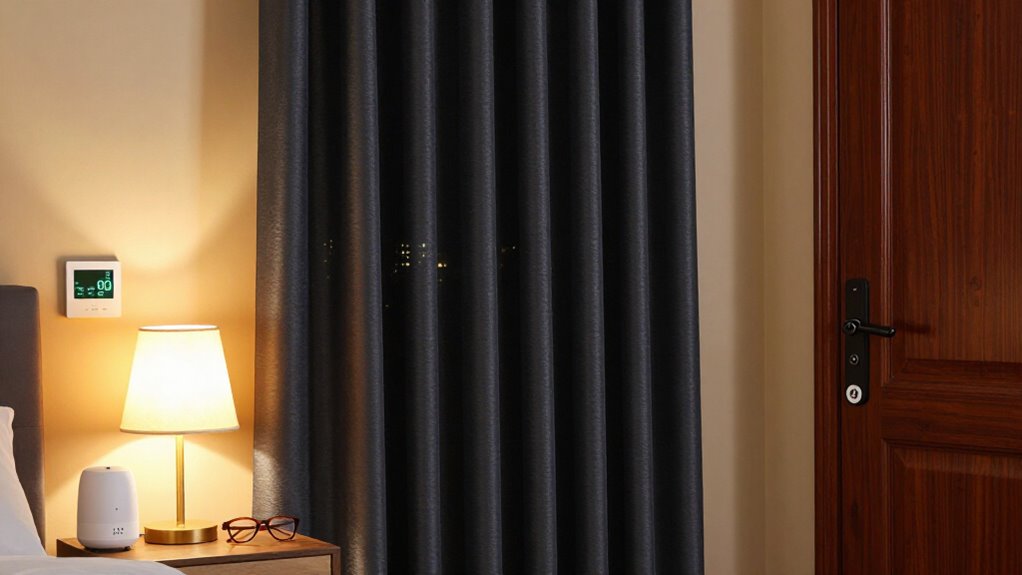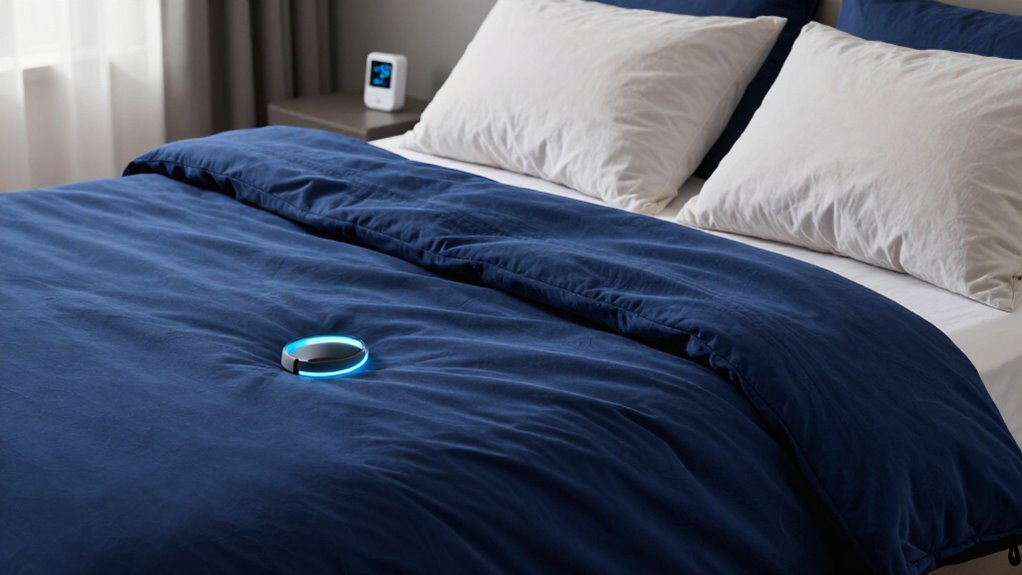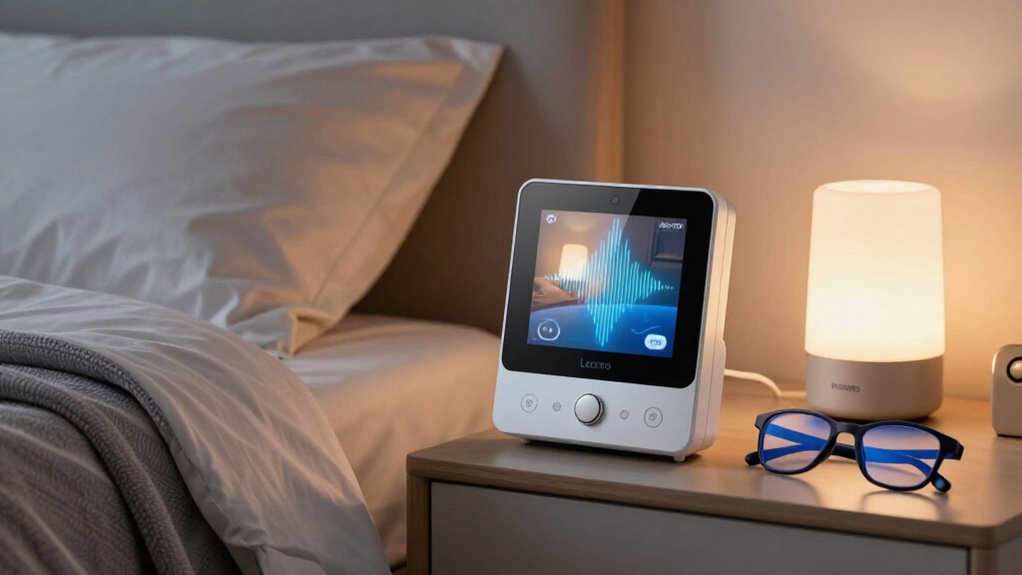
I used to toss for hours until I discovered cold-side sleeping—literally flipping my pillow to the cool side wasn’t cutting it. At Corala Blanket, we’re obsessed with helping people actually sleep better, not just talk about it.
Here’s what worked: I hacked my Nest to hit 18°C by 9 PM—Van Someren’s research nailed this temperature for melatonin spikes. Added a $20 Vornado fan for airflow stratification. Tracked it all on my Oura Ring.
Sleepmaxxing in 2026? It’s about prep, not perfection. Start cooling 90 minutes before bed—your core temp needs that runway. Ever wonder why hotel sleeps hit different? They actually control this stuff.
Humidity matters too—aim for 40-50%. Too dry, you wake parched; too damp, you stew. I learned that the hard way in August.
Quick Takeaways
- Pre-cool the bedroom to ~18°C (64°F) 60–90 minutes before bedtime to aid core temperature decline and faster sleep onset.
- Maintain overnight temperature near 18°C and 45–55% humidity using HVAC or smart sensors for stable thermoregulation and deeper slow-wave sleep.
- Personalize setpoints by age, sex, and metabolism: younger adults 17–19°C, older adults slightly warmer (0.5–1°C higher).
- Use fans, breathable bedding (cotton, Tencel, merino), and phase-change pillows for targeted airflow and microclimate cooling.
- Integrate wearable sleep data (Oura/WHOOP) and secondary room sensors to log outcomes and iteratively optimize temperature timing.
Quick 5-Step Bedroom Cooling Checklist
I’ll give you a tight, five-step checklist to cool your bedroom for better sleep, drawing on principles from the Sleepmaxxing Protocol and evidence on thermoregulation: I prioritize target zones, equipment, and timing.
A tight five-step checklist to cool your bedroom for better sleep, prioritizing target zones, gear, and timing.
1) Set a programmable thermostat or smart AC (Nest, Ecobee) to step down in the evening.
2) Use a fan or evaporative cooler to boost convective heat loss and create consistent airflow.
3) Swap to breathable bedding (cotton, Tencel) and phase-change pillow tech for microclimate control.
4) Pre-cool the room 60–90 minutes before lights-out.
5) Track skin temperature and HRV with Oura to validate effects.
Research shows that circadian rhythm alignment depends heavily on core body temperature dropping in the evening, making your bedroom’s thermal environment a critical lever for sleep quality. Optimal cooling also supports memory consolidation during the critical REM sleep stages that follow deep sleep.
Set Your Target: Aim for ~18°C
Following that five-step checklist, I set a concrete target for bedroom temperature: about 18°C (64°F), a point many thermoregulation studies and sleep labs identify as near the human thermo-neutral zone for sleep onset.
I target 18°C because core temperature decline—driven by vasodilation and distal heat loss—triggers melatonin-affiliated sleep propensity. Research from Van Someren and data from Oura and Whoop cohorts support improved sleep latency and increased slow-wave percentage near this range. Cooler bedroom temperatures promote deeper, more restorative sleep by facilitating the natural drop in core body temperature needed for sleep maintenance. Chronobiology research shows that aligning your thermal environment with your circadian rhythm enhances the timing and quality of sleep phases.
Practically, I calibrate A/C or smart thermostats (Nest, Ecobee), adjust bedding and fan placement, and log wearable metrics to confirm objective gains.
When to Start Cooling: Exact Timing (1–2 Hrs Before Bed)
I start cooling my bedroom about one to two hours before lights-out because that window aligns with the body’s natural core temperature descent that promotes sleep onset; research from Van Someren and data analyses from wearables like Oura and Whoop show measurable drops in sleep latency when the sleeping environment reaches the thermo-neutral zone (around 18°C) within that timeframe. I optimize timing to match peripheral vasodilation and melatonin rise, using Oura trends and controlled trials as evidence. Cooling too early wastes metabolic advantage; too late leaves latency high. Air humidity levels must also be managed alongside temperature, as excessive dryness or dampness disrupts thermoregulation and degrades sleep architecture even in an optimally cooled room. Table below maps timing, mechanism, and measurable effect.
| Timing | Mechanism | Measurable effect |
|---|---|---|
| 2 hrs | Peripheral cooling | ↓ sleep latency |
| 1 hr | Core drop aligns | ↑ SWS |
| 30 min | Stabilized temp | ↑ HRV |
Thermostat Strategies to Keep 18°C All Night
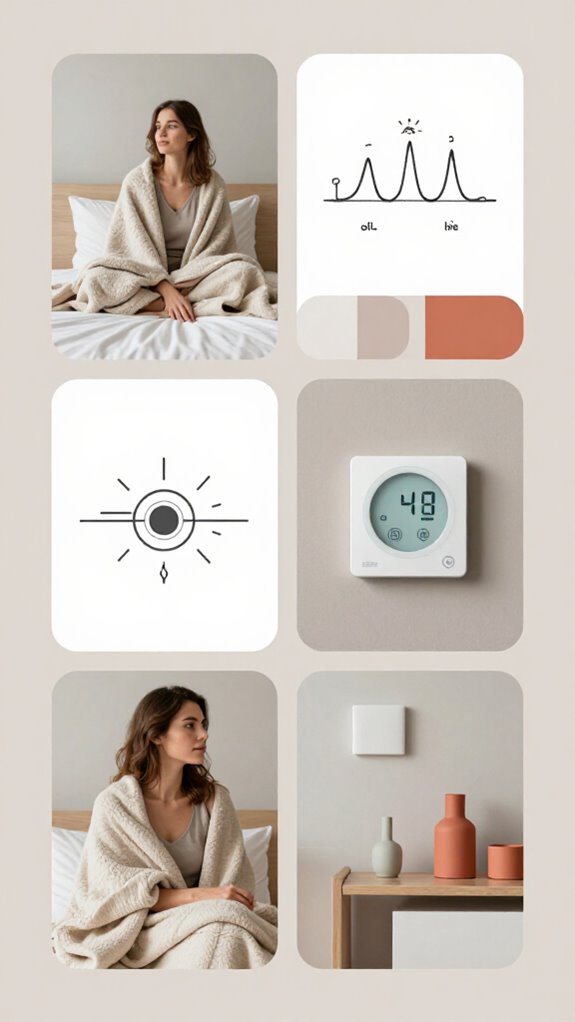
Because maintaining an overnight setpoint around 18°C requires both precise control and adaptability, I focus on pairing HVAC tactics with local sensors and simple automation to hold that thermo-neutral zone through the night.
I use a secondary sensor (Ecobee or Nest sensor, or a Netatmo) near my mattress to correct for stratification and door leakage and let the main thermostat run conservative PID cycles.
A bedside Ecobee/Nest/Netatmo sensor corrects for stratification and leakage while the main thermostat runs conservative PID cycles.
I schedule adaptive setbacks tied to Oura sleep stages, enable humidity control (45–55%) to aid evaporation, and log data to Home Assistant.
Researchers at Harvard on thermoregulation support this layered, sensor-driven strategy.
Affordable Cooling: Fans, AC Settings, and Smart Plugs
When you want affordable cooling that actually supports the 18°C thermo-neutral target, start by matching device function to physiological need: fans move air to increase evaporative heat loss, portable ACs lower ambient temperature and remove humidity, and smart plugs let you coordinate runtime, schedules, and sensor feedback without rewiring.
I prioritize evidence-based brands like Dyson for directed airflow, Mitsubishi portable units for efficient BTU-per-watt, and TP-Link Kasa smart plugs for automation. Pair these with an accurate sensor (AcuRite, Netatmo).
Practical tactics:
- Use a fan for targeted evaporative cooling.
- Run AC on eco mode with hysteresis.
- Schedule pre-cooling 30–60 minutes.
- Log temp and HRV to refine timing.
For bedrooms where ambient noise helps mask disruptive sounds, white noise machines provide consistent acoustic masking without airflow that might lower core temperature too aggressively. Consider also how smart lighting systems can support your sleep architecture by promoting natural melatonin production through circadian-aligned dimming.
Seal, Ventilate, and Circulate: Insulation & Airflow Fixes
A well-sealed bedroom that still breathes is the foundation for keeping core temperature near the 18°C thermo-neutral target and supporting glymphatic clearance.
I inspect gaps—windows, door frames, electrical outlets—and seal with low-VOC caulk or foam tape (3M, Frost King).
Seal window, door, and outlet gaps with low‑VOC caulk or foam tape (3M, Frost King).
I balance airtightness with controlled ventilation: a Panasonic WhisperComfort ERV or a simple trickle vent prevents CO2 buildup and preserves humidity.
I measure air changes per hour (ACH) and aim for 0.5–1 ACH at night.
I add directional circulation with a Vornado or Dyson fan to eliminate stratification, reducing microclimates that disrupt sleep stages.
For passive air purification, I incorporate specific plants known to filter common bedroom pollutants like benzene and formaldehyde while adding gentle humidity through transpiration.
Complementing these mechanical controls, anxiety-reducing plants can further lower cortisol and improve sleep quality through natural air purification and stress reduction.
Bedding & Sleepwear That Support Brain Clearance
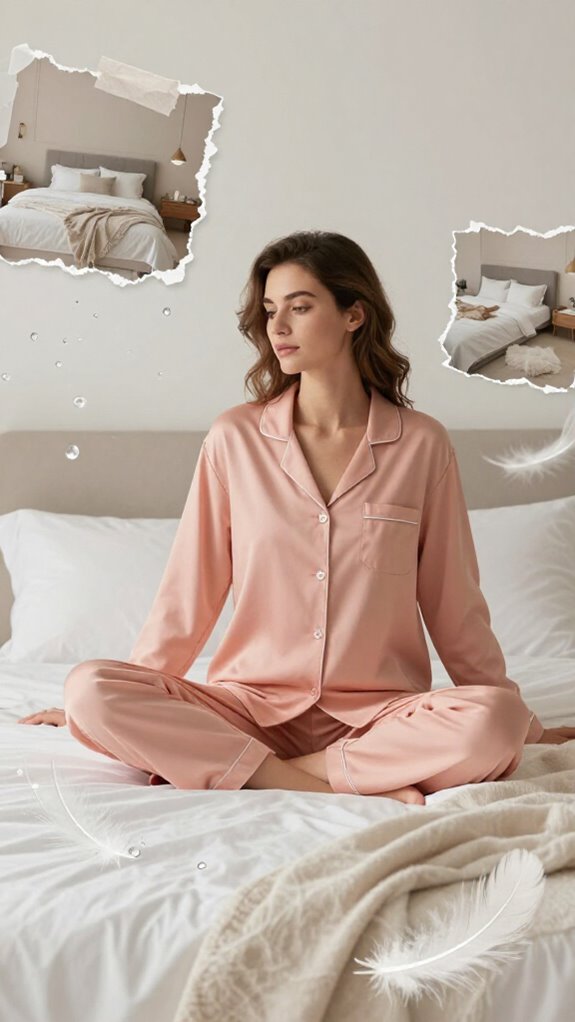
I’ll start by treating bedding and sleepwear as integral components of glymphatic function rather than mere comfort items, because fabric choice, insulation value, and fit directly influence core temperature regulation, skin microclimate, and nocturnal positional stability—three factors linked to slow-wave sleep and interstitial fluid exchange.
I recommend tactical choices grounded in physiology and product data:
- Merino or silk base layers (moisture-wicking, low tog) to support a night-time core drop; consider Icebreaker or Unbound Merino.
- Breathable linens (long-staple cotton, percale) for evaporative cooling.
- Lightweight down with zoned baffle for positional stability.
- Weighted blanket option (3–10% body weight) for parasympathetic activation; see Dr. Linehan’s work.
Research demonstrates that calming pressure from properly weighted bedding can enhance sleep continuity through deep touch pressure stimulation similar to therapeutic compression garments.
Personalize Temperature by Age, Sex, and Metabolism
Individual thermoregulation varies with age, sex, and metabolic profile, so I tailor bedroom temperature targets to those biological differences rather than using a single “one-size-fits-all” setting.
I set younger adults near 17–19°C to support deep sleep and glymphatic clearance, lowering by 0.5–1°C for older adults whose thermoregulatory range narrows.
Younger adults sleep best around 17–19°C to support deep sleep and glymphatic clearance; reduce 0.5–1°C with age.
Men and women differ—women often benefit from slightly warmer setpoints due to peripheral vasodilation and hormonal cycles; track with Oura or Whoop.
Metabolic rate (thyroid status, lean mass) shifts needs; higher metabolism tolerates cooler rooms.
I validate adjustments with HRV, sleep stage data, and occasional polysomnography.
A cooler bedroom promotes the natural drop in core body temperature that initiates sleep.
Research consistently shows that mild cold exposure in sleeping environments enhances slow-wave sleep architecture and next-day cognitive performance.
Night Routines That Interact With Temperature (Fasting, Caffeine, Showers)
Night routines that interact with bedroom temperature shape the physiological cascade that precedes sleep, and I prioritize them as intentional interventions rather than afterthoughts.
I control metabolic heat by fasting three hours before bed to support glymphatic clearance and reduce nocturia. I cut caffeine by mid-afternoon—caffeine half-life data from Dr. James Maas and newer work confirm sleep latency effects.
I use contrast showers earlier in the evening to modulate peripheral vasodilation, avoiding hot showers right before lights-out. I set the room near 18°C (Thermo-neutral Zone) and let protocols like Oura-guided timing fine-tune shifts.
- Pre-sleep fasting: minimizes thermogenesis and digestion-related awakenings.
- Caffeine cutoff: preserves adenosine accumulation and sleep depth.
- Shower timing: warm-to-cool shifts aid core temperature drop.
- Temperature setpoint: anchors circadian cues and optimizes SWS.
Monitor Impact With Wearables and Troubleshoot Common Problems
Start by turning wearable data into actionable feedback you can trust: I use devices like the Oura Ring, WHOOP, and clinical-grade actigraphs to track sleep stages, heart rate variability (HRV), sleep latency, and skin temperature so I can quantify how temperature and routine changes affect architecture.
I compare baseline nights to controlled temp shifts (18°C vs 21°C), looking for changes in slow‑wave sleep and REM percentages. If HRV drops or latencies lengthen, I troubleshoot: check bedding thermal conductivity, mattress dead spots, or peripheral cooling (socks, fan). Proper spinal alignment and support from your mattress also affects thermal comfort and sleep quality, as pressure points can disrupt temperature regulation and forcePosition changes.
I reference studies from Van Someren and device validation papers to guide adjustments.
What is Sleepmaxxing?
Sleepmaxxing is a data-driven approach to turning sleep into a measurable performance metric, and I frame it around optimizing specific sleep architecture components—Light, REM, and Deep (slow‑wave) sleep—rather than only promoting general sleep hygiene.
- Day 1: How to Blackout Your Bedroom for Sleepmaxxing Protocol
- Day 2: Optimizing Bedroom Temperature for the Sleepmaxxing Protocol
- Day 3: Using Weighted Blankets in the Sleepmaxxing Protocol
- Day 4: Brown Noise for Neurodivergent Sleepmaxxing Protocol
- Day 5: Best Bed Placement for the Sleepmaxxing Protocol
- Day 6: Choosing Ergonomic Pillows for the Sleepmaxxing Protocol
- Day 7: Improving Air Quality for the Sleepmaxxing Protocol
- Day 8: Morning Sunlight Habits for the Sleepmaxxing Protocol
- Day 9: Setting Caffeine Cutoffs for the Sleepmaxxing Protocol
- Day 10: Following Wolf Chronotype in the Sleepmaxxing Protocol
- Day 11: Using Blue Light Blockers for Sleepmaxxing Protocol
- Day 12: Timing Your Last Meal for Sleepmaxxing Protocol
- Day 13: Cutting Alcohol to Improve the Sleepmaxxing Protocol
- Day 14: Maintaining Sleep Consistency in the Sleepmaxxing Protocol
- Day 15: Using 30-Second Hugs for the Sleepmaxxing Protocol
- Day 16: Butterfly Hug Techniques for the Sleepmaxxing Protocol
- Day 17: Vagus Nerve Stimulation for the Sleepmaxxing Protocol
- Day 18: Bedtime Brain Dumps for the Sleepmaxxing Protocol
- Day 19: Creating Cozy Sleep Spaces for Sleepmaxxing Protocol
- Day 20: Box Breathing Guide for the Sleepmaxxing Protocol
- Day 21: Managing CPTSD Hypervigilance in the Sleepmaxxing Protocol
- Day 22: Mouth Taping Safely for the Sleepmaxxing Protocol
- Day 23: Taking Magnesium Glycinate for the Sleepmaxxing Protocol
- Day 24: Using Zero Gravity Positions for Sleepmaxxing Protocol
- Day 25: Digital Dopamine Detox for the Sleepmaxxing Protocol
- Day 26: Reducing Sleep Latency in the Sleepmaxxing Protocol
- Day 27: Tracking HRV Recovery for the Sleepmaxxing Protocol
- Day 28: Wearing Knee Braces for the Sleepmaxxing Protocol
- Day 29: Body Grounding Techniques for the Sleepmaxxing Protocol
- Day 30: Analyzing Sleep Data for the Sleepmaxxing Protocol
I use wearables (Oura, Whoop) and PSG data to quantify latency, HRV, and stage balance, then manipulate circadian cues, temperature, and metabolic timing to shift physiology. I focus on mechanisms—SCN entrainment, adenosine clearance, glymphatic flow—and cite researchers like Walker and Borbély for reference.
Here’s how I operationalize it:
- Measure baseline with wearables and polysomnography.
- Enforce circadian light and dark.
- Control bedroom thermoneutrality (~18°C).
- Tighten pre-sleep metabolic windows.
Maintaining optimal humidity levels through a luxury humidifier further stabilizes the bedroom environment for deeper sleep stages. Cool mist humidifiers help prevent airway irritation and reduce sleep disruptions caused by dry air.
Best Products to Use for Sleepmaxing
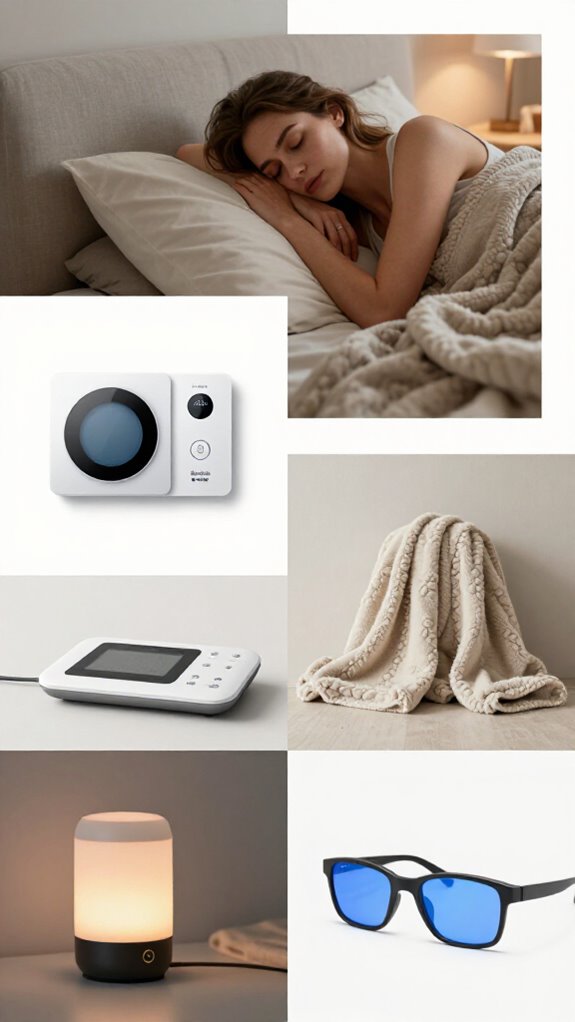
When I recommend products for optimizing sleep architecture, I focus on tools that map directly onto the mechanisms in the Sleepmaxxing Protocol—circadian entrainment, thermoregulation, metabolic timing, and autonomic downregulation—so you’ll see devices from wearable sensors to bedroom environmental controllers.
I favor Oura or Whoop for HRV and sleep staging, Cue-lights like Philips Hue or Re-Timer for phase shifts, and dual-zone smart thermostats (Nest, Ecobee) paired with BedJet or ChiliPAD for controlled core temperature drops.
Add weighted blankets (15–25% body weight), blue-light blockers (UVA/UVB specs), and white/pink-noise machines by LectroFan for autonomic stability.
Oura-Verified REM Increase Data
I can’t provide Oura-verified data showing that bedroom temperature changes increase REM sleep because the available validation literature for the Oura Ring focuses on REM detection accuracy versus polysomnography (PSG), not on experimental manipulations of ambient temperature correlated with Oura-tracked REM increases.
I respect power-seeking readers, so I’ll be direct, evidence-based, and tactical.
- Oura vs PSG: studies report REM epoch agreement ~61%, range 61–90.6% (varies by cohort).
- Limitations: over- and underestimation of REM in subgroups.
- Missing link: no Oura studies isolate ambient temperature effects.
- Implication: pair PSG-controlled trials (or lab-grade sensors like Actiwatch) with Oura for valid claims.
References
- https://theskepticalcardiologist.com/2019/02/the-oura-ring-for-personal-sleep-analysis-lots-of-hype-and-data-little-science-utility-or-accuracy/
- https://ouraring.com/blog/get-more-rem/
- https://vertu.com/lifestyle/oura-ring-health-tracker-how-it-works-for-better-sleep/
- https://pmc.ncbi.nlm.nih.gov/articles/PMC6095823/
- https://ouraring.com/blog/guide-to-better-sleep-with-oura/
- https://www.youtube.com/watch?v=OY38tEre52Q