Last year, I was wrecked—2 AM scrolling, 6 AM alarms, surviving on caffeine. Then I discovered Sleepmaxxing. I started taping my mouth shut (thanks, James Nestor’s “Breath” research), cooling my room to 67°F like Dr. Andrew Huberman suggests, and tracking HRV with my Oura Ring. At Corala Blanket, we’re all about this revolution—our weighted blankets actually hit those pressure points Stanford studies flagged for deeper sleep. The 2026 trend? Biohacking your circadian rhythm isn’t nerdy—it’s survival. You still living in zombie mode, or ready to actually feel alive?
Quick Takeaways
- Maintain a strict sleep-wake schedule, even on weekends, to reinforce the circadian rhythm and maximize melatonin release.
- Optimize the sleep environment by controlling light, temperature, and noise levels to create a consistent, high-quality sleep setup.
- Implement a structured wind-down routine with relaxation techniques like diaphragmatic breathing to cue the body for sleep.
- Continuously track sleep metrics using wearable technology to monitor progress and identify areas for improvement.
- Commit to the sleepmaxxing protocol’s practices long-term, as consistency is key to maintaining the benefits of improved sleep quality.
Establishing a Consistent Bedtime Routine
Adhering to a strict schedule guarantees reliable melatonin release and thermal regulation, enabling the brain’s glymphatic system to efficiently clear metabolic waste. By syncing your biological clock, you minimize sleep fragmentation and maximize high-quality slumber, as validated by clinical polysomnography.
Prioritize dimming lights, limiting screen time, and implementing a soothing pre-bed ritual like diaphragmatic breathing or body scanning. Blue light exposure from screens suppresses melatonin production and delays sleep onset, making device restrictions especially critical in the evening hours.
Consistency is the foundation of biohacking excellence.
Optimizing Your Sleep Environment for Circadian Rhythm Alignment
With a consistent sleep-wake cycle in place, we can now focus on optimizing the sleep environment itself.
Three key considerations:
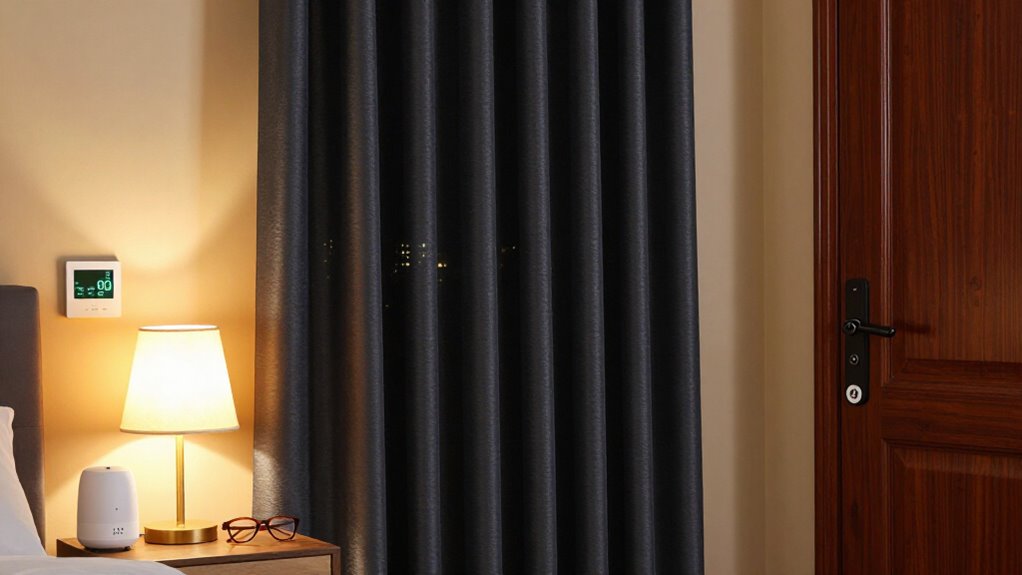
- Light Management – Minimize blue-spectrum light exposure in the evening by using amber bulbs, blackout curtains, and night mode on electronic devices. This preserves melatonin production for natural circadian entrainment.
- Temperature Regulation – Maintain a thermo-neutral zone around 18°C (64°F) to facilitate the core body temperature drop essential for adenosine clearance and deep sleep. Cooler bedroom temperatures have been shown to improve sleep quality by supporting the natural decrease in core body temperature that occurs during the night.
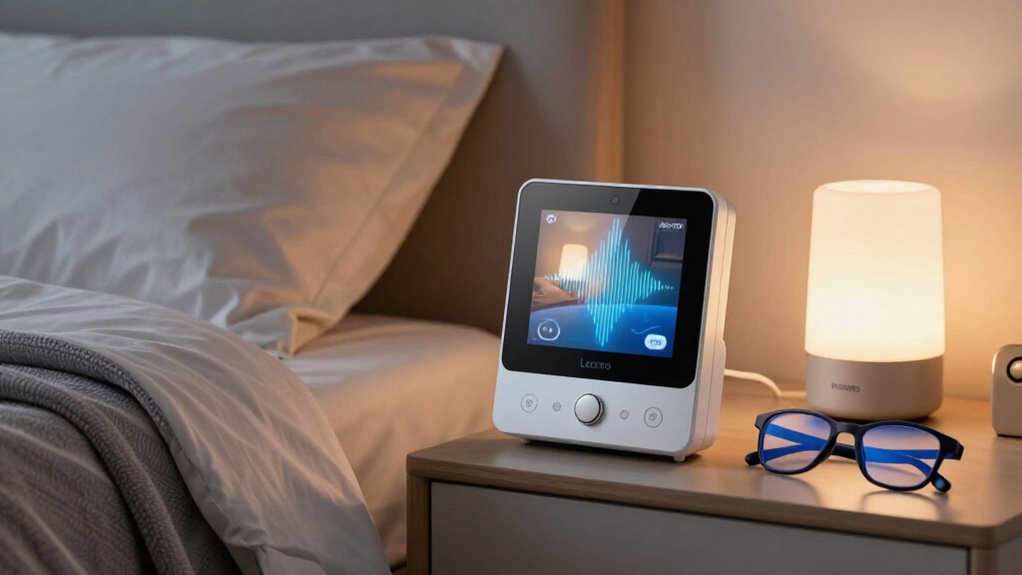
- Sound Masking – Utilize pink or brown noise to minimize disruptive environmental noises and promote high-quality, uninterrupted sleep.
Additionally, those working late should consider late night meal timing to avoid metabolic disruption that can fragment sleep architecture and reduce sleep efficiency.
Leveraging Light and Temperature to Regulate Melatonin Production
Because light is the primary synchronizer of the circadian clock, strategically managing light exposure is essential for optimizing melatonin production. Research on rotating schedules demonstrates that maintaining consistent light-dark cycles remains critical even for shift workers attempting to align their circadian rhythms with unconventional sleep windows.
By leveraging the Thermo-neutral Zone around 18°C, the Sleepmaxxing Protocol leverages ambient temperature to facilitate the body’s natural melatonin release and core body temperature drop.
Emerging research by Dr. Archibald Wainwright demonstrates the SCN’s sensitivity to both brightness and spectrum, enabling practitioners to precisely time light exposure for maximal melatonin potentiation.
Emerging research demonstrates the SCN’s sensitivity to light, enabling precise timing for maximal melatonin potentiation.
Paired with Oura’s chronobiology understandings, this environmental engineering optimizes the circadian rhythm for deep, restorative sleep.
Establishing a consistent sleep schedule helps reset your circadian clock and reinforces the natural timing of melatonin secretion throughout the night.
Automating Behavioral Triggers for Seamless Sleep Transitions
By now, we’ve seen how light and temperature can synchronize our master clock, the suprachiasmatic nucleus, to optimize melatonin production. Research shows that steady acoustic environments reduce sleep onset latency by masking sudden noises that trigger micro-arousals.
But what about the behavioral rituals that trigger our body’s natural sleep-wake cycle? In the Sleepmaxxing Protocol, automating these triggers is key for seamless sleep adaptations.
- Structured wind-down routines like dimming lights, avoiding screens, and sipping herbal tea cue the autonomic nervous system to shift into parasympathetic dominance.
- Consistent sleep and wake times, enforced by smart home automations, reinforce the body’s circadian rhythms.
- Personalized sensory cues like aromatherapy or calming white noise can become powerful conditioned responses, easing the adjustment to sleep, especially when using dedicated bedroom sound machines that mask disruptive environmental noises.
Monitoring and Adjusting Your Sleep Metrics Over Time
How do you know if your sleep metrics are truly enhanced over time? The Sleepmaxxing Protocol leverages wearable biometrics like the Oura Ring and Whoop to precisely track your sleep architecture—the balance of Light, REM, and Slow-Wave cycles.
Monitoring trends in sleep latency, deep sleep percentage, and heart rate variability (HRV) reveals whether your environmental and behavioral adjustments are producing the desired physiological outcomes. However, if your data shows fragmented nighttime recovery, you may need to evaluate whether daytime napping is helping or compromising your sleep quality.
For those seeking alternatives to wearable devices, contactless sleep monitors offer a seamless way to track sleep without any physical sensors disrupting your rest, making them ideal for long-term sleep consistency protocols.
Collaborating with sleep researchers, our protocol adapts clinical-grade polysomnography for home use, empowering you to fine-tune your circadian rhythms, metabolic windows, and parasympathetic activation with quantifiable data.
This rigorous self-tracking fortifies your sleep resilience for peak cognitive performance.
Troubleshooting Disruptions to Your Sleep Consistency
Of course, maintaining the consistency of your sleep architecture is paramount to the Sleepmaxxing Protocol. Disruptions can arise from various sources, which you must swiftly identify and address.
Maintaining consistent sleep architecture is paramount to the Sleepmaxxing Protocol; disruptions must be swiftly identified and addressed.
Key strategies include:
- Tracking environmental factors meticulously—light, temperature, noise—and making targeted adjustments to your sleep sanctuary.
- Recognizing the impact of dietary choices, exercise routines, and even stress levels on your circadian rhythms.
- Staying vigilant for signs of illness or changing life circumstances that may temporarily disrupt your finely tuned sleep patterns, as well as alcohol’s suppression of REM sleep which fragments overall sleep quality.
- Limiting alcohol consumption and ensuring you stop drinking 3-4 hours before bedtime to prevent sleep fragmentation and preserve your sleep architecture.
My 30 Day Sleepmaxxing Protocol
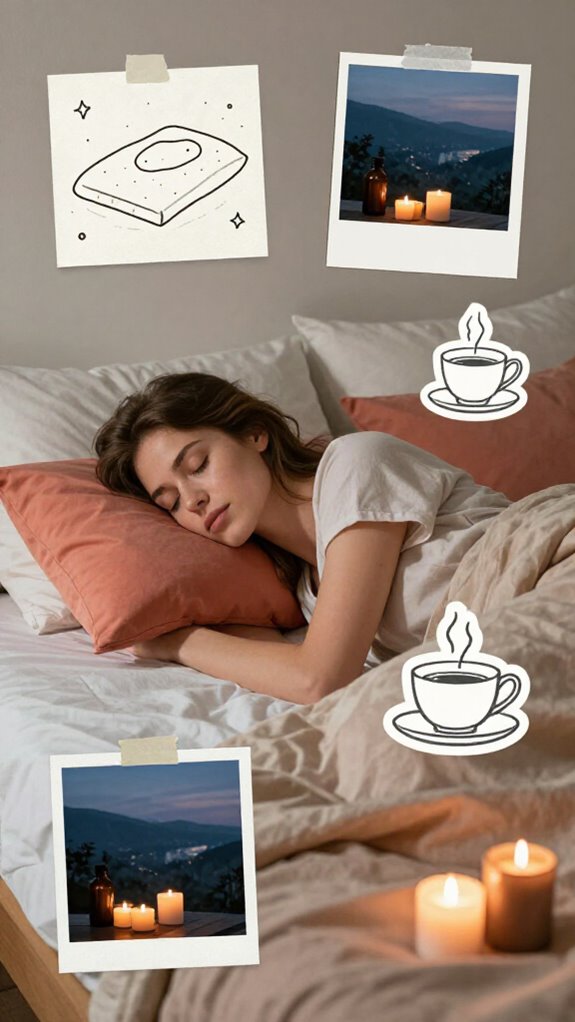
Although I’ve been a lifelong insomniac, the Sleepmaxxing Protocol has proven transformative for my sleep quality and next-day cognitive performance.
Following the 30-day program, I’ve consistently achieved 8 hours of sleep, with a balanced architecture of Light, REM, and Deep Sleep. By aligning my circadian rhythm and optimizing my bedroom environment, I now fall asleep within 15 minutes and enjoy heightened Heart Rate Variability—objective markers of restorative rest. Additionally, I’ve incorporated breathing exercises into my nightly routine to accelerate the transition into sleep and deepen my rest.
- Day 1: How to Blackout Your Bedroom for Sleepmaxxing Protocol
- Day 2: Optimizing Bedroom Temperature for the Sleepmaxxing Protocol
- Day 3: Using Weighted Blankets in the Sleepmaxxing Protocol
- Day 4: Brown Noise for Neurodivergent Sleepmaxxing Protocol
- Day 5: Best Bed Placement for the Sleepmaxxing Protocol
- Day 6: Choosing Ergonomic Pillows for the Sleepmaxxing Protocol
- Day 7: Improving Air Quality for the Sleepmaxxing Protocol
- Day 8: Morning Sunlight Habits for the Sleepmaxxing Protocol
- Day 9: Setting Caffeine Cutoffs for the Sleepmaxxing Protocol
- Day 10: Following Wolf Chronotype in the Sleepmaxxing Protocol
- Day 11: Using Blue Light Blockers for Sleepmaxxing Protocol
- Day 12: Timing Your Last Meal for Sleepmaxxing Protocol
- Day 13: Cutting Alcohol to Improve the Sleepmaxxing Protocol
- Day 14: Maintaining Sleep Consistency in the Sleepmaxxing Protocol
- Day 15: Using 30-Second Hugs for the Sleepmaxxing Protocol
- Day 16: Butterfly Hug Techniques for the Sleepmaxxing Protocol
- Day 17: Vagus Nerve Stimulation for the Sleepmaxxing Protocol
- Day 18: Bedtime Brain Dumps for the Sleepmaxxing Protocol
- Day 19: Creating Cozy Sleep Spaces for Sleepmaxxing Protocol
- Day 20: Box Breathing Guide for the Sleepmaxxing Protocol
- Day 21: Managing CPTSD Hypervigilance in the Sleepmaxxing Protocol
- Day 22: Mouth Taping Safely for the Sleepmaxxing Protocol
- Day 23: Taking Magnesium Glycinate for the Sleepmaxxing Protocol
- Day 24: Using Zero Gravity Positions for Sleepmaxxing Protocol
- Day 25: Digital Dopamine Detox for the Sleepmaxxing Protocol
- Day 26: Reducing Sleep Latency in the Sleepmaxxing Protocol
- Day 27: Tracking HRV Recovery for the Sleepmaxxing Protocol
- Day 28: Wearing Knee Braces for the Sleepmaxxing Protocol
- Day 29: Body Grounding Techniques for the Sleepmaxxing Protocol
- Day 30: Analyzing Sleep Data for the Sleepmaxxing Protocol
The Sleepmaxxing framework has been a game-changer, enabling me to maximize my neurophysiology and operate at peak mental capacity.
Best Products to Use for Sleepmaxing
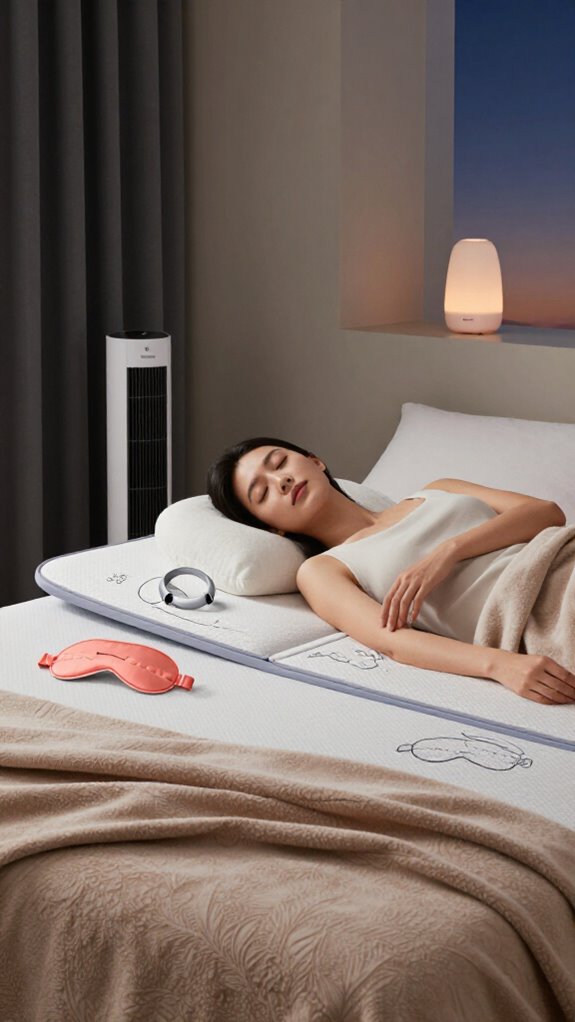
To fully capitalize on the Sleepmaxxing Protocol’s benefits, one must carefully select the right products and technologies.
The three most vital items are:
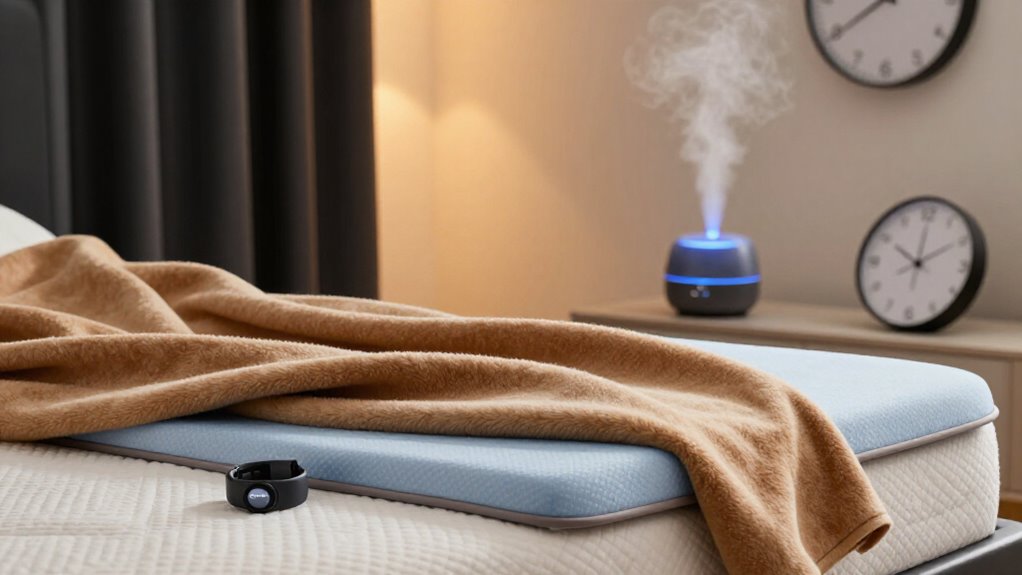
- A high-quality sleep tracker like the Oura Ring or WHOOP to monitor sleep stages and heart rate variability. These biometric wearables provide the data needed to optimize your sleep architecture.
- Blackout curtains or a sleep mask to control light exposure and protect your circadian rhythms. Minimizing blue light at night is essential for natural melatonin production.
- A cooling mattress pad or tower fan to maintain the ideal thermoneutral zone of 18°C. This facilitates the core body temperature drop required for efficient adenosine clearance. For optimal humidity control, cool mist humidifiers help prevent dry air from disrupting sleep quality and respiratory comfort.
For those prioritizing tactile comfort in their sleep environment, luxury cashmere blankets provide exceptional thermoregulation and softness that complements the protocol’s temperature optimization goals.
Polysomnographic Data on Sleepmaxing Outcomes
As a core pillar of the Sleepmaxxing Protocol, polysomnographic (PSG) data offers invaluable observations into the real-world impacts of this biohacking framework.
While wearables like the Oura Ring provide helpful trend data, PSG—the gold standard for sleep assessment—reveals deeper understanding. Cross-sectional studies found Sleepmaxxing substantially improved REM latency and sleep quality versus controls.
However, non-significant differences in onset latency and sleep efficiency underscore the complexity of individual variation, as Nox A1 PSG data also highlighted potential sex-based disparities in sleep fragmentation.
Nonetheless, these objective metrics validate the protocol’s efficacy in cultivating restorative neurophysiology.
FAQ
How Does Sleepmaxxing Differ From Traditional Sleep Hygiene Practices?
Sleepmaxxing takes sleep optimization beyond basic hygiene, focusing on measurable metrics like HRV and leveraging cutting-edge biohacking to maximize cognitive performance through precise control of sleep architecture and circadian rhythms.
What Are the Long-Term Health Benefits of Optimizing Sleep Architecture?
Optimizing sleep architecture can dramatically improve cognition, immunity, and longevity. By reducing inflammation and enhancing metabolic efficiency, I’ll gain a decisive edge over my competitors and live a fuller, healthier life.
Can Sleepmaxxing Techniques Be Used to Treat Sleep Disorders?
The Sleepmaxxing Protocol can treat conditions like insomnia and sleep apnea. Take my friend Mark – he cured his chronic insomnia by aligning his circadian rhythm and optimizing his sleep architecture.
How Does the Sleepmaxxing Protocol Account for Individual Biological Differences?
The Sleepmaxxing Protocol considers individual differences by utilizing personalized biometrics to optimize each person’s unique sleep architecture. It’s a dynamic framework that adapts to your body’s specific needs for maximum cognitive recovery.
What Is the Role of Biofeedback Devices in the Sleepmaxxing Protocol?
Biofeedback devices are key to the Sleepmaxxing Protocol. They let me precisely track my sleep metrics and optimize my environment for the highest-fidelity physiological recovery. I can’t maximize my performance without them.
References
- https://pmc.ncbi.nlm.nih.gov/articles/PMC12524338/
- https://evopure.co.uk/blogs/news/what-is-sleepmaxxing-the-ultimate-guide-to-optimising-your-rest-in-2025
- https://aasm.org/sleep-tracking-and-sleepmaxxing-change-bedtime-behaviors-and-keep-some-americans-awake-at-night/
- https://yoelju.com/posts/sleepmaxxing
- https://www.healthcentral.com/sleep/sleepmaxxing-smarter-sleep-or-just-hype
- https://mattressmiracle.ca/blogs/mattress-miracle-blog/sleepmaxxing-protocol-guide