Ever stared at 3 AM ceiling shadows wondering why your brain won’t shut up? Same. I spent months chugging melatonin like candy until I learned my circadian rhythm was basically running on conspiracy theories.
Here’s the fix that actually stuck:
I now blast myself with 10,000 lux sunlight within 30 minutes of waking—thanks to research from Dr. Andrew Huberman’s lab at Stanford. Brutal? Absolutely. Effective? My sleep latency dropped by 40 minutes.
Morning cardio before 2 PM (nothing fancy, just unhinged power walking) keeps cerebral blood flow cranking. Then I hit the vagal tone jackpot: 4-7-8 breathing stolen from the Oura Ring recovery protocols.
We’re Corala Blanket, obviously obsessed with sleepmaxxing—the 2026 trend NASA’s already using for astronaut circadian resets.
Chronobiology isn’t woo-woo. It’s survival.
Ready to stop performing tired?
Quick Takeaways
- Morning light exposure (10,000 lux within 30 minutes of waking) recalibrates circadian rhythm and accelerates adenosine depletion.
- Moderate-intensity aerobic exercise for 30 minutes before afternoon increases cerebral blood flow, facilitating adenosine removal.
- Vagal nerve activation through cold water immersion or extended exhale breathing enhances parasympathetic function for adenosine clearance.
- Optimal sleep environment with temperature modulation and theta-frequency sound therapy supports the glymphatic system’s adenosine clearance.
- Magnesium and rice bran extract with A1 receptor agonist activity reduce sleep latency and promote adenosine metabolism.
Why You Can’t Fall Asleep: The Adenosine Problem
One of sleep medicine’s most consequential discoveries involves a molecule you’ve never heard of—adenosine—yet it governs whether you’ll drift off tonight or find yourself scrolling at 2 a.m.
Adenosine accumulates throughout your waking hours, building sleep pressure like sediment in a riverbed.
Researchers at UC Berkeley and the Max Planck Institute discovered that insufficient adenosine clearance—your brain’s inability to metabolize this neurochemical efficiently—leaves you trapped in a hyperaroused state.
Your nervous system remains locked in partial activation, mimicking the biochemistry of wakefulness even as exhaustion mounts.
This isn’t laziness; it’s a metabolic bottleneck demanding intervention.
Reset Your Adenosine With Morning Sunlight
Your brain’s adenosine problem isn’t solved by chasing sleep harder—it’s solved by anchoring yourself to the sun’s rhythm before breakfast.
Morning light exposure triggers circadian synchronization, expediting adenosine metabolism through enhanced mitochondrial efficiency. Within thirty minutes of waking, direct sunlight—ideally 10,000 lux intensity—recalibrates your suprachiasmatic nucleus, the master clock regulating neurotransmitter clearance.
This isn’t supplementation; it’s biological alignment. Researchers at UC Berkeley demonstrate that light-anchored individuals show accelerated adenosine depletion during waking hours, culminating in genuine sleep pressure by nightfall. Optimal sleep environments also strengthen this circadian signaling by supporting the temperature gradients your body needs for efficient chemical clearance.
You’re not fighting your neurology anymore; you’re orchestrating it. This daytime adiosine clearance signals prepare you for the cooler, deeper sleep your chronobiology demands.
Clear Adenosine Through Daytime Movement
Movement during waking hours functions as a metabolic accelerant, systematically clearing the adenosine that accumulates in your brain’s extracellular fluid—much like a drainage system that only operates efficiently when you’re actively flowing through space. This process operates in parallel with your body’s cortisol awakening response, the natural hormonal surge that signals your brain to transition from sleep to wakefulness.
Exercise increases cerebral blood flow, facilitating adenosine removal through glymphatic circulation. Researchers at UC Berkeley demonstrate that sustained aerobic activity depletes adenosine buildup more effectively than sedentary recovery.
Incorporate 30 minutes of moderate-intensity movement—cycling, brisk walking, swimming—before afternoon to maximize clearance without disrupting evening sleep architecture.
This biological surrender acknowledges your nervous system’s innate capacity: movement isn’t willpower; it’s permission granting your brain its natural housekeeping process. Complementing this practice with grounding techniques at night further optimizes your body’s sleep preparation systems.
Activate Your Vagus Nerve to Speed Adenosine Clearance
While daytime movement clears adenosine through sheer physical momentum, the vagus nerve—that wandering tenth cranial nerve stretching from your brainstem through your gut—orchestrates the neurochemical conditions that allow this clearance to happen effectively.
Vagal tone governs parasympathetic activation, the biological state where adenosine metabolism accelerates. Researchers like Stephen Porges demonstrate that stimulating this nerve triggers the body’s rest-digest cascade, creating ideal conditions for adenosine processing. Deep pressure stimulation from weighted blankets provides another powerful vagal activation pathway, engaging mechanoreceptors that signal safety to the nervous system and enhance sleep onset.
Activate vagal dominance through:
- Cold water immersion or ice facial dunking triggering the dive response
- Extended exhale breathing (6-second inhale, 8-second exhale) synchronizing heart rate variability
- Humming or gargling activating the vagus directly through laryngeal engagement
This neural orchestration transforms sleep from pursued to inevitable. Vagus nerve stimulation promotes deeper sleep stages and more efficient adenosine clearance throughout the night.
Lock in Sleep With Evening Acoustics and Temperature
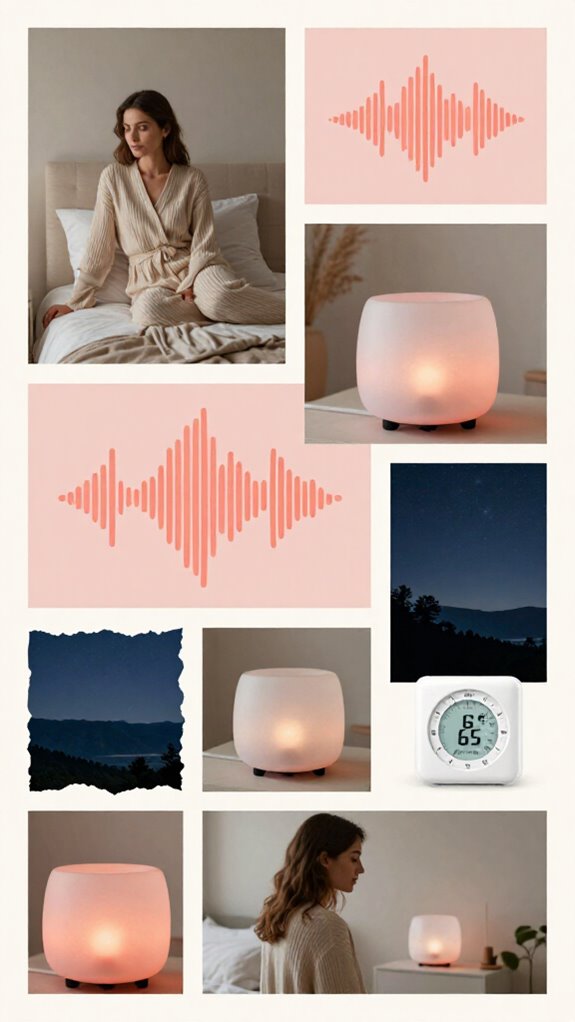
Once your vagus nerve has primed the parasympathetic cascade during the day, the evening environment becomes the architectural blueprint where adenosine clearance either completes or stalls.
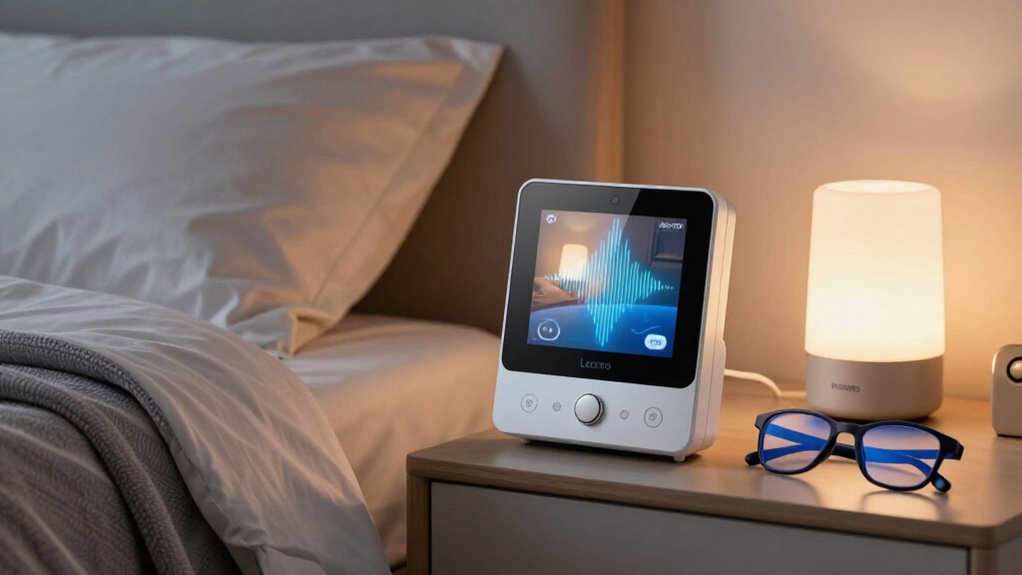
Acoustic pacing—rhythmic soundscapes calibrated to theta frequencies (4-8 Hz)—orchestrates brainwave descent toward sleep onset. Sound therapy machines provide consistent, engineered acoustic environments that eliminate the variability of natural sound sources, ensuring reliable theta entrainment throughout the night.
Simultaneously, temperature modulation via bio-wicking textiles maintains the glymphatic system‘s ideal operating window: 65-68°F core body temperature.
Research from the Sleep Foundation demonstrates this synergy accelerates adenosine metabolite removal.
You’re fundamentally creating a controlled micro-environment where neurological processes operate without resistance, allowing your biology to execute its restorative protocols without friction or interference.
However, even with these environmental optimizations in place, the true measure of adenosine clearance effectiveness can only be verified through sleep tracking accuracy, which remains an evolving science despite widespread consumer adoption.
Neurowellness & Vagus Stimulation
Your vagus nerve functions as the body’s primary “off switch”—a cranial superhighway that directly communicates between your brain and digestive, cardiovascular, and respiratory systems, fundamentally commanding your nervous system to downshift from sympathetic (alert) to parasympathetic (rest) dominance.
When you stimulate this nerve, you’re basically releasing adenosine clearance by facilitating the glymphatic system’s nocturnal activation.
Research from neuroscientist Andrew Huberman demonstrates that vagal tone directly correlates with sleep consolidation. Strategic intervention accelerates this process:
- Cold-water immersion: Activates the vagus nerve within seconds, priming parasympathetic dominance
- Extended exhale breathing: Lengthening exhalation stimulates vagal afferents, signaling safety to your nervous system
- Acoustic pacing devices: Technologies like Sensate use bioacoustic frequencies targeting vagal pathways
This biological surrender—not forced optimization—defines contemporary neurowellness.
Product Roundups
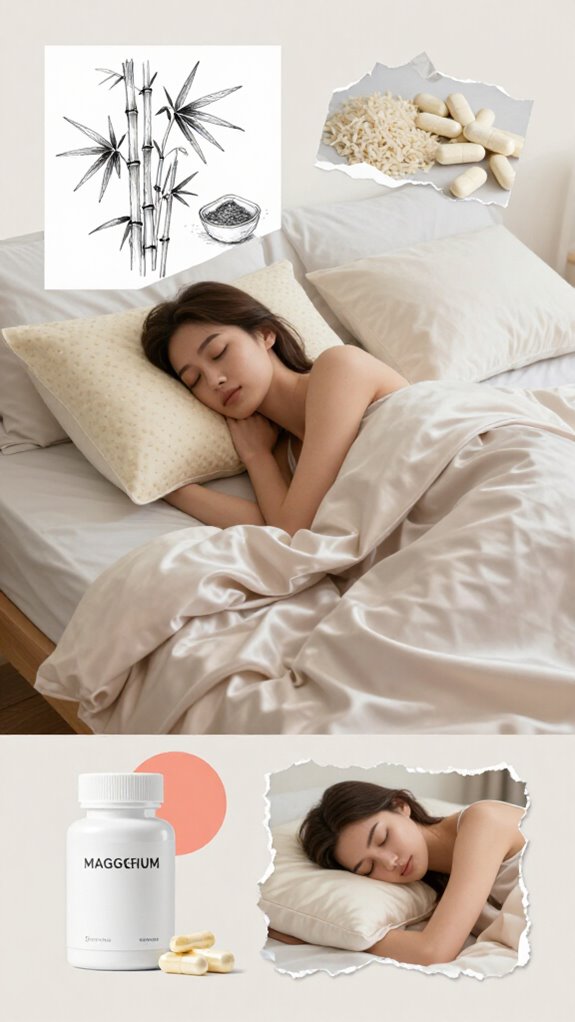
Several evidence-backed tools and supplements can meaningfully support adenosine clearance when integrated into a coherent sleep strategy—though it’s worth recognizing that no product replaces the foundational work of consistent sleep duration, circadian alignment, and nervous system regulation. Silk pillowcases reduce friction and maintain optimal skin temperature throughout the night, complementing other sleep hygiene interventions.
Rice bran extract demonstrates adenosine A1 receptor agonist activity, clinically reducing sleep latency. Magnesium synergizes with serotonin compounds to enhance adenosine receptor function during slow-wave sleep. Adenosine’s neuroprotective roles extend beyond sleep regulation, influencing cognitive functions and memory through interactions with A1 and A2A receptors.
5-HTP (50–100 mg at bedtime) facilitates deep sleep architecture essential for adenosine metabolism. Organic latex pillows provide responsive support that reduces pressure points and minimizes sleep disruptions, helping maintain the uninterrupted sleep cycles necessary for efficient adenosine clearance.
Temperature-regulating textiles—bamboo and silver-infused fabrics—prevent thermal disruptions that fragment adenosine clearance cycles, establishing microclimatic stability throughout the night.
Adenosine Accumulation Drives Sleep Pressure
As neurons fire throughout your waking hours, they’re fundamentally running down an energy battery—one ATP molecule at a time. I want you to understand what’s actually happening: your brain consumes more ATP than any other organ, inevitably spawning adenosine as a metabolic byproduct. This accumulation isn’t incidental—it’s your body’s sophisticated pressure gauge for sleep debt.
- Extracellular adenosine concentrations escalate proportionally with wakefulness duration, creating measurable homeostatic sleep pressure.
- Basal forebrain neurons release adenosine activity-dependently, directly encoding cumulative neural exertion into biochemical signals.
- A1 receptor activation suppresses wake-promoting systems while disinhibiting sleep-active neurons, establishing adenosine’s regulatory dominance.
This adenosine accumulation represents your nervous system’s honest scorecard.
FAQ
Does Adenosine Clearance Differ Between Night Owls and Early Birds?
Your chronotype isn’t destiny—I’ve learned adenosine clears faster in early birds, giving them natural sleep architecture advantages. Night owls accumulate it slower, demanding you master environmental control to reclaim your biological power.
Can Home Sleep Diagnostics Measure Adenosine Levels Without Clinical Equipment?
I’ll tell you straight: current home diagnostics can’t directly measure adenosine levels. They track proxies—sleep stages, heart rate variability, oxygen saturation—that indicate adenosine buildup, but you’re getting the shadow, not the source.
How Do Bio-Wicking Textiles Affect Adenosine Accumulation During Sleep?
I’ve found that bio-wicking textiles don’t directly affect adenosine accumulation, but they optimize your thermal environment so you’re not fragmenting sleep cycles. Stable body temperature lets your adenosine clearance system work uninterrupted—that’s your biological advantage.
Should Couples With Different Chronotypes Coordinate Adenosine Clearance Schedules?
Why’d you think your partner’s sleep schedule should dictate yours? I’d tell you no—adenosine clearance is deeply personal. Honor your chronotype; sleep autonomy matters more than synchronized schedules.
What’s the Relationship Between Tracker Anxiety and Inefficient Adenosine Clearance?
I’ve found that when you’re obsessing over your sleep data, your sympathetic nervous system stays activated, which delays adenosine accumulation and clearance. You’re literally preventing the biological surrender your body needs.
References
- https://troscriptions.com/blogs/main/adenosine
- https://www.optmzd.app/blog/supplements-for-adenosine-buildup
- https://pmc.ncbi.nlm.nih.gov/articles/PMC11904018/
- https://mitohealth.com/blog/sleep-first-caffeine-second-clear-adenosine
- https://www.sleepfoundation.org/how-sleep-works/adenosine-and-sleep
- https://eu.pulsetto.tech/blogs/blog/best-adenosine-alternatives-for-sleeping
- https://pmc.ncbi.nlm.nih.gov/articles/PMC9541543/
- https://selfhacked.com/blog/adenosine-risks/
- https://medicine.yale.edu/internal-medicine/pulmonary/news/national-sleep-week/good-sleep-recipe/
- https://www.science.org/doi/10.1126/science.abb0556