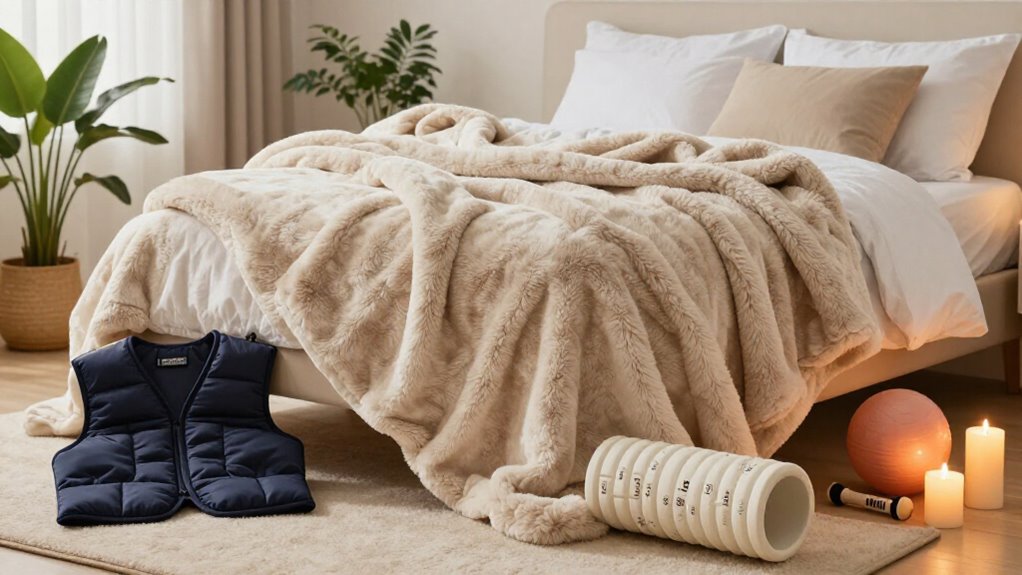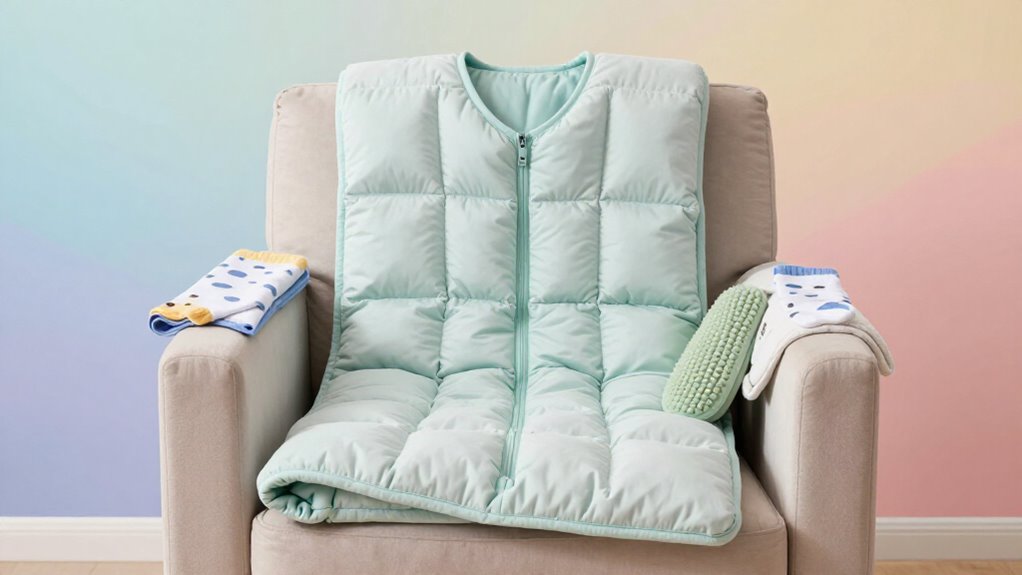
My brain used to treat 2 a.m. like a TED Talk I never asked for—until I discovered deep pressure is basically a “chill out” command for your nervous system.
Game changer.
At Corala Blanket, we’re obsessed with getting people real rest. Here’s what actually works:
- Vagus-nerve touch – 30 seconds on my neck, slow exhales. Instant “downshift.”
- Weighted blanket – mine’s exactly 10% of my body weight. Dr. Grandin’s research on Deep Touch Pressure backs this.
- Calf massage – proprioceptive reset for my restless legs.
- Compression + acoustic pacing – 40–60 bpm beats. Shoutout to Bose Sleepbuds.
2026’s “Sleepmaxxing” trend? This *is* it.
Ever feel like your body forgot how to relax?
Quick Takeaways
- Use deep, steady pressure on the body to signal safety and reduce sympathetic stress during bedtime.
- Try weighted blankets or pillows aiming for ~10% of body weight for consistent pressure and improved sleep quality.
- Perform slow-release vagus-nerve pressure: gentle fingertip pressure along the neck for 20–40 seconds with longer exhalations.
- Massage calves and feet with slow, firm strokes and sustained holds on arches to calm proprioceptive stress responses.
- Combine rhythmic acoustic pacing (40–60 bpm) with slow pressure holds and breathing to support sleep onset and relaxation.
Learn the Nervous System Mechanism Behind Deep Pressure
Deep pressure works because it gives your nervous system a convincing “safe to stand down” signal.
When I press my body in a steady, even way, I’m not just relaxing muscles—I’m cueing the autonomic balance. The nervous system interprets pressure-related input as protective contact, which can dampen sympathetic arousal and support vagal-mediated recovery.
Pressing my body steadily doesn’t just relax muscles—it signals safety to my nervous system, easing sympathetic arousal and supporting recovery.
Research on sensory stimulation in anxiety and somatosensory processing suggests this pattern: tactile input narrows attentional threat scanning, then lowers stress chemistry. Studies have shown that deep pressure therapy can significantly increase slow-wave sleep duration, making it particularly valuable for those seeking more restorative rest.
I often think of it like lowering a lighthouse beam—less glare, more darkness.
Brands like TheraBand and studies by Stephen Porges align with this mechanism.
Similar to how a cashmere blackout mask creates darkness that signals safety for visual processing, deep pressure provides consistent tactile boundaries that the nervous system registers as environmental security.
Try Vagus-Nerve Slow-Release Deep Pressure on Your Neck
After we comprehend how steady, even touch can act like a “safe signal” for the autonomic nervous system, you can apply that same logic closer to the source of parasympathetic signaling. I do slow-release neck pressure techniques to support vagus stimulation benefits, without jolting the tissue. Research suggests that distributed deep pressure—similar to the mechanism behind weighted blankets—can enhance somatic regulation and promote sleep quality through consistent sensory input.
I place gentle fingertips along the side of my neck (under the jawline, along the carotid sheath region), then press slightly and hold 20–40 seconds, breathe out longer than in, and release. This mirrors how cutaneous input can bias vagal tone. These techniques work as grounding techniques that help anchor your nervous system for restorative sleep, similar to how direct earth contact calms physiological arousal.
| Area | Pressure | Time |
|---|---|---|
| Under jaw | gentle | 20–30s |
| Side neck | even | 30–40s |
| Base skull | light | 15–25s |
Use Weighted Blanket Pressure to Cue Parasympathetic Calm
When you lie down under a weighted blanket, you’re fundamentally giving your nervous system a slow, steady “load” cue that resembles the kind of calming input your body learns to trust—think of it like a metronome for your arousal level rather than a performance enhancer.
I focus on weighted benefits you can feel immediately: the blanket’s consistent pressure encourages sensory integration, helping your brain downshift from vigilance toward safety. Studies suggest this proprioceptive input may help stabilize sleep architecture and promote more restorative REM cycles throughout the night.
Research on deep pressure and autism-related calming supports this mechanism, and clinicians often echo it in protocols by Temple Grandin’s work.
Weighted blankets provide deep touch pressure that has been shown to relieve insomnia and improve overall sleep quality.
For best results, choose a secure fit—typically 10% of your body weight—and let your breathing soften.
Practice Deep Pressure Massage Along the Legs and Feet
Legs and feet hold more than “tired” signals—they’re a major sensory input highway to your autonomic nervous system, and you can use that fact with deep pressure massage. I slow my breathing, then press with my thumbs along the calf, finishing at the ankle. I repeat on the foot, using steady pressure over tender zones. Deep pressure activates the body’s proprioceptive pathways, which naturally dampen the stress response and shift the nervous system toward equilibrium. The calming effect comes from stimulating pressure receptors that signal safety to the brain, reducing cortisol and promoting parasympathetic activation.
| Area | Pressure cue | What I notice |
|---|---|---|
| Calf | slow, firm strokes | heat, release |
| Shin | thumb circles | tingling fades |
| Arch | sustained hold | steadier calm |
This pairs leg massage techniques with foot reflexology benefits. If you feel sharp pain, I ease up and switch to gentler passes, like the work supported by Vagus-related calming principles.
Combine Acoustic Pacing With Deep Pressure for Faster Sleep Onset
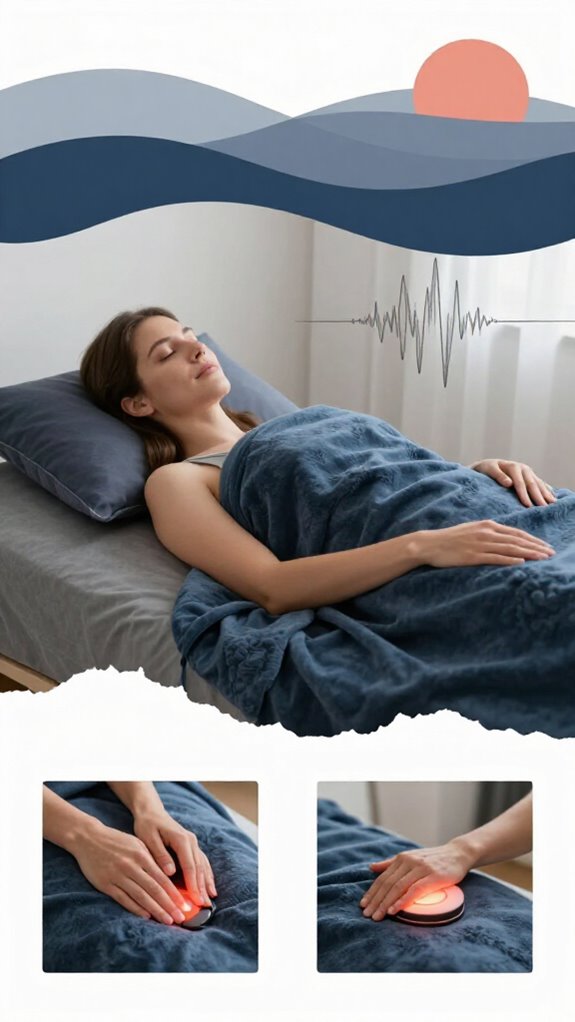
I’ve been pairing quiet, steady deep-pressure work on your lower body with a second lever: acoustic pacing, because your hearing system can steer your brain into sleep onset while your touch tells the nervous system “it’s safe to stand down.” Just as waterless diffusion preserves aromatic compounds without heat or water degradation, acoustic pacing preserves the integrity of your sensory transition into rest. Deep pressure stimulation activates the parasympathetic nervous system through distributed weight, helping release muscle tension that keeps the body alert. To do it, I set a low, metronome-like rhythm—think soothing tones at a consistent beat rather than songs with surprises—and I synchronize my massage tempo to that pulse. In practice, I breathe with you, then apply slow pressure holds for 10–20 seconds, followed by gentle shifts, all under the same steady Acoustic Techniques. This pairing can reduce perceived time awake and support Sleep Onset without hype, echoing research on vagal engagement.
Neurowellness With Acoustic Pacing
- Choose 40–60 bpm pulses, soft volume
- Match exhale length to the beat
- Keep sessions 15–25 minutes
- Use low-frequency, steady tones
- Track comfort, not scores
- Pair with butterfly hug techniques to amplify deep pressure calming effects
Activating your glymphatic system through these paced rhythms enhances the brain’s natural cleansing process during rest. Researchers on vagus-mediated regulation support these neuromodulation benefits—so you can relax on purpose.
Product Roundup
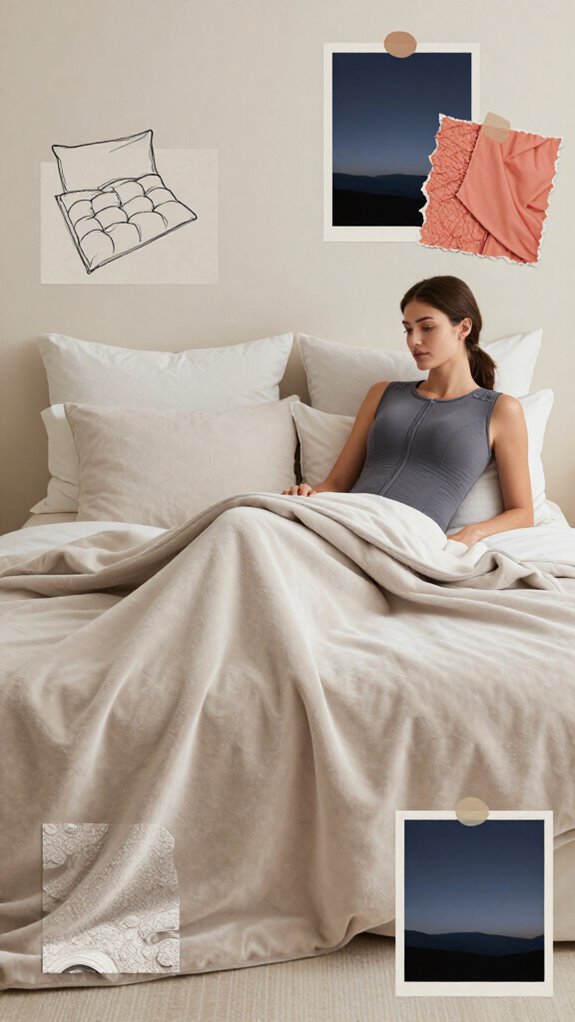
A practical way to “biologically surrender” to sleep is to add calibrated pressure to your evening routine—think of it like giving your nervous system a steady, floor-level handhold so it doesn’t feel the need to grip the night. The luxury weighted blanket experience has become a cornerstone of anxiety relief for those seeking deeper rest through intentional pressure.
For me, weighted pillows (buckwheat hulls or dense fills) contour the head and neck, easing stiffness. Compression vests use wraparound, Velcro-closed pressure; studies in sensory processing suggest calming via vagus-linked parasympathetic shifts, and many include money-back guarantees. Gravity Blanket applies consistent pressure to activate the parasympathetic nervous system, making it especially helpful for calming restless legs or general fidgeting.
If you want wearable coverage, I look for therapeutic cocoons or pea-pod designs. For texture, sensory products with smooth versus bumpy surfaces let me tune stimulation.
“Home Apnea Screening”
I watch for home apnea symptoms, then follow physician-prescribed sleep disorder screening.
These studies approximate lab accuracy for moderate-severe OSA, but can miss mild OSA or central events.
Home screening results may vary depending on circadian timing since sleep architecture shifts throughout the night affect breathing stability and event detection.
Creating a light-blocking environment before bedtime can improve the reliability of home screening by supporting more stable sleep architecture during the testing period.
FAQ
How Much Deep Pressure Is Safe Before It Becomes Uncomfortable?
Safe deep pressure is “enough to relax,” not “enough to fight.” I start light and build slowly, watching factors influencing comfort and individual pressure preferences. You should feel soothing, not trapped—if it hurts, I back off immediately.
Can Deep Pressure Help Insomnia Caused by Anxiety or Hyperarousal?
Yes—deep pressure can help insomnia from anxiety or hyperarousal by signaling safety to your nervous system. When you pair it with steady sleep hygiene, I notice faster calming, easier sleep onset, and fewer anxious mind-loops.
When Should You Avoid Deep Pressure Techniques, Like With Blood Clots?
About 1 in 100,000 people develop a deep-vein clot yearly. You should avoid deep pressure if you suspect blood clots, have unexplained swelling, warmth, or pain, and if you have pregnancy concerns—ask your clinician first.
How Long Does Deep Pressure Take to Improve Sleep Onset Latency?
I usually notice faster sleep onset within 5–10 minutes of deep pressure, but it can take several nights. I aim for an ideal duration of 10–20 minutes, and I stop if adverse effects appear.
Will Deep Pressure Work if You’Re Breathing Through Your Mouth at Night?
If you’re mouth breathing, deep pressure may still help you settle, but your sleep quality likely suffers. I’d start with gentle breathing techniques through your nose—then use deep pressure to calm your nervous system faster.
References
- https://www.youtube.com/watch?v=o-zPyQX1CKg
- https://www.kimba.ai/blog/best-sleep-products
- https://hullopillow.com/deep-pressure-stimulation-the-comfort-secret-in-sleep-products/
- https://sleepopolis.com/education/your-ultimate-guide-to-deep-pressure-therapy-deep-pressure-stimulation/
- https://www.independent.co.uk/indybest/best-sleep-aids-uk-b2074656.html
- https://www.appliedbehavioranalysisedu.org/5-best-off-the-shelf-deep-touch-stimulation-products/
- https://therapyshoppe.com/products/deep-pressure-sensory-seekers-top-picks
- https://www.health.harvard.edu/healthy-aging-and-longevity/how-to-test-for-sleep-apnea-at-home-or-in-a-lab
- https://www.sleepfoundation.org/sleep-studies/at-home-sleep-study
- https://www.mayoclinic.org/diseases-conditions/sleep-apnea/diagnosis-treatment/drc-20377636