So I learned the vagus nerve is basically my sleep’s emergency brake—when it’s working, I’m cruising through REM like a dream. When it’s not? I’m grinding my teeth at 3am wondering why my Oura ring is screaming at me.
Low tone hit me hard last year. Shallow breaths, fragmented dreams, waking up wrecked. Dr. Stephen Porges’ polyvagal theory finally made sense when I felt it in my own wrecked mornings.
Now it’s slow exhales, nasal breathing, and actually checking my WHOOP trends instead of ignoring them. The 2026 sleepmaxxing crowd is already onto this—HRV optimization is having a moment.
We at Corala Blanket live for this stuff. Devices from LivaNova plus consistent practice? Game changer.
Your vagus nerve talking to you yet?
Quick Takeaways
- Higher vagal tone supports parasympathetic recovery, steadier HRV, and better overall sleep quality.
- Strong vagal tone helps keep REM heart rate supple, enabling smoother brainwave transitions during REM sleep.
- Low vagal tone often appears as elevated sleeping heart rate, flattened HRV, fragmented REM, and frequent awakenings.
- Slow exhalation, nasal breathing, brief cold exposure, and gentle pressure can help improve vagus nerve tone naturally.
- Track sleep trends with wearables and journaling, focusing on caffeine, alcohol, stress, and temperature influences on REM quality.
What Is Vagus Nerve Tone During Sleep?
When we talk about vagus nerve tone during sleep, I mean how effectively the vagus nerve—the main parasympathetic highway in the body—helps shift you out of stress physiology and into a state of recovery.
I read it as a marker of how resilient your nervous system is when the lights go out. In sleep physiology, higher tone usually means steadier heart-rate variability, quieter adrenaline output, and smoother shifts into restorative phases. Deep pressure stimulation—the same mechanism behind weighted blankets—can activate vagal pathways and promote parasympathetic dominance during rest.
Researchers like Stephen Porges and devices from Oura and WHOOP use related metrics. Think of it as your body’s internal governor, tightening control without force, so recovery can proceed.
Just as adenosine clearance marks the metabolic transition that deepens sleep pressure resolution overnight, vagus nerve tone governs the autonomic backdrop that lets those restorative phases unfold undisturbed.
How Does Vagus Tone Affect REM Sleep?
Because REM sleep sits at the intersection of vivid dreaming and autonomic instability, vagus nerve tone can shape how smoothly you move through it.
I see stronger tone as a steadier command signal: heart rate stays supple, brainwave patterns shift cleanly, and REM cycles feel less fragmented. Researchers like Stephen Porges and devices from Nurosym and Apollo Neuro frame vagus stimulation as a way to bias the body toward parasympathetic control. Earthing techniques can similarly support this parasympathetic shift by reducing nighttime cortisol and stabilizing the autonomic nervous system before sleep. A dopamine detox removes the artificial stimulus spikes that otherwise force the vagus into defensive, high-arousal mode throughout the night.
- A lake settling after wind
- An orchestra finding tempo
- A fortress lowering its gates
- A compass locking north
- A lantern dimming, not flickering
Signs of Low Vagus Nerve Tone at Night
A low vagus nerve tone at night often shows up as a body that won’t quite downshift: your heart rate stays stubbornly elevated, HRV looks flattened, sleep feels lighter than it should, and REM can fragment into short, uneasy bursts.
I watch for sympathetic dominance, jaw clenching, shallow breathing, and frequent awakenings. My clients often describe a “wired but tired” state, like a guard dog refusing to stand down.
Researchers such as Stephen Porges link this pattern to poor parasympathetic braking. Even simple relaxation techniques can reveal the shift, especially when you notice it consistently on Oura or WHOOP data.
For those seeking targeted intervention, sleep neuromodulation devices offer a promising avenue to restore vagal balance and deepen restorative sleep architecture.
How to Improve Vagus Nerve Tone Naturally
Improving vagus nerve tone naturally starts with teaching the body to recognize safety, then making that cue repeatable. I use breathwork techniques: slow exhalations, nasal breathing, and a 4-6 cadence to recruit parasympathetic pathways. I also add brief cold exposure, like a 20-second cool rinse, to train resilience without strain. Restorative sleep depends equally on calming the nervous system and optimizing your environment for parasympathetic dominance. Somatic regulation through gentle pressure or weight can deepen this effect by signaling safety to the body on a sensory level.
- A long exhale over still water
- Dawn light on your face
- Humming like a tuned instrument
- A short walk after dinner
- Chest lowered, jaw unclenched
Researchers like Stephen Porges and tools from Wim Hof-style protocols support this nervous recalibration. Consistency builds power; discipline turns calm into leverage.
How to Track REM Sleep Without Obsessing
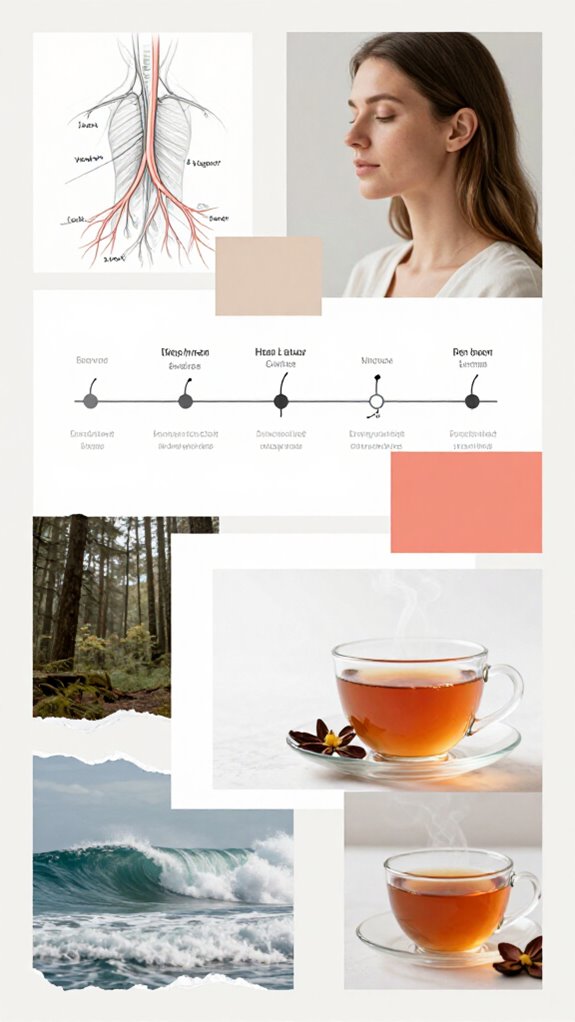
When I track REM sleep, I treat the data like a weather report, not a verdict: useful for spotting patterns, useless when I stare at it too hard.
I compare a wearable’s estimate with my sleep journaling, noting late meals, alcohol, and stress. Oura, WHOOP, and Apple Watch each use motion and heart-rate surrogates, so I read trends, not exact minutes. Caffeine timing matters just as much as what I track, since deep sleep architecture crumbles when stimulants linger past early afternoon.
I compare wearable sleep estimates with journaling, watching trends shaped by meals, alcohol, and stress.
I pair the numbers with mindfulness techniques, then ask one question: did I wake clear or fogged?
Researchers like Matthew Walker emphasize consistency, not scoreboard worship. That keeps me sharp, disciplined, and free from orthosomnia.
When my sleep feels fragmented, I’ll sometimes practice box breathing before bed to settle my nervous system instead of checking my phone.
Neurowellness Flagships
Neurowellness flagship tools work differently from sleep trackers because they try to shape the nervous system before sleep starts, not just measure what happened after the fact. White noise machines create a consistent acoustic blanket that reduces sleep-disrupting environmental sounds, complementing the nervous system preparation these tools aim to achieve.
I see their value in quiet leverage: vagus-focused stimulation, acoustic pacing, and light cues that nudge brainwave modulation toward calmer states.
- a dim amber room
- a slow metronome pulse
- a breathing rhythm like tide
- a wearable hum at the neck
- a journal beside the bed
Brands such as Apollo Neuro, Somnee, and research from Dr. Andrew Huberman point to neurowellness benefits: faster downshifting, steadier REM quality, and less orthosomnia. For those seeking smart headbands as part of their neurowellness toolkit, these devices offer targeted brainwave modulation that complements vagus nerve stimulation approaches.
Product Roundups
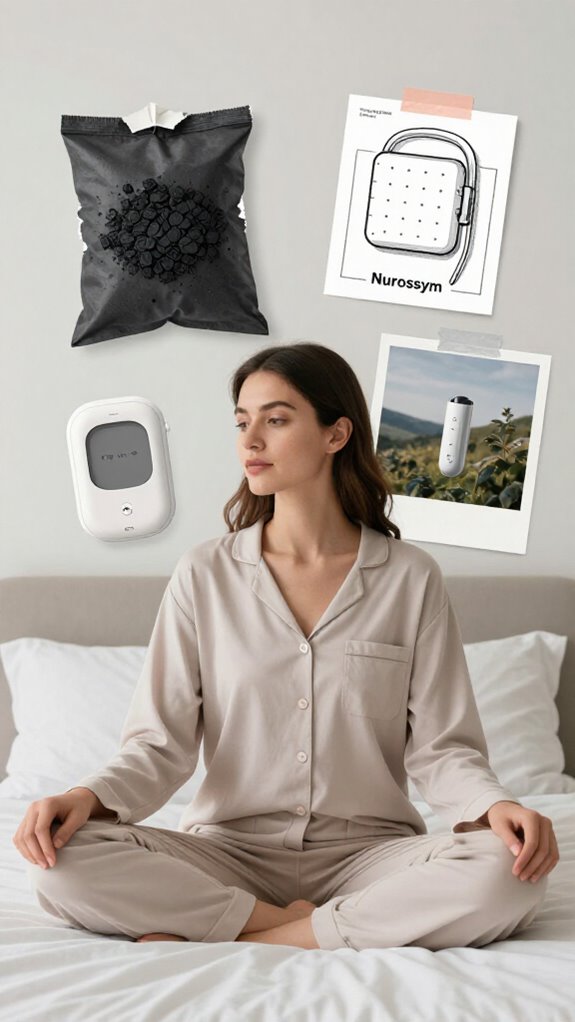
For precise neurowellness, I’d point you to Truvaga Plus, Nurosym, and Pulsetto: handheld tVNS tools, ear wearables, and neck stimulators with fast sessions, app control, or no-app simplicity. Apollo Neuro sits apart as a vibration wearable for all-day resilience. VNS devices can help shift the body from fight-or-flight toward a calmer state by supporting vagal tone. Activated charcoal bags work well in sleep environments to maintain air quality that supports restorative rest.
Phase change toppers can also enhance sleep quality by regulating temperature throughout the night, working alongside neuromodulation tools for comprehensive rest optimization.
In my device reviews, I look for FCC or CE status, guarantees, and trial data, including Pulsetto’s 2025 results. These product comparisons help you choose leverage, not clutter.
Vagus Nerve Study
Because vagus nerve function sits at the crossroads of sleep, recovery, and autonomic balance, I like to start with the nerve itself: the vagus, or tenth cranial nerve, begins in the medulla oblongata and threads through the neck, chest, and abdomen all the way to the colon.
In sleep studies, I watch neural response interactions like a control panel:
- cardiac rhythm settling
- diaphragmatic breathing deepening
- gastric activity easing
- inflammatory signaling cooling
- HRV rising
Researchers such as Tracey and devices from LivaNova show how vagus stimulation methods can shift the body toward rest-and-digest, sharpening power through recovery. Emerging vibration therapy devices represent another promising avenue for modulating autonomic tone and enhancing recovery outcomes. Just as luxurious linen promotes restful sleep through improved comfort and thermoregulation, optimizing vagal tone creates the physiological conditions for deeper, more restorative rest.
FAQ
Can Vagus Nerve Tone Change From One Night to the Next?
Yes—my vagus tone can shift from night to night. I’d watch sleep variability, because stress, recovery, alcohol, and breathing all move it. A vagus assessment can reveal those swings fast and give me leverage.
Is Low Vagus Tone Linked to Vivid Dreams?
Like a stormy radio, yes, low vagus tone can ride with vivid dreams. I’ve seen restless nights sharpen REM intensity; if you want power, train calm, because your nervous system steers the night’s screenplay.
Do Alcohol and Caffeine Affect Vagus Tone During REM?
Yes—alcohol consumption and caffeine intake can blunt vagus tone during REM sleep through neurochemistry effects, amplifying stress response and reducing restoration. I’d cut both late, then use relaxation techniques to protect your edge and recovery.
Can Breathing Exercises Improve REM Quality Immediately?
Yes—I’ve seen breathing exercises help some people settle faster, but REM quality usually changes more gradually. One study found slow breathing can cut stress markers by 20%, improving breath regulation and sleep depth tonight.
Is Vagus Nerve Tone Measurable at Home Without Wearables?
Yes, I can measure vagus nerve tone at home with simple home measurements like resting heart rate and breathing tests, but I can’t confirm it precisely without wearables or clinical tools.
References
- https://aijourn.com/best-vagus-nerve-stimulation-devices-2026/
- https://www.mexc.com/news/352932
- https://www.innerbody.com/best-vagus-nerve-stimulation-device
- https://cptsd.sites.umassd.edu/best-vagus-nerve-stimulation-devices-ranked-top-rated-stimulator-device-2026/
- https://wellnesspulse.com/healthtech/best-vagus-nerve-stimulation-device/
- https://soundsory.com/best-vagus-nerve-device/
- https://www.youtube.com/watch?v=95akd2vjtNU
- https://www.massgeneral.org/news/article/vagus-nerve
- https://teachmeanatomy.info/head/cranial-nerves/vagus-nerve-cn-x/
- https://en.wikipedia.org/wiki/Vagus_nerve