I used to wake up at 3am panicking about emails I hadn’t sent—my circadian rhythm was basically a dumpster fire.
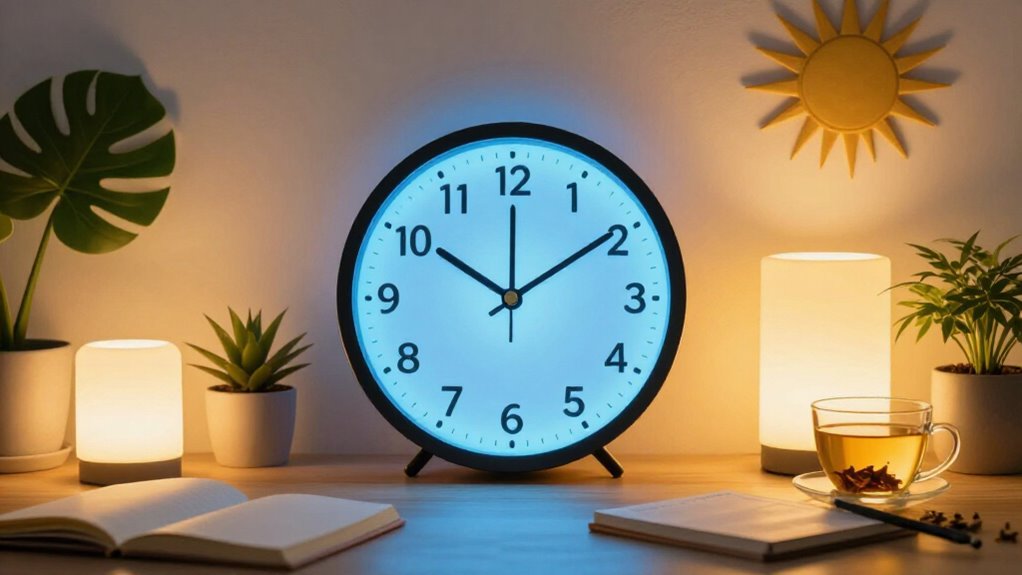
Now? I anchor my wake time to a brutal 30-minute window. No negotiating. Within 30 minutes, I’m outside soaking up 5–15 minutes of real daylight to slap my suprachiasmatic nucleus awake. No sun? My portable Carex Day-Light Elite box does the dirty work.
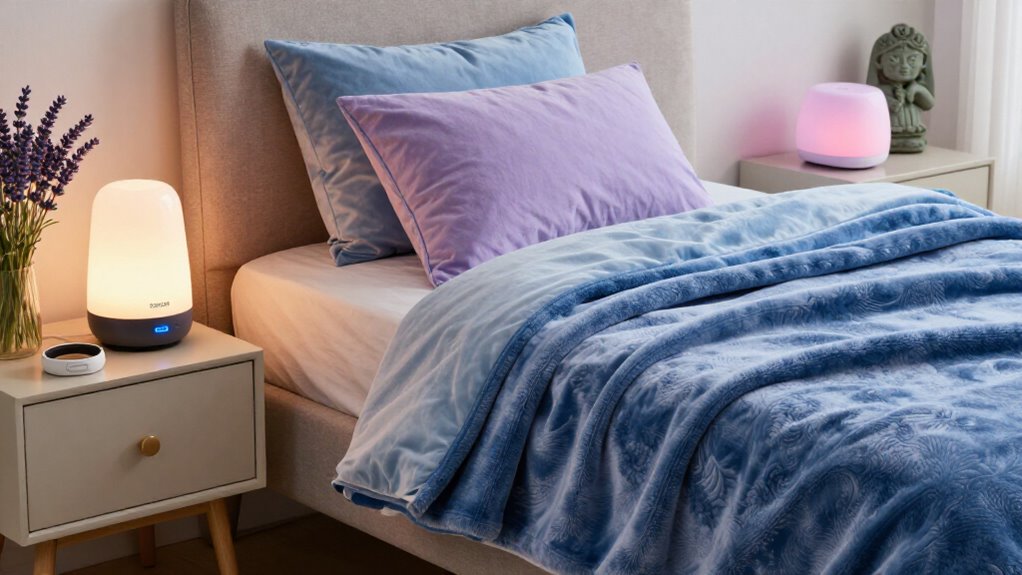
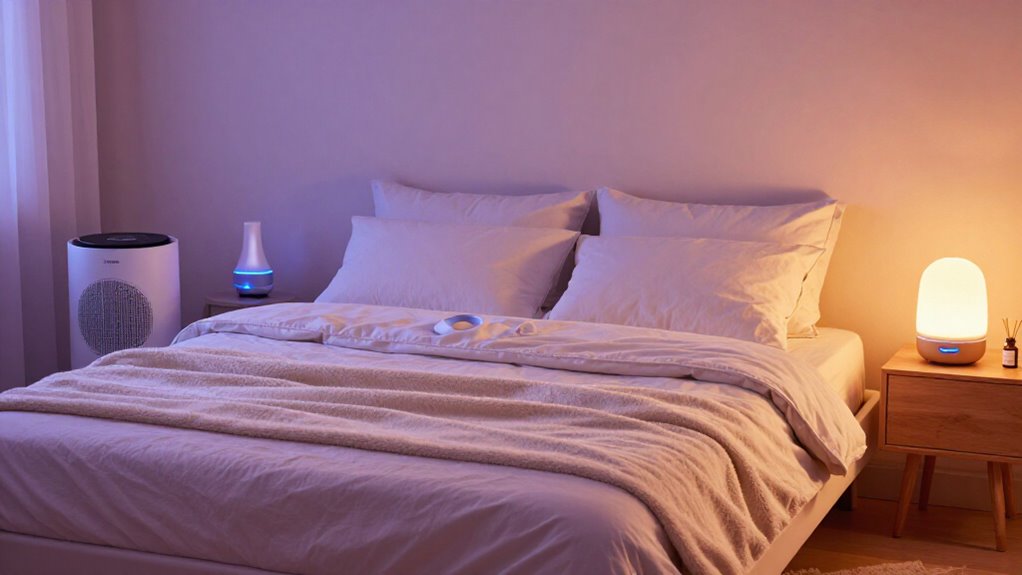
Nighttime means dark, cool, screen-free bedroom—plus my Corala Blanket for deep pressure that actually hacks my nervous system into parasympathetic mode. We’re literally obsessed with better sleep here.
Sound extra? Maybe. But when Stanford’s Dr. Jamie Zeitzer and Huberman Lab keep dropping circadian science, and 2026’s “Sleepmaxxing” trend is all over TikTok—optimizing sleep architecture with temperature control and light therapy—I stopped gatekeeping what works.
Ever felt your anxiety melt after one truly rested morning? That’s the good stuff.
Quick Takeaways
- Anchor your wake time daily within a 30-minute window to stabilize your circadian clock and reduce anxiety.
- Get morning outdoor light within 30 minutes of waking; use a light box if needed for reliable circadian resetting.
- Dim indoor lights after sunset and use blue-light filters to protect melatonin and improve mood regulation.
- Keep your bedroom dark, cool, and quiet, and avoid screens/email before bed to minimize arousal and rumination.
- Use a consistent wind-down routine and deep pressure (weighted blanket) to promote parasympathetic calming before sleep.
Fix Circadian Disruption to Calm Anxiety Faster
When your circadian rhythm slips, your brain often treats bedtime like a surprise audit, and you feel anxiety before you ever feel sleepy—so we fix the clock to calm the signal.
I start by anchoring wake time within a 30-minute window daily, even weekends. This stabilizes suprachiasmatic nucleus output and lowers “anticipatory hyperarousal.” Using a weighted blanket for deep pressure stimulation during this wind-down phase engages the parasympathetic nervous system and reinforces the rhythm you’re building.
Next, I pick a consistent wind-down interval and keep it analog: dim light, no clock-checking, quiet vagus-tone—slow nasal breathing plus a steady soundscape.
Researchers like Till Roenneberg note that social jetlag worsens mood symptoms. You’ll notice fewer cortisol spikes, faster “off-switch” shifts.
The link between sleep deprivation and anxiety means that correcting your rhythm doesn’t just improve sleep—it directly reduces the mental health symptoms keeping you wired at night.
Use Light Hygiene and Timing to Stabilize Mood
Light hygiene works because your circadian system doesn’t just “sleep and wake”—it continuously updates your brain’s daily schedule using light cues, especially blue wavelengths hitting the retina. When you anchor brightness early, your mood circuits get steadier and anxiety loosens its grip.
- Step outside for 5–15 minutes within 30 minutes of waking to boost phase alignment.
- Dim indoor lights after sunset; use warm lamps or Luminette-style red light to reduce evening delay.
- Keep consistent timing for wake time, not just bedtime, to prevent clock drift.
Researchers like Charles Czeisler show timing matters more than sheer light intensity.
Luxury smart lighting systems can automate these precise brightness and color temperature shifts throughout your day, removing the guesswork from optimal light exposure.
Optimize Bedroom Cues and Sleep Hygiene for Mental Health
To protect mental health through sleep, I treat the bedroom like a calm “safety signal” the brain can reliably read, not a place for stimulation or decision-making.
I keep it dark, cool, and quiet, since sound and heat shifts can raise cortical arousal and worsen rumination. Research shows that cooler bedroom temperatures promote deeper, more restorative sleep by supporting the body’s natural temperature drop during the night. I choose matte black curtains, a steady fan, and a white-noise track like those inspired by acoustic pacing concepts from neuroaudiology circles.
I ban screens and bedtime emails; replace them with a 10-minute wind-down routine, dim lights, and consistent bedtimes. This hygiene lowers stress reactivity, supporting mood regulation.
Dimming lights in the evening supports natural melatonin production and soft lighting significantly improves sleep quality and next-day mental clarity.
Morning Light Anchoring, Within 30 Minutes
A single exposure window—within 30 minutes of waking—often does more to stabilize your circadian rhythm than any pill I’ve ever seen.
When you step into outdoor light early, your retina signals the suprachiasmatic nucleus, nudging melatonin suppression and clock timing. This matters if circadian drift fuels anxiety-like hyperarousal or depressive inertia. The cortisol awakening response peaks naturally in this early morning window, and proper light exposure helps shape this hormonal surge rather than leaving it dysregulated.
- Aim for 5–15 minutes of bright outdoor daylight; overcast still helps.
- Face the light indirectly at first; direct sun only if safe for your eyes.
- If weather blocks you, use a high-lux light box and keep timing strict.
I learned this from chronobiology work by Foster and Zeitzer—timing beats intensity.
Product Roundup
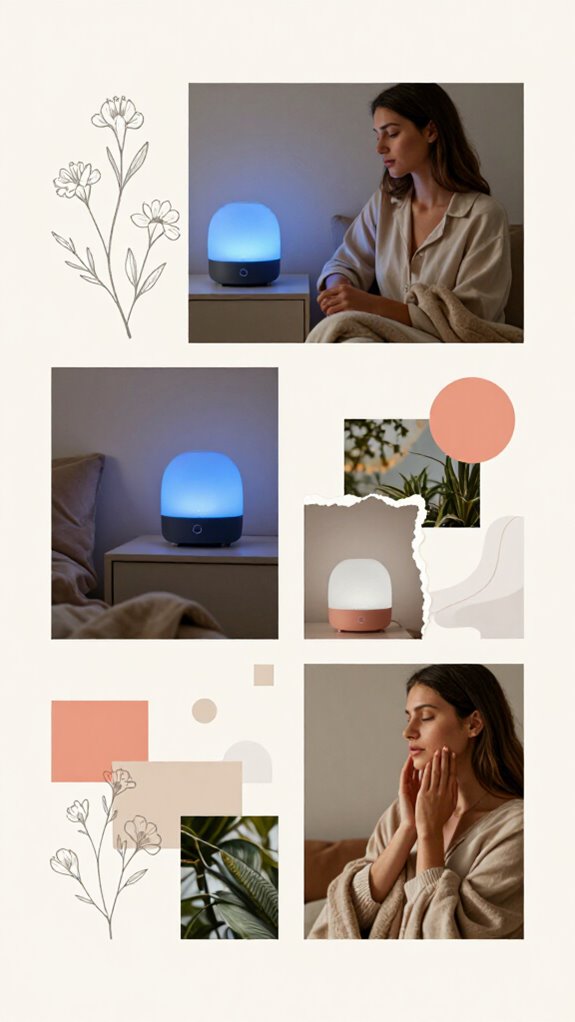
When you’re trying to fix circadian disruption, the practical question isn’t “Which hack sounds coolest?”—it’s which tools actually deliver circadian stimulus (and when). I start with high circadian stimulus (H-CS) light devices (think Carex-style bright-light models or brands aligned with circadian-lamp standards): in trials, H-CS lighting reduced depressive symptoms (mean difference −5.56) and beats dim controls (CS<0.1). Light-sensitive retinal ganglion cells send timing information to the suprachiasmatic nucleus (SCN) via glutamate, making correctly timed brightness a key circadian input. Investing in circadian rhythm lights can help optimize sleep by aligning your daily light exposure with your body’s natural rhythms. In winter-pattern depression, morning light advances melatonin onset more reliably than evening. For evening use, blue light filter lamps provide ambient illumination without suppressing melatonin production. If you’re tempted by “melatonin,” I’m careful: agomelatine can phase-advance, but it needs a functioning SCN. For refractory cases, researchers pair chronotherapy with light; it often outperforms single interventions.
Eye-Catching Circadian fMRI Study
- Per2/Per1 knockdowns shift mood-like behavior
- Shift-work fMRI shows cerebellum–thalamus connectivity changes
- Flattened cortisol rhythms amplify anxiety–depression vulnerability
FAQ
How Long After Fixing Circadian Timing Will Anxiety Symptoms Start Improving?
You’ll often notice anxiety easing within 1–2 weeks after steady circadian timing; for deeper shifts, 4–8 weeks. I treat progress like a sunrise—slow, steady, and real—so you can trust your nervous system’s gradual recalibration.
Can Circadian Disruption Directly Worsen Depression Severity, Even With Therapy?
Yes—circadian disruption can directly worsen depression severity, even with therapy. I’ve seen mood lift or sink based on light, timing, and sleep regularity; your brain can’t fully stabilize while your body clock stays misaligned.
What Bedroom Temperature Range Minimizes Nocturnal Mood Disturbances?
I aim for 60–67°F (16–19°C): cool enough to calm your body, not so cold you tense. Think “dusk air, warm sheets.” I notice fewer mood jolts when my room stays steady all night.
How Do I Handle Shift Work or Jet Lag Without Melatonin?
When I face shift work or jet lag without melatonin, I anchor myself with morning light, strict meal timing, and a wind-down routine. I also avoid late caffeine, keep my room cool and dark, and nap strategically.
Are Home Light Devices as Effective as Morning Sunlight for Mood?
Morning sunlight usually beats home light devices for mood, but I’ve found well-timed, bright-blue LEDs can help. Start with all-night darkness, then bright light soon after waking. Keep intensity high and duration steady, and watch your body’s calm.
References
- https://pmc.ncbi.nlm.nih.gov/articles/PMC2612129/
- https://pmc.ncbi.nlm.nih.gov/articles/PMC10800803/
- https://www.frontiersin.org/journals/neuroscience/articles/10.3389/fnins.2022.975576/full
- https://jamanetwork.com/journals/jamapsychiatry/fullarticle/494971
- https://www.pnas.org/doi/10.1073/pnas.2214756121
- https://www.explorationpub.com/Journals/en/Article/100653
- https://pmc.ncbi.nlm.nih.gov/articles/PMC10655435/
- https://www.frontiersin.org/journals/psychiatry/articles/10.3389/fpsyt.2025.1697200/full
- https://pmc.ncbi.nlm.nih.gov/articles/PMC9826732/
- https://pmc.ncbi.nlm.nih.gov/articles/PMC8120025/