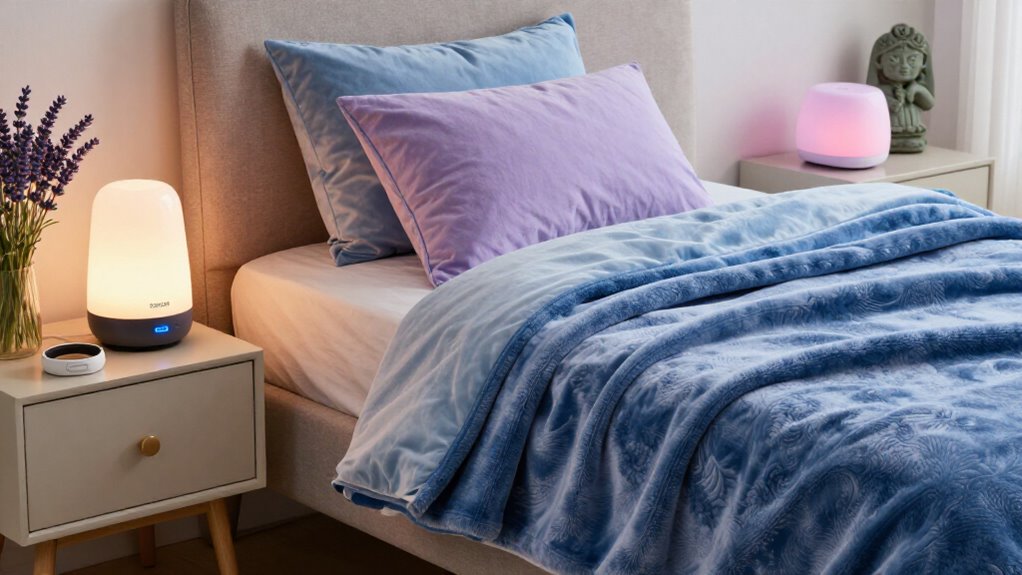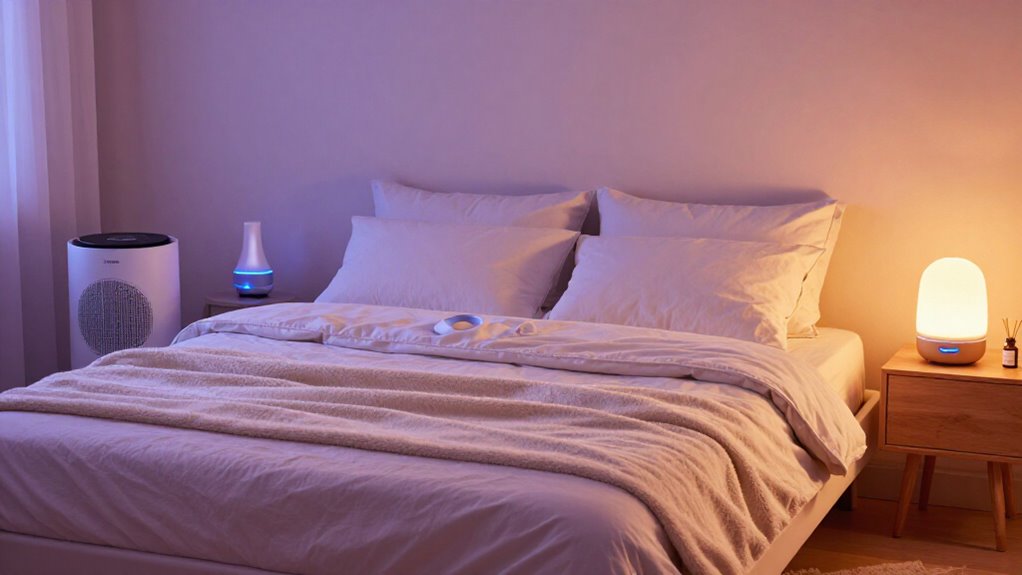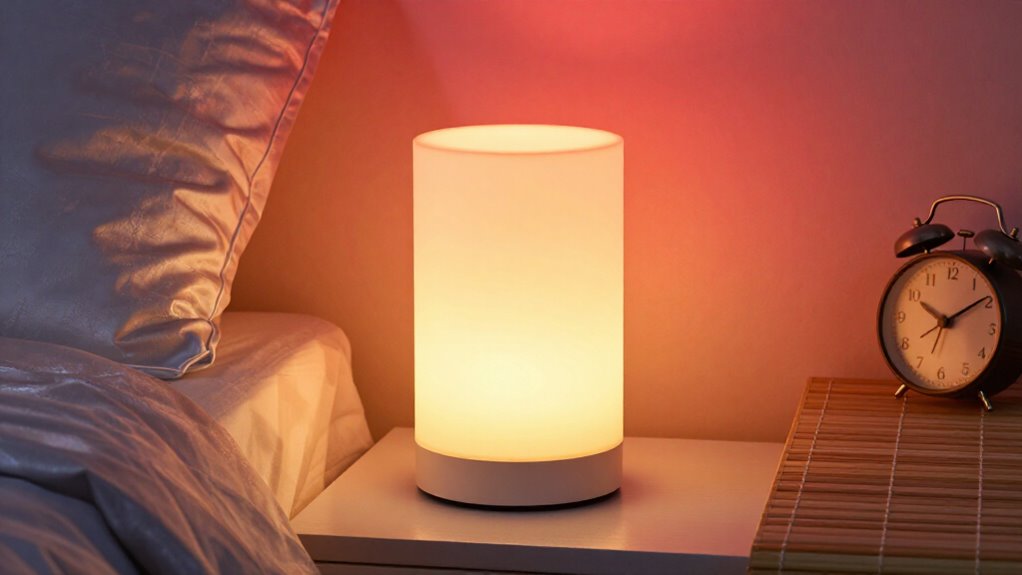
I used to think willpower could bully me to sleep—spoiler: it can’t.
Three years ago, I’d lie there, furious, watching 2 AM blink by. Then I discovered my SCN was basically screaming for help.
Now? I chase morning sunlight like it’s coffee, per Satchin Panda’s research—yes, your brain actually notices. I crank my Nest thermostat to 65°F by 9 PM, pre-cooling so my core temp drops naturally. My LectroFan masks city noise with low-frequency hum that mimics womb vibes.
I journal analog, breathe slow, honor my wolf chronotype. No screens, no guilt.
Sleepmaxxing in 2026 isn’t about hacks—it’s biology, baby.
We at Corala Blanket live this. Your bed should work *with* you, not against you.
Ready to stop fighting yourself?
Quick Takeaways
- Get bright morning light within 30 minutes of waking to entrain your SCN and stabilize your circadian sleep timing.
- Use dim, warm light in the evening and reduce screen brightness to prevent phase delays and improve sleep onset.
- Keep your bedroom cool (60–67°F / 16–19°C) and pre-cool 1–2 hours before bed for better thermoregulation.
- Control sound with consistent, low-level masking (white noise with a fade-in) to reduce arousals and support deeper cycles.
- Follow a wind-down routine: dim screens, use calming breathwork, and jot worries to help your nervous system downshift.
Set Up Your Chronobiology-Friendly Light Timing
Light timing is the first lever I pull when I’m setting up chronobiology-friendly rest space. I begin at waking: I chase early light exposure, ideally within 30 minutes.
This timing strategy cues the suprachiasmatic nucleus, your brain’s timekeeper, and shifts biological rhythms toward day-active alertness. I use natural lighting—open curtains, step outside, even brief shade-to-sun shifts—so the retina gets a clean morning signal.
In the evening, I dim aggressively: fewer bright overheads, warmer bulbs, and screen brightness controls. Think “sunrise on purpose,” not sleep hacking.
Researchers like Satchin Panda emphasize these entrainment pathways. Philips Hue can help, but sunlight leads.
The right bedroom furniture creates the foundation for these light-controlled environments, pairing functional design with the circadian rhythm support your rest space demands.
Design Circadian Temperature Control for Deep Sleep
Once you’ve nailed your light timing, temperature becomes the next lever I pull because it directly shapes how fast your body drops into sleep-friendly “core cooling”—and that matters for deep sleep.
I aim for thermal regulation with environment harmony: a cool bedroom (often 60–67°F / 16–19°C), breathable bedding, and a controllable microclimate. Your thermo-neutral zone represents the temperature range where your body doesn’t need to work to generate or lose heat, making it the ideal target for uninterrupted sleep.
I use a smart thermostat set to start cooling 1–2 hours before bed, matching the natural circadian fall in core temperature.
NASA sleep studies and Michael Breus’s work align on this: thermoregulation cues sleep onset.
This mirrors the mindful Nordic approach to creating serene, temperature-balanced bedrooms that prioritize natural materials and thermal comfort.
I sleep better when the bed feels cool, not chilly.
Use Sound Pacing to Calm the Nervous System
After you’ve lined up your temperature cues for that natural core-cooling window, I turn to sound pacing to help your nervous system shut off “threat monitoring” before you try to sleep.
In my auditory environment, I favor rhythmic sounds at a stable sound frequency, because the brain syncs its arousal level to predictable patterns. As you settle, I use sound therapy calming tactics: slow the pacing, reduce abrupt onsets, and let nature sounds replace speech-like peaks. White noise creates a consistent acoustic blanket that masks disruptive environmental sounds and promotes deeper, more restorative sleep cycles. The right white noise gear can make implementing these sound pacing strategies significantly easier.
Try these approaches:
- 45–60 min fade-in.
- 40–60 bpm heartbeat-like rhythm.
- Broadband masking (fan or noise).
- One repeating playlist, not playlists.
Researchers like Nina Kraus note timing matters.
Build a Psychologically Safe “Analog” Wind-Down Routine
1 simple rule sets the tone for a psychologically safe “analog” wind-down: I treat your mind like a nervous system that needs permission to downshift, not another problem to solve.
Tonight, I dim screens and open a paper page. I start mindful breathing: inhale 4, exhale 6, for 5 minutes, then I shift into sensory focus—notice fabric, room temperature, even the faintest sound.
This pairing guides attention away from clock-checking, reducing threat appraisals that drive sympathetic arousal. I end by writing one honest worry and one gentle action.
Researchers like Stephen Porges would call it ventral vagal “safety.”
Natural remedies such as chamomile tea or lavender oil can deepen this pre-sleep calm by soothing the nervous system through familiar, non-digital rituals.
Keep Your Bedroom Sleep-Autonomous by Chronotype
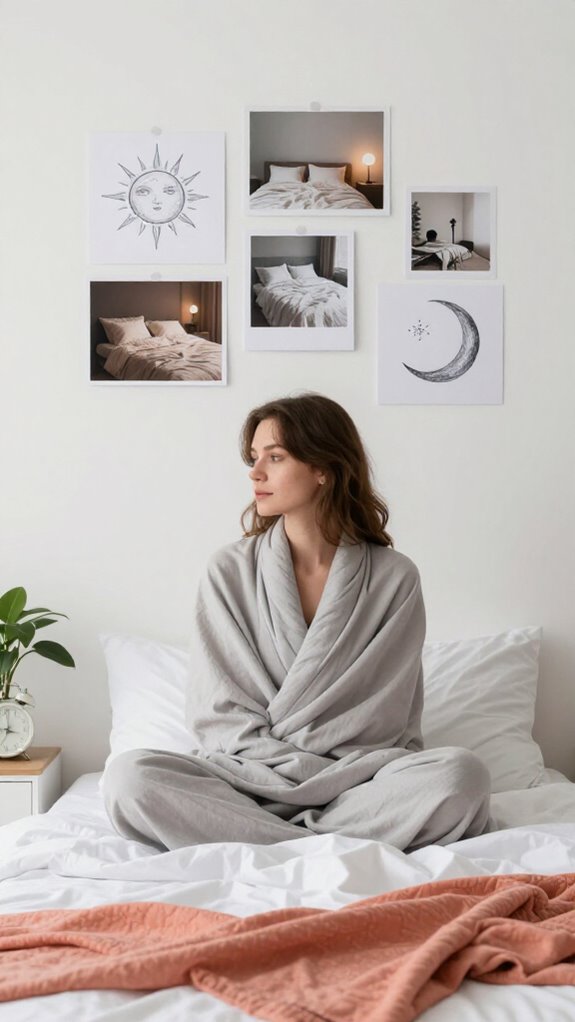
To keep your bedroom truly sleep-autonomous, I start by respecting your chronotype—the timing of your internal circadian “clock,” shaped by genetics and regulated by light exposure through the SCN (suprachiasmatic nucleus) in your hypothalamus.
Your sleeping patterns should lead, not your calendar. If you’re a night owl, I dim lights later and block morning glare; if you’re an early bird, I pull curtains open early and cool the room before your window. The hypothalamic regulation of body temperature works in tandem with your sleep-wake cycle to prepare you for rest.
For individual needs, I tune sleep habits with temperature and timing. In shared space, partner preferences matter; we negotiate darkness, noise, and routine.
- Anchor bedtimes to chronotype.
- Control light intensity and spectrum.
- Match room temperature to biology.
- Use restorative practices, not force.
A cool bedroom temperature promotes deeper, more restorative sleep by supporting your body’s natural drop in core temperature during the night.
“2026 Sleep Trends” Debut Section
In 2026, I treat “sleep trends” less like novelty waves and more like a set of testable design principles for the nervous system, the circadian clock, and your bedroom microclimate.
In 2026, treat sleep trends as testable design principles for your nervous system, circadian clock, and bedroom microclimate.
As you read, I’ll anchor each trend to sleep hygiene and restful environments that reliably cue “shutdown.”
First, neurowellness: vagus-nerve stimulation and acoustic pacing aim to dampen sympathetic tone.
Second, analog-bedroom calm: tracker anxiety eases when you stop auditing every minute.
Third, light hygiene: anchor with morning sunlight, then use dim, red-shifted evenings to stabilize melatonin timing.
Finally, sleep autonomy: respect chronotypes.
Even researchers in chronobiology echo this: consistency beats intensity.
Product Roundup
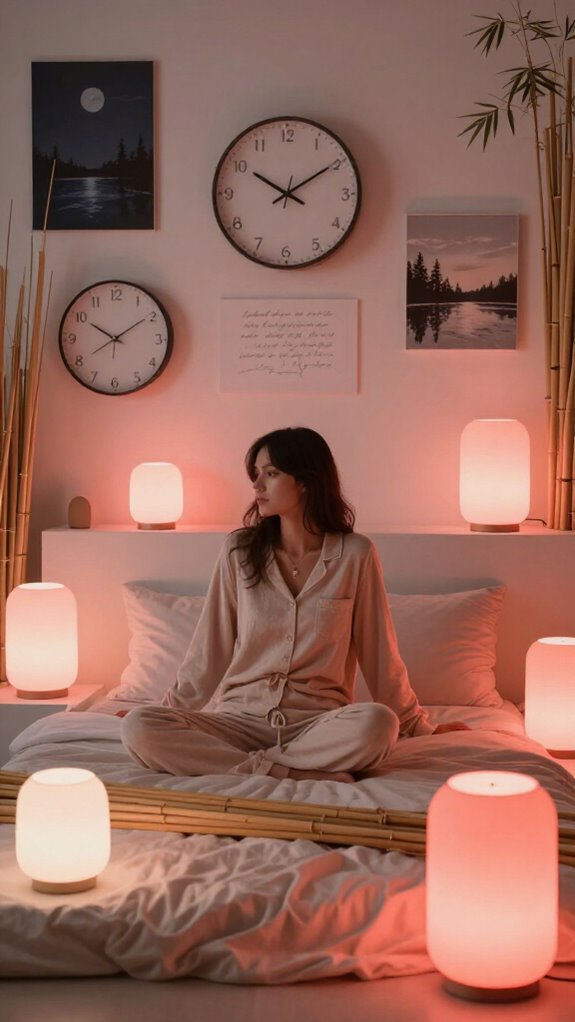
Here’s a practical product roundup built on chronobiology—not a “sleep hacks” shopping spree. Using circadian rhythm lights can significantly enhance your sleep by supporting your body’s natural light-dark cycles.
For sleep optimization, I focus on environmental cues that entrain your SCN, not on chasing a perfect score. I look for circadian entrainment tools that use light as the primary Zeitgeber to align internal rhythms with your day.
I look for:
- Morning Light Anchoring lamps (10,000-lux class) to strengthen phase alignment.
- Red-shift lighting or red panels at dusk to prevent late-night phase-delay.
- Bio-wicking bamboo or silver-infused bedding to stabilize temperature, reducing homeostatic “micro-wake” spikes.
- Analog clocks plus off-screen wind-down to curb tracker anxiety and protect circadian Process C/S balance.
Brands like Circadian Optics and Philips Hue match the concept. Light spectrum control is essential for any system claiming true circadian alignment.
“Remote Polysomnography at Home”
With home monitoring devices like WatchPAT (FDA-approved) or NomadAir, I track breathing, oxygen (SpO2), pulse, position, and snoring, then ship signals through cellular uploads for telehealth integration. When setup is right, data accuracy matches lab sleep time, latency, and architecture closely; studies show comparable sleep-stage distribution. That’s real diagnostic benefits for sleep disorders such as obstructive sleep apnea, often faster than waiting rooms.
But wearable technology can’t capture limb movements or brain waves, and apnea severity may be underestimated if “bed time” is used instead of true sleep—so patient compliance matters. Morning light exposure remains the most powerful external cue for aligning these measurements with your natural circadian phase, ensuring that sleep data reflects your biology rather than a disrupted schedule.
The precision of mechanical timekeeping offers an instructive contrast to digital wearables, reminding us that reliable measurement depends on the interaction between device mechanics and human behavior.
FAQ
How Do I Choose Morning Light Intensity Without Triggering Headaches?
I start with dim daylight and shorten exposure in tiny steps: 2–5 minutes, then add. If light sensitivity flares, I move to indirect shade, wear clear lenses, and keep eyes gently closed until my headache triggers settle.
What’s the Ideal Room Temperature Range for Different Sleep Chronotypes?
Swiftly, I’d set your sleep environment to 65–67°F (18–19°C) for early birds, 67–69°F (19–21°C) for neutral types, and 68–70°F (20–21°C) for night owls, then tweak for your temperature preferences.
How Loud Should Sound Pacing Be to Avoid Disturbing Micro-Awakenings?
I keep sound pacing low—just enough to sit under your auditory thresholds. I aim for a steady sound frequency with gentle white noise, matching an ambient rhythm that smooths my sleep cycles without popping into micro-awakenings.
Which Analog Wind-Down Activities Best Reduce Rumination and Anxiety?
I’ll guide you like a warm lantern: mindful journaling, slow breathing, and gentle bedtime stretches. I do calming rituals—dim lights, a brief gratitude note, then I let thoughts pass like clouds. You’ll feel safer fast.
Do Home Apnea Screenings Change My Light, Sound, or Temperature Setup?
Yes—apnea screening can. If results hint at nighttime obstruction, I tweak light adjustment to avoid late awakenings, refine sound optimization to mask breaths, and tighten temperature control for steadier airflow while you sleep more safely.
References
- https://esrs.eu/news/sleep-science-friday/physiological-basis-of-sleep-circadian-biology-chronobiology/
- https://pmc.ncbi.nlm.nih.gov/articles/PMC8801860/
- https://cdn.publisher.gn1.link/sleepscience.org.br/pdf/v13n4a09.pdf
- https://www.sleephealth.org/sleep-circadian-basics/
- https://www.frontiersin.org/journals/sleep/articles/10.3389/frsle.2025.1544945/full
- https://sleep.hms.harvard.edu/education-training/public-education/sleep-and-health-education-program/sleep-health-education-48
- https://bioclock.ucsd.edu/portfolio-item/an-introduction-to-chronobiology-part-i/
- https://pmc.ncbi.nlm.nih.gov/articles/PMC11853583/
- https://www.tenovi.com/home-sleep-monitoring/
- https://us.nihonkohden.com/nkweb/en/USD/products/neurology/home-sleep-apnea-testing-hsat-nomadair/