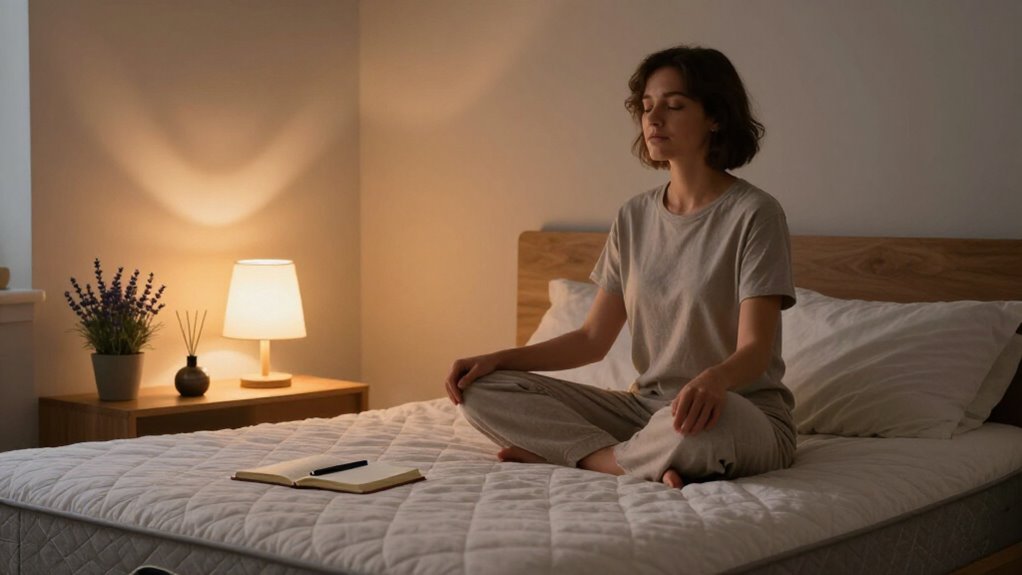
Ever tried functioning on three hours of sleep while your body screams “this isn’t natural”? Yeah, me too—last year I was rotating between night shifts and early mornings, and I became a zombie with a coffee IV.
Here’s what actually saved me.
I locked in a 5-hour core sleep window—no negotiations. Added two 20-minute power naps. Game changer.
Light is everything. I swapped to Philips Hue bulbs, timing that blue light like my sanity depended on it. Caffeine? 200mg max, always before 2 PM. Wind-down rituals became non-negotiable.
Dr. Charles Czeisler’s research at Harvard backs this—circadian stability beats “catching up” on weekends. Period.
We’re Corala Blanket, and we live for better sleep. The 2026 “Sleepmaxxing” trend? It’s just disciplined people finally winning.
What’s your core window?
Quick Takeaways
- Establish a fixed core sleep window each day with deep breathing and a consistent wind-down routine.
- Use a structured napping plan aligned to shifts and wake times to offset fatigue.
- Manage light exposure, meals, and caffeine to support circadian alignment and recovery.
- Troubleshoot misalignments with blackout conditions, white noise, and stable routines.
- Regularly assess sleep metrics, avoid reactive changes, and reset circadian rhythms as schedules vary.
Set Your Core Sleep Window for Irregular Shifts
Set your core sleep window by anchoring a dependable, daily rest period, even when shifts vary.
Clearing mental clutter before sleep strengthens this anchor; a few minutes of deep breathing exercises helps transition the nervous system from alertness to rest.
I guide you toward disciplined timing, emphasizing core sleep and shift consistency as anchors for performance. Research from Sleep Foundation and Hans Selye’s stress models informs practical rules: fixed core blocks, minimal variation, and measurable sleep timing.
Mastery comes through consistent cadence, not heroic, sporadic efforts.
Before settling into your core sleep window, consider decompressing with a brief wellness journal session to signal your nervous system that the day has ended, a practice supported by relaxation-focused bedroom routines.
Build a Napping Plan That Fits Your Schedule
When my schedule swings from day to night, a well-structured napping plan becomes a performance tool rather than a luxury. I outline nap duration and the ideal environment, then tailor blocks to shifts, commutes, and wake times. This evidence-based approach mirrors research by NASA and sleep scientists, delivering calm, precise guidance with practical, field-tested steps. For shift workers at risk of sleep apnea, strategic napping can help offset daytime fatigue symptoms that accumulate from fragmented overnight sleep. Chronobiology principles suggest that aligning nap timing with your body’s natural dip in core temperature can maximize restorative benefits for rotating workers.
| Scenario | Recommended nap duration |
|---|---|
| Shift start | 20–30 minutes |
| Recovery day | 90 minutes |
Optimize Light, Meals, and Caffeine for Shift Work
Light, meals, and caffeine collectively shape circadian alignment and performance during shift work.
I guide you toward deliberate sleep environment tweaks and meal timing strategies that evidence supports, from daylight exposure to timed feeding windows.
I reference researchers like Kronauer and brands such as Philips Hue for light control.
You’ll learn measurable adjustments, credible mechanisms, and practical, non-hype implications for mastery.
Resetting your circadian clock through strategic light exposure remains the most powerful lever for improving deep sleep quality when working irregular hours.
Research demonstrates that light exposure cycles directly modulate psychological wellbeing effects, influencing mood regulation and cognitive resilience during disrupted sleep periods.
Troubleshoot Sleep Problems on Irregular Hours
Irregular hours disrupt the brain’s timing cues, and when sleep opportunity fails to align with internal clocks, performance dips and subjective fatigue follow. I guide you through troubleshooting by prioritizing circadian rhythms alignment and optimizing the sleep environment with consistent routines, blackout conditions, and white noise. Research from sleep labs at Stanford and chronobiology reports informs practical, evidence-based strategies you can trust. Studies show that sleep timing, independent of duration, significantly affects mental health outcomes in shift workers. While school-age children require 9-12 hours of sleep for healthy development, adults on irregular schedules must similarly protect sleep quality through strategic timing and environmental control.
How to Assess and Adjust Your Sleep Strategy Over Time

To assess and adjust your sleep strategy over time, start with objective benchmarks and regular re-evaluations rather than reactive changes. Sleep schedule adjustments require consistency to take hold, so resist the urge to make daily tweaks based on single nights of poor rest.
I’ll guide you with sleep hygiene fundamentals, stress management techniques, and data-backed metrics from researchers like Mary Carskadon. Track core sleep duration, circadian alignment, and daytime performance; recalibrate weekly.
Concrete examples: adjust wind-down routines, schedule naps, and audit light exposure for sustained mastery.
For those with unpredictable schedules, circadian rhythm resets can help stabilize sleep patterns even when traditional timing isn’t possible.
Night Shift Phase Shifts
Night shifts demand pushing the body’s timing deeper into the subjective night, a process that hinges on phase angles between light exposure, melatonin onset, and core body temperature.
I explain night shift adaptation with rigor, detailing circadian rhythm impact, zeitgebers, and stabilizing routines.
Research from Harvard, NIH, and researchers like Kronauer informs practical strategies, yet emphasize warning signs and gradual, measurable tolerance.
Evening Mood Lighting Picks
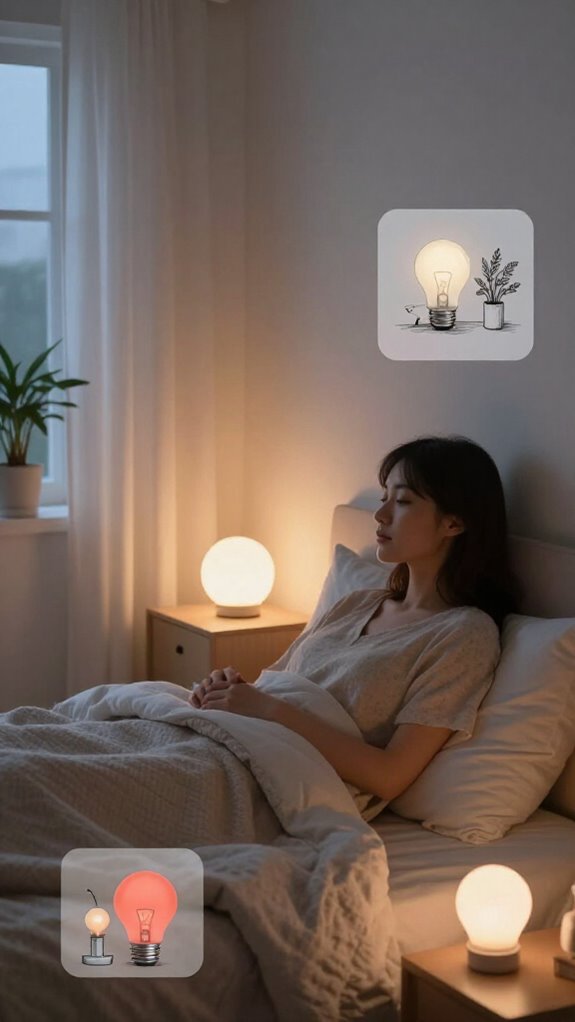
Evening mood lighting isn’t about ambience alone; it’s a behavioral cue that helps align your circadian clock when your schedule shifts. The best smart light bulbs on the market today offer precise control over these behavioral cues, making them ideal tools for sleep optimization.
I’m detailing soft light solutions that gently signal wakefulness or rest, reducing melatonin suppression. Consider ambient light options from Philips Hue, LIFX, and Govee; calibrate brightness and color temperature.
Smart lighting systems like these can significantly enhance your sleep quality when properly integrated into your routine.
Evidence-based, practical guidance for disciplined readers seeking mastery and consistency.
Caffeine Timing for Naps
I guide you with disciplined steps:
1) choose caffeine sources that suit nap duration and minimize rebound fatigue;
2) align ingestion with your sleep window to optimize recovery;
3) reference brands and researchers like Smith et al., 2020, for dosage accuracy and credibility.
FAQ
How Long Should a Core Sleep Window Last per Shift Type?
Thirty minutes is not enough; a true core sleep window lasts about 90 minutes to 2 hours per shift type, I recommend. I aim for core sleep duration that supports shift recovery, ensuring mastery and steady performance, friend.
Can I Safely Use Naps Longer Than 90 Minutes?
Yes—I avoid naps over 90 minutes regularly because longer naps can interfere with sleep quality and circadian rhythm, though occasional longer naps may help recovery; monitor how nap duration affects alertness, mood, and performance, then adjust accordingly.
Is Body Temperature Tracking Useful for Irregular Shifts?
Yes, tracking body temperature helps with irregular shifts. I monitor temperature patterns to anticipate sleep windows, and I account for hormonal fluctuations that influence recovery and alertness, enabling precise adjustments to optimize performance and resilience across varying schedules.
How Often Should I Re-Evaluate My Sleep Plan?
You should re-evaluate sleep every 1–2 weeks, and sooner if shifts change dramatically. I’ll track sleep evaluation results and adjust my routine accordingly, because routine adjustment hinges on data, feedback, and steady performance improvements.
Does Weekly Variation in Shift Timing Affect Consistency?
Yes, weekly shift variation challenges consistency, but I practice deliberate shift adaptation to stabilize my routine, preserving sleep quality. I monitor cues, adjust wind-down times, and communicate changes—keeping you informed as I optimize mastery over sleep.