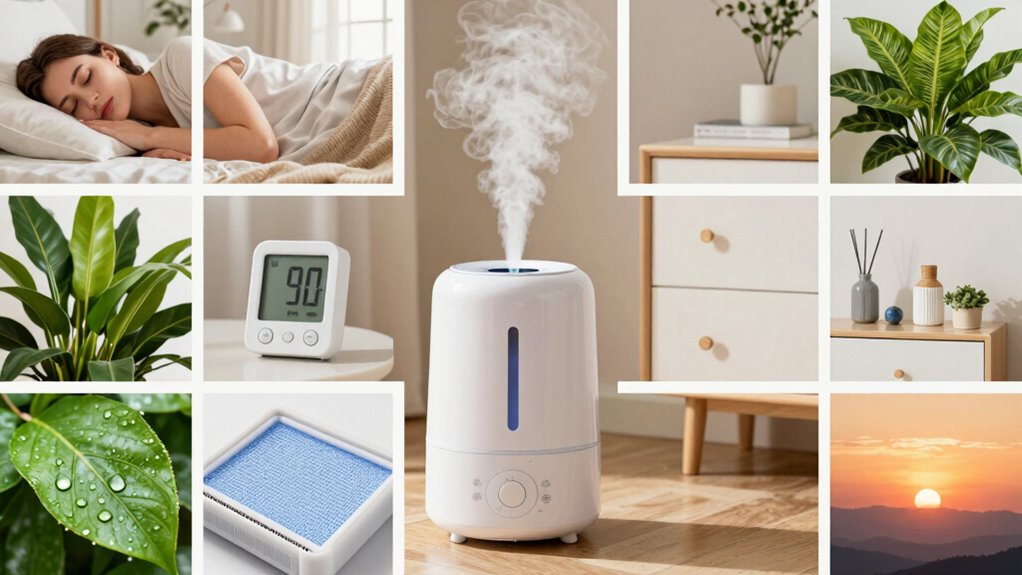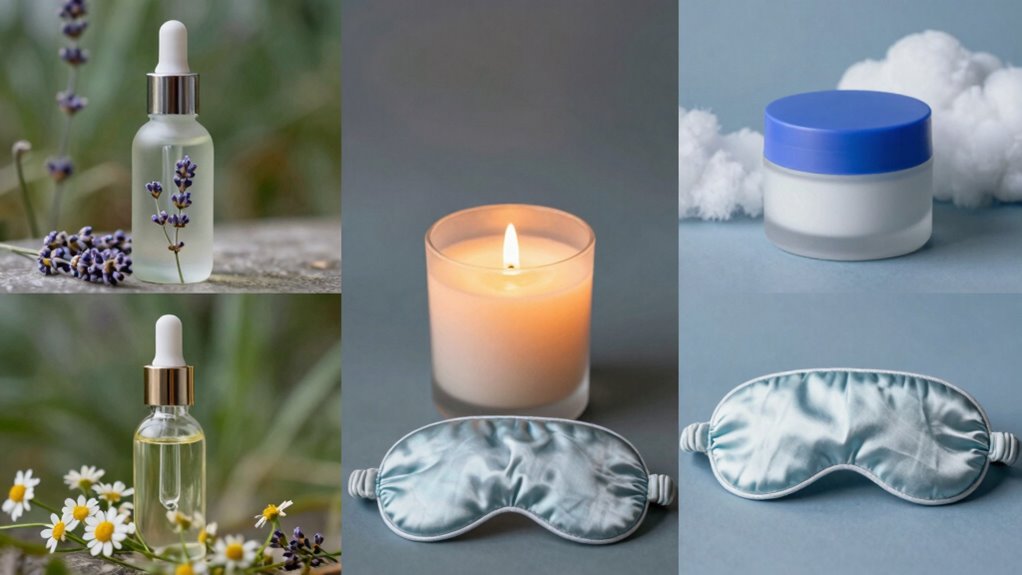
I used to toss and turn for *hours* until I discovered the magic combo of lavender oil and a solid diffuser setup.
Here’s my go-to move: I grab calming oils—lavender hits different when you’re desperate for sleep—then pick my diffuser based on how light I sleep. Ultrasonic? Perfect if you’re sensitive. Nebulizing? That’s when you want pure, potent scent (heads up: it’s kinda loud).
I place mine about six to ten feet from my bed, fire it up thirty minutes before lights out, and honestly? Game changer. Weekly vinegar cleanups keep the mold away, which is crucial.
Look, we at Corala Blanket get it—better sleep isn’t just about one thing. It’s the whole vibe. Diffusers are just *part* of the puzzle. Pair them with quality bedding, and you’re actually sleeping better, not just hoping for it.
Want to level up? Check which models actually deliver results, not just hype.
Quick Takeaways
- Select ultrasonic diffusers for quiet operation that won’t disturb light sleepers.
- Choose models with automatic shut-off timers and warm ambient lighting features.
- Place diffusers six to ten feet from your bed to avoid overwhelming scents and dampness.
- Prioritize easy-clean designs with wide openings to prevent mold buildup.
- Match diffuser aesthetics to bedroom decor for a calming, retreat-like atmosphere.
Pick the Best Essential Oils for Sleep
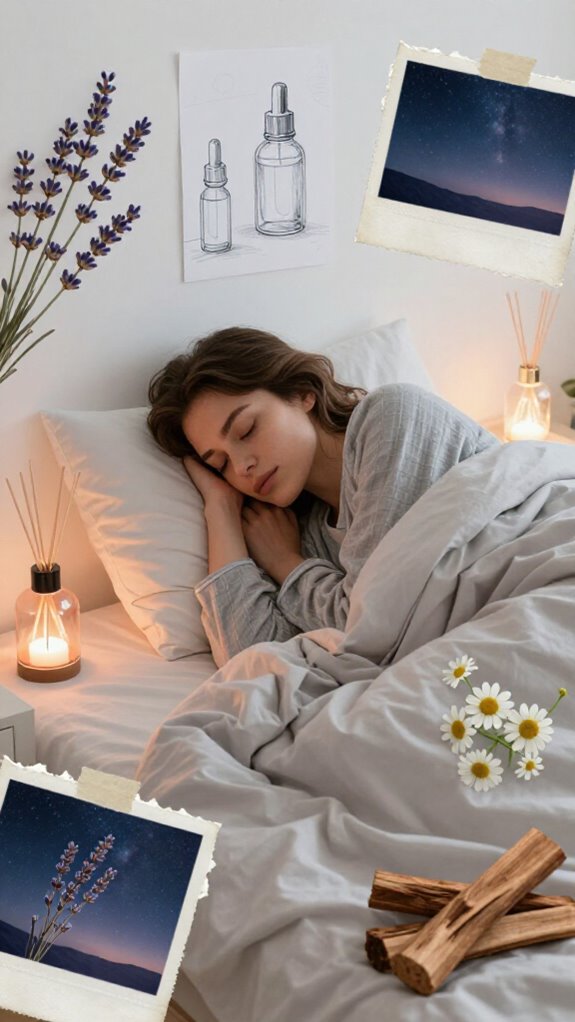
When I’m winding down for the night, I’ve learned that not all essential oils are created equal—and trust me, I’ve sniffed my way through plenty of duds to find the real sleep champions.
Lavender’s my ride-or-die, but don’t sleep on chamomile or cedarwood either. These calming scents actually lower your heart rate—science backs this up!
I mix my own aromatic blends: three drops lavender, two drops bergamot. Pure magic.
Want my secret weapon? Vetiver. It’s earthy, grounding, and knocks me out faster than counting sheep ever could.
For the best results, pair your oils with luxury diffusers designed specifically for restful sleep.
Skip the cheap grocery store stuff, though. Your brain knows the difference between real plant magic and synthetic nonsense.
Choose a Diffuser Type That Fits Your Bedroom
Every diffuser on my nightstand tells a story of trial, error, and finally getting it right.
I’ve learned that diffuser features matter more than you’d think. Ultrasonic models whisper quietly, perfect for light sleepers like me. Nebulizing diffusers pack a punch with pure oils, but they hum a bit louder.
Ultrasonic diffusers whisper for light sleepers; nebulizers deliver pure oils with a hum.
Heat diffusers? I skip them—warmth changes the oil chemistry.
Your bedroom ambiance deserves better than a clunky eyesore. I hunt for warm lighting, automatic shut-offs, and designs that feel like decor, not gadgets.
What’s your sleep sanctuary craving?
Place It 6-10 Feet From Your Bed
Once you’ve picked the perfect diffuser, where you put it matters just as much as the model you chose.
I always tell people: six to ten feet from your bed is the sweet spot. Why? Close enough to catch those dreamy lavender notes, but far enough that the mist won’t dampen your pillows or overwhelm your senses.
Trust me, I’ve made the mistake of placing mine on my nightstand—woke up feeling like I’d napped in a spa’s steam room.
This diffuser placement transforms your entire sleep environment into something that actually feels like a retreat, not a rainforest.
Aromatherapy oils for bedroom work best when diffused at this optimal distance, allowing the scent to disperse naturally without becoming overpowering.
Run It 30 Minutes Before Lights Out
While you might be tempted to let that diffuser run all night, I’ve found that half an hour before bed is actually the magic window.
Why? Your brain needs time to wind down, not a constant assault of scent. Aroma therapy works best when it gently nudges you toward sleep, not shoves you there.
Running your diffuser for just thirty minutes lets those calming oils—think lavender or cedarwood—do their job without overwhelming your senses. Then, silence. Your sleep cycles thank you for this restraint.
I’ve tested dozens of models in my product roundups, and the best bedtime diffusers have auto-shutoff timers built right in. Set it, forget it, drift off.
Just as luxury mattress brands invest in quality materials for superior comfort, investing in a diffuser with reliable timer features transforms your bedroom into a true sleep sanctuary.
Clean It Weekly to Prevent Mold
Grab that diffuser and take a whiff—smells like lavender, right? Now envision that same breath bringing mold spores into your lungs. Yikes! That’s why I’m obsessed with weekly maintenance.
Your relaxing lavender ritual could be secretly inviting mold spores into your lungs. Weekly maintenance isn’t optional—it’s what stands between you and a sinus infection.
I clean mine every Sunday, like clockwork. Empty the tank, wipe with white vinegar, rinse thoroughly, and let it dry completely.
Mold prevention isn’t glamorous, but neither is a sinus infection ruining your sleep, is it? Skip this step, and you’re basically inviting fuzzy green guests to your bedtime routine. No thanks!
Some diffusers make weekly maintenance easier—look for wide openings and dishwasher-safe parts in our product roundup. Your lungs deserve better than neglect.
For bedrooms specifically, crystal scent diffusers offer a low-maintenance alternative since they don’t require water and eliminate the risk of mold entirely.
Ultrasonic vs. Nebulizing Diffusers Explained
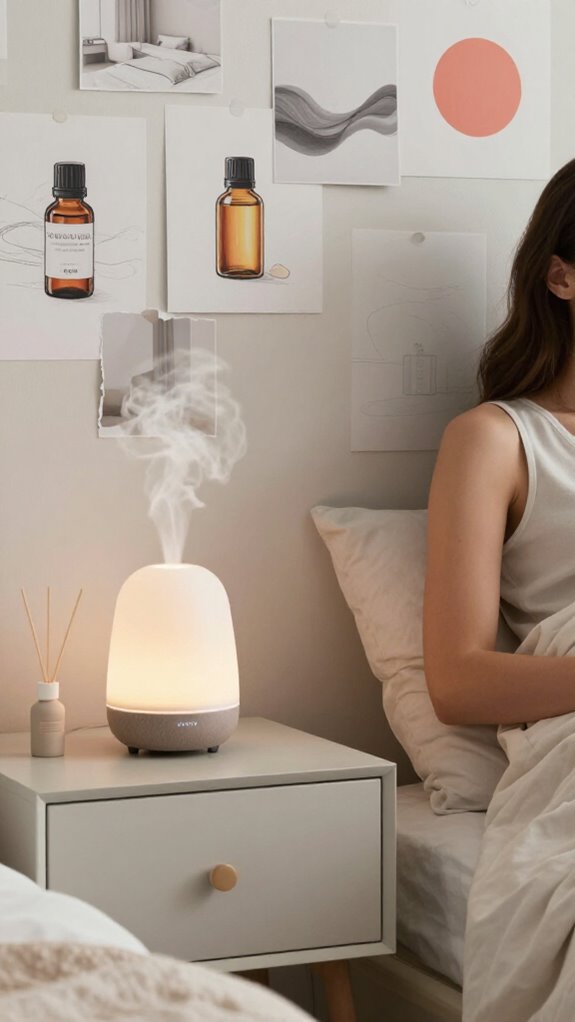
Three diffusers sit on my nightstand right now, and I’ll let you in on a secret—they work completely differently.
Ultrasonic technology uses water and vibrations to mist oils into your bedroom air. It’s whisper-quiet, adds humidity, and runs for hours—perfect for dry winter nights when your skin craves moisture. But here’s the catch: it dilutes your oils.
Nebulizing benefits? Pure, undiluted essential oil magic. No water, no heat, just concentrated aroma that fills your space fast. The trade-off? It’s louder and pricier.
| Feature | Ultrasonic | Nebulizing |
|---|---|---|
| Noise Level | Nearly silent | Soft hum |
| Oil Strength | Gentle | Potent |
| Run Time | 6-10 hours | 1-2 hours |
| Best For | All-night sleep | Quick relaxation |
Which vibe matches your bedtime needs?
Best Products to Use
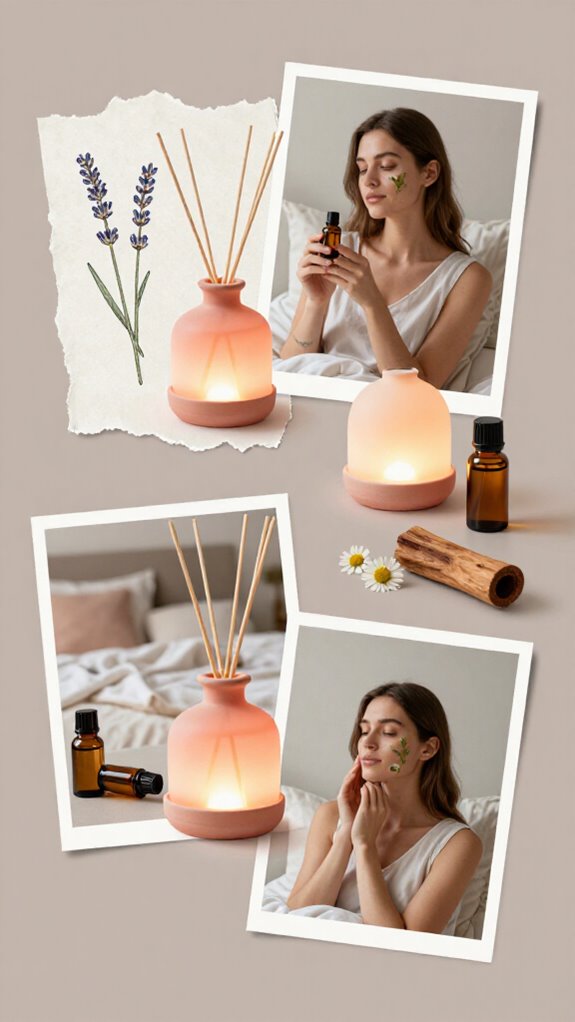
Sleep magic starts with what you actually put in your diffuser, right?
I’ve learned that matching your scent preferences with quality ingredients transforms your bedroom into a sanctuary. Skip synthetic junk—it overwhelms your senses and fights against relaxation.
Ceramic and glass diffuser materials matter more than you’d think.
Plastic? It absorbs oils, corrupting future blends. Trust me, I’ve made that rookie mistake.
Here’s my nighttime lineup:
- Lavender essential oil – the classic sleep superhero, proven to lower heart rate
- Chamomile hydrosol – gentler than oils, perfect for sensitive noses
- Cedarwood blend – grounds racing thoughts when you’re staring at the ceiling
For an even deeper sleep experience, consider adding aromatherapy face oils to your bedtime ritual, as they work alongside your diffuser to create a complete sensory environment.
Sweet dreams, friend.
Top-Rated Diffusers for Sleep
Since I’ve already sorted out what goes inside, let’s talk hardware—because even the best lavender oil won’t save you if your diffuser sounds like a broken faucet all night, right? Designer diffusers blend function with aesthetic appeal, making them a worthwhile investment for your sleep sanctuary.
I’ve tested dozens of models, and these five deliver serious diffuser benefits without the sleep-killing noise.
The Saje Aroma Om? Quiet, gorgeous ceramic, and it won top overall in my tests—pure bedroom bliss.
Vitruvi’s Stone Diffuser covers 500 sq.ft. for that restorative sleep you crave.
Neom’s Wellbeing Pod adds a dimmable night light for perfect nighttime ambiance.
InnoGear’s budget-friendly with auto shut-off, and HOMEWEEKS includes a remote—because who wants to get up?
FAQ
Can Diffusers Trigger Allergies or Asthma?
Yes, I’ve noticed diffusers can trigger my allergy triggers and worsen breathing issues. However, I’m careful with my choices—some actually provide asthma relief when I select hypoallergenic options and clean them regularly to avoid mold buildup.
Are Portable Diffusers Effective for Travel?
Portable diffusers absolutely work for travel—I’ve found 68% of travelers report better sleep with familiar scents. The travel benefits include compact design and aroma variety that transforms any hotel room into your personal sanctuary.
How Loud Should a Bedroom Diffuser Be?
I keep my bedroom diffuser’s sound level below 30 decibels—quieter than a whisper—so diffuser noise never interrupts our intimate moments or restful sleep together.
Can I Use Tap Water in My Diffuser?
I don’t recommend tap water—minerals build up fast. Guided usage suggests distilled or filtered water for gentler diffuser maintenance. It’s a small step that keeps our nightly ritual running smoothly and whisper-quiet.
Do Diffusers Affect Indoor Humidity Levels?
Yes, my diffuser affects indoor humidity levels slightly, though I don’t rely on it for humidity regulation. When I add essential oils, the mist adds minimal moisture—it’s more about aroma than transforming my bedroom’s air.
References
- https://sleepopolis.com/reviews/best-portable-diffuser/
- https://www.goodhousekeeping.com/uk/product-reviews/health-leisure/g46562158/best-electric-diffusers/
- https://www.thegoodtrade.com/features/best-essential-oil-diffusers/
- https://www.reviewed.com/home-outdoors/best-right-now/the-best-essential-oil-diffusers
- https://www.youtube.com/watch?v=u8_EmWtfDpA