I used to track every REM cycle like it was my job. Spoiler: it didn’t work.
So I burned the spreadsheets.
Now? I’m all about the Analog Bedroom life—yep, it’s a thing, and sleep peeps like Dr. Matthew Walker from UC Berkeley are totally on board. Ditched the Oura ring, said peace out to Whoop. Felt weird at first. Felt *free* after.
CBT-I helped big time. So did painting my walls sleepy blue, cranking the temp to 67°F, and blasting brown noise like I’m in a spa cave.
Here at Corala Blanket, we’re pushing this hard. Because “sleepmaxxing” for 2026? It’s not about more data. It’s about *less* chaos.
Ever looked at your sleep score and felt worse? Same.
Morning light hits different now. Literally. I anchor my day with ten minutes of sunrise—no phone, just me and the window. My circadian rhythm finally said “thank you, weird human.”
Neurowellness isn’t buzzword bingo. It’s the real deal, backed by Stanford’s Center for Sleep Sciences.
You in?
Quick Takeaways
- The Analog Bedroom movement promotes a digital detox to improve sleep quality and reduce sleep anxiety.
- Orthosomnia can be exacerbated by over-reliance on sleep tracking data and ideal sleep metrics.
- Cultivating a healthier sleep relationship involves shifting away from data-driven control and embracing natural sleep cycles.
- Creating a sleep sanctuary with calming decor, optimal temperature, and acoustic masking techniques enhances relaxation.
- Neurowellness principles, including morning light anchoring and smart lighting, support natural circadian rhythms and better sleep.
Break Free From Sleep Anxiety With Analog Bedrooms
As we increasingly acknowledge the pitfalls of Orthosomnia, a condition where the relentless pursuit of ideal sleep metrics paradoxically exacerbates sleep anxiety, the Analog Bedroom movement is gaining traction.
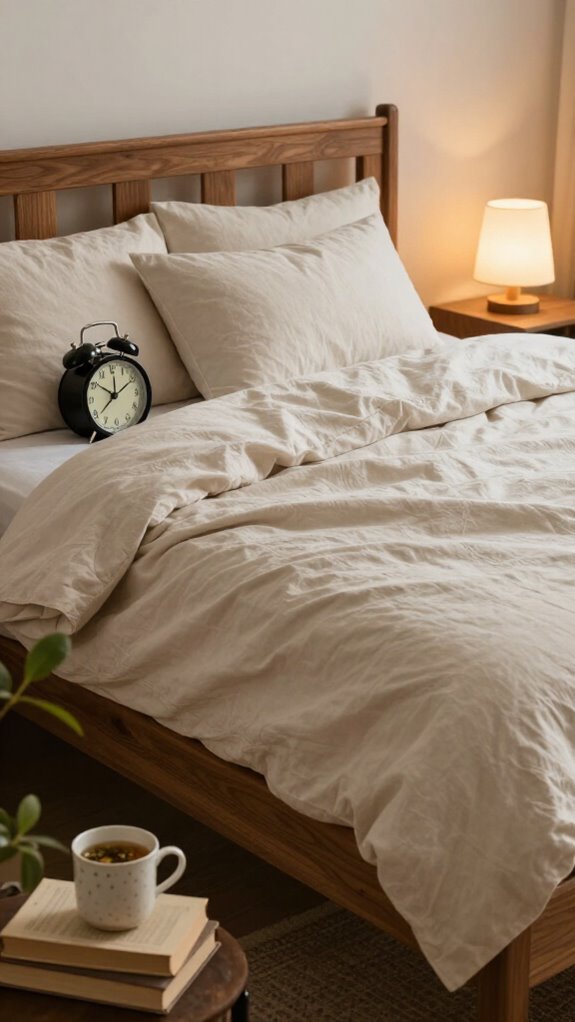
I’m adopting sleep rituals that foster a digital detox, ditching smartwatches for mechanical clocks and smartphones for paper journals. By doing so, I’m recalibrating my nervous system, allowing for a more natural sleep-wake cycle. Cognitive Behavioral Therapy for Insomnia represents one of the most effective evidence-based approaches for addressing the sleep anxiety that often accompanies technology-driven sleep tracking.
Experts like Dr. Matthew Walker advocate for this approach, citing the benefits of a tech-free sleep sanctuary, citing studies that show reduced sleep anxiety and improved sleep quality.
nighttime anxiety often stems from the pressure of sleep tracking data, creating a vicious cycle of worry that keeps us awake when we need rest most.
I’m regaining control, cultivating a restful sleep environment.
Stop Obsessing Over Sleep Data
I’m not alone; many have undergone a “data detox” to shatter sleep myths perpetuated by wearables. By relinquishing the need for control through data, I’m cultivating a healthier relationship with sleep. Learning to interpret sleep metrics without becoming enslaved to them is a crucial skill that modern sleep science increasingly emphasizes.
Embracing the uncertainty, I’ve started using paper journals to record my sleep narratives, rather than relying on algorithm-driven observations, thereby recalibrating my perception of restful slumber.
This shift away from quantified self culture has revealed how obsessing over sleep scores can actually degrade sleep quality through performance pressure and anxiety.
Create a Sanctuary for Restful Sleep
By shedding the glow of screens and the weight of data-driven sleep metrics, I’m rediscovering the simple yet potent benefits of a sleep-conducive environment.
Creating a sanctuary for restful sleep involves curating a sleep environment that fosters relaxation. Some key elements include:
- Calming decor, such as soothing color palettes and minimalist aesthetics, inspired by interior designers like Kelly Wearstler
- Optimized temperature and humidity levels, informed by research on thermoregulation and sleep quality
- Strategic soundscapes, using techniques like acoustic masking to promote relaxation
Understanding how sleep architecture changes throughout the night helps explain why environmental conditions matter so much for restorative rest.
I’m taking control of my sleep by crafting a haven that honors my biological needs. Research shows that maintaining an ideal bedroom temperature around 65 degrees Fahrenheit significantly improves deep sleep quality by supporting your body’s natural thermoregulation process.
2026 Neurowellness Sleep Shifts
Six distinct shifts in my daily routine have been instrumental in optimizing my sleep through neurowellness principles.
I’ve incorporated Morning Light Anchoring, as advocated by circadian researcher Dr. Michael Breus, and Acoustic Pacing using brands like Neurowave, to influence my brainwaves. I complement these practices with smart lighting solutions that support my circadian rhythm throughout the day and evening. The transition to soft lighting fixtures in the evening hours has been particularly transformative for preparing my body for restorative sleep.
By leveraging neuroscience understanding, I’ve adopted wellness practices like Vagus Nerve Stimulation and Red Light Therapy, which have helped regulate my nervous system.
These shifts have enabled me to convert smoothly into a restful state, illustrating the efficacy of neurowellness in achieving sleep autonomy and underscoring the complex interplay between environment, biology, and restorative sleep.
Product Roundups
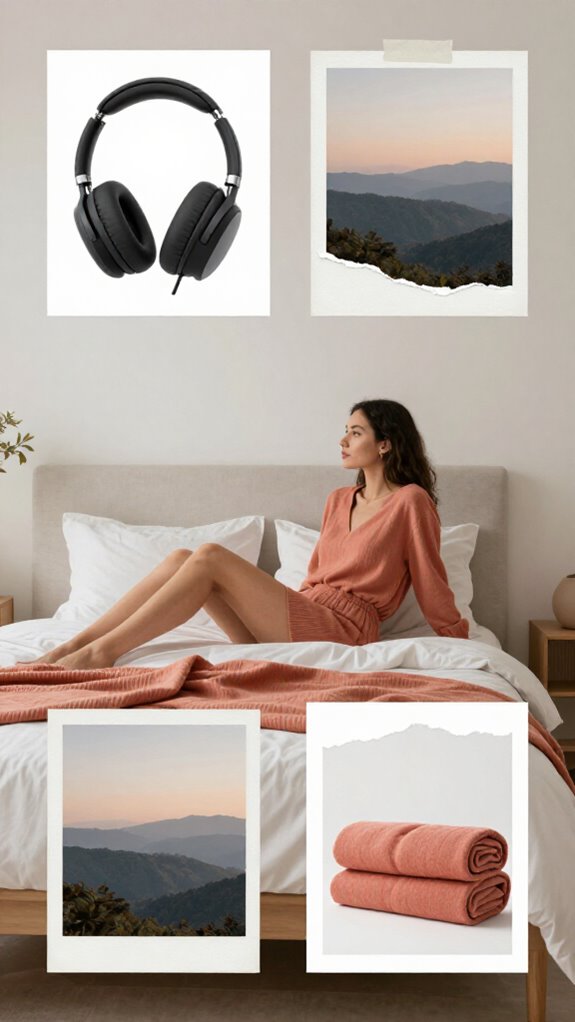
As we pivot towards the Analog Bedroom, a sanctuary where technology doesn’t dictate our sleep patterns, we’re met with a multitude of products that promise to facilitate a restful night’s sleep without the burden of data obsession.
To make informed product selection, I consider product roundups that aid in item comparisons. Key features to look for include:
- Curated lists of products serving the same goal, such as noise-canceling headphones or wireless keyboards
- Comparison tables and individual reviews to inform purchasing decisions
- Vendor outreach and feedback to verify accuracy
- Effective roundups often rely on a disciplined editorial process to maintain credibility and trust.
This enables me to make data-driven decisions, comparing products from brands like those utilizing bio-wicking textiles.
Sleep Study Key Findings
Recent sleep studies have yielded essential observations into the intricacies of our nocturnal habits, illuminating the complex interplay between our environment, behavior, and bodily responses.
I’ve found that normal sleep efficiency exceeds 80 percent, while sleep latency under 30 minutes is considered normal. Research indicates that factors like light exposure and sleep position greatly impact these metrics. Proper recessed lighting can help regulate circadian rhythms by providing adjustable illumination that supports natural sleep-wake cycles.
For instance, studies show that right-sided sleeping correlates with higher subjective sleep quality. Maintaining a low-bacteria environment through tools like UV phone sanitizers can further support uninterrupted rest by reducing nighttime exposure to microbes accumulated on frequently used devices.
FAQ
How Do I Transition From Digital to Analog Sleep Tracking?
I’m shifting from digital to analog sleep tracking by simplifying my sleep environment and focusing on mindful practices.
I’m replacing my smartwatch with a mechanical clock and using a paper journal to record my sleep patterns, a method endorsed by sleep researchers like Dr. Charles Czeisler.
Will Ditching My Sleep Tracker Affect My Insurance Coverage?
I’m not beating around the bush – ditching your sleep tracker won’t directly impact your insurance coverage.
Focusing on sleep health and quality through analog means can be just as effective. Researchers like Dr. Matthew Walker’s work on sleep quality show that it’s not just about tracking, but about creating a conducive sleep environment.
You can still monitor sleep health through other means, like Morning Light Anchoring and At-Home Diagnostics, ensuring you stay in control.
Can I Still Use Some Digital Tools With an Analog Bedroom?
I still use select digital tools alongside my analog bedroom setup, embracing a balanced approach to digital minimalism.
I find that apps like Calm, with its guided sleep stories, and devices employing Acoustic Pacing, like those from Dr. Lee Bartel’s research, enhance my sleep rituals.
What if I’m Too Used to Relying on Sleep Data for Motivation?
I’m weaning myself off sleep data, and it’s unsettling.
To break the habit, I incorporate digital detox periods, abstaining from wearables like Oura rings and Fitbit devices, and focus on subjective experience, using techniques like Morning Light Anchoring, as advocated by sleep researcher Dr. Andrew Huberman.
I track sleep quality through journaling, monitoring for trends and anomalies, allowing my nervous system to recalibrate, embracing the uncertainty.
Are There Any Age Restrictions for Adopting the Analog Bedroom Approach?
I’m not aware of any age restrictions for adopting the analog bedroom approach; it’s about recalibrating your sleep environment to foster biological surrender.
Research by sleep experts like Dr. Matthew Walker supports the idea that simplifying sleep routines can be beneficial across various age groups. By ditching sleep data and embracing analog benefits, you’re likely to notice improvements in sleep quality, regardless of age, as your nervous system learns to self-regulate.
References
- https://advertstar.net/2025/10/26/how-to-create-product-roundups-a-complete-seo-friendly-guide/
- https://www.fifteen-media.com/blog-index/what-is-a-product-roundup
- https://www.henasakura.com/blogs/all/6-steps-to-crafting-a-product-roundup-a-guide-to-affiliate-marketing
- https://www.orbitmedia.com/blog/how-to-write-expert-roundup/
- https://www.hikeseo.co/learn/onsite/link-roundups
- https://thriveagency.com/news/a-complete-guide-to-creating-expert-content-roundup-posts/
- https://beomniscient.com/blog/roundup-post/
- https://goldenword.co/blogs/why-your-product-needs-to-be-in-thanksgiving-and-holiday-media-roundups/
- https://mudita.com/community/blog/7-science-backed-benefits-of-waking-up-with-an-analog-alarm-clock/
- https://pmc.ncbi.nlm.nih.gov/articles/PMC9416198/