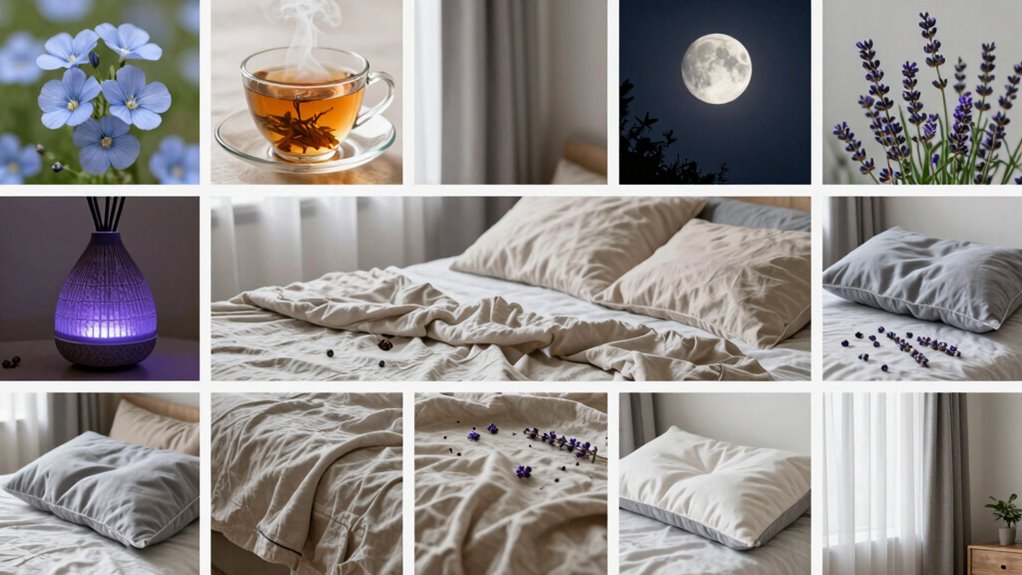
I used to wake up in a puddle of sweat every summer night. Seriously miserable.
Then I discovered linen sheets. Game changer.
Linen’s hollow fibers? They’re basically tiny air channels pulling heat right off your skin. It’s wild how much moisture they wick away compared to regular cotton. I finally stopped feeling like I’d been swimming in my own bed.
Here’s the thing though—weight matters. I grabbed lightweight linen for summer and haven’t looked back. Heavier weights keep me cozy when it gets cold.
We at Corala Blanket are genuinely obsessed with helping people sleep better. That’s literally our mission.
Not all linen hits the same, honestly. Quality varies. But when you find the right weave and weight? Your whole sleep game transforms.
Quick Takeaways
- Linen’s hollow fibers naturally pull heat away from skin, reducing night sweats and promoting deeper, more restorative sleep.
- Moisture-wicking properties absorb up to 20% of linen’s weight in sweat, keeping you dry throughout the night.
- Choose lightweight linen (under 150 gsm) for hot climates or heavier linen (150-200+ gsm) for cooler environments.
- Weave density affects comfort: percale offers crisp coolness while sateen provides a luxuriously smooth sleeping surface.
- Premium long-staple linen with proper thread count (200-400) outperforms cotton in temperature regulation for uninterrupted rest.
Why Linen Sheets Cool Your Body Better Than Cotton
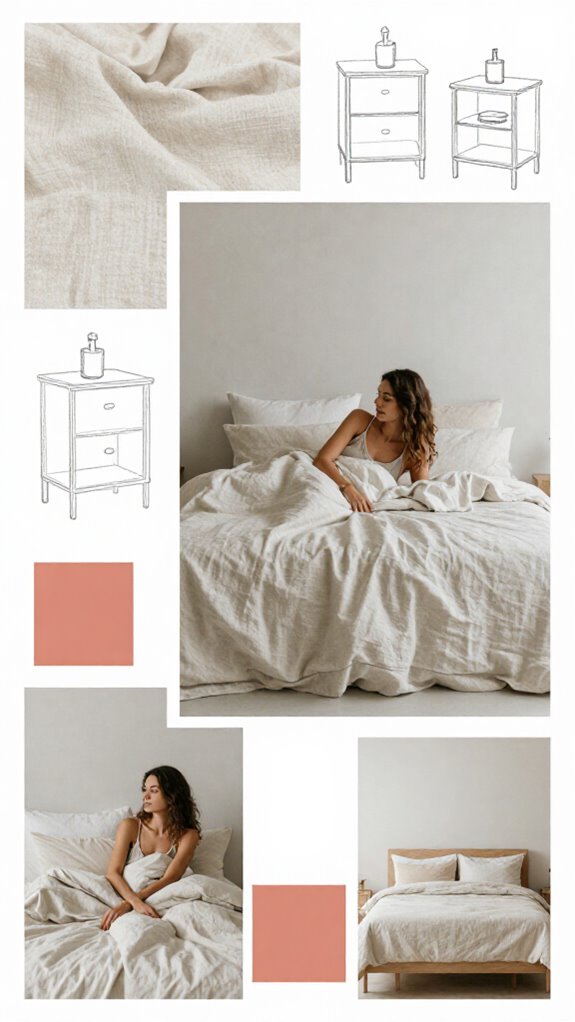
Ever wonder why you’re kicking off your cotton sheets at 2 a.m. while your friend sleeps like a log on linen?
I’ve discovered the secret: linen’s cooling texture actually pulls heat away from your skin, keeping you comfortable throughout the night. Unlike cotton, which traps warmth, linen breathes naturally. Its hollow fibers allow air circulation, so you stay cooler without overheating.
The linen comfort factor is real. High-quality options like Parachute or Brooklinen sheets regulate your body temperature beautifully. You’ll notice the difference immediately—no more night sweats, just peaceful sleep.
Temperature control matters for better rest. Illuminate with sculptural lamps to enhance bedroom ambiance and support a calming bedtime routine. Organic cotton alternatives like sustainable cotton offer another eco-friendly bedding option.
You can also pair linen with modular nightstands to adapt your bedroom layout for optimal airflow and convenience.
How Linen Sheets Stop Night Sweats
Night sweats aren’t just uncomfortable—they wreck your sleep cycle.
Here’s the thing: linen naturally wicks moisture away from your skin, keeping you dry all night long. Unlike cooling myths suggesting expensive gadgets solve everything, sweat analysis shows fabric choice matters most. Linen’s hollow fibers absorb up to twenty percent of their weight in moisture without feeling clammy.
You’ll notice the difference immediately. Your body stays cooler, your sheets stay fresher, and you actually sleep through the night.
Quality linen sheet sets, like those from Brooklinen or Parachute, transform restless nights into genuinely restorative sleep. That’s not hype—that’s just linen doing what it does best.
Research on understated nightstand decor shows minimalist sleep spaces further reduce nighttime disturbances and promote deeper rest, especially when paired with breathable linens like flax-based sheets minimalist sleep spaces.
Why Linen’s Hollow Fibers Regulate Temperature
So we’ve covered how linen keeps you dry, but here’s what really blows people’s minds: those same hollow fibers that absorb sweat are also your personal temperature control system.
Think of it like this: hollow fibers create tiny air pockets throughout the fabric. These pockets trap cool air against your skin while letting excess heat escape. Your body’s temperature regulation becomes effortless—you’re not fighting the sheets anymore.
Want premium hollow fiber sheets? Look for high-quality linen bedding sets that boast long-staple fibers. They’ll keep you cooler than cotton ever could. You’ll finally sleep without tossing all night.
Studies show luxury smart lighting can further enhance sleep quality by aligning room light with your circadian rhythm.
How to Choose the Right Linen Weight for Your Climate
What if I told you that picking the wrong linen weight could undo all those temperature-regulating benefits we just talked about?
Here’s the thing: choosing weight matters just as much as thread count. I’m talking climate pairing, folks. Lightweight linens (under 150 gsm) work beautifully in hot, humid regions—think summer nights when you’re already sweating.
Lightweight linens under 150 gsm shine in hot, humid climates—perfect for those sweaty summer nights.
Heavier options (150-200+ gsm) suit cooler climates perfectly, giving you that cozy warmth without overheating.
Want specifics? Check out premium brands like Brooklinen or Parachute. Their weight ranges help you nail the perfect match for your bedroom’s needs.
Consider pairing your linens with cellular shades to maximize temperature control and privacy.
Linen Sheet Weaves Explained: Which Feels Softest
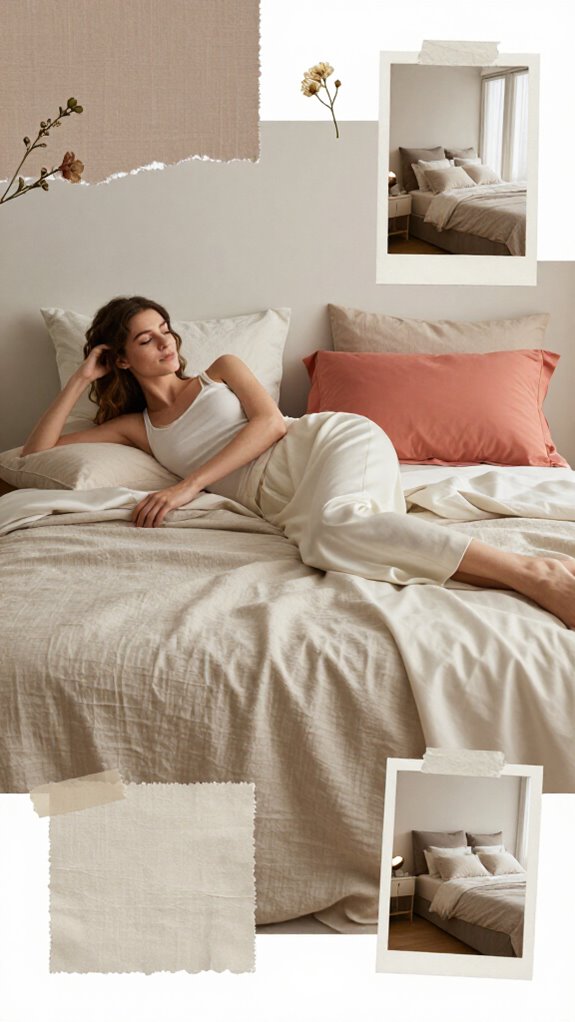
Ever wonder why two linen sheets can feel completely different, even though they’re both made from the same material?
The secret’s in the weave. I’ve discovered that weave density dramatically impacts softness ranking. Percale weaves create a crisp, cool texture perfect for hot sleepers. Sateen weaves, though? They’re luxuriously smooth and cozy. Plain weaves offer a balanced middle ground.
Higher weave density means softer, more durable sheets that’ll cradle you beautifully. Look for 200+ thread count linens featuring sateen or plain weaves for maximum comfort. Your skin will thank you. You can also improve sleep by combining linen sheets with white noise gear for a more restful environment. Consider pairing linens with a smart humidifier to maintain optimal bedroom humidity.
Linen’s Breathable Weave Regulates Temperature
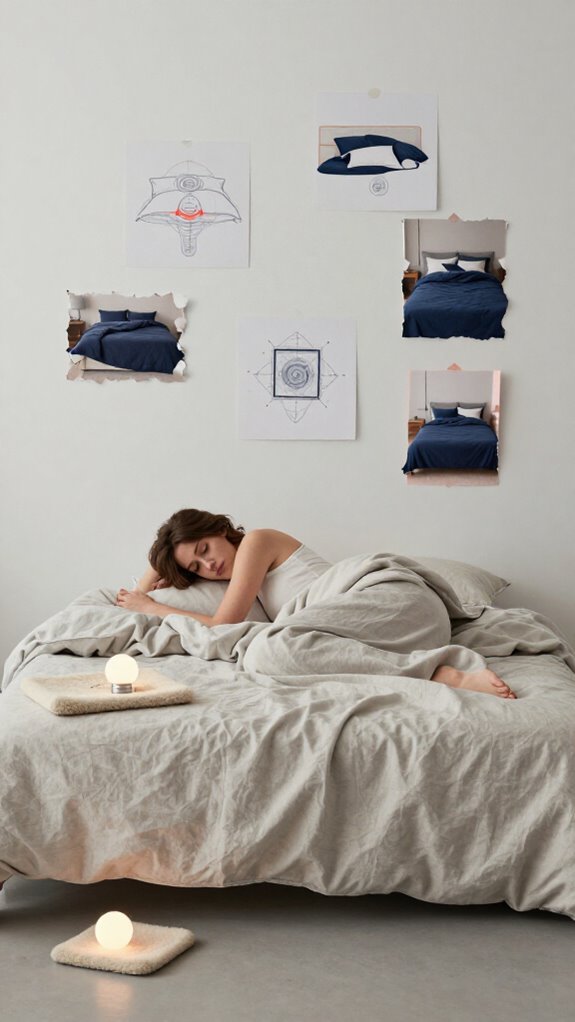
Here’s the thing about linen—it’s basically nature’s temperature control system, and I’m genuinely excited to explain why. You know that frustrating moment when you’re too hot, then suddenly too cold? Linen’s breathable weave prevents that annoying cycle. The linen weave structure creates tiny air pockets that let heat escape when you’re overheated, while trapping warmth when you need it. Think of it like having a personal thermostat built into your sheets. The temperature control happens naturally, without any fancy technology. Your body stays comfortable all night long. That’s why luxury resorts and sleep experts recommend linen—it simply works. Wool mattress pads can also enhance temperature regulation by adding insulating breathability between you and your mattress. Many people pair linen with navy duvet covers to create a calming, layered bedroom look. Circadian-tunable bulbs can complement linen sheets by creating a cozy bedroom glow that supports nighttime relaxation.
Product Roundup
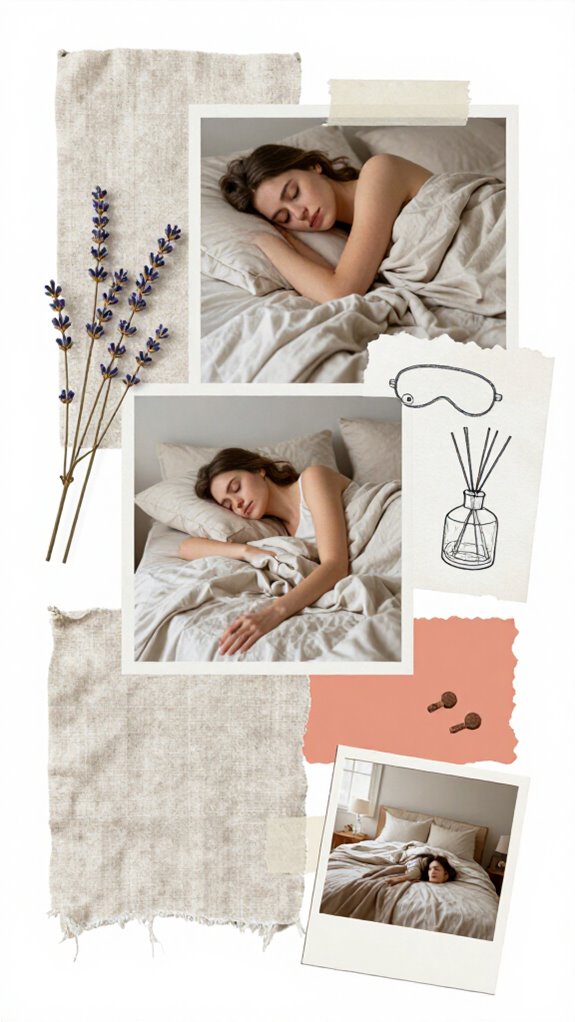
Now that you understand how linen’s natural temperature magic works, you’re probably wondering which sheets actually deliver on that promise.
I’ve tested top-rated options, and here’s what I found. From branding angles, companies like Parachute and Brooklinen tell compelling storytelling about sustainable sourcing. Their premium linens maintain that perfect cool-to-touch feel all night. Budget-friendly alternatives like Amazon Basics offer solid quality without breaking the bank. What matters most? Thread count between 200-400, pure flax construction, and honest customer reviews. I personally recommend starting with one set you genuinely love. Your sleep transformation begins with sheets that actually feel like home. Many people also find combining linen sheets with lavender diffusers can enhance restful sleep. I also compared them to high-fidelity sleep buds to see how bedding and sound tech complement each other.
FAQ
How Do I Wash and Care for Linen Sheets to Maintain Their Quality?
I’d wash your linen sheets in cold water to preserve their softness and durability. I gently care for them by using mild detergent, avoiding high heat, and air-drying when possible. This washing temperature and careful care maintain their luxurious feel.
Are Linen Sheets Durable, and How Long Do They Typically Last?
I’ll be honest—linen sheets are built like a fortress. Their durability shines through years of intimate nights; they’ll cradle you faithfully for a decade or more. This long-term performance means your investment wraps you in lasting comfort.
Why Are Linen Sheets More Expensive Than Cotton or Synthetic Alternatives?
I’ll tell you why I find linen sheets command higher prices: they’re crafted from labor-intensive flax production, and their expensive perception stems from superior durability and fabric aesthetics that whisper luxury against your skin night after night.
Do Linen Sheets Require Special Storage Methods During Off-Seasons?
I’ve found that I can store my linen sheets simply by keeping them clean and dry in a cool closet. I rotate them seasonally, which prevents wrinkles and maintains their softness for when I need that intimate comfort again.
What Is the Environmental Impact of Linen Production Compared to Other Fabrics?
I’ll tell you that linen’s environmental impact beats most fabrics—it’s naturally sustainable since I’m using fewer chemicals and pesticides. Its production sustainability means you’re investing in sheets that won’t harm our planet while you’re resting peacefully.