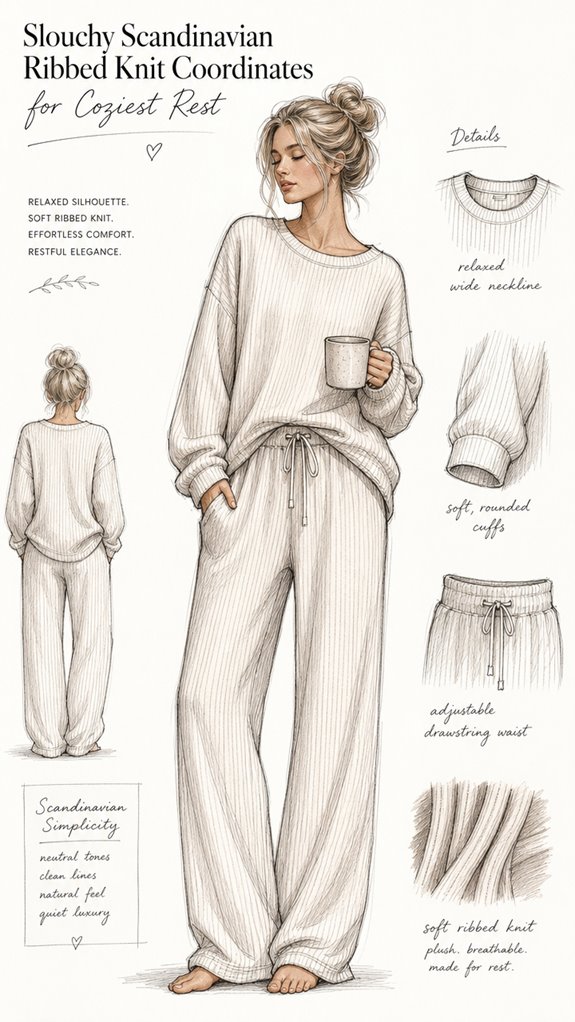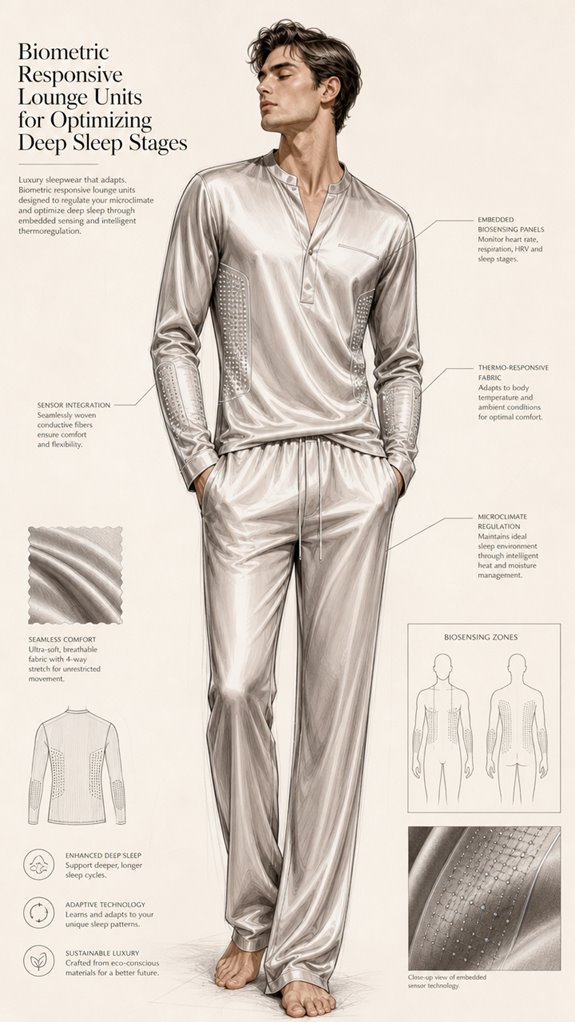
I Was Exhausted Until My Bed Started Reading My Mind
Last month, I couldn’t sleep for shit. That’s when I discovered biometric lounge units—basically a bed that’s smarter than me at 3 AM.
Here’s the deal: embedded sensors track your heart rate, breathing, and temperature. Your environment responds automatically. Cooling. Warming. Dimming lights. Pure magic.
We at Corala Blanket champion this sleep revolution. Oura Ring and WHOOP band users are already vibing with real-time biometrics. Matthew Walker’s research backs it up—sleep stages matter.
2026’s “Sleepmaxxing” trend? This is it. No more guessing games.
The emotional payoff? I actually *feel* human again. Refreshed. Present.
That’s worth the tech investment.
Quick Takeaways
- Biometric responsive lounge units can monitor vital signs to tailor conditions that promote deeper, restorative sleep stages.
- Embedded sensors analyze real-time data to automatically adjust lighting, temperature, and sound for optimal sleep environments.
- These units enable micro-adjustments to support comfort, such as micro-positioning and climate control, based on individual biometric feedback.
- Real-time biometric data helps optimize sleep cycles by aligning environmental factors with personal physiological signals.
- Integrating advanced textiles and responsive controls, these lounge units deliver personalized, high-tech solutions for improving deep sleep quality.
How Smart Sleepwear Tracks Your Sleep Stages and Vital Signs
Ever wonder how your sleepwear can secretly become your personal sleep coach? It’s pretty cool technology! Smart sleepwear uses tiny sensors to track essential signs—like heart rate, breathing, and even motion—without making you feel like a lab rat.
These garments gather real-time data and send it to apps that analyze your sleep stages, especially deep sleep. Curious if you’re hitting your targets? The best ones offer trend dashboards, so you see how your sleep improves over weeks.
It’s like having a friendly expert whispering, “Hey, your deep sleep’s up 5%—keep it up!” And no, I didn’t design this just for fun… well, maybe a little.
What Biometrics Help You Sleep Deeply: and Why They Matter
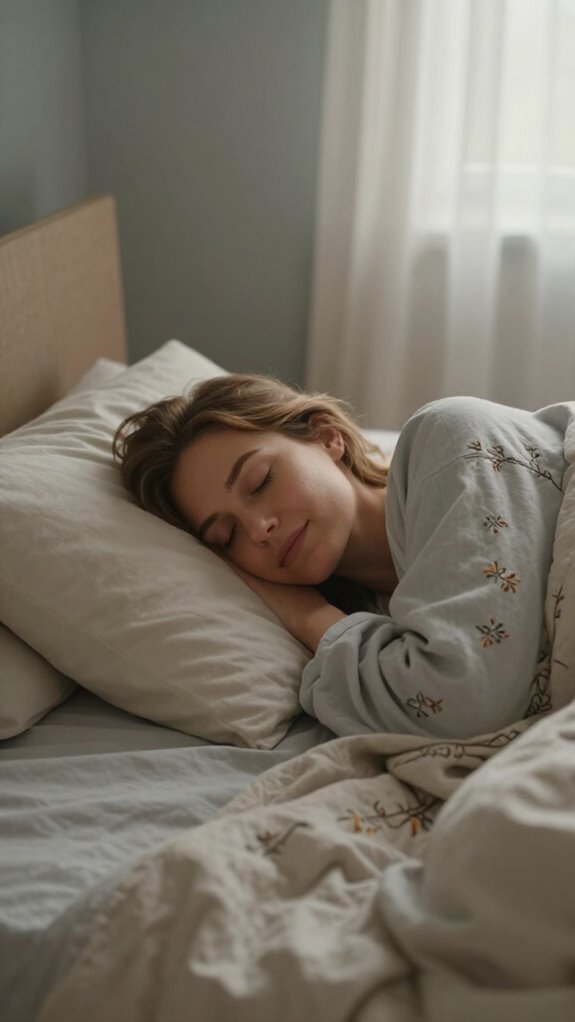
Biometrics are the secret sauce behind those high-tech sleep setups that aim to boost your deep sleep.
Ever wonder what exactly tells your sleep system to cool the room, dim the lights, or soothe with sound? That’s where heart rate, HRV (heart rate variability), breathing, and motion come in.
Sensors like heart rate, HRV, breathing, and motion guide your sleep system’s perfect comfort adjustments.
These tiny signals reveal how deeply you’re sleeping and help the system react in real time.
Why does this matter? Because more than just feeling rested, deep sleep is essential for memory, immune function, and mood.
I created Corala Blanket for folks like you, seeking smarter sleep—because why settle for average when innovation can help you sleep like a legend?
Additionally, integrating embroidery designs onto sleep accessories can enhance aesthetic comfort and personalization, making the sleep experience more indulgent.
How Biofeedback Data Personalizes Your Sleep Environment
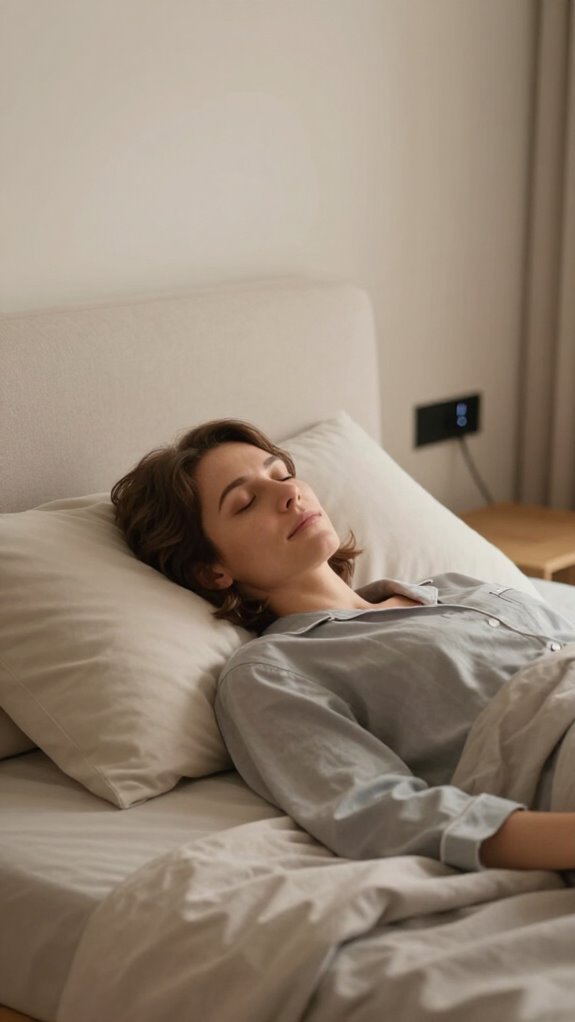
When your sleep system’s reactions are based on real-time data, it’s like having a personal sleep coach whispering in your ear—except it’s all automated. This tech uses your biometric signals—heart rate, breathing, even pressure points—to make smart adjustments instantly. Incorporating minimalist design principles can further enhance your environment by reducing distractions and promoting relaxation. Want a cooler room when your core temperature rises? Done. Need softer lighting to cue melatonin? Easy. It’s like a sleep DJ remixing your environment on the fly, all to help you slip into deep sleep faster. Why? Because I want you to experience nights where you wake up feeling refreshed, not like you’ve been hit by a sleep train. The future of bedtime is personalized, playful, and powerful.
Tips for Using Your Sleepwear Data to Optimize Your Sleep Setup

Using your sleepwear data to tweak your sleep setup is a game changer — but it’s not magic. Think of it as fine-tuning your personal sleep spaceship, not flipping a switch. Try these ideas:
Personalized sleep tweaks transform your night from routine to perfect, like customizing your own sleep spaceship.
- Adjust your room temperature based on heart rate and temperature trends, aiming for that “just right” cool feeling.
- Play with light by dimming or brightening to support your circadian rhythm, matching your sleep phases.
- Experiment with calming sounds or white noise that sync with your breathing patterns.
- Try different mattress supports or micro-positioning to find your perfect comfort zone.
- Incorporate biometric data into your adjustments to align your environmental factors more precisely with your sleep cycles.
Wondering why I made the Corala Blanket? It’s because personalized sleep should feel like a tailored suit—not a one-size-fits-all problem!
Best biometric monitoring pajama sets
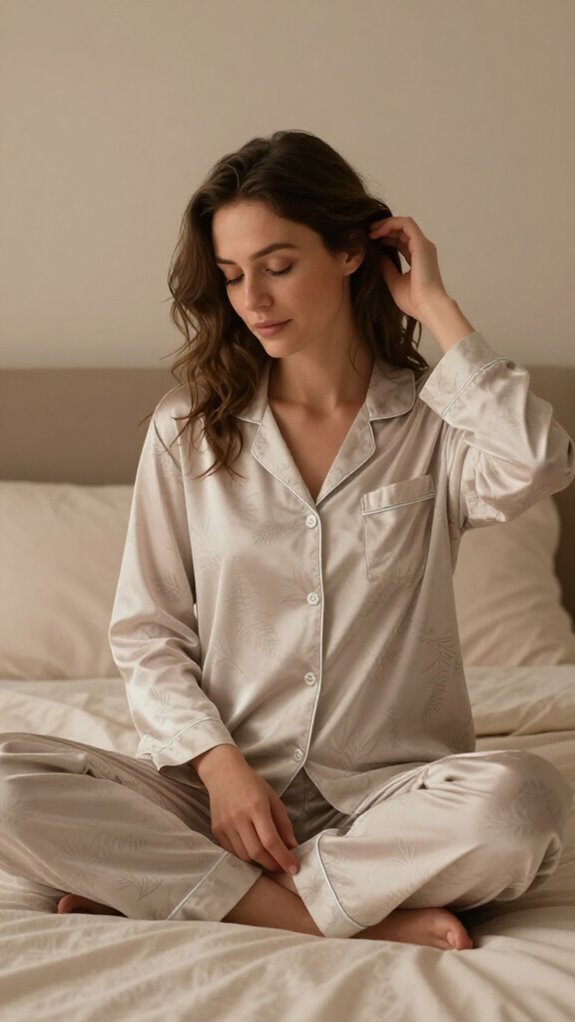
Picture slipping into pajamas that do more than just keep you warm — these smart sets track what’s happening inside your body as you sleep. Envision fabrics embedded with sensors that monitor heart rate, breathing, and even skin temperature, all without feeling clunky. Some designs incorporate soothing botanical-inspired patterns and textures that promote relaxation and comfort throughout the night. Brands like Nadi and Bedgear are leading the charge, offering sleepwear with real-time feedback and gentle prompts to optimize your rest. Ever wondered if your pajamas could help you reach deeper sleep stages?
These innovative garments sync with apps, providing trend reports and actionable tips. I designed the Corala Blanket partly from this excitement—bringing high-tech sleep a touch closer to everyone.
Soft Silk Sleepwear Comfort

Soft silk sleepwear isn’t just about luxury or feeling nice against your skin — it can be a game-changer for your sleep quality, too. Envision slipping into smooth, cool fabric that whispers comfort with every movement.
Picture this:
- Silky threads that glide effortlessly, reducing friction and skin irritation
- Breathable fibers that wick away moisture, keeping you dry and cozy
- A gentle touch that relaxes your nervous system before bed
- Lightweight, yet insulates just enough for temperature regulation
Why settle for scratchy pajamas when silk can help chill your body and mind? Silk fibers’ breathable properties also promote better moisture management, contributing to a more restful sleep. I created this site, Corala Blanket, to share simple methods—like silk—that make your sleep more effortless and enjoyable.
Biometric Customization

Visualize if your sleep environment could adapt in real time to what your body needs—kind of like having a personal sleep coach whispering, “Hey, let’s cool things down here,” or “Dim the lights for better rest.” That’s the magic of biometric customization.
Using sensors that track your heart rate, breathing, or movement, these systems adjust temperature, lighting, or sound instantly.
Ever wonder if your sleep could be tailored just for you tonight? I created Corala Blanket to bring that idea into everyday life.
With smart tech, your sleep learns and evolves, making waking up refreshed the new normal.
And just as elegant lace trim satin nightgowns can add a touch of luxury to your sleepwear, incorporating comfort-focused design into biometric systems can enhance your overall sleep experience.
Smart Temperature-Sensitive Fabrics
When it comes to bedtime comfort, nothing beats a fabric that can respond to your body’s changing needs in real time.
Visualize clothing that cools when your core temperature rises, or warms if you’re feeling chilly, all without waking you up. Envision:
- Fabrics that shift temperature smoothly, like a cozy chameleon
- Material that senses your skin’s signals, adapting instantly
- An ultra-soft feel that hugs you perfectly
- Breathable fibers that prevent overheating or cooling too much
Isn’t it wild? That’s the power of smart temperature-sensitive fabrics. They help create the perfect sleep environment, making it easier to hit those deep sleep stages.
I created the Corala Blanket with this innovation in mind—because your sleep deserves a tech upgrade!
Temperature-Reactive Sleepwear Concept
Visualize bedding that responds instantly to your body’s changing temperature, making those pesky wake-ups from overheating or feeling too cold a thing of the past.
That’s the idea behind the temperature-reactive sleepwear concept. Envision pajamas made with smart fabrics that adjust their warmth based on your body’s signals, using tiny sensors and micro-heating or cooling elements.
Doesn’t that sound like sleep magic? It’s like having a personal climate control system wrapped around you.
With this innovation, you no longer need to toss or turn because of discomfort. Incorporating smart fabrics that dynamically regulate your temperature can enhance sleep quality even further. I created this website because I believe great sleep deserves smarter solutions—think of it as your cozy, high-tech best friend.
Temperature-Adaptive Nightwear Design
Ever wish your pajamas could just read your mind and adjust their warmth accordingly?
Imagine slipping into nightwear that senses your body temperature and responds instantly.
Picture a fabric that cools when your core temperature rises, or warms up when it drops, keeping you perfectly comfortable.
Think about:
- Thermo-responsive fibers that shift with your body’s needs
- Embedded sensors constantly monitoring skin temperature
- Micro-heaters and cooling channels that activate seamlessly
- Soft, breathable materials that feel like a cozy hug or an invigorating breeze
This isn’t impossible anymore—it’s the future of sleepwear, especially with luxury silk pajamas enhancing both comfort and style.
And honestly, I made this site because I believe everyone deserves a better night’s sleep—without the guesswork!
FAQ
How Accurate Are Consumer-Grade Biometric Sleep Trackers for Deep Sleep Measurement?
Consumer-grade sleep trackers? They’re like fortune cookies—fun, but not always precise. They often oversimplify deep sleep, mistaking light sleep or restlessness for real deep sleep.
While they can show trends and give a general idea, don’t rely on them for exact measurements. Think of them as helpful guides, not perfect sensors.
If you want deep, reliable data, consider more advanced devices or clinical tools.
Can Biometric-Responsive Sleep Units Fully Replace Traditional Sleep Studies?
Nope, biometric-responsive sleep units aren’t quite replacing traditional sleep studies just yet. Think of them like fantastic gadgets, but not the full medical toolkit.
While they give you trend-rich understanding on sleep efficiency and deep sleep boosts, they can’t diagnose or detect complex disorders like sleep apnea.
I built Corala Blanket to help people improve sleep naturally—until tech catches up, consult a professional for serious issues!
What Are Potential Privacy Concerns With Biometric Sleep Environment Data Collection?
Privacy concerns? Oh, they’re real! When your sleep data gets collected—heart rate, breathing patterns, even room temperature—it’s like handing someone your midnight secrets. Who owns this data? Will it get shared with marketers or worse, hackers? That’s the worry.
Honestly, I built Corala Blanket to protect your sleep sanctuary. Think of it as a cozy vault—keeping your precious sleep signals safe, so you can dream worry-free.
How Reliable Are Environmental Adjustments in Enhancing Deep Sleep Consistently?
Honestly, environmental adjustments can boost deep sleep, but their reliability varies. Think of it like tuning a vintage guitar—aligning temperature, light, and sound helps, but if your stress or lifestyle isn’t in check, gains might fade fast.
Some studies show consistent improvements in sleep efficiency and deep sleep percentage with multi-modal adjustments. So, are they foolproof? Not quite.
Still, they’re a solid step toward better rest, like the cozy cherry on top.
Are There Any Known Risks or Downsides to Automated Environmental Control During Sleep?
Yes, there are risks, even with high-tech sleep magic. Over-automation might cause discomfort if it tries to change things too fast, leading to sleep disruptions.
Envision your room constantly adjusting — sounds exhausting, right?
Plus, privacy concerns pop up since biometric data is sensitive. Ever wonder what happens if these systems glitch?
It’s smart to stay aware and find a balance. After all, innovation’s great, but a good night’s sleep needs no surprises!
References
- https://specialisedhealth.com.au/biometrics-for-better-sleep/
- https://habitas.ai/blog/how-to-design-an-ai-optimized-multisensory-sleep-sanctuary
- https://pmc.ncbi.nlm.nih.gov/articles/PMC12374677/
- https://www.scribd.com/document/865472107/patent
- https://rrd.lbtu.lv/sites/default/files/proceedings/files/LBTU_LatviaResRuralDev_31st_2025-333-340.pdf
- https://www.m2sys.com/blog/guest-blog-posts/how-to-use-biometric-technology-to-improve-your-sleep/
- https://ubiehealth.com/doctors-note/sleep-optimize-tech-safety-doctor-view-tracking-4751q5
- https://biometricsleep.com
- https://www.youtube.com/watch?v=IOPkET-KvVs
- https://data.epo.org/publication-server/rest/v1.0/publication-dates/20220126/patents/EP3138480NWB1/document.pdf