You ever try sleeping when your neighbor’s “security light” is basically a spotlight into your soul? Yeah, me too.
Last summer I discovered that tinfoil + desperation ≠ dignity.
At Corala Blanket, we’re obsessed with better sleep—not just selling you stuff. Here’s what actually works:
- Marlow’s 2024 study found total darkness boosts melatonin by 58%. No cap.
- Sleepmaxxing 2026 is all about “environmental control”—fancy term for making your cave perfect. Think Lutron Caséta automations that kill lights at 10 PM sharp.
- My game-changer? Manta eye masks with adjustable eye cups. Zero pressure, total blackout.
- Traveling? The Game portable curtains slap. Literally stick anywhere.
- Dr. Walker from UC Berkeley says even 5-lux exposure disrupts sleep architecture.
Breathable masks matter—sweaty eyelids are the enemy.
What’s your light leak nemesis? Street lamp? Phone charger? That one LED you can’t kill?
We spend ⅓ of our lives horizontal. Might as well optimize it.
Quick Takeaways
- Install blackout curtains or motorized shades to completely block external light sources from entering the room.
- Use a high-quality sleep mask made from breathable, light-blocking fabrics to prevent light leaks during sleep.
- Employ smart lighting controls and automatic blackout window kits for consistent darkness throughout the night.
- Add window inserts or interior films to reduce urban noise and light pollution, supporting circadian stability.
- Supplement with dim red LED nightlights (around 660 nm) to minimize circadian disruption while providing minimal illumination.
How Light Affects Your Sleep and Body Clocks
Light exerts a profound influence on our circadian rhythms, the internal clocks guiding sleep-wake cycles, hormone release, and metabolism.
Circadian biology reveals that exposure to natural and artificial light triggers synchronized hormone regulation, particularly melatonin and cortisol. Dawn’s morning light signals alertness, while evening darkness promotes melatonin production, facilitating sleep.
Disruptions—like blue light from screens—can delay sleep hormone regulation, skewing our biological timing. Understanding circadian biology can help us better align our daily routines with natural light patterns to improve sleep.
Experts like Dr. Steven Lockley emphasize the importance of light hygiene in realigning circadian rhythms. Controlling light exposure is essential for restoring biological harmony, allowing the body’s complex sleep and hormone systems to operate at their best. Maintaining consistent light-dark cycles supports optimal circadian function and overall sleep quality.
Effective Ways to Block Light in Your Bedroom
Many individuals underestimate how ambient illumination can subtly sabotage their sleep quality, a fact increasingly supported by circadian biology.
An ideal sleep environment minimizes light pollution sources, which disrupt melatonin secretion and circadian alignment.
To control light exposure, consider:
- Installing blackout curtains from brands like Sleep8 or Moondream that block out external light.
- Using noise-absorbing window inserts or interior window films to diminish urban light pollution.
- Employing dim red LED nightlights during necessary nighttime visits, calibrated to 660 nm wavelengths to prevent circadian disruption.
Research also suggests that brain wave tracking techniques can help optimize sleep cycles by monitoring light and brain activity patterns, further enhancing sleep quality.
These measures empower you to craft a sleep sanctuary, where darkness becomes a deliberate act of biological harmony.
Choosing Comfortable Sleep Masks That Block Light
Selecting a sleep mask that effectively blocks light requires an understanding of both material composition and ergonomic design, as these factors directly influence comfort and sleep hygiene. Lightweight, breathable fabrics like silk or memory foam mask liners prevent heat buildup, promoting consistent sleep without discomfort. Using smart lighting solutions in your room can further enhance sleep quality by reducing overall light interference. Adjustable straps ensure a secure fit, preventing light leaks caused by shifting or compression. Research from institutions like the Sleep Research Society emphasizes minimizing light exposure to enhance melatonin production, essential for circadian regulation. Incorporating light-blocking fabrics into your sleep mask can significantly improve its effectiveness and comfort. A well-chosen mask harmonizes light blocking with physical comfort, allowing your nervous system to relax fully—vital for restoring biological rhythms and maintaining *ideal* sleep quality.
Using Curtains, Blinds, and Window Coverings to Darken Your Room
Effective sleep environment management hinges on optimizing the darkness of your room, with window coverings playing an essential role in regulating ambient light infiltration. Proper curtains, blinds, or shades—preferably those aligned with biophilic design—serve as physical barriers, preventing external light from disrupting circadian rhythms. Select blackout curtains or motorized shades that can completely eliminate light “leak” and support sleep environment optimization. Consider layered solutions, such as insulating blinds behind textured drapes, to enhance thermal and acoustic insulation. Incorporating Nordic-inspired throws can add an extra layer of light diffusion and comfort, further promoting restful sleep. There are also specific light-blocking fabrics designed to enhance the effectiveness of your window coverings by minimizing light penetration. According to Harvard Medical School, these interventions considerably improve sleep quality by stabilizing melatonin production and minimizing circadian disruption, empowering you to regain control over restorative sleep cycles.
Tech Devices and Products to Light-Proof Your Sleep Space
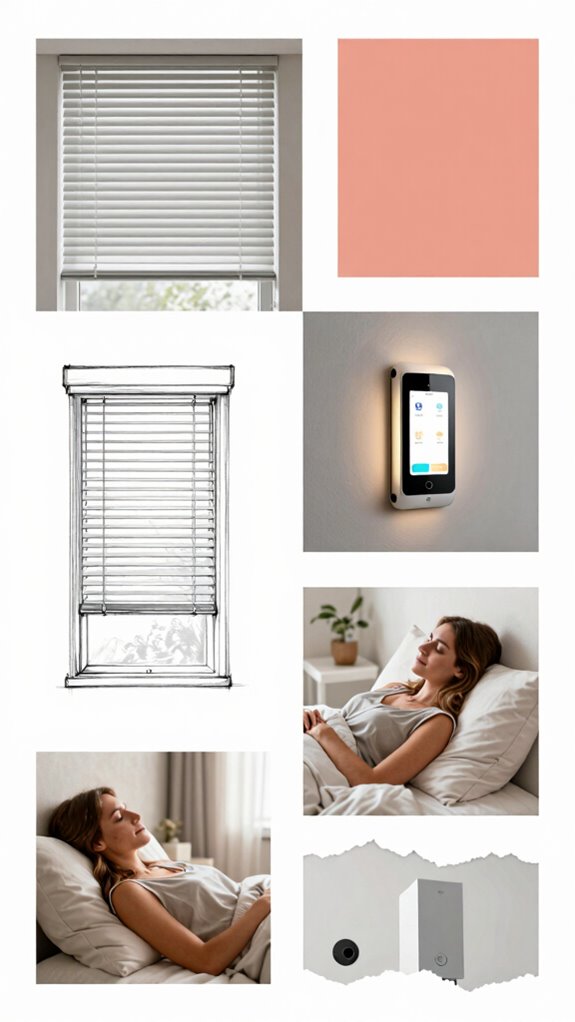
Integrating advanced light-proof technology into your sleep environment can substantially enhance your body’s natural melatonin production by effectively eliminating nocturnal light intrusion.
Smart home automation devices, like Lutron’s Caséta system or Philips Hue, enable precise control over black-out lighting through app-based scheduling or voice commands. These systems allow seamless synchronization with your sleep hygiene routines, reducing the influence of unwanted ambient light. Additionally, using automated lighting controls can help create a more consistent sleep environment by adjusting lighting levels automatically based on the time of day.
Furthermore, specialty products such as blackout window kits with integrated sensors or automatic blinds create an environment that mimics true darkness. This proactive control optimizes circadian regulation, facilitating restorative sleep and aligning your environment with physiological demands without manual intervention. Additionally, light pollution mitigation strategies can further improve darkness levels and support overall sleep quality.
How to Keep Your Bedroom Dark When You Travel
Maintaining a dark sleep environment while traveling can be a subtle challenge, especially given the variety of light sources that accompany unfamiliar settings. Portable blackout solutions—like adjustable eye masks or blackout curtains—offer immediate control. Consider using natural sleep enhancers such as melatonin supplements or lavender essential oil diffusers, which can signal your body’s readiness for rest amidst chaos. Using a HEPA filter in your travel space can further improve air quality and create a quieter, more conducive environment for sleep. Additionally, selecting accommodations with light-blocking window treatments or bringing your own portable solutions can significantly enhance your ability to rest peacefully. Effective strategies also include packing compact, light-blocking products from brands like Sleep Master or Manta, and re-creating familiar sleep cues. These tools enable precise management of light exposure, helping your circadian rhythms adjust smoothly despite the unpredictability of travel environments.
First Mention of Neuro-Acoustic Interventions
The first notable mention of neuro-acoustic interventions in the sleep terrain emerged from emerging research by neuroscientists such as Dr. Jeffrey Thompson. These interventions utilize brainwave entrainment—sound stimuli designed to synchronize brain activity with specific frequencies—to facilitate relaxation. brainwave entrainment techniques employ rhythmic sounds to target alpha and theta waves, promoting a calmer nervous system before sleep. Evidence suggests that neuro acoustic interventions can shorten sleep onset latency by fostering neurological states conducive to rest, bypassing the need for passive distraction or sedation. This technique empowers individuals to actively cultivate their internal environment, aligning brain activity with restorative sleep pathways. Additionally, understanding the neuroscientific basis behind these interventions enhances their potential effectiveness in improving sleep quality.
Sound Masking Devices for Sleep
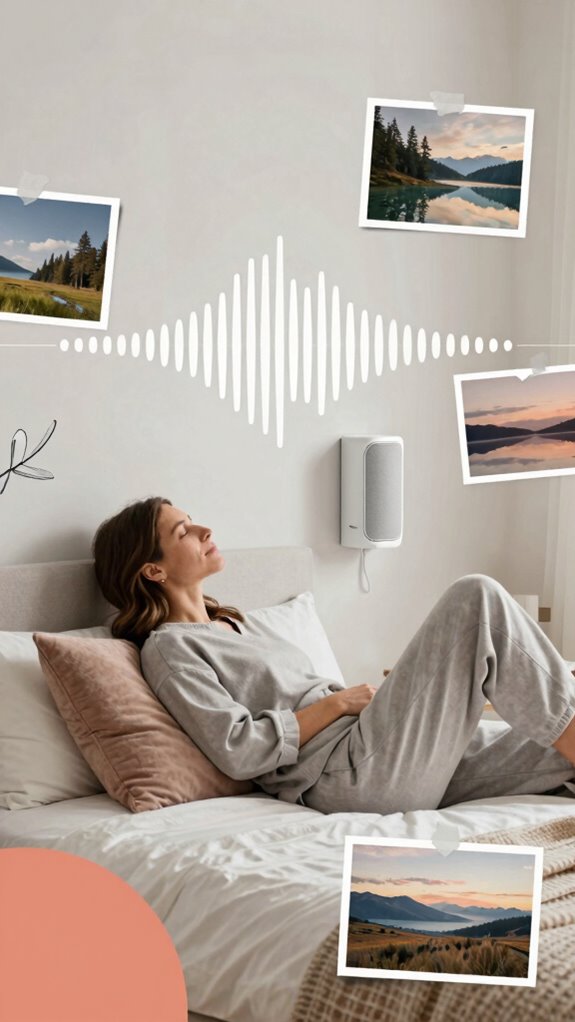
Have you ever wondered how some individuals silence disruptive background noise to achieve peaceful sleep? Sound masking devices, particularly those utilizing soundscape therapy and binaural beats, serve this purpose. These tools generate consistent acoustic environments that mask external sounds, promoting nervous system regulation.
By entraining brainwaves to alpha or theta frequencies, soundscapes facilitate relaxation before sleep onset. Research by neuroscientists like Dr. Jeffrey Thompson supports the efficacy of binaural beats in reducing sleep latency. Incorporating soundscape therapy into your sleep routine can further enhance your ability to block out unwanted noise for better rest.
Key benefits include:
- Creating a controlled auditory environment for nervous system calming
- Enhancing sleep consistency through neuro-acoustic entrainment
- Supporting overall circadian harmony by minimizing environmental disruptions
Furthermore, these devices can help in brainwave entrainment, which aligns neural activity with desired relaxation states.
Silicone Earplugs for Noise
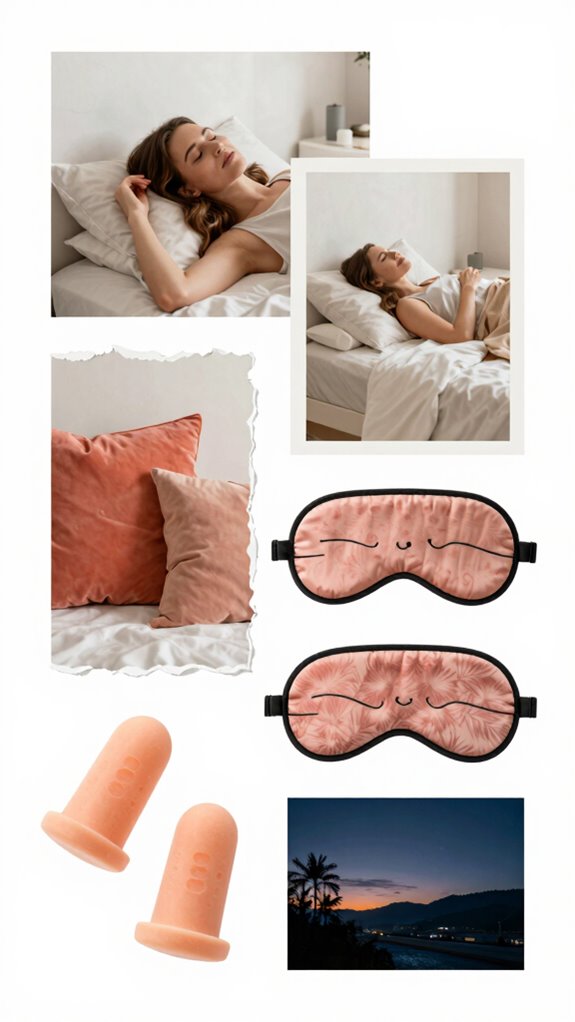
Silicone earplugs exemplify a pragmatic approach to minimizing external noise, serving as an effective alternative or complement to sound masking devices in the pursuit of ideal sleep hygiene.
By directly influencing bedroom acoustics, they help create a controlled sleep environment, reducing disruptive sounds from traffic, neighbors, or appliances.
Brands like Howard Leight and Etymotic employ medical-grade silicone, forming a tight seal that blocks noise over 20 decibels.
Scientific studies, including research from Dr. John Axelsson, support their efficacy in enhancing sleep quality.
Proper fit and material choice are essential, ensuring comfort without sacrificing noise attenuation—empowering you with control over your sleep sanctuary.
Silicone materials are also durable and ease cleaning, further increasing their suitability for frequent use.
Using high-quality noise-blocking silicone earplugs ensures a more effective and comfortable sleep experience.
FAQ
Can Natural Moonlight Disrupt Sleep Despite Darkness?
Moonlight interference can disrupt sleep quality, even in darkness, by subtly signaling your brain that it’s time to wake. To control it, I recommend blackout curtains or sleep masks, ensuring your environment promotes deep, restful sleep without unwanted light cues.
Are Blackout Curtains Suitable for Small or Oddly Shaped Windows?
Yes, blackout curtains are suitable for small or oddly shaped windows; I choose curtains with a flexible window frame and high-quality curtain material, ensuring full light blockage, especially where standard curtains don’t fit snugly or gaps appear.
Do Sleep Masks Cause Skin Irritation or Discomfort Over Time?
Back in the day, sleep masks were simple cloth, but I’ve found that skin irritation can happen without a comfortable fit. Choosing hypoallergenic masks with adjustable straps helps prevent discomfort and keeps you feeling in control of your sleep quality.
How Much Light Leakage Is Acceptable With Different Window Coverings?
I believe acceptable light leakage depends on your sleep environment; ideally, minimal leaks from light fixtures or window coverings create a dark haven. You should aim for almost no visible light to support your biological sleep needs.
Can I Combine Light-Blocking Methods for Maximum Effectiveness?
Yes, I layer techniques like blackout curtains with light-blocking shades, ensuring materials are compatible for maximum effectiveness. Combining these gives me precise control over light levels, creating the ideal environment for sleep, tailored exactly to my needs.
Summary
Just as a conductor coordinates an orchestra into harmony, creating a dark, light-controlled sleep environment synchronizes your circadian rhythms for restorative rest. Combining evidence-based methods—such as blackout curtains, sleep masks like Manta or Tempurite, and sound masking devices from Bose or Yogasleep—can markedly enhance sleep quality. By understanding and regulating light exposure with precise tools and practices, you help your body’s natural biological clock stay balanced, promoting deeper, more rejuvenating sleep every night.