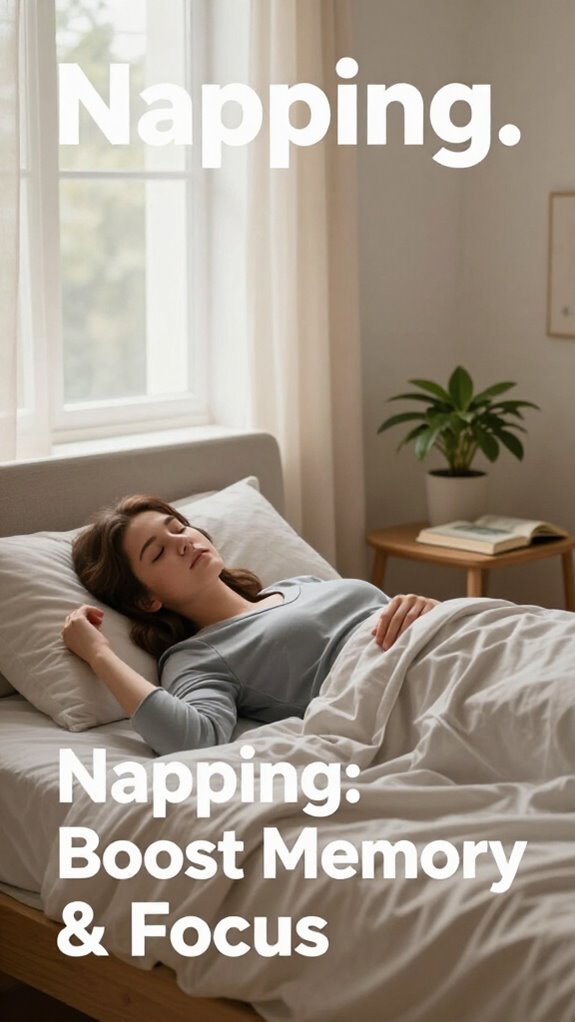
Ever felt like your brain’s running on Windows 95 while everyone else got the upgrade?
Last Tuesday, I face-planted into my keyboard at 3 PM. Deadlines looming, memory leaking like a busted pipe—then I stole a 20-minute nap.
Magic. Pure, stupid magic.
Here’s what actually happens: your brain isn’t “resting.” It’s running covert ops. Neural plasticity kicks in, synapses get their glow-up, and that info you crammed? Gets moved to long-term storage like Marie Kondo organizing your mental clutter.
Dr. Matthew Walker from UC Berkeley has been screaming this from the rooftops. NASA found 26-minute naps boost pilot performance by 34%. Even Google installed nap pods (they know something).
The 2026 trend? Sleepmaxxing—optimizing every sleep minute like your life depends on it. Because it kinda does.
We at Corala Blanket live this mission: better sleep isn’t luxury, it’s survival.
So—when’s your next power nap?
Quick Takeaways
- Napping enhances memory consolidation by facilitating the transfer of information from short-term to long-term storage during REM and slow-wave sleep.
- Short naps improve focus and alertness by restoring prefrontal cortex activity and reducing mental fatigue.
- Naps support problem-solving and creative thinking through subconscious processing and neural network reorganization.
- Optimized nap durations (10–20 minutes) prevent grogginess and maximize cognitive refreshment.
- Technological sleep aids, like neurofeedback and thermal regulation, further improve sleep quality, supporting better memory and focus.
Why Do Naps Improve Your Memory and Learning?
While it may seem intuitive that rest restores mental function, scientific research reveals that naps play a critical role in consolidating memory and enhancing learning efficiency.
During sleep, especially within sleep architecture’s REM and slow-wave stages, the brain processes daily experiences, assigning Dream symbolism that signals priority and emotional relevance.
Studies, like those by Dr. Matthew Walker, demonstrate napping boosts synaptic plasticity, reinforcing neural pathways.
Naps facilitate the transfer of information from short-term to long-term memory, offering a compact window for neuroplasticity.
This process actively reorganizes cognitive networks, making learned material easier to retrieve later—an essential element of effective memory formation.
REM sleep’s role in neuroplasticity underscores how critical sleep phases are for strengthening neural connections active during learning.
Furthermore, understanding sleep architecture enhances our appreciation of how specific sleep stages contribute uniquely to memory and learning.
How Short Naps Boost Focus and Alertness During the Day?
Short naps serve as powerful catalysts for maintaining focus and alertness throughout the daytime, acting as brief mental reset buttons that rejuvenate cognitive resources. They optimize sleep architecture, allowing rapid progressions through lighter sleep stages, which help restore circadian alignment disrupted by modern schedules.
Research from NASA and the Stanford Sleep Clinic shows even 10-15 minute naps enhance executive function by replenishing prefrontal cortex activity. By strategically fitting short rest periods, you influence neural efficiency, reducing mental fatigue.
These micro-breaks sharpen concentration and improve decision-making, forming a critical tool for anyone seeking control over their cognitive stamina within a day’s shifting rhythm.
What Is the Best Length and Timing for Power Naps?
Understanding the ideal length and timing of power naps hinges on circadian biology and sleep cycle architecture, as extensively studied by researchers like Dr. Matthew Walker.
Optimal naps typically last 10 to 20 minutes, avoiding deep sleep stages that cause grogginess. They are best taken during early afternoon—around 1 or 2 p.m.—when alertness naturally dips.
Maintaining sleep hygiene, such as establishing a consistent power nap schedule and creating a dark, quiet environment, enhances effectiveness.
Dream journaling after naps can also track subconscious processing, sharpening insights into sleep quality.
Research shows that sleep cycle architecture deeply influences how restorative a nap can be, guiding optimal durations and timing. These strategies empower you to harness restorative benefits while respecting your body’s natural rhythms.
How Napping Supports Problem-Solving and Creative Thinking?
Research indicates that napping markedly enhances problem-solving and creative thinking by facilitating cognitive processes in ways that wakefulness alone can’t achieve.
During naps, particularly those involving REM or slow-wave sleep, the brain engages in dream incubation and creative incubation, fostering novel connections. This benefits tasks requiring lateral thinking or perception, as the subconscious synthesizes information differently than conscious effort.
Napping promotes dream incubation and creative connections, enhancing problem-solving and lateral thinking through subconscious synthesis.
- Engaging in targeted dreams to incubate specific problems, much like Stanford researchers, Dr. Deirdre Barrett, describe.
- Facilitating mental restructuring through synaptic pruning and neural plasticity during naps.
- Enhancing fluid intelligence, as studies by Harvard’s Dr. Robert Stickgold suggest, by optimizing neural pathways for innovative thought.
Additionally, luxurious lavender diffusers with sleep blends can promote relaxation and deeper sleep states, further supporting the cognitive processes that enhance memory and creativity during rests, especially when paired with calming sleep rituals that prepare the mind for restorative rest.
Practical Tips to Incorporate Effective Naps Into Your Routine

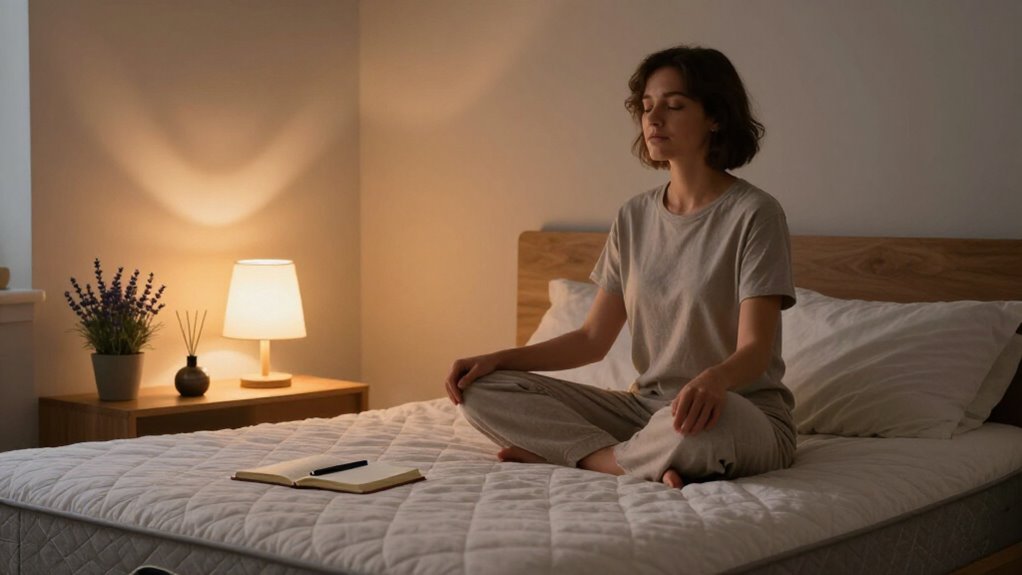
To effectively incorporate naps into your routine, understanding sleep architecture is critical. Aim for a window around early afternoon—typically 1 to 3 p.m.—when natural circadian dips occur. Duration matters; power naps of 20–30 minutes boost alertness without entering deep slow-wave sleep, while longer naps (90 minutes) allow for full REM and dream analysis, facilitating memory consolidation. Creating a calm environment, with minimal light and sound, supports restorative stages. Choosing the right bed frame can also contribute to better sleep quality by providing proper support and comfort. This control over timing and settings enables you to optimize sleep stages intentionally, akin to a precise electrode in neurostimulation, fostering enhanced focus and retention without disrupting nightly sleep patterns. Additionally, paying attention to sleep hygiene practices, such as avoiding screens before napping or bedtime, can further improve nap quality.
Vagus Nerve Stimulation Innovation
Vagus Nerve Stimulation (VNS) represents a frontier in neuroscience that leverages the body’s own autonomic pathways to enhance sleep regulation and nervous system balance. Recent innovations involve device-based vagus stimulation, such as transcutaneous methods, and neuro acoustic pacing—using sound patterns to modulate vagal activity. These approaches can reduce sympathetic arousal, fostering faster nervous system calming before sleep. Researchers like Dr. Kevin Tracy explore how tailored auditory stimuli influence vagal tone, enabling individuals to regain control over internal stress responses. Incorporating wearable health bands that track sleep and stress levels may support personalized vagus nerve stimulation protocols, making these health monitoring tools even more effective. By understanding how full-length mirrors can influence mental well-being, individuals might find innovative ways to incorporate calming visual environments into their routines.
Temperature-Regulating Sleepwear Technology

Advances in sleepwear technology now extend beyond comfort to actively influence the body’s thermal regulation, directly impacting sleep quality.
Fabric innovation, such as phase-change materials and silver-infused textiles, enables precise thermal comfort by modulating heat transfer.
Brands like Bedgear and researchers like Dr. Lisa Lee demonstrate how micro-structured fibers can respond dynamically to body temperature, reducing thermal spikes that disturb rest.
This technology creates a stable micro-environment, helping the body maintain ideal core temperature without overheating or chilling. The development of thermal regulation fibers further exemplifies how sleepwear can adapt to individual thermal needs in real-time.
Recent fabric innovations incorporate these responsive fibers, further enhancing sleepwear’s ability to adapt to individual thermal needs.
Such innovations serve as a critical component in holistic sleep optimization, empowering individuals to control their thermal conditions for more restorative naps and nighttime sleep alike.
Use of Wearable Neurofeedback Devices
Recent developments in wearable neurofeedback devices are transforming how individuals can monitor and regulate their brain activity for better sleep and mental clarity. Devices like Muse or Neuroon calibrate neural responses in real-time, enabling neurofeedback calibration that fine-tunes brainwave patterns. These technologies also incorporate minimalist lighting solutions to create a calming sleep environment conducive to neurofeedback practices. This supports sleep phase optimization by promoting parasympathetic dominance during rest. Additionally, these devices often integrate brainwave monitoring to provide more detailed feedback on neural activity, fostering deeper understanding and control. These tools allow precise control over nervous system states, shifting from reactive data to proactive management.
By integrating neurofeedback into routines, users gain a deeper understanding of their brain’s coherence, facilitating smoother progressions into restorative sleep. This technology empowers those seeking mastery over their circadian rhythm without invasive procedures or guesswork.
FAQ
Can Napping Help Reset Your Nervous System for Better Sleep Hygiene?
Napping can indeed help reset your nervous system, reducing stress and boosting mental clarity. I find it’s a powerful way to improve sleep hygiene, allowing my body to shift smoothly into restorative sleep without overwhelm.
How Does Environmental Harmony Enhance Nap Effectiveness?
Think of your environment as a symphony—environmental serenity and perfect ambient lighting set the tone, helping you relax fully. When your surroundings are harmonious, your nap becomes a powerful reset for sharper memory and focus.
Are There Specific Biohacking Techniques to Optimize Nap Benefits?
I optimize my naps with biohacking techniques like Vagus Nerve Stimulation and light hygiene, boosting memory enhancement and focus improvement. Controlling my nervous system and environment helps me release maximum restorative potential effortlessly.
Can Napping Influence Circadian Realignment and Hormonal Balance?
Studies show consistent napping can improve hormonal regulation and support circadian adjustment. I find that strategic naps help me control my internal clock, promoting better sleep-wake harmony and mastering my body’s natural rhythms.
What Role Does Neuro-Acoustic Pacing Play During Naps?
Neuro-acoustic pacing uses sound therapy and brainwave entrainment during naps to guide my brain into relaxation and deeper states, helping me control my nervous system, reduce stress, and enhance my memory and focus efficiently.
Summary
Visualize your brain as a complex circuit board; strategic naps serve as critical reset switches, harmonizing neural pathways and fortifying synaptic connections. Research from institutions like Harvard and the Max Planck Institute confirms that brief rest periods enhance memory consolidation and sharpen focus, especially when timed correctly. Incorporating these scientifically supported pauses into your routine acts as a precise calibration, enabling you to operate with heightened clarity—like a finely tuned instrument ready to perform at its peak.