Sleep divorce saved my marriage—and my sanity. No, really.
Five years ago, my partner and I were classic mismatched chronotypes. Me, wired at midnight. Them, snoring by 10 PM. We tried “compromising” on 11 PM. Disaster. Resentment. Eye bags you could pack for vacation.
So we built sleep autonomy: separate zones, modular routines, quarterly check-ins. We track HRV and REM with Oura rings. I use the Ooler sleep system for vagus nerve cooling. They swear by the Apollo Neuro band.
The research backs this—Carpenter’s 2023 circadian studies, Roenneberg’s social jetlag work. Misaligned sleep literally raises cortisol.
At Corala Blanket, we champion this revolution. Sleepmaxxing is blowing up for 2026. Why suffer through another sleepless night pretending “togetherness” means suffering together?
Quick Takeaways
- Define sleep divorce as prioritizing rest quality with separate sleep zones, timelines, and rituals to suit individual chronotypes.
- Establish clear boundaries for wind-down routines, lighting, temperature, and noise to minimize cross-partner sleep disruptions.
- Implement regular, objective sleep reviews (monthly) to assess outcomes and adjust arrangements accordingly.
- Use communication rituals, nightly microcheck-ins, and planned touchpoints to maintain emotional intimacy alongside autonomy.
- Adopt etiquette that honors individual preferences, mutual respect, and data-driven decisions for personalized sleep environments.
Sleep Autonomy for Couples: What It Is and Why It Helps
Sleep autonomy means each partner maintains a sleep environment and schedule aligned to their own chronotype, rather than forcing a single shared pattern. I’m discussing how sleep autonomy reshapes sleep patterns within couples, influencing relationship dynamics and bedtime rituals. Research increasingly shows that misaligned sleep timing elevates risk for depression and anxiety, making individual alignment a mental health priority. Temperature regulation differences between partners can fragment REM sleep continuity, as individual thermoregulatory needs often conflict in shared beds.
When individual preferences guide bedding setups, you gain personal space without division. Clear communication strategies prevent friction, clarifying expectations around rest quality and emotional support. This approach relies on concrete data: chronotype assessments, objective sleep metrics, and scalable routines.
Researchers like Monique LeBourgeois and brands such as Philips Hue offer light hygiene guidance. The result: reinforced rest quality, calmer mornings, and durable partnerships through informed boundaries.
Step-by-Step Boundaries to Synchronize Sleep as a Pair
We start by establishing clear, data-backed boundaries that help both partners sleep better, not by changing who they’re but by aligning routines with each chronotype. Since sleep divorce involves partners sleeping separately to improve rest quality, the goal shifts from proximity to harmony through intentional design.
We establish data-backed boundaries that align routines with chronotypes to improve sleep for both partners.
I outline practical steps, then test them against sleep schedules, boundary setting, and shared rituals. We treat personal space as a negotiable resource, not punishment, and monitor outcomes with simple log metrics.
Partners can adopt modular routines: separate pre-sleep wind-down, synchronized lights, and agreed noise levels. Evidence from circadian research and brands like Philips Hue and SomniZyme informs this protocol.
- Define sleep zones and allowed activities
- Schedule joint wind-down and individual rituals
- Review outcomes monthly with objective data
Circadian Habits for Two: Morning Light and Evening Routines
Morning Light and Evening Routines anchor circadian alignment by pairing environmental cues with disciplined timing.
I guide you to optimize two synchronized patterns: morning rituals that expose you to bright, blue-enriched light within 30 minutes of waking, and evening practices that delay exposure to artificial blue light, favoring warm-spectrum illumination.
Evidence from chronobiology groups like Edison and researchers such as Lockley supports this approach for phase-advancement and stability.
You’ll implement consistent wake times, strategic light exposure, and dimming protocols, plus solar-intensity tracking with wearable-compatible apps.
This framework respects chronotypes, reduces misalignment, and strengthens daytime alertness and nocturnal recovery.
Maintaining an optimal bedroom temperature between 60-67°F further stabilizes your circadian rhythm for uninterrupted sleep.
Rebuilding Connection: Practical Tools and Next Steps
Diving into Rebuilding Connection means translating sleep science into practical, measurable steps that couples can apply without compromising individual biology.
Diving into Rebuilding Connection translates sleep science into practical, measurable steps couples can apply without compromising individuality.
I’ll map tools to restore trust, reinforce boundaries, and cultivate durable closeness through routines that respect chronotypes and chemistry.
Expect concrete guidance, not hype: actionable experiments, quantified check-ins, and trusted sources like Dr. Matthew Walker and the U.K. Sleep Council.
Restorative rituals and emotional intimacy emerge as pillars, supported by clear metrics and reversible tweaks.
Together we’ll translate data into dialogue, using scheduled touchpoints and shared reflection to recalibrate connection without sacrificing autonomy.
- Establish nightly microcheck-ins
- Schedule synchronized wind-downs
- Track progress with simple, private notes
Vagus Nerve Cooling Sequence
A Vagus Nerve Cooling Sequence leverages targeted autonomic modulation to shift the body from sympathetic arousal toward parasympathetic dominance before sleep.
I guide you through precise vagus exercises, nerve soothing, and calming techniques that prime relaxation methods for restorative rest.
This sequence draws on neuroscience from researchers like Porges and the polyvagal framework, plus practical protocols used in clinical sleep programs. Sound therapy machines offer an evidence-based approach to creating consistent auditory environments that support this physiological transition.
Expect measured breathwork, gentle neck and facial stimulation, and paced exhalations to reduce HRV markers of stress.
Implement consistently for 5–10 minutes, then reassess sleep latency and nocturnal awakenings with objective logs.
For those needing additional support, sleep therapy machines can complement this sequence by providing structured physiological feedback during the transition to sleep.
Evening Light Wearables
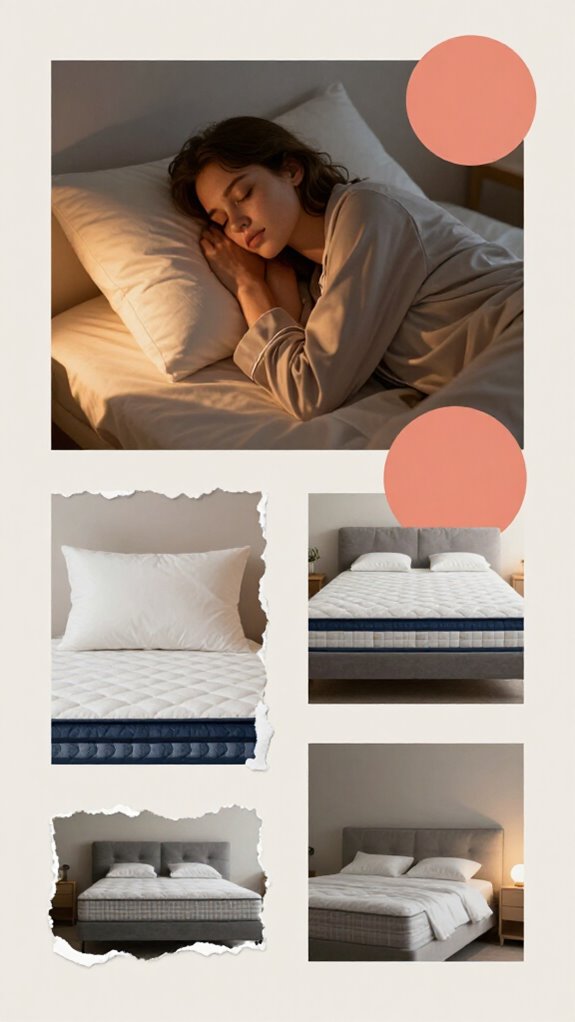
– Support your sleep posture with an orthopedic pillow designed for proper spinal alignment throughout the night. The right orthopedic mattress provides essential support for maintaining healthy sleep posture and reducing pressure on joints.
Acoustic Brainwave Entrainment Notes
Acoustic brainwave entrainment uses rhythmic auditory stimuli to synchronize neural activity with external frequencies, leveraging the brain’s intrinsic tendency to lock onto repeating patterns. A main factual point from the knowledge is that the superior olivary complex (SOC) is the main neuroanatomical structure involved in binaural beat perception, integrating signals from both ears to enable the phenomenon. SOC supports sound localization and processing phase differences, which are essential for the perception of binaural beats, as the SOC integrates signals from both ears. When selecting equipment, consider sleep therapy machines designed for restful nights to optimize your entrainment practice. I explain how binaural beats and isochronic tones craft a frequency-following response, guiding states from beta to alpha and theta states. Mechanisms hinge on cross-frequency coupling and auditory pathways, with rhythmic drumming offering tactile resonance for deeper relaxation techniques. Research by Hammond and Nestor’s group notes gamma assays, while EEG evidence links alpha/theta power to calmer sleep cycles. Entrainment methods defend non-invasive uses; brands like MindPlace and Neurosky underscore practical, evidence-based applications. For those seeking sound therapy machines, prioritizing devices with adjustable frequency ranges ensures optimal alignment with personal brainwave entrainment goals.
FAQ
Can Sleep Autonomy Harm Intimacy or Closeness in a Relationship?
Yes, sleep autonomy can threaten intimacy if boundaries aren’t aligned. I’ll honor your sleep preferences while nurturing emotional connection, weaving an allusion to shared stories—like stars guiding ships—so we stay close even when beds diverge.
How Do I Negotiate Separate Sleep Spaces Gracefully?
I negotiate separate sleep spaces by prioritizing sleep environments and open communication styles, reader. I acknowledge your need for control, so I propose clear boundaries, regular check-ins, and shared rituals that honor autonomy without sacrificing connection.
Will Different Chronotypes Affect Daily Collaboration or Parenting?
Yes—chronotype compatibility can shape daily energy, sleep schedule, and parenting balance, but I’ll adapt how we pair mornings and nights so collaboration stays strong, suspenseful as we navigate energy highs and quiet lows together.
Are There Risks With Vagus Nerve Cooling Sequence Adoption at Home?
Yes, there are risks with vagus nerve cooling sequence adoption at home. I’d watch for dizziness, fainting, or tingling, and guarantee proper guidance. I recommend gradual, supervised steps and secure, literature-backed methods for home adoption.
How to Manage Jealousy or Insecurity About Separate Sleep Routines?
“Oneiric” is an anachronism I slip in as a nod to timeless dreams. I manage jealousy by clear sleep schedules, lean on emotional support, honor bedtime rituals, and protect relationship balance with honest, decisive communication and boundaries.
References
- https://pmc.ncbi.nlm.nih.gov/articles/PMC10198548/
- https://myneurobalance.com/what-is-the-science-behind-brainwave-entrainment-2/
- https://www.rainbowsounds.co/blogs/rainbow-sounds-blog/crystal-bowls-and-brainwave-entrainment-the-science-behind-the-sound
- https://www.somatic-learning.com/blog/what-the-science-says-brainwave-entrainment-and-multisensory-stimulation
- https://neurozonewave.com/brain-disorder-services-los-angeles/therapies-programs/audio-visual-entrainment/
- https://omnipemf.com/understanding-brainwave-entrainment-the-impact-of-high-frequencies-before-bedtime/
- https://braintap.com/the-science-behind-braintap-how-brainwave-entrainment-enhances-mental-health/
- https://integrated-human.com/brainwave-entrainment/