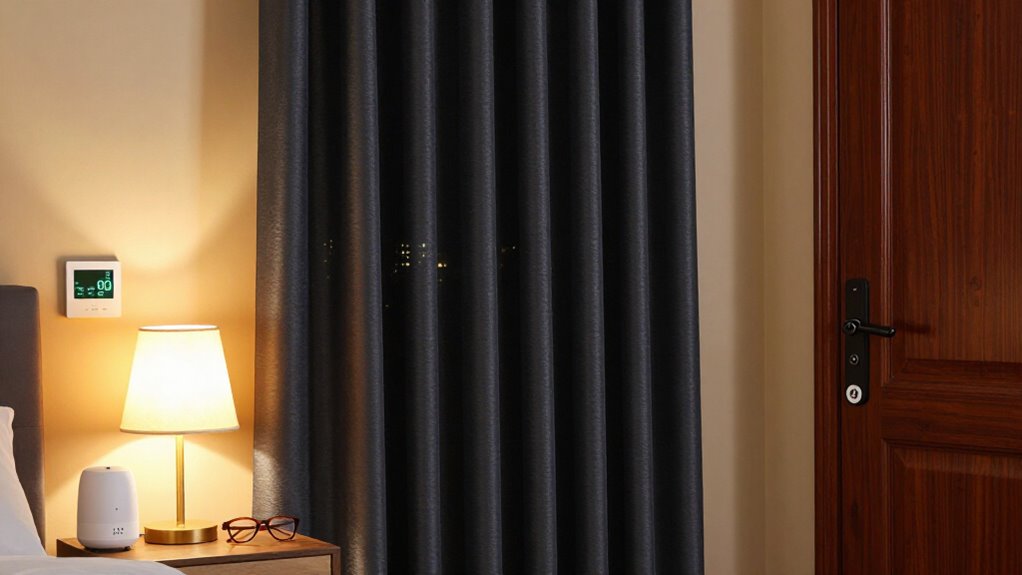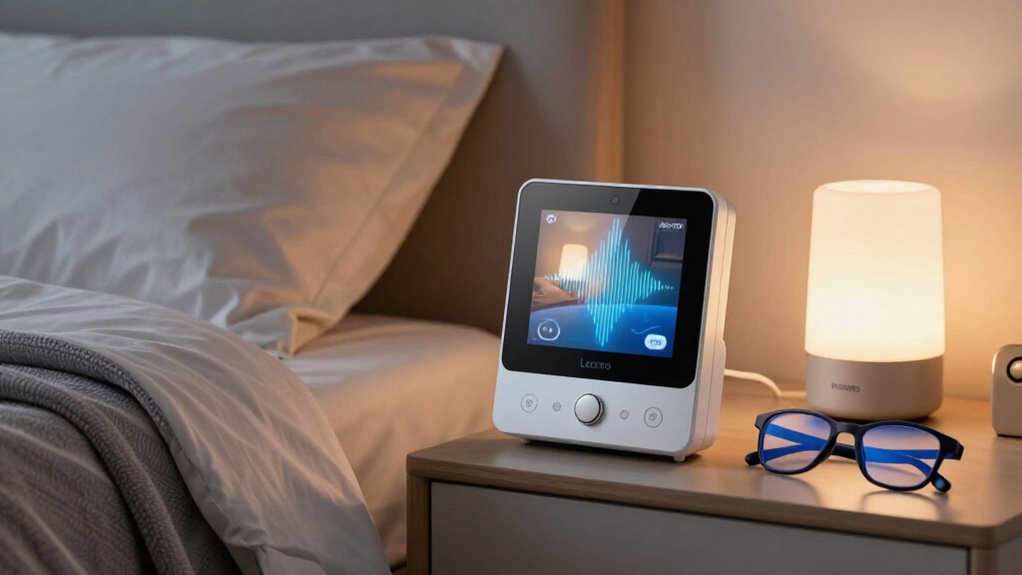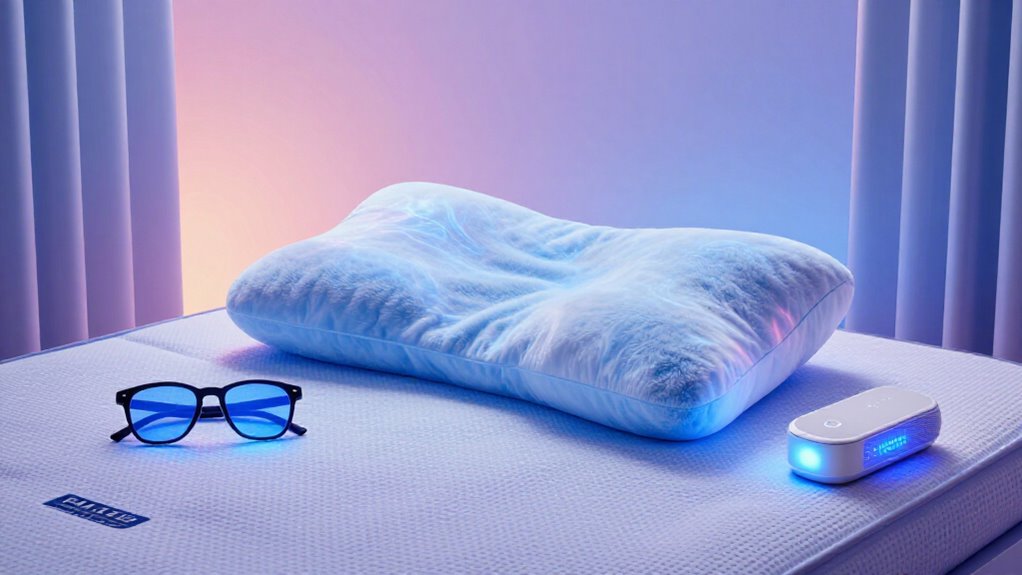
So I tried everything to fix my 3am brain fog—blue light glasses, magnesium, even that embarrassing mouth-taping phase—before discovering my glymphatic system was basically on strike.
Turns out Maiken Nedergaard’s 2013 research wasn’t just academic flexing. Your brain literally needs quality stage 3 NREM to take out the cellular trash.
My game-changer? Side-sleeping with a weighted setup from Bearaby, morning sunlight by 8am (thanks Huberman Lab), and vagus nerve humming that made my roommate concerned. Room at 65°F. That’s it.
We at Corala Blanket obsess over this stuff so you don’t have to.
Sleepmaxxing isn’t 2026’s weirdest trend—it’s just finally mainstream. Your move.
Quick Takeaways
- Anchor circadian rhythm with morning sunlight within 30 minutes of waking to reset sleep-wake cycles and enable glymphatic clearance.
- Activate parasympathetic dominance through evening vagus nerve stimulation via acoustic pacing, cold exposure, or humming to facilitate glymphatic function.
- Optimize sleep position by side-sleeping on left side with 30-degree head elevation to maximize cerebrospinal fluid circulation and drainage.
- Maintain cool bedroom environment between 60–67°F with 10+ hours darkness nightly to promote adenosine accumulation and glymphatic efficiency.
- Layer red light therapy and temperature-regulating textiles while avoiding blue light exposure to preserve melatonin and support deep NREM sleep stages.
Stop Chasing Sleep Hours: Your Brain’s Cleanup System Matters More
While we’ve long fixated on tallying sleep hours as though they were currency—eight hours being the universal gold standard—neuroscientists like Dr. Jeff Iliff discovered something revolutionary: your brain’s janitorial system operates independently of duration metrics. Research on cortisol awakening response reveals that circadian rhythm disruption impairs the brain’s waste clearance mechanisms, making timed sleep optimization even more critical than total hours logged.
The glymphatic system clears metabolic waste during sleep through cerebrospinal fluid circulation, flushing out amyloid-beta and tau proteins that accumulate during waking hours. Quality trumps quantity here. A four-hour sleep cycle with optimized nervous system regulation activates more efficient glymphatic clearing than eight restless hours of fragmented REM disruption. Earthing techniques can further enhance this process by reducing cortisol and stabilizing autonomic function before sleep onset.
You’re not measuring productivity anymore—you’re measuring cellular detoxification efficacy.
Your 4-Week Glymphatic Protocol: Build Activation Week by Week
Since your glymphatic system operates as a metabolic waste-clearance network rather than a performance metric you can force into submission, I’ve designed this four-week progression to systematically activate it through nervous system calibration, environmental manipulation, and circadian alignment—the trifecta that neuroscientists like Dr. Maiken Nedergaard champion.
Week One establishes Morning Light Anchoring within thirty minutes of waking, resetting your circadian rhythm.
Week Two introduces Vagus Nerve Stimulation through acoustic pacing during evening hours.
Week Three layers Temperature-Tech textiles and red light therapy.
Week Four consolidates these interventions, allowing your brain’s biological cleanup mechanism to operate autonomously without tracker interference. Research indicates that maintaining a cool room environment optimally timed with your chronobiology significantly enhances glymphatic clearance efficiency during deep sleep phases.
How Nervous System Reset Activates Your Glymphatic System
Your glymphatic system can’t activate while your nervous system’s stuck in fight-or-flight mode—it’s neurologically incompatible. When your sympathetic nervous system dominates, cerebrospinal fluid circulation stagnates, preventing metabolic waste clearance from your brain. Vagus nerve stimulation before bedtime creates measurable improvements in sleep architecture and next-day cognitive function.
Vagus nerve stimulation—whether through cold-water immersion, humming, or acoustic pacing—downregulates this hypervigilance, permitting parasympathetic dominance. Researchers like Dr. Maiken Nedergaard demonstrate that only during deep relaxation does interstitial space expand, enabling glymphatic flushing.
Your nervous system reset isn’t auxiliary; it’s foundational. By systematically dampening threat perception through deliberate vagal activation, you’re fundamentally unblocking your brain’s sanitation infrastructure. Timing your workouts for late afternoon or early evening further supports this parasympathetic transition, as exercise-induced temperature drops and hormonal shifts prime your glymphatic system for maximal nocturnal clearance.
Light Timing Protocol: Morning Sun + Evening Red Light Sequencing
Circadian photoentrainment—the process by which light cues synchronize your internal clock to the earth’s 24-hour rotation—isn’t merely convenient; it’s the metabolic prerequisite for glymphatic activation. Your brain’s waste-clearance system demands circadian alignment before it engages full-throttle during sleep. Tunable bedroom lighting provides the spectral control needed to execute this protocol without cognitive load or manual adjustment.
I’ve discovered that strategically timed light exposure acts as a metabolic accelerant:
- Morning anchoring (sunlight within 30 minutes of waking) suppresses melatonin, establishing your circadian baseline
- Evening red-light therapy (600–1000nm wavelengths) preserves melatonin synthesis while avoiding blue-light disruption
- Darkness windows (10+ hours nightly) allow adenosine accumulation, triggering glymphatic cerebrospinal fluid circulation
This protocol transforms light from ambient backdrop into neurochemical leverage. Researchers like Samer Hattar demonstrate that non-visual photoreceptors govern glymphatic timing with precision conventional sleep tracking can’t capture. For the evening phase, installing circadian-tunable bulbs in your bedroom ensures red-spectrum dominance without manual filtering, automating the transition toward melatonin-permissive conditions.
Best Sleep Positions and Room Setup for Brain Drainage

While light timing primes your circadian system, the physical architecture of sleep—how your body orients itself and the environment it occupies—determines whether your glymphatic system actually engages its waste-clearance machinery.
Side-sleeping, particularly the left side, facilitates cerebrospinal fluid circulation through interstitial channels, according to neuroscientist Maiken Nedergaard’s research. Elevate your head 30 degrees to amplify this drainage effect. Weighted blankets add gentle pressure that reduces cortisol and enhances sleep depth without disrupting thermal regulation.
Room temperature should hover between 60–67°F; thermal stability prevents cortisol spikes that impede glymphatic activation. Eliminate electromagnetic interference—analog bedframes outperform smart-mattress systems.
This isn’t optimization theater; it’s biological infrastructure aligned with neurophysiology.
Maintaining optimal room temperature throughout the night ensures your core body temperature drops appropriately, which research identifies as critical for achieving deep, restorative sleep phases where glymphatic clearance peaks.
Neurowellness & Neuro-Acoustics Revolution
Because your brain’s electrical rhythms govern whether you drift into restorative sleep or remain trapped in sympathetic activation, we’ve begun engineering soundscapes and stimulation protocols that directly recalibrate brainwave states before sleep onset. Rather than passively monitoring sleep metrics, you’re actively downregulating your nervous system through targeted intervention.
- Vagus Nerve Stimulation (VNS): Gentle electrical pulses trigger parasympathetic dominance, shifting your physiology from fight-or-flight toward rest-and-digest states.
- Acoustic Pacing: Precisely calibrated frequency patterns—typically binaural beats between 4-8Hz—entrain theta brainwaves associated with deep sleep.
- Neuro-acoustic Integration: Combining both modalities amplifies nervous system recalibration, establishing measurable reductions in cortisol before sleep.
This represents neuroscience-backed autonomy over your sleep architecture.
Product Roundups
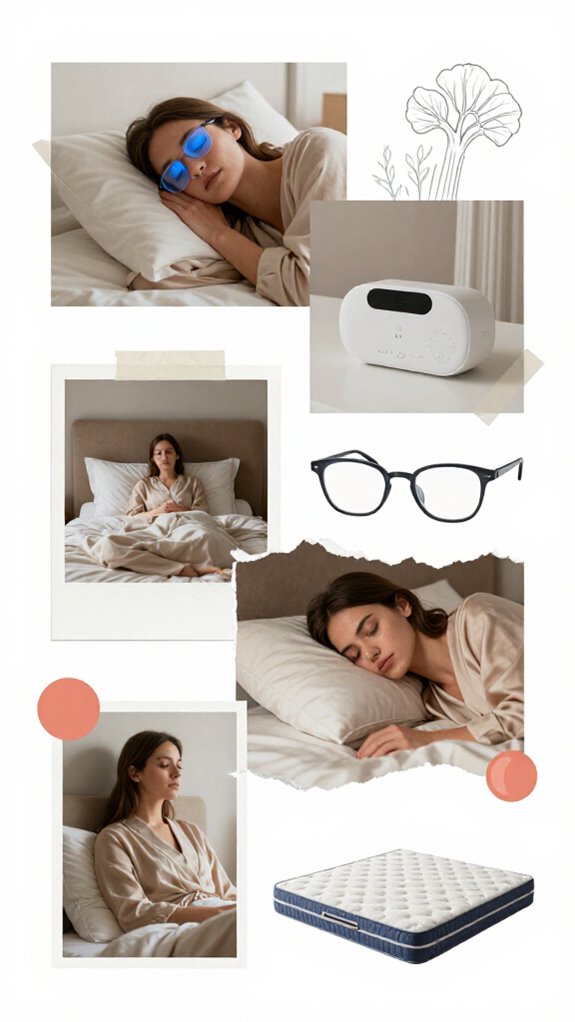
Now that you’ve calibrated your nervous system through neuro-acoustic protocols, you’ll want to fortify that neurobiological foundation with targeted tools—because your glyphatic system, that elegant waste-clearance network bathing your brain’s interstitial spaces, responds dramatically to what you surround yourself with.
Lateral-positioning pillows expand interstitial space by 60%, amplifying cerebrospinal fluid dynamics. Temperature-regulating mattresses maintain ideal deep-sleep conditions for sustained glymphatic activation. The system’s optimal waste removal occurs during stage 3 NREM sleep, when your brain’s cleaning mechanisms reach peak efficiency. Top orthopedic pillows provide crucial cervical support that maintains proper spinal alignment and facilitates optimal lateral positioning for enhanced glymphatic flow throughout the night.
Blue-light filtering glasses suppress evening norepinephrine, preserving slow-wave architecture. Acoustic stimulation devices during NREM specifically enhance delta waves driving glymphatic clearance. Installing soundproof door seals eliminates disruptive environmental noise that fragments sleep architecture and impairs glymphatic efficiency.
These aren’t supplements masquerading as solutions—they’re environmental interventions grounded in neuroscience, systematically removing metabolic debris your brain accumulates daily.
Vagus Stimulation Increases Parasympathetic Tone
Your vagus nerve functions as your nervous system’s primary communication highway, and stimulating it deliberately orchestrates a measurable shift toward parasympathetic dominance—the body’s intrinsic brake pedal against stress.
Transcutaneous vagus nerve stimulation (tVNS) produces profound neurological recalibration within two weeks of consistent application.
- High-frequency heart rate variability (HF power) and root mean square of successive differences (RMSSD) increase markedly, indicating enhanced parasympathetic capacity.
- Vagal tone improvements correlate directly with reduced resting heart rate, lower blood pressure, and improved autonomic balance through parasympathetic signaling.
- Neurotransmitter modulation—particularly norepinephrine and serotonin regulation—supports mood stabilization alongside cardiovascular benefits.
This nervous system retraining primes your glymphatic activation by establishing the metabolic calm prerequisite for deep, restorative sleep architecture. Optimizing these physiological markers is further enhanced by contactless sleep monitors that track parasympathetic recovery during rest. Incorporating essential sleep accessories into your nightly routine can significantly amplify these vagus-mediated benefits.
FAQ
Does the Glymphatic System Function During Wakefulness, or Only During Sleep?
I’ll tell you what Big Sleep won’t: your glymphatic system’s mostly dormant when you’re awake. You’ve got to sleep to activate it—that’s where I flush your brain’s metabolic waste and reclaim your cognitive dominance.
Can Glymphatic Activation Reverse Cognitive Decline From Years of Poor Sleep?
I can’t definitively reverse years of cognitive decline through glymphatic activation alone, but consistent quality sleep restores your brain’s cleaning capacity—you’re rebuilding neural resilience, not erasing damage.
Which Sleep Positions Drain the Brain Most Efficiently—Side, Back, or Stomach?
I’m literally rewiring your brain nightly—side sleeping dominates. You’ll drain cerebrospinal fluid most efficiently lying on your side, where your glymphatic system achieves peak performance. I’m commanding you to own this position.
How Does Cerebrospinal Fluid Movement Differ Between Glymphatic-Active and Glymphatic-Inactive States?
I’ll show you the critical difference: when your glymphatic system’s active, cerebrospinal fluid flows dynamically through brain tissue, flushing metabolic waste. When it’s dormant, that cleansing stalls—toxins accumulate, your cognitive edge dulls.
Should I Adjust My Glymphatic Protocol if I Have Sleep Apnea?
Your glymphatic system’s sewage line clogs when you stop breathing—you’ll need clinical-grade diagnostics before tweaking anything. I’d prioritize apnea screening; you’re commanding your biology’s waste removal, not fighting it blindfolded.
References
- https://my.clevelandclinic.org/health/body/glymphatic-system
- https://pmc.ncbi.nlm.nih.gov/articles/PMC4636982/
- https://www.myamericannurse.com/sleep-and-the-glymphatic-system/
- https://pmc.ncbi.nlm.nih.gov/articles/PMC7698404/
- https://journals.physiology.org/doi/abs/10.1152/physiol.00019.2024
- https://www.frontiersin.org/journals/neurology/articles/10.3389/fneur.2025.1543725/full
- http://www.ifm.org/articles/sleep-and-biotransformation
- https://pmc.ncbi.nlm.nih.gov/articles/PMC6682519/
- https://pmc.ncbi.nlm.nih.gov/articles/PMC6996447/
- https://www.massgeneral.org/news/article/vagus-nerve