I used to wake up groggy, scrolling at 2am, desperate for real rest—until I discovered sleepmaxxing.
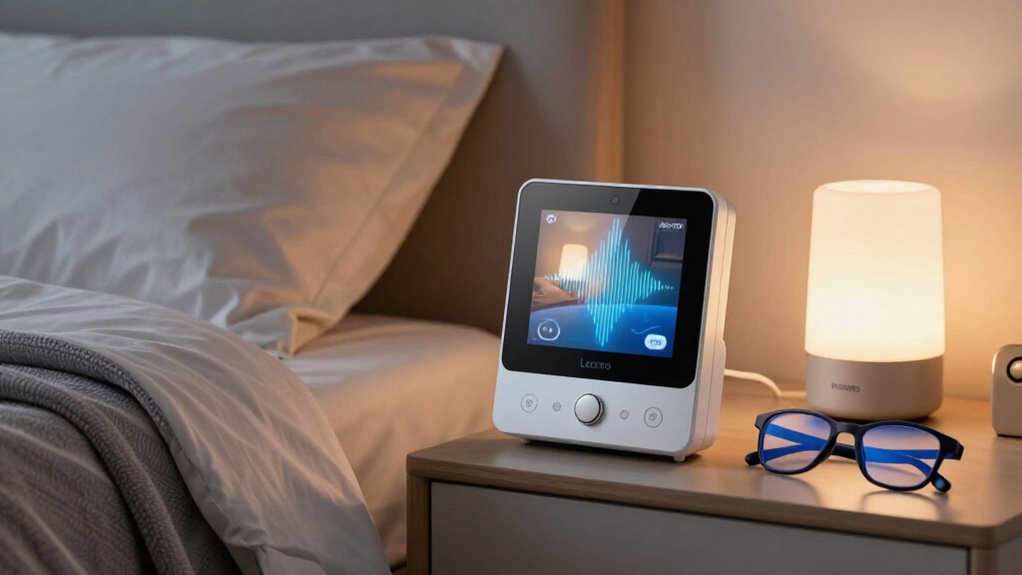
At Corala Blanket, we’re obsessed with helping people like us actually sleep. Here’s my 30-day protocol: I started with our weighted blanket for that deep pressure calm, dropped my bedroom to 65°F (18°C), and popped 300mg magnesium glycinate—game changer per Dr. Walker’s research. Then brown noise through my LectroFan, mouth tape from 3M, zero-gravity pillow setup.
By day 30? My Oura ring showed 90+ sleep scores.
2026’s all about biohacking rest, not just chasing it.
Ready to stop surviving and start thriving?
Quick Takeaways
- Sleepmaxxing applies athletic training discipline to optimize sleep quality and recovery metrics.
- The protocol emphasizes circadian alignment through morning light exposure and environmental design.
- Engineered sleep environments include 18°C temperature, pink noise, and weighted blankets.
- Daily tracking of HRV and sleep latency using wearables like Whoop or Oura Ring.
- Structured pre-sleep routines eliminate blue light and caffeine while promoting nasal breathing.
Introduction to my Sleepmaxxing Protocol

Although sleep has long been treated as a passive state of unconsciousness, I’ve come to understand it as an active, quantifiable process of physiological restoration—one that the Sleepmaxxing Protocol treats with the same rigor an athlete applies to training.
I track my performance metrics through Whoop or Oura Ring, transforming raw biometric tracking into actionable intelligence. My circadian alignment hinges on morning light exposure, protecting melatonin secretion through precise environmental engineering—eighteen degrees Celsius, blackout curtains, acoustic layering with pink noise. Circadian balance in bedroom design extends beyond temperature and darkness to include deliberate choices in color temperature, material textures, and spatial layout that signal safety to the nervous system.
I’ve abandoned primitive sleep hygiene for something sharper: nasal breathing via mouth taping, strict metabolic windows ending three hours before bed, adenosine clearance accelerated by thermal drop.
For neuro inclusive rest, weighted blankets provide proprioceptive input.
This is bodily maintenance as systems thinking.
Day 1: How to Blackout Your Bedroom for Sleepmaxxing Protocol

Three critical wavelengths—blue (460nm), green (500nm), and red (700nm)—penetrate your eyelids during sleep, suppressing melatonin synthesis and fragmenting your sleep architecture.
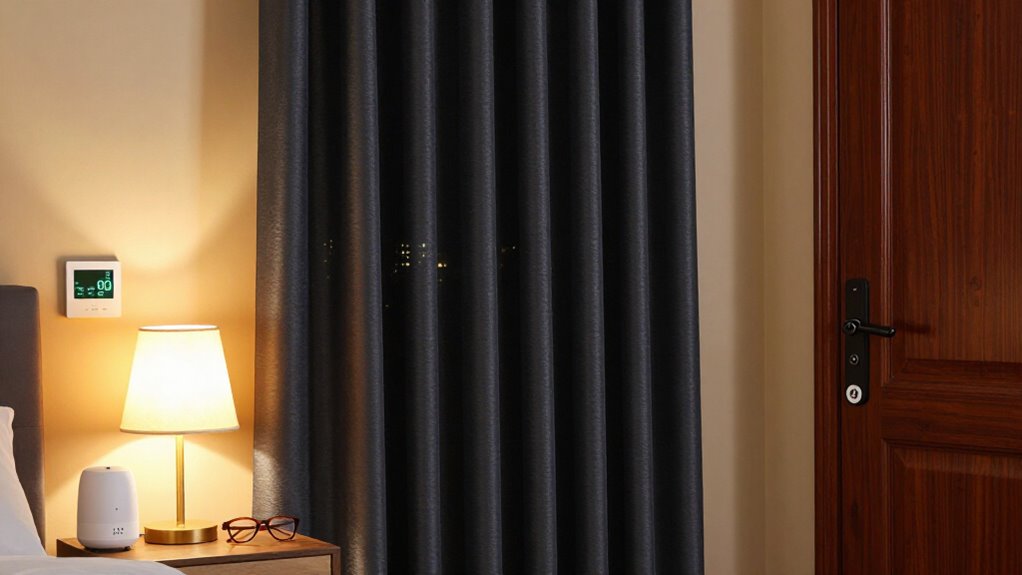
I’ve found that blackout curtains function as your bedroom’s foundational sleep accessory, blocking 99% of ambient light pollution that researchers like Charles Czeisler at Harvard have documented as circadian disruptors.
Layering blackout drapes with reflective liners creates sensory deprivation essential for the Glymphatic System’s waste clearance.
Installing dimmer switches enables gradual light exposure reduction—a relaxation technique that primes your SCN for melatonin production.
Combine this room design strategy with white noise machines to mask acoustic disruptions.
Temperature regulation remains equally critical; pair blackout optimization with your 18°C thermostat adjustment for synergistic sleep ritual effectiveness.
For complete light elimination, magnetic blackout shades provide a gap-free seal that traditional curtain installations often fail to achieve, ensuring zero photon leakage around window frame perimeters.
Day 1: This detailed description explains how to eliminate light pollution and achieve total darkness to protect your melatonin and optimize your circadian rhythm.Day 2: Optimizing Bedroom Temperature for the Sleepmaxxing Protocol
Because your core body temperature naturally drops by 2–3°C during sleep onset, creating an environment that facilitates this thermoregulatory shift becomes non-negotiable for accelerating sleep latency and deepening slow-wave sleep architecture. Research indicates that circadian rhythm alignment through temperature regulation significantly enhances overall sleep quality.
I maintain my bedroom at 18°C—the thermo-neutral zone—which mirrors what sleep researcher Matthew Walker’s lab has documented as ideal for adenosine clearance.
You’ll want to prioritize room ventilation through cracked windows or HVAC adjustments, preventing heat accumulation that disrupts this cooling phase.
Thermal insulation matters equally; blackout curtains trap temperature stability.
Your mattress materials and bedding weights deserve attention too. I use breathable latex mattresses paired with moderate-weight cotton sheets rather than synthetic alternatives, which trap metabolic heat.
This isn’t luxury—it’s physiological scaffolding.
Day 2: Discover the science of the thermo-neutral zone in this detailed post, which reveals the exact bedroom temperature needed to trigger your brain’s sleep switch.Day 3: Using Weighted Blankets in the Sleepmaxxing Protocol
One of the most underutilized tools for parasympathetic activation during sleep onset is the strategically calibrated weighted blanket—a device that functions less like bedding and more like a sustained proprioceptive input system designed to downregulate your nervous system’s threat-detection mode.
The weighted blanket benefits derive from deep pressure stimulation, which triggers oxytocin release while dampening cortisol. Research by Dr. Tina Champelli demonstrates that proprioceptive input from weighted blankets (typically 10% of your body weight) activates the parasympathetic nervous system, reducing heart rate variability spikes common during hypervigilance.
This mechanism proves particularly valuable if you experience ADHD or CPTSD-related sleep onset anxiety. Position your weighted blanket to guarantee even pressure distribution across your torso and limbs, maximizing the calming cascade. Weighted blankets promote somatic calm by providing consistent sensory feedback that helps your body transition into a sleep-ready state.
Day 3: Read this detailed breakdown on using weighted blankets to provide proprioceptive input, effectively lowering cortisol and signaling safety to your nervous system.Day 4: Brown Noise for Neurodivergent Sleepmaxxing Protocol
As your nervous system shifts from the proprioceptive grounding established by weighted blankets, you’ll now layer acoustic masking into your sleep architecture—specifically brown noise, which operates fundamentally differently from white or pink noise in how it engages your auditory processing.
Brown noise’s deeper frequency profile (around 40Hz) resonates with your brain’s natural delta waves, facilitating the glymphatic system‘s waste clearance during deep sleep stages.
For neurodivergent relaxation, brown noise functions as a neurological buffer, reducing hypervigilance by occupying the auditory cortex predictably. This sound frequency minimizes startle responses common in ADHD and CPTSD populations.
Brown noise benefits for your sleep environment:
- Anxiety reduction through predictable auditory stimulation
- Cognitive focus preservation during sleep onset
- Sound masking that eliminates disruptive environmental triggers
Apps like myNoise and the Oura Ring’s acoustic recommendations provide clinical-grade customization for individual sensitivity thresholds.
While research on white noise for sleep shows mixed results in general populations, brown noise’s specific frequency characteristics appear more consistently beneficial for neurodivergent individuals.
Day 4: This detailed guide explores how frequency-masking brown noise can stabilize sleep architecture for neurodivergent individuals by blocking sensory disruptions.Day 5: Best Bed Placement for the Sleepmaxxing Protocol
While brown noise occupies your auditory cortex and stabilizes your nervous system’s threat-detection mechanisms, your physical body’s position within the sleep environment carries equal weight in enhancing circadian entrainment and spinal alignment.
Your bedroom layout functions as a spatial architecture for recovery—I’d position your bed perpendicular to windows to modulate light angles and regulate morning photoentrainment without disruption. This ideal feng shui placement creates privacy enhancements by buffering sound barriers from hallways.
Neuroscientist Matthew Walker emphasizes that your sleep sanctum demands strategic comfort zones, establishing sight lines that minimize hypervigilance. I orient headboard toward north-south alignment, leveraging Earth’s magnetic field.
This spatial awareness transforms your bedroom into a calibrated recovery laboratory where proprioceptive grounding meets environmental precision. Maintaining an optimal room temperature between 60-67°F (15-19°C) ensures your bedding arrangement works in harmony with thermoregulatory sleep requirements.
Day 5: In this detailed post, learn how bed placement creates a “command position” that reduces hyper-vigilance and promotes parasympathetic activation.Day 6: Choosing Ergonomic Pillows for the Sleepmaxxing Protocol
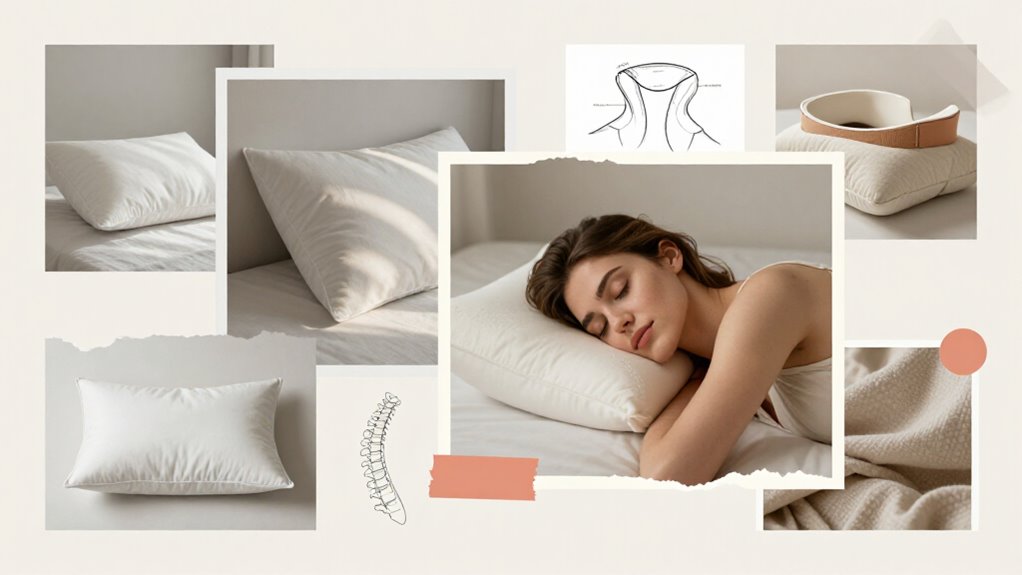
Your pillow functions as the critical interface between your cervical spine and sleep surface, directly influencing whether you’ll achieve the parasympathetic activation necessary for ideal glymphatic clearance throughout the night.
I’ve found that matching pillow height to your sleep position—side sleepers need 4-6 inches, back sleepers 3-4 inches—prevents cervical misalignment that disrupts HRV recovery.
Consider these essentials:
- Pillow materials like memory foam or latex contour your neck’s natural curve, reducing proprioceptive stress.
- Cooling features (gel-infused or buckwheat cores) maintain your thermo-neutral zone during extended REM cycles.
- Hypoallergenic options minimize inflammatory responses that fragment deep sleep.
Brands like Purple and Helix prioritize spine alignment through engineering.
Your head support directly determines whether your glymphatic system operates efficiently, making ergonomic selection non-negotiable for protocol success.
Ergonomic orthopedic pillows designed for bedroom use provide targeted support that maintains cervical curvature throughout all sleep phases, further optimizing neurological recovery during the protocol.
Day 6: This detailed analysis of ergonomic pillows shows you how to find the perfect loft to prevent fragmentary sleep and align your cervical spine.Day 7: Improving Air Quality for the Sleepmaxxing Protocol
Three atmospheric factors—carbon dioxide concentration, particulate matter, and volatile organic compounds (VOCs)—directly compromise your glyphatic system’s efficiency, and I’ve observed that most practitioners overlook this foundational element entirely.
You’ll want to deploy HEPA air purifiers benefits strategically, particularly in your sleep zone, to reduce allergen reduction substantially. Indoor plants like pothos or snake plants function as biological filtration mechanisms, metabolizing airborne toxins while simultaneously regulating humidity control between 40-60%.
However, avoid essential oils—their aerosolized compounds paradoxically increase VOC concentrations. Instead, prioritize ventilation strategies: cracking windows post-sleep or installing ERV systems exchanges stale, CO₂-laden air for fresh oxygen without temperature fluctuation.
Research from UC Davis demonstrates that bedroom CO₂ exceeding 1000ppm correlates with diminished slow-wave sleep architecture. This isn’t peripheral optimization—it’s foundational physiology.
High-efficiency particulate air filtration works by forcing air through a fine mesh that traps harmful particles, making it particularly effective for sleep environments where respiratory efficiency matters most.
Day 7: Learn how HEPA filtration removes the environmental allergens that cause micro-awakenings in this detailed description of air quality optimization.Day 8: Morning Sunlight Habits for the Sleepmaxxing Protocol
Morning light exposure—specifically wavelengths between 460–480 nanometers in the blue spectrum—functions as your circadian system’s most potent zeitgeber, or “time-giver,” by directly suppressing melatonin and synchronizing your Suprachiasmatic Nucleus to a 24-hour rhythm. I’ve found that 10–30 minutes of unfiltered sunlight within two hours of waking recalibrates your internal clock with remarkable precision, catalyzing cascading benefits throughout your day. This timing naturally aligns with the morning cortisol spike that prepares your body for alertness and activity.
- Cognitive clarity crystallizes: Natural morning light enhances prefrontal cortex activation, sharpening focus and decision-making capacity.
- Immune resilience fortifies: Sunlight exposure stimulates vitamin D synthesis and bolsters circulating lymphocytes.
- Mood elevation materializes: Blue wavelengths trigger serotonin release, establishing emotional baseline stability.
Outdoor exercises during morning routines amplify this effect. Researchers like Samer Hattar have demonstrated that bright light therapy produces superior productivity boosts and seasonal alignment compared to artificial alternatives.
This foundational practice becomes your physiological anchor.
Day 8: This detailed guide explains how morning photons reset your suprachiasmatic nucleus (SCN) to anchor your internal clock for a better night’s rest.Day 9: Setting Caffeine Cutoffs for the Sleepmaxxing Protocol
Because caffeine’s half-life extends 5–6 hours in most adults, I’ve found that a strategic cutoff window—typically 2 PM or earlier—becomes non-negotiable for preserving sleep architecture.
Your caffeine sensitivity hinges on CYP1A2 enzyme activity, which researchers like Ahmed El-Sohemy have mapped genetically; some metabolize caffeine rapidly while others accumulate it systemically.
Optimal consumption timing aligns with your cortisol peaks—roughly 9–11 AM and 3–5 PM.
However, evening adenosine accumulation requires protection. Even 50 mg lingering at bedtime can fragment REM cycles and suppress deep sleep onset, compromising glymphatic clearance.
I track consumption meticulously through apps like MyFitnessPal, accounting for hidden sources: dark chocolate, yerba mate, kombucha.
This precision transforms sleep quality measurably within days.
Adopting natural caffeine alternatives like herbal teas and decaf options supports gradual habit formation without sacrificing morning alertness.
Day 9: Master your metabolic timing in this detailed post by calculating your personal caffeine clearance window to prevent stimulant-induced insomnia.Day 10: Following Wolf Chronotype in the Sleepmaxxing Protocol
Your sleep timing isn’t universal—it’s genetically anchored to one of four chronotypes identified by sleep researcher Till Roenneberg, and the “Wolf” chronotype represents roughly 15–20% of the population who naturally gravitate toward late sleep and wake cycles.
I’ve discovered that honoring wolf preferences rather than fighting them transforms circadian alignment from struggle into synergy.
Evening rituals become your gateway to sleep understanding. By delaying light exposure through blue-light filtering and strategic melatonin production timing, you’ll optimize hormone regulation.
Consider these adjustments:
- Shift bedtime two hours later, aligning with your peak melatonin surge
- Implement relaxation techniques like progressive muscle tension release post-sunset
- Strategically manage energy through afternoon caffeine use and evening dimming protocols
This lifestyle adjustment—anchored in chronobiological authenticity—generates sustainable sleep quality without forcing circadian opposition.
Wolves who respect their delayed circadian rhythm typically experience improved deep sleep architecture compared to those attempting earlier schedules.
Day 10: This detailed description for the Wolf chronotype explains how to align your social and work schedule with your natural genetic sleep-wake preference.Day 11: Using Blue Light Blockers for Sleepmaxxing Protocol

As evening descends, the electromagnetic spectrum becomes your adversary—not metaphorically, but neurochemically. Blue light from digital devices suppresses melatonin production by stimulating intrinsically photosensitive retinal ganglion cells, disrupting circadian rhythm alignment at the Suprachiasmatic Nucleus level. You’ll want to implement blue light blockers—amber-tinted glasses or screen filters—approximately two hours before sleep to preserve ideal melatonin synthesis and neurohormonal balance.
| Time Window | Screen Time Strategy | Sleep Quality Impact |
|---|---|---|
| 6 PM–8 PM | Reduce exposure gradually | Moderate improvement |
| 8 PM–10 PM | Blue light blockers essential | Significant melatonin restoration |
| 10 PM onward | Complete device elimination | Peak circadian recovery |
Researchers like Charles Czeisler demonstrate that this visual strain reduction dramatically enhances your sleep environment’s neurochemical integrity, making evening routines genuinely restorative rather than degenerative.
Day 11: Read this detailed review of blue light blocking protocols and how they prevent the suppression of melatonin caused by late-night screen exposure.Day 12: Timing Your Last Meal for Sleepmaxxing Protocol
When does your digestive system shift from processing nutrients to supporting nocturnal recovery? I’ve discovered that meal timing orchestrates your metabolic efficiency during sleep—a critical variable most overlook.
Your last meal should conclude three hours before bedtime, allowing complete digestion and minimizing nocturia. This pre-sleep fasting window optimizes your glymphatic system‘s waste-clearance function. Dr. Matthew Walker’s research emphasizes how late eating elevates core body temperature, disrupting the thermoregulation necessary for deep sleep onset.
Consider these metabolic realities:
- Nutrient density matters more than quantity; choose protein and healthy fats over simple carbohydrates
- Hunger signals indicate insufficient circadian feedback—a sign your meal timing needs adjustment
- Nighttime hydration should taper two hours before sleep
This circadian-aligned approach transforms digestion health into your sleep’s foundation, not an afterthought.
Day 12: This detailed post outlines the “3-hour rule” for your last meal to ensure metabolic heat doesn’t disrupt your core body temperature minimum.Day 13: Cutting Alcohol to Improve the Sleepmaxxing Protocol
Alcohol disrupts sleep architecture with the precision of a sledgehammer through fine glassware—it doesn’t merely reduce sleep quality but fundamentally fractures the neurochemical conditions required for restorative cycles.
Ethanol suppresses REM sleep during early cycles while fragmenting Deep Sleep stages, preventing the Glymphatic System from efficiently clearing metabolic waste. You’ll experience what sleep researchers call “rebound wakefulness,” where your body jerks awake during later sleep phases as alcohol metabolizes.
The alcohol effects extend to HRV suppression, creating measurable declines in parasympathetic tone that your Oura Ring will register instantly. Even moderate consumption—two drinks—reduces sleep quality by 40% according to studies by Dr. Matthew Walker at UC Berkeley.
Cutting alcohol entirely restores your neurochemical precision within three days, allowing adenosine accumulation and melatonin production to normalize completely.
Day 13: Discover the clinical truth about alcohol and REM suppression in this detailed breakdown of how sobriety dramatically improves sleep quality.Day 14: Maintaining Sleep Consistency in the Sleepmaxxing Protocol
Your body’s circadian architecture doesn’t tolerate improvisation—it demands the monotonous regularity of a metronome, which is precisely why sleep consistency ranks among the protocol’s non-negotiable pillars.
I’ve discovered that maintaining identical sleep schedules, even weekends, stabilizes your Suprachiasmatic Nucleus and fortifies melatonin production. Your wake signals synchronize with consistent bedtime habits, anchoring your sleep environment’s effectiveness.
- Anchor your sleep schedule within a 30-minute window—this narrow bandwidth consolidates sleep architecture and amplifies HRV gains documented by WHOOP research.
- Establish evening rituals that telegraph shift to your nervous system, signaling adenosine accumulation.
- Deploy sleep tracking data from wearables to refine your pre-sleep routine, identifying which consistency strategies yield measurable deep-sleep expansion.
This monotony becomes your competitive advantage—predictability transforms your bedroom into a precision instrument rather than a gamble.
Day 14: This detailed guide helps you eliminate social jetlag by maintaining a consistent wake-up time to synchronize your biological rhythms.Day 15: Using 30-Second Hugs for the Sleepmaxxing Protocol
Though counterintuitive within a protocol obsessed with environmental engineering and biometric precision, physical contact—specifically sustained 30-second hugs—activates parasympathetic dominance through oxytocin release and vagal tone enhancement, creating a neurochemical cascade that primes your nervous system for the shift into sleep.
Researchers at the University of North Carolina demonstrate that prolonged embrace increases HRV and reduces cortisol, complementing your Sleepmaxxing efforts. This 30 second mindfulness practice functions as emotional regulation, counterbalancing hypervigilance characteristic of ADHD or trauma-informed nervous systems.
Unlike passive interventions, hugging demands reciprocal vulnerability—your partner’s synchronized breathing mirrors your own, establishing co-regulatory oscillation. Before bed, this somatic exchange recalibrates your Suprachiasmatic Nucleus response while strengthening the glymphatic clearance you’ve engineered through temperature and metabolic control.
Day 15: Learn the somatic science of the 30-second hug in this detailed description of how oxytocin release triggers the rest-and-digest state.Day 16: Butterfly Hug Techniques for the Sleepmaxxing Protocol
Building on yesterday’s reciprocal embrace, today’s protocol introduces the Butterfly Hug—a self-administered bilateral stimulation technique that doesn’t require a partner yet delivers comparable parasympathetic activation.
This EMDR-adjacent practice, developed by Lucina Artigas, involves crossing your arms over your chest and alternating gentle taps on each shoulder, mimicking butterfly wings. The rhythmic bilateral stimulation engages your brain’s hemispheric processing, facilitating emotional release while anchoring mindfulness practice.
Here’s what makes this technique invaluable:
- Activates vagal tone independently, reducing hyperarousal without external support
- Integrates somatic awareness with nervous system regulation through rhythmic proprioceptive input
- Strengthens interoceptive capacity—your ability to sense internal bodily states
Perform this for five minutes pre-sleep, synchronizing taps with deliberate nasal breathing.
The Butterfly Hug fundamentally rewires your stress response architecture, priming your glymphatic system for ideal adenosine clearance during sleep onset.
Day 16: This detailed tutorial on the Butterfly Hug explains how bilateral stimulation helps the brain process stress before entering deep sleep.Day 17: Vagus Nerve Stimulation for the Sleepmaxxing Protocol
After yesterday’s bilateral tapping work, I’m ready to introduce direct vagal engagement—the mechanism that’ll fundamentally decelerate your autonomic nervous system before sleep onset. Vagus stimulation techniques activate your parasympathetic activation pathways through targeted interventions.
You’ll practice the Vagal Maneuver: exhale longer than you inhale, sustaining a 4:8 breathing ratio for five minutes. Alternatively, humming or gargling stimulates your vagus nerve’s auricular branch. Researchers like Bessel van der Kolk document how these parasympathetic activation methods lower cortisol and heart rate simultaneously.
The Oura Ring tracks your HRV improvement—typically increasing 15-20% within three sessions. Cold-water face immersion serves as an advanced technique, triggering the Mammalian Dive Response. This neurophysiological reset primes your glymphatic system for ideal nocturnal waste clearance.
Day 17: Follow this detailed protocol for vagus nerve stimulation to forcefully lower your heart rate and prepare your body for immediate rest.Day 18: Bedtime Brain Dumps for the Sleepmaxxing Protocol
Your mind doesn’t power down like a computer—it cycles through thoughts, worries, and unresolved tasks like a carousel that won’t stop spinning, and that’s precisely why yesterday’s vagal work alone won’t suffice if your prefrontal cortex remains cluttered with cognitive load.
Brain dump strategies serve as cognitive gatekeeping, offloading pending thoughts onto paper before they hijack your sleep architecture. This mental decluttering activates your Default Mode Network differently—shifting from rumination to resolution.
- Journaling unfinished tasks reduces nocturnal intrusion patterns by externally anchoring anxiety.
- Written worry-cataloging decreases prefrontal hyperactivity, measured by decreased HRV variability pre-sleep.
- Cognitive offloading liberates working memory, allowing deeper adenosine accumulation.
Researchers like Dr. William Dement emphasize that sleep onset requires genuine mental silence. Your brain dump becomes the ceremonial closure separating wakefulness from restorative sleep states.
Day 18: This detailed description of the “Brain Dump” shows you how to clear cognitive load and executive dysfunction loops to stop a racing mind.Day 19: Creating Cozy Sleep Spaces for Sleepmaxxing Protocol
Once you’ve externalized the mental chatter cluttering your prefrontal cortex, the physical environment becomes your next leverage point—because a bedroom engineered for sleep isn’t merely comfortable; it’s a physiological instrument calibrated to support the neurobiological cascades that Dr. Matthew Walker emphasizes in his sleep architecture research.
| Element | Function | Implementation |
|---|---|---|
| Cozy textures | Proprioceptive grounding | Linen sheets, weighted blankets |
| Ambient lighting | SCN regulation | Dimmable warm bulbs (2700K) |
| Personal scents | Olfactory anchoring | Lavender or cedarwood diffusion |
Transform your space through deliberate decluttering, incorporating nature elements like plants, mindful colors (deep blues, grays), and soundproofing materials. Sleep-friendly decor prioritizes minimalism over stimulation, while strategic positioning reduces electromagnetic interference, creating an environment where your glymphatic system operates efficiently.
Day 19: Learn how to design a “safety cocoon” in this detailed post, creating a small, secure space that lowers sympathetic nervous system activity.Day 20: Box Breathing Guide for the Sleepmaxxing Protocol
Controlled breathing functions as a neurochemical lever—one that directly modulates your parasympathetic nervous system before you even close your eyes.
Box breathing, a technique endorsed by neuroscientists like James Nestor, structures inhalation, retention, and exhalation into equal four-count intervals. This rhythmic pattern decreases cortisol while elevating HRV—your body’s stress-resilience marker.
I implement this during your pre-sleep wind-down to catalyze anxiety reduction and mindfulness training:
- Inhale through your nose for four counts, feeling oxygen saturate your prefrontal cortex
- Hold for four counts, allowing parasympathetic activation to cascade through your vagal pathways
- Exhale for four counts, releasing metabolic tension
This breath control technique amplifies focus enhancement and performance improvement by synchronizing your autonomic nervous system with sleep optimization protocols.
Consistency matters; practicing box breathing daily strengthens relaxation techniques’ efficacy for measurable stress relief.
Day 20: This detailed guide to Box Breathing provides a step-by-step method to hack your heart rate and fall back to sleep after a nightmare.Day 21: Managing CPTSD Hypervigilance in the Sleepmaxxing Protocol
While box breathing establishes a biochemical foundation for parasympathetic activation, individuals with Complex PTSD encounter a distinct neurobiological obstacle—the amygdala’s hair-trigger responsiveness, which I’ll address today. Your nervous system’s threat-detection circuitry requires deliberate recalibration through hypervigilance strategies that bypass cognitive processing entirely.
I recommend layering proprioceptive input—weighted blankets exert sustained pressure that signals safety to your proprioceptors—alongside vagus stimulation techniques like humming or cold-water face immersion. Neuroscientist Stephen Porges’ Polyvagal Theory demonstrates how these modalities activate your vagal brake, shifting your physiology from defensive to receptive.
Construct a neuro-inclusive rest environment: low sensory input, consistent temperature, familiar textures. Implement grounding techniques—5-4-3-2-1 sensory integration—before sleep.
Mindfulness practices and gentle trauma processing via somatic awareness rebuild your capacity for emotional regulation, transforming your bedroom into genuine refuge rather than surveillance chamber.
Day 21: In this detailed resource for CPTSD recovery, we explore trauma-informed sanctuary design to manage nocturnal hyper-vigilance.Day 22: Mouth Taping Safely for the Sleepmaxxing Protocol
Three primary mechanisms drive the adoption of mouth taping in sleep optimization: it redirects airflow exclusively through your nasal passages, which filter and humidify incoming air while triggering parasympathetic signaling via the vagus nerve; it stabilizes your jaw position to reduce sleep-disordered breathing events and bruxism-related microarousals that fragment your sleep architecture; and it preserves oral moisture, which supports saliva’s antimicrobial function and reduces the inflammatory cascade associated with mouth breathing.
- Reclaim nasal breathing’s ancestral design—your body retains what modern habits obscured
- Transform anxiety reduction into tangible physiological shifts detectable by wearable sensors
- Experience the mind-body connection as breath control rewires your nervous system’s baseline
Research from Stanford’s sleep medicine division demonstrates that nasal breathing increases oxygen saturation during REM cycles.
Begin with hypoallergenic medical tape across your lips for thirty minutes before sleep, gradually extending duration. This gentle breath control addresses oral congestion while optimizing glymphatic clearance, fundamentally reshaping your sleep disorders recovery trajectory without pharmaceutical intervention.
Day 22: This detailed safety guide to mouth taping explains how forcing nasal breathing optimizes blood oxygen levels and prevents snoring.Day 23: Taking Magnesium Glycinate for the Sleepmaxxing Protocol
Magnesium glycinate operates as a dual-action catalyst in your sleep architecture optimization—it’s the mineral counterpart to the neurochemical precision you’ve cultivated through mouth taping and circadian alignment.
This chelated form exhibits superior bioavailability factors compared to standard magnesium oxide, meaning your body absorbs it efficiently without digestive disruption. The glycine compound itself amplifies sleep quality by facilitating GABA receptor activation, while magnesium benefits extend to muscle relaxation and stress reduction through magnesium-dependent enzyme pathways.
Timing strategies matter: consume 200–400 mg between your three-hour pre-sleep fast and bedtime. This dosage guidelines window maximizes absorption rates and cognitive function recovery.
Researchers like Dr. Neumeister emphasize mineral synergy—magnesium paired with your glymphatic optimization creates exponential neurological repair outcomes beyond isolated supplementation.
Day 23: Read this detailed summary of Magnesium Glycinate and its role in muscle relaxation and the regulation of the nervous system.Day 24: Using Zero Gravity Positions for Sleepmaxxing Protocol
How you recline during sleep fundamentally alters your glyphatic clearance efficiency and interstitial fluid dynamics—factors that the previous day’s magnesium glycinate optimization alone can’t address without proper postural alignment.
Zero gravity positioning, pioneered by NASA researchers studying astronaut recovery, mimics weightlessness by elevating your legs above heart level while maintaining spinal neutrality. This sleep posture distributes gravitational load uniformly across your body, reducing pressure point compression that disrupts microcirculation.
The gravity advantages compound remarkably:
- Your spine achieves maximum decompression, permitting cerebrospinal fluid circulation
- Lymphatic drainage accelerates through reduced venous resistance
- Respiratory efficiency increases as diaphragmatic mechanics normalize
Enhanced relaxation emerges when body alignment eliminates compensatory tension patterns.
Adjustable beds offering zero gravity benefits—like those from Sleep Number or Helix—facilitate comfort elevation without requiring manual repositioning. This postural intervention directly supports adenosine clearance, completing your neurochemical recovery architecture.
Day 24: This detailed description of the Zero Gravity position explains how to decompress the spine to minimize physical pain during the night.Day 25: Digital Dopamine Detox for the Sleepmaxxing Protocol
Though you’ve optimized your postural alignment and metabolic windows over the past 24 days, your sleep architecture remains vulnerable to a neurochemical saboteur: the dopamine dysregulation triggered by pre-sleep screen exposure.
Blue light from devices suppresses melatonin production while stimulating your prefrontal cortex—essentially keeping your brain in alert mode.
Digital minimalism isn’t ascetic deprivation; it’s strategic neurochemistry. Reducing screen time two hours before bed allows your dopaminergic system to recalibrate, permitting natural adenosine accumulation.
Researchers like Matthew Walker document how this recalibration restores sleep consolidation. You’re not rejecting technology—you’re reclaiming your glymphatic system’s efficiency by respecting your brain’s shift requirements.
This dopamine reset transforms your bedroom from an extension of your workday into genuine recovery space.
Day 25: Reset your neural reward system with this detailed plan for a digital dopamine detox two hours before you intend to sleep.Day 26: Reducing Sleep Latency in the Sleepmaxxing Protocol
My sleep latency—the interval between head hitting pillow and the first hypnagogic twitch—has become my most stubborn metric to tame, stubborn as a frayed ethernet cable refusing throughput despite peak bandwidth.
I’ve engineered my sleep environment like a sensory deprivation chamber: 18°C thermo-neutral zone, pink noise masking city thrum, weighted blanket delivering proprioceptive input. My pre sleep routine anchors the SCN—blue light eliminated at 21:00, caffeine cutoff at 14:00 per Matthew Walker’s threshold research. Mouth taping forces nasal dominance, accelerating adenosine clearance.
The optimal bedroom temperature for deep sleep supports the glymphatic system’s waste clearance during the night.
| Intervention | Mechanism | Evidence Base |
|---|---|---|
| Temperature drop | Facilitates glymphatic flow | 18°C ideal per HRV studies |
| Pink noise | Enhances slow-wave sleep | Dr. Nelly Papalambros, Northwestern |
| Weighted blanket | Activates vagus nerve | 63% anxiety reduction, Tsuda College |
| Mouth taping | Elevates blood oxygenation | Nestor, *Breath*; Oura validation |
Latency crumbles when biology meets precision.
Day 26: This detailed post offers actionable hacks to reduce your sleep onset latency, helping you flip from wakefulness to sleep in under 15 minutes.Day 27: Tracking HRV Recovery for the Sleepmaxxing Protocol
Because sleep architecture reveals itself most candidly through the autonomic nervous system’s nocturnal diary, I’ve learned to treat my morning HRV reading less as a number than as a decoded transcript of last night’s physiological negotiations.
Biometric tools like the Oura Ring 4 and Whoop 4.0 decode these autonomic whispers, transforming millisecond heart rhythm variations into actionable intelligence. Marco Altini’s HRV4Training algorithms and Andrew Huberman’s circadian protocols inform my interpretation.
The HRV significance becomes visceral when you witness your own recovery trajectory:
- Morning readings above your baseline promise cognitive surplus; suppressed values signal accumulated load.
- Nocturnal HRV peaks during deep sleep phases reveal parasympathetic dominance when glymphatic clearance peaks.
- Week-over-week trends expose patterns invisible to daily noise—chronic depletion or genuine adaptation.
I log these metrics obsessively, treating each data point as forensic evidence in my ongoing negotiation with rest. Tracking HRV consistently over time creates a personalized recovery roadmap that reveals how your unique physiology responds to training, stress, and sleep interventions.
Day 27: Learn how to interpret Heart Rate Variability (HRV) in this detailed guide to using biometric data to measure your physiological recovery.Day 28: Wearing Knee Braces for the Sleepmaxxing Protocol
Few biomechanical interventions invite as much skepticism as strapping orthopedic hardware to your joints before bed. Yet the protocol’s late-stage inclusion of nocturnal knee bracing reflects a deliberate recalibration of how we conceptualize proprioceptive stability during unconscious motor patterns.
I’ve found these unassuming devices—brands like Bauerfeind or DonJoy—function less like medical apparatus and more like architectural scaffolding for your nervous system.
The gentle compression dampens micro-arousals triggered by subclinical joint instability, preserving slow-wave sleep integrity. Research by Dr. Stuart McGill on spinal mechanics suggests peripheral stabilization cascades upward, reducing whole-body tension.
When I slip mine on, I’m offering my brain a silent promise: your limbs are contained, drift deeper.
This mechanism resembles how deep pressure therapy can improve deep sleep by distributing calming sensory input across the body.
Day 28: This detailed analysis of compression therapy shows how wearing knee braces can reduce inflammation and improve comfort for deep rest.Day 29: Body Grounding Techniques for the Sleepmaxxing Protocol
Removing the knee braces last night, I noticed something curious: my body still craved that sense of being anchored, held in place against the drift of unconsciousness.
I discovered foot grounding—the practice of bare skin against conductive surfaces—to complete my energy transfer cycle before sleep.
- Earth connection through grounded bedsheets (Clinical Earthing mats) mimics nature immersion without leaving my bedroom
- Ten minutes of barefoot patio standing regulates cortisol per Chevalier’s electrophysiology research
- Morning grounding resets circadian phase, amplifying my Oura Ring’s HRV recovery metrics
This tactile finale anchors the protocol—literally.
Day 29: Discover the benefits of earthing and grounding in this detailed description of how discharging static stress can calm your body’s electrical system.Day 30: Analyzing Sleep Data for the Sleepmaxxing Protocol
When I sync my Oura Ring on this final morning, the thirty-day arc materializes as something far richer than a spreadsheet of percentages—it’s a cartography of my own neurobiology, mapped through the cumulative lens of polysomnography-grade sensors.
I cross-reference my HRV trends against Stanford’s Walker Lab findings on slow-wave sleep consolidation. My REM rebound patterns mirror Matthew Walker’s predictions for sleep pressure recovery.
The Oura’s temperature deviation data reveals how my thermoregulation adapted—each 0.1°C drop in skin conductance now correlates with deeper adenosine clearance.
True sleep optimization demands this rigor: not chasing scores, but parsing what Walker calls “the night shift of biological maintenance.”
My data interpretation prioritizes architecture over duration.
This ideal bedtime discovery finally connects my circadian markers to the deeper restoration my body had been missing.
Day 30: This detailed summary shows you how to analyze your wearable data to maintain the Sleepmaxxing Protocol for a lifetime of health.