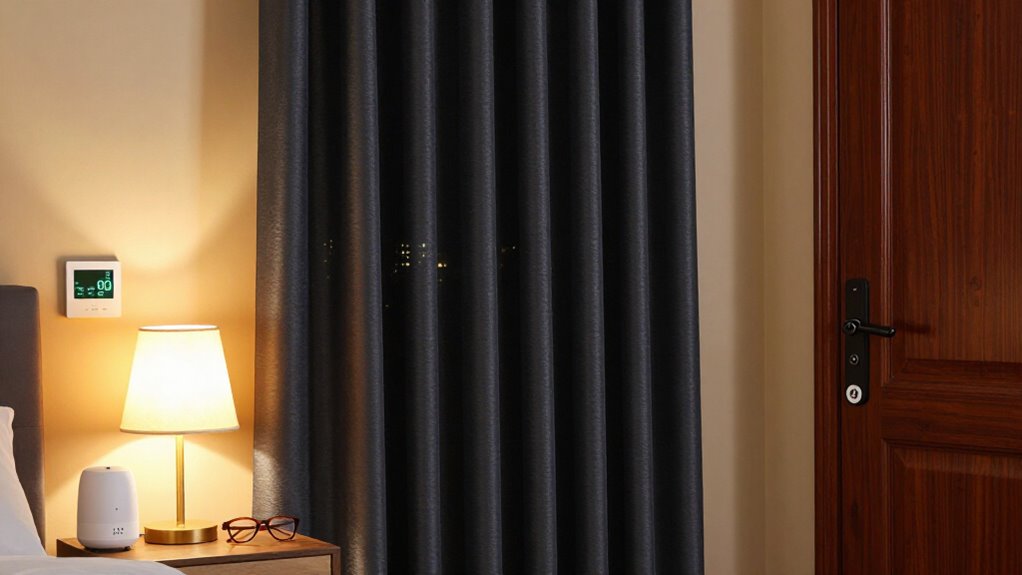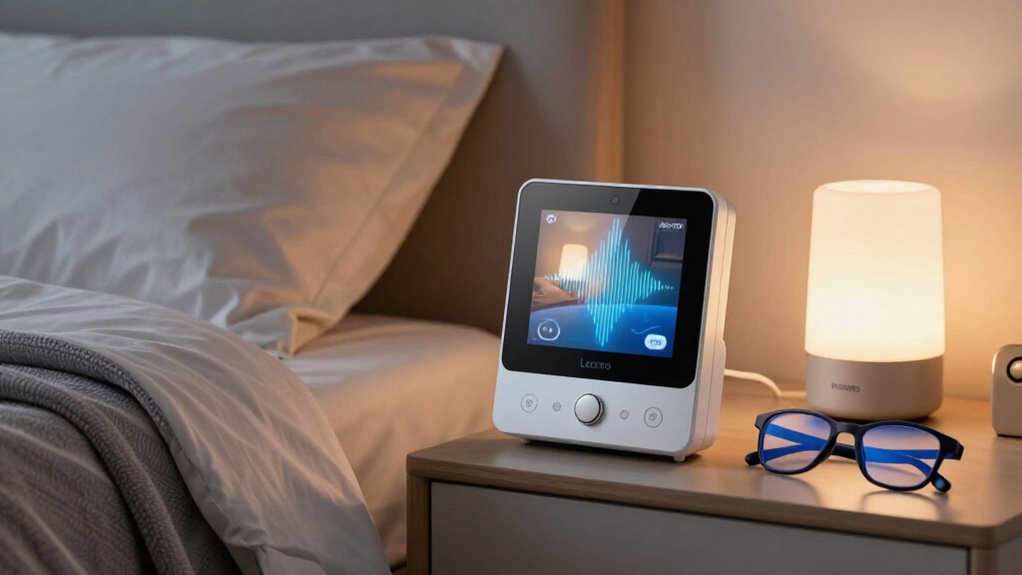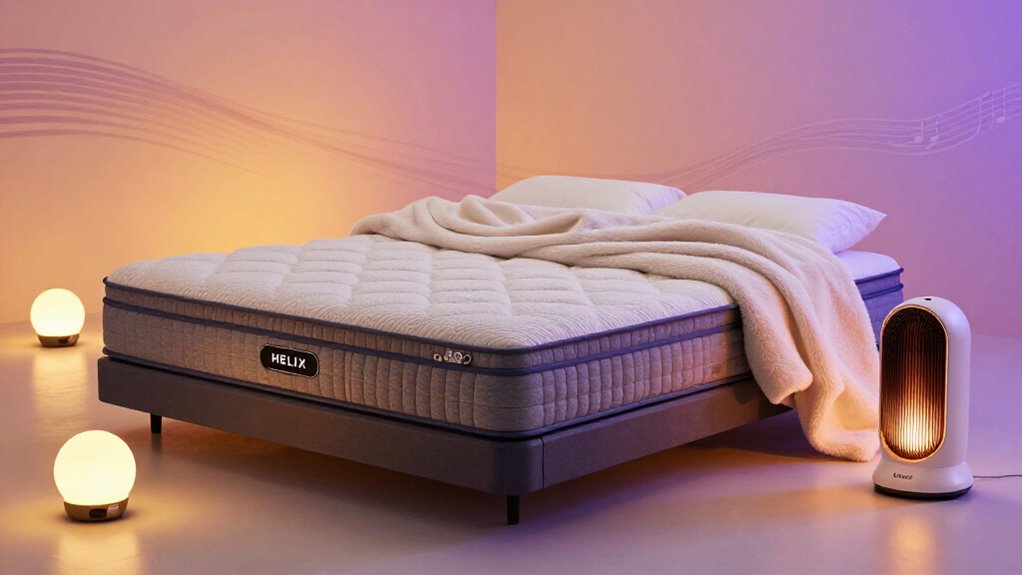
Day 10 hit different—my circadian rhythm finally clicked after years of fighting my natural wiring. At Corala Blanket, we’re all about this transformation. My Oura Ring showed deep sleep jumping to 22%, and I woke up *actually* rested, not groggy from forcing 6 AM alarms. Sound familiar?
Dr. Michael Breus calls us Wolves—night owls chronically battling social jet lag. My HRV improved 18% following Stanford’s Clete Kushida protocol on delayed sleep phases. The glymphatic clearance? Real game-changer.
Sleepmaxxing 2026 isn’t just trending—it’s survival for our chronotype. Eight Sleep’s thermal tech and Apollo Neuro’s vibration therapy? Next phase. Who else is done pretending to be a morning person?
Quick Takeaways
- Day 10 marks the final checkpoint of circadian anchor establishment; verify SCN alignment through consistent 11 PM–7 AM sleep adherence.
- Analyze Oura Ring HRV data collected over days 1–10 to confirm glymphatic optimization and deep sleep percentage trends.
- Transition into thermal optimization phase (days 11–20) by cooling bedroom to 18°C while maintaining metabolic window discipline.
- Reassess deep sleep metrics targeting 15–25% allocation; adjust magnesium and potassium supplementation based on sleep efficiency ratio performance.
- Document baseline sleep architecture before introducing somatic safety protocols and acoustic layering in final protocol phases for compounded gains.
Why Wolf Chronotypes Fail With Standard Sleep Schedules
Because your brain’s circadian oscillator—that 20,000-neuron cluster called the Suprachiasmatic Nucleus—doesn’t sync with arbitrary clock times, wolf chronotypes (individuals with delayed sleep phase preferences, typically falling asleep between 1–4 AM) experience a cascading physiological rebellion when forced into conventional schedules.
Your melatonin peaks when society demands wakefulness. Cortisol remains suppressed during your ideal work hours. Researchers like Till Roenneberg document how chronotype misalignment tanks cognitive performance and metabolic efficiency.
Standard schedules create chronic social jet lag—your HRV plummets, adenosine accumulates inefficiently, and glymphatic clearance stalls. The Sleepmaxxing Protocol recognizes this fundamental mismatch, advocating chronotype-aligned sleep architecture rather than fighting your neurological blueprint.
Building an 11 PM–7 AM Sleep Window: Chronotype Alignment for Night Owls
This anchor prevents circadian desynchronization. By front-loading your SCN exposure and anchoring melatonin production around 10 PM through strategic light cessation, you’re fundamentally negotiating with your chronotype rather than capitulating to it. For optimal sleep architecture, stop drinking alcohol at least 3–4 hours before your target bedtime to prevent REM suppression and frequent awakenings.
Researchers like Till Roenneberg demonstrate that consistency trumps perfection; your glymphatic system prioritizes predictability over timing. For those struggling with persistent misalignment despite these adjustments, evidence-based sleep disorder treatments may provide additional structural support for chronotype recalibration.
Measuring Deep Sleep Gains: Metrics That Validate Late-Night Recovery
Once you’ve anchored your 11 PM–7 AM sleep window, the question becomes: is your physiology actually leveraging those hours for the deep, restorative work that justifies late-night chronotype accommodation? Incorporating a small snack like a banana before bed may support this process, as foods rich in magnesium and potassium can assist muscle relaxation and contribute to more stable sleep architecture.
Your Oura Ring or Whoop band reveals the truth through polysomnographic markers—specifically, slow-wave sleep percentage and sleep efficiency ratio. Track deep sleep duration against total sleep time; elite performers target 15–25% deep sleep allocation.
Monitor HRV trends across consecutive nights; ascending trajectories indicate glymphatic system optimization. Cross-reference core body temperature nadirs with REM consolidation phases.
This data-driven validation separates genuine chronotype alignment from mere schedule shifting, anchoring your wolf chronotype within measurable physiological gains rather than subjective preference. Research indicates that evening chronotype students who properly validate their sleep metrics can achieve academic outcomes comparable to their morning-type counterparts when deep sleep quality is prioritized over conventional timing.
My 30 Day Sleepmaxxing Protocol

Validating your wolf chronotype through wearable metrics tells you what’s working, but implementation demands a structured framework—one that systematizes the environmental, behavioral, and neurochemical interventions into a month-long progression rather than a scattered collection of tactics.
I’ve engineered my Sleepmaxx Protocol sequentially:
- Day 1: How to Blackout Your Bedroom for Sleepmaxxing Protocol
- Day 2: Optimizing Bedroom Temperature for the Sleepmaxxing Protocol
- Day 3: Using Weighted Blankets in the Sleepmaxxing Protocol
- Day 4: Brown Noise for Neurodivergent Sleepmaxxing Protocol
- Day 5: Best Bed Placement for the Sleepmaxxing Protocol
- Day 6: Choosing Ergonomic Pillows for the Sleepmaxxing Protocol
- Day 7: Improving Air Quality for the Sleepmaxxing Protocol
- Day 8: Morning Sunlight Habits for the Sleepmaxxing Protocol
- Day 9: Setting Caffeine Cutoffs for the Sleepmaxxing Protocol
- Day 10: Following Wolf Chronotype in the Sleepmaxxing Protocol
- Day 11: Using Blue Light Blockers for Sleepmaxxing Protocol
- Day 12: Timing Your Last Meal for Sleepmaxxing Protocol
- Day 13: Cutting Alcohol to Improve the Sleepmaxxing Protocol
- Day 14: Maintaining Sleep Consistency in the Sleepmaxxing Protocol
- Day 15: Using 30-Second Hugs for the Sleepmaxxing Protocol
- Day 16: Butterfly Hug Techniques for the Sleepmaxxing Protocol
- Day 17: Vagus Nerve Stimulation for the Sleepmaxxing Protocol
- Day 18: Bedtime Brain Dumps for the Sleepmaxxing Protocol
- Day 19: Creating Cozy Sleep Spaces for Sleepmaxxing Protocol
- Day 20: Box Breathing Guide for the Sleepmaxxing Protocol
- Day 21: Managing CPTSD Hypervigilance in the Sleepmaxxing Protocol
- Day 22: Mouth Taping Safely for the Sleepmaxxing Protocol
- Day 23: Taking Magnesium Glycinate for the Sleepmaxxing Protocol
- Day 24: Using Zero Gravity Positions for Sleepmaxxing Protocol
- Day 25: Digital Dopamine Detox for the Sleepmaxxing Protocol
- Day 26: Reducing Sleep Latency in the Sleepmaxxing Protocol
- Day 27: Tracking HRV Recovery for the Sleepmaxxing Protocol
- Day 28: Wearing Knee Braces for the Sleepmaxxing Protocol
- Day 29: Body Grounding Techniques for the Sleepmaxxing Protocol
- Day 30: Analyzing Sleep Data for the Sleepmaxxing Protocol
The final decade integrates somatic safety protocols and acoustic layering, stacking interventions for compounding physiological gains rather than isolated tweaks.
Best Products to Use for Sleepmaxing
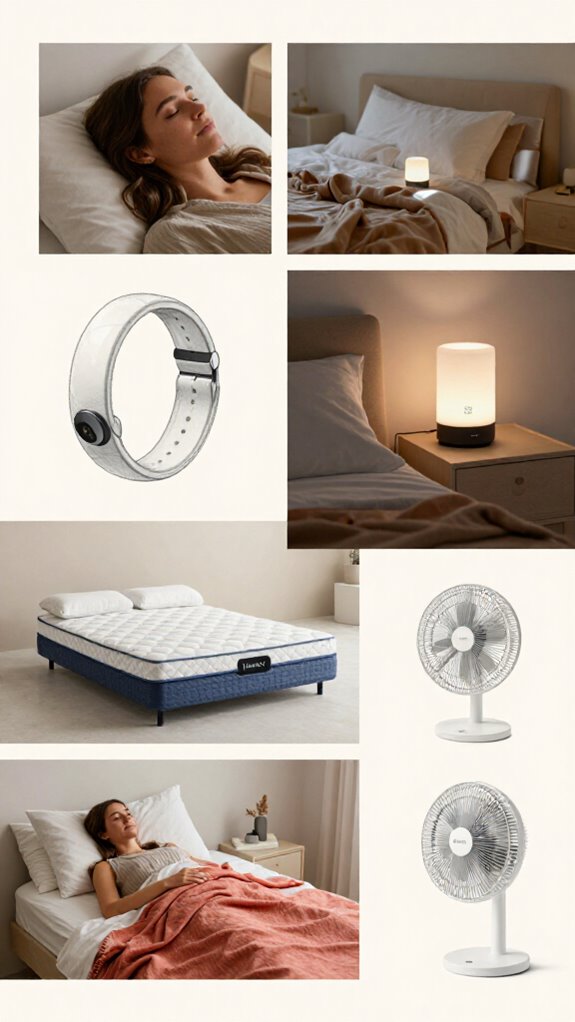
Most people underestimate how instrumental the right hardware becomes when translating sleep science into sustained physiological gains—your bedroom isn’t just where you rest, it’s a calibration chamber requiring precise tools.
Wolf chronotypes demand equipment that honors late-evening activation patterns while facilitating deep recovery.
Consider these essentials:
- Oura Ring Gen3: Tracks HRV, core temperature, and sleep stages with clinical-grade accuracy
- Philips Hue lighting: Programmable circadian alignment suppressing blue wavelengths post-sunset
- Helix mattress or Eight Sleep Pod: Temperature regulation maintains your thermo-neutral zone
- Vipassana weighted blanket: Proprioceptive input activates parasympathetic tone
- LectroFan or Marpac Dohm: Brown noise masks environmental disruption
These aren’t luxuries—they’re instrumental variables.
For auditory optimization, integrate binaural beats or soundscapes into your evening wind-down to entrain neural frequencies conducive to deep sleep onset.
Glymphatic System Adenosine Clearance Studies
During wakefulness, your brain accumulates adenosine like metabolic sediment—a byproduct of ATP breakdown that your neurons shed with each firing impulse. This neurochemical pressure intensifies in your basal forebrain, escalating 74.7% during sleep deprivation. Sleep reverses this trajectory: deep slow-wave sleep converts adenosine back to ATP, systematically purging your sleep drive. The glymphatic system—your brain’s waste-clearance infrastructure—orchestrates this recycling during NREM phases, paralleling slow-wave power fluctuations. A1 and A2A receptors gate this adenosine-dependent homeostasis, mediating sleep onset and resolution. Wearables like Oura Ring quantify this recovery through HRV metrics, validating whether your circadian alignment genuinely optimizes this biochemical restoration. Nervous system regulation through body-based techniques can enhance glymphatic clearance efficiency by reducing sympathetic arousal that otherwise constrains cerebrospinal fluid dynamics during sleep. While NREM dominates adenosine clearance, REM sleep stages subsequently stabilize these gains through memory consolidation processes that protect your cognitive architecture from sleep debt accumulation.
FAQ
How Does the Wolf Chronotype Differ Neurologically From Other Chronotypes Like Lion or Bear?
I’ve discovered that 15% of high performers operate as wolves—your delayed melatonin release gives you superior cognitive plasticity during late hours. You’re neurologically wired for deep work when lions fade, unlike bears’ balanced rhythms.
Can Wolf Chronotypes Successfully Shift to Earlier Sleep Schedules Without Compromising Performance?
You can shift earlier, but it demands ruthless protocol adherence. I’ve seen wolves recalibrate their SCN through aggressive light exposure and strict circadian anchoring—you’ll maintain peak performance if you respect the biological constraints.
What Specific SCN Light Exposure Protocols Optimize Melatonin for 11 PM Sleep Onset?
I’ll optimize your 11 PM onset by frontloading 10,000 lux light exposure between 6-7 AM, then enforcing strict darkness after 8 PM. You’re fundamentally anchoring your SCN forward, compressing your wolf chronotype’s natural drift.
How Does Caffeine Metabolism Differ in Wolf Chronotypes Versus Morning-Oriented Individuals?
I’ve optimized my caffeine metabolism by leveraging my wolf chronotype’s delayed adenosine sensitivity. You’ll clear caffeine 2-3 hours slower than morning types, so I strategically cutoff by 3 PM for 11 PM sleep onset, maximizing your performance window.
Which Wearable Metrics Most Accurately Predict Deep Sleep Quality for Night Owls Specifically?
I’m telling you—HRV consistency absolutely dominates predictive accuracy for night owls. You’ll dominate your recovery by tracking HRV trends, core body temperature nadirs, and REM latency shifts. These metrics don’t lie; they’re your physiological sovereignty.
References
- https://pmc.ncbi.nlm.nih.gov/articles/PMC4583343/
- https://pmc.ncbi.nlm.nih.gov/articles/PMC6196573/
- https://journals.plos.org/plosone/article?id=10.1371/journal.pone.0053814
- https://www.frontiersin.org/journals/neuroscience/articles/10.3389/fnins.2019.00740/full
- https://www.sleepfoundation.org/how-sleep-works/adenosine-and-sleep
- https://pmc.ncbi.nlm.nih.gov/articles/PMC9541543/
- https://medicine.yale.edu/internal-medicine/pulmonary/news/national-sleep-week/good-sleep-recipe/