Day 8 hit different when I finally stopped hitting snooze and stumbled outside at 7:15 AM, coffee in hand, squinting like a vampire. Three days later, my Oura Ring showed my HRV jumped 12 points—legit goosebumps. We at Corala Blanket live for this stuff, ya know? Dr. Andrew Huberman‘s research on SCN activation isn’t just hype; that morning light blast actually resets your cortisol spike. Pair it with a Hatch Restore alarm and you’re golden. Sleepmaxxing in 2026? It’s all about stacking these micro-wins. What’s your excuse for staying in bed?
Quick Takeaways
- Step outside within 30 minutes of waking to reset your internal clock and align your circadian rhythm.
- Engage in 10-30 minutes of direct sunlight exposure between 6 and 9 AM for optimal melatonin suppression.
- Combine morning sunlight with a routine of light aerobic activity to enhance energy and well-being.
- Utilize devices like the Oura Ring to monitor the effects of light exposure on your sleep patterns.
- Track and adjust morning sunlight habits to facilitate rapid adaptation to new time zones when traveling.
Why Morning Sunlight Matters in Sleep Optimization
While many focus on elaborate nighttime routines to enhance sleep, morning sunlight often gets overlooked despite its fundamental role in optimizing sleep architecture. By stimulating the Suprachiasmatic Nucleus (SCN) with early light exposure, we’re able to reset our internal clock. This primes our body’s natural melatonin rhythm, essential for entering deep sleep cycles later. Scientific research, like Dr. Satchin Panda’s work, highlights natural light’s efficacy versus artificial counterparts. Research indicates that morning light exposure helps regulate cortisol levels and strengthens your sleep-wake cycle throughout the day. Renowned brands like Oura Ring and Whoop demonstrate increased Heart Rate Variability from proper sunlight exposure. Beyond sleep architecture, circadian rhythm disruption has been linked to elevated anxiety and depression symptoms, making morning light exposure a critical intervention for mental health. Therefore, embracing this daily ritual isn’t just a wellness fad; it’s foundational for unparalleled cognitive recovery and mastery.
Methods to Use Morning Sunlight for Circadian Alignment
By incorporating strategic exposure to morning sunlight into your daily routines, you can facilitate a robust alignment of your circadian rhythm.
Begin with stepping outside within thirty minutes of waking. Exposure to natural light, especially between 6 and 9 AM, effectively calibrates the Suprachiasmatic Nucleus, your body’s “master clock.”
Prioritize direct sunlight; windows filter critical wavelengths. According to Dr. Andrew Huberman from Stanford, just 10 to 30 minutes can enhance melatonin suppression, fortifying daytime alertness and evening relaxation.
Devices like the Oura Ring can track your light exposure, offering quantitative perspectives.
These light exposure cycles play a critical role in regulating mood and cognitive function throughout the day.
Embrace this practice; claim dominion over your sleep and maximize neuro-physiological performance.
Set a Morning Light Routine for Sleep
Establishing a morning light routine serves as the first actionable step towards aligning your sleep architecture for peak performance. By greeting the dawn with intentionality, you signal to your Suprachiasmatic Nucleus that it’s game time, synchronizing your body’s clock to nature’s tick-tock. Imagine this: you step outside for 20 minutes, basking in the unfiltered sun, casting off the fog of night. This intentional ritual of morning light exposure creates the same foundational calm that understated nightstand decor brings to your evening wind-down, bridging your day’s bookends with purposeful design. Just as you optimize your room temperature for restorative rest, you must equally prioritize light exposure to complete your sleepmaxxing protocol.
Here’s a framework:
| Time | Action |
|---|---|
| 7:00 AM | Step outside |
| 7:10 AM | Light aerobic activity |
| 7:20 AM | Mindful meditation |
| 7:30 AM | Rehydrate & reflect |
These practices harness light, enhancing cognitive clarity and sleep depth.
How Light Intensity and Duration Affect Sleep

Understanding how light intensity and duration impact sleep is crucial for harnessing the full potential of the Sleepmaxxing Protocol. High-intensity light triggers the Suprachiasmatic Nucleus (SCN), resetting your circadian rhythm. Phase change materials in sleep products like cooling mattress toppers can complement this circadian optimization by regulating body temperature throughout the night.
Exposure to natural light, particularly in the morning, enhances alertness by suppressing melatonin, a hormone essential for sleep regulation. But how long should one bask in sunlight? Andrew Huberman from Stanford advises at least 10-30 minutes post-awakening.
A key correlation exists: prolonged exposure amplifies cognitive recovery. Deploying tech like the Oura Ring maximizes results, monitoring your sleep architecture modifications.
These observations guarantee supreme physiological performance, embedding control into slumber patterns.
Conversely, soft bedroom lighting in the evening supports melatonin production and prepares the body for restful sleep.
My 30 Day Sleepmaxxing Protocol
Light, with all its transformative potential, serves as just one facet of the complex composition that’s the Sleepmaxxing Protocol.
Over the 30 days, I’ve meticulously calibrated my environment using wearable technology like the Oura Ring to achieve supreme sleep architecture. Aligning my Circadian Rhythm through strategic light exposure aids my Suprachiasmatic Nucleus.
A nightly Thermo-neutral Zone maintains ideal body temperature, while Somatic Safety elements, such as weighted blankets, guarantee neuro-inclusive rest.
Vital metabolic timing refines my Glymphatic System efficiency by instituting a caffeine cutoff. Each adaptive strategy, from acoustic layering to mouth taping, solidifies my nocturnal power.
Check out my routine:
- Day 1: How to Blackout Your Bedroom for Sleepmaxxing Protocol
- Day 2: Optimizing Bedroom Temperature for the Sleepmaxxing Protocol
- Day 3: Using Weighted Blankets in the Sleepmaxxing Protocol
- Day 4: Brown Noise for Neurodivergent Sleepmaxxing Protocol
- Day 5: Best Bed Placement for the Sleepmaxxing Protocol
- Day 6: Choosing Ergonomic Pillows for the Sleepmaxxing Protocol
- Day 7: Improving Air Quality for the Sleepmaxxing Protocol
- Day 8: Morning Sunlight Habits for the Sleepmaxxing Protocol
- Day 9: Setting Caffeine Cutoffs for the Sleepmaxxing Protocol
- Day 10: Following Wolf Chronotype in the Sleepmaxxing Protocol
- Day 11: Using Blue Light Blockers for Sleepmaxxing Protocol
- Day 12: Timing Your Last Meal for Sleepmaxxing Protocol
- Day 13: Cutting Alcohol to Improve the Sleepmaxxing Protocol
- Day 14: Maintaining Sleep Consistency in the Sleepmaxxing Protocol
- Day 15: Using 30-Second Hugs for the Sleepmaxxing Protocol
- Day 16: Butterfly Hug Techniques for the Sleepmaxxing Protocol
- Day 17: Vagus Nerve Stimulation for the Sleepmaxxing Protocol
- Day 18: Bedtime Brain Dumps for the Sleepmaxxing Protocol
- Day 19: Creating Cozy Sleep Spaces for Sleepmaxxing Protocol
- Day 20: Box Breathing Guide for the Sleepmaxxing Protocol
- Day 21: Managing CPTSD Hypervigilance in the Sleepmaxxing Protocol
- Day 22: Mouth Taping Safely for the Sleepmaxxing Protocol
- Day 23: Taking Magnesium Glycinate for the Sleepmaxxing Protocol
- Day 24: Using Zero Gravity Positions for Sleepmaxxing Protocol
- Day 25: Digital Dopamine Detox for the Sleepmaxxing Protocol
- Day 26: Reducing Sleep Latency in the Sleepmaxxing Protocol
- Day 27: Tracking HRV Recovery for the Sleepmaxxing Protocol
- Day 28: Wearing Knee Braces for the Sleepmaxxing Protocol
- Day 29: Body Grounding Techniques for the Sleepmaxxing Protocol
- Day 30: Analyzing Sleep Data for the Sleepmaxxing Protocol
Best Products to Use for Sleepmaxing
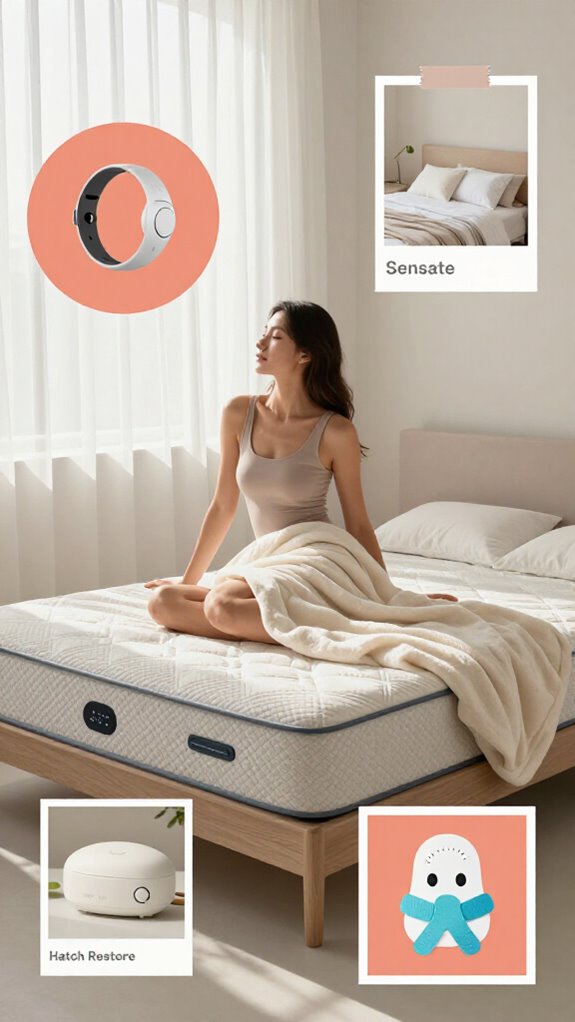
Selecting the right tools for your Sleepmaxxing journey makes a monumental difference in optimizing sleep architecture. Equally critical is your sleep surface—research indicates that a medium-firm mattress often provides optimal spinal alignment for those managing back discomfort. Consider the Oura Ring, a biometric marvel that deciphers sleep stages, pinpointing deviations in your circadian patterns.
Weighted blankets like Gravity enhance somatic safety, alleviating hypervigilance through proprioceptive input, and recent findings suggest deep touch pressure promotes restorative sleep through measurable somatic calm. For elite vagus nerve stimulation, devices like Sensate cultivate parasympathetic activation, foundational for neurological rest.
Silence interference with acoustic layers; Hatch Restore provides tailored soundscapes enveloped in pink noise. Engage in nasal breathing with mouth tape; SomniFix reliably augments oxygenation efficacy.
Each advancement shifts bedtime from ordinary rest to a high-caliber physiological overhaul.
Circadian Rhythm Optimization Studies
To tackle the challenge of aligning our circadian rhythm with nature’s clockwork, we must strategically harness light exposure, a vital element governed by the Suprachiasmatic Nucleus (SCN). Data from circadian studies reveal that syncing light and sleep schedules can halve entrainment time, effectively slashing a 16-hour shift from 279 to 140 hours. Process integration aids travelers and shift workers by offsetting disruptive rhythms, optimizing recovery. Recent studies indicate that the two-process model combines circadian rhythm and homeostatic sleep drive to dictate sleep-wake behavior, emphasizing the importance of understanding these dynamics for practical applications. Even in compact sleeping quarters, morning light exposure remains achievable through strategic window positioning and reflective surfaces that amplify natural illumination. The cool bedroom temperature of approximately 65°F supports this circadian optimization by facilitating the natural drop in core body temperature that signals sleep onset.
| Dimension | Understanding |
|---|---|
| Entrainment Time | Cut in half with synchronized light/sleep |
| Recovery Duration | Shorter for westward travel |
| Exercise Impact | Enhances rhythm through tailored timing |
Our mastery over these elements empowers optimized living.
FAQ
How Does Sunlight Affect Sleep Disorders Like Insomnia or Sleep Apnea?
Natural sunlight regulates your circadian rhythm by reinforcing its natural cycle, helping combat insomnia and sleep apnea. By harnessing sunlight, you harness power over your sleep, aligning your body’s internal clock with nature’s cues for better rest.
Can I Use Artificial Sunlight if I’M in a Low-Light Environment?
Absolutely, you can use artificial sunlight. I’ve found that light boxes effectively mimic natural sunlight and maintain my circadian rhythm even in low-light conditions. It’s empowering to control my light exposure and optimize my sleep health.
What Are the Optimal Hours for Morning Sunlight Exposure?
Expose yourself to morning sunlight between 6:00 AM and 9:00 AM to harness the power of natural light for ideal circadian alignment. This window maximizes melatonin regulation and sets you up for enhanced performance and energy.
How Does Morning Sunlight Impact Vitamin D Production?
Morning sunlight’s essential for jumpstarting vitamin D production in your skin, giving you that power edge. It not only boosts mood but also enhances immune function. Sink that sunlight in, and you’ll optimize your day naturally.
Will Morning Sunlight Affect My Evening Melatonin Supplementation?
Do you want to maximize your melatonin’s effectiveness? Morning sunlight won’t hinder your evening supplementation. Instead, it synchronizes your circadian rhythm, allowing melatonin to work efficiently. Use this knowledge to gain control over your sleep quality.