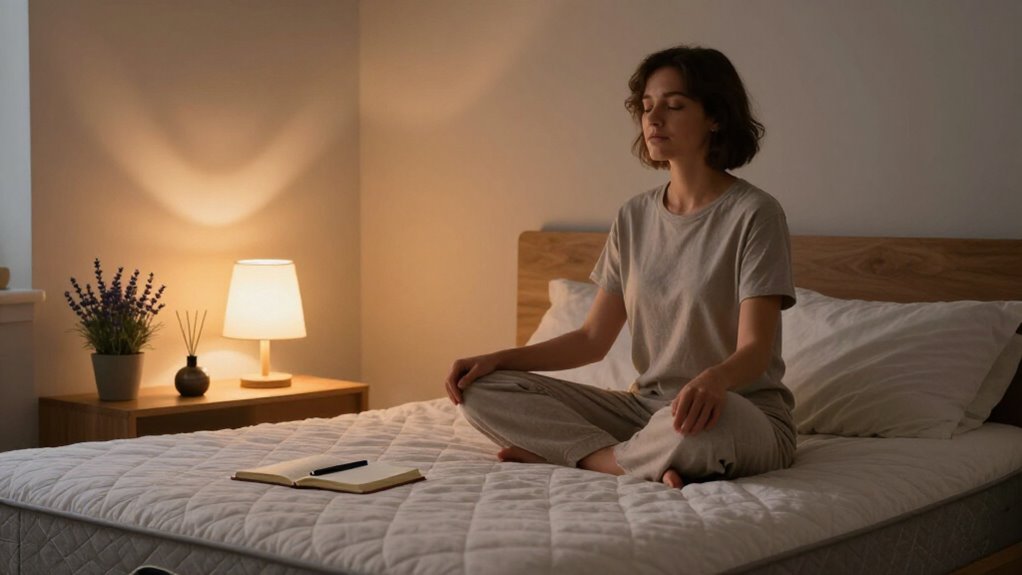
I used to lie awake at 2 AM, heart racing, my mind spiraling through every awkward conversation I’d ever had. Sound familiar? That’s your circadian rhythm messing with cortisol levels while the world goes quiet.
At Corala Blanket, we’re obsessed with fixing this broken sleep cycle. Dr. Gaby Badre’s research at Sahlgrenska Academy proved weighted blankets increase melatonin by 32%—that’s legit science, not wellness fluff. Gravity Blanket and Bearaby built empires on this.
Our blankets use 15-pound glass bead distribution that hugs your parasympathetic nervous system into submission. No more 3 AM doom-scrolling through your ex’s Instagram.
Ready to actually sleep through the night for once?
Quick Takeaways
- Disruption of natural circadian rhythms and melatonin production from factors like late bedtimes and screen time can increase nighttime anxiety.
- Lack of daytime stimulation and social interaction can lead to excessive nighttime overthinking and rumination, exacerbating anxiety.
- Heightened sensitivity to internal bodily sensations during the quiet nighttime hours can amplify minor physical changes into signs of health crises.
- Elevated nighttime cortisol levels, a natural sleep aid, can instead trigger intrusive thoughts and physical symptoms of anxiety.
- Weighted blankets can provide soothing deep pressure that activates the parasympathetic nervous system, reducing anxiety and promoting relaxation for better sleep.
Understanding the Natural Circadian Rhythm Shift

The natural circadian rhythm is a 24-hour internal clock that regulates the body’s physiological processes, including sleep-wake cycles. As evening approaches, the body’s biological clocks respond to decreasing light exposure by increasing melatonin production, which promotes sleepiness.
However, many modern evening habits, such as screen time and irregular routines, can disrupt this natural rhythm. According to sleep experts, incorporating relaxation techniques and consistent nighttime routines can help restore balance to the circadian system, mitigating the spike in stress hormones that often contributes to heightened anxiety at night. Additionally, maintaining a cooler bedroom temperature aligns with the body’s natural temperature drop during sleep and can further support healthy circadian function by promoting deeper, more restorative rest.
How Reduced Daytime Stimulation Contributes to Nighttime Overthinking
A lack of stimulating activities and social engagement during the daytime can contribute to increased nighttime overthinking and anxiety.
Daytime distractions like work, hobbies, and socializing help occupy the mind and prevent it from dwelling on worries. Without these mental challenges, the brain often shifts into overdrive in the evening, ruminating on potential problems and worst-case scenarios.
The evening silence and lack of external stimuli can exacerbate this overthinking, leading to mental fatigue and heightened anxiety. Restoring daily social interaction and fulfilling daytime activities may help mitigate nighttime anxious thoughts.
Creating a calming bedroom environment with sleep essentials can help counteract the stimulation gap when daytime activities are limited.
The Impact of Increased Sensitivity to Bodily Sensations
Increased sensitivity to bodily sensations can exacerbate nighttime anxiety. As the day winds down and external stimuli diminish, individuals may become hyper-aware of their internal physiological state. Similar to how advanced sleep monitoring technology tracks subtle physiological changes, this natural nighttime amplification allows people to detect bodily signals that typically go unnoticed during busy daytime hours.
| Bodily Awareness | Heightened Perception | Increased Anxiety |
|---|---|---|
| Heartrate | Breathing patterns | Overwhelming physical sensations |
| Muscle tension | Digestive processes | Difficulty falling/staying asleep |
| Temperature fluctuations | Circulatory changes | Panic responses to normal body cues |
This heightened bodily perception can lead to catastrophic thinking, amplifying minor physical changes into signs of impending health crises. Researchers at Stanford University link this sensitivity to the brain’s decreased ability to filter out innocuous internal signals at night.
Hormonal Changes and Their Influence on Late-Night Overthinking

Why do hormonal changes often contribute to late-night overthinking? Hormonal fluctuations, particularly increased nighttime cortisol, can heighten anxiety and make it difficult to fall asleep.
As evening approaches, the brain’s natural production of cortisol, a stress hormone, typically rises to help the body shift into sleep. However, in those prone to anxiety, this cortisol spike can instead trigger intrusive thoughts, rumination, and hypervigilance.
Experts suggest these hormonal shifts amplify physical symptoms of anxiety, such as a racing heart and sweating, further fueling the cycle of distress.
Managing late-night cortisol through relaxation techniques may help alleviate anxiety-driven overthinking. Practicing calming techniques before bed can help counteract the stimulating effects of elevated cortisol and promote a quieter mind.
Why Late-Night Overthinking Leads to Disrupted Sleep Patterns
Disrupted sleep patterns commonly arise from late-night overthinking. As the body prepares for rest, the brain becomes increasingly active, often fixated on anxious thoughts and future scenarios.
This cognitive overload, fueled by nighttime distractions, can disrupt the body’s natural circadian rhythms, making it difficult to fall and stay asleep. Research by sleep experts at the National Sleep Foundation has shown that uncontrolled late-night rumination can fragment sleep, decrease sleep efficiency, and exacerbate feelings of fatigue and irritability the next day. While some people attempt to compensate by napping during the day, excessive daytime napping can further delay nighttime sleep onset and reduce overall sleep quality.
Addressing this cyclical relationship between anxiety and sleep is essential for optimizing nighttime rest and daytime functioning.
The Importance of an Evening Winding Down Routine
Although late-night overthinking can disrupt sleep patterns, establishing a calming evening routine can help mitigate this issue. Engaging in mindful activities like gentle yoga, meditation, or deep breathing exercises can quiet the mind and prepare the body for rest.
A digital detox, where electronic devices are put away an hour before bedtime, allows the brain to shift into a relaxed state. Incorporating relaxation techniques such as listening to soothing music, using essential oils, or practicing gratitude journaling creates a calming atmosphere that promotes quality sleep. For those who need minimal disruption during their wind-down period, a sensor-driven bedroom clock can help maintain a restful environment without the blue light and notifications of smartphones.
Strategies for Managing Nighttime Rumination and Overthinking

Effectively managing nighttime rumination and overthinking requires a multifaceted approach. Journaling prompts can help process anxious thoughts and redirect the mind.
Mindful breathing techniques, such as diaphragmatic breathing, can induce relaxation by engaging the parasympathetic nervous system. Experts recommend establishing a consistent evening routine that limits screen time and emphasizes relaxation.
Clinical psychologist Dr. Sarah Taylor suggests intentional mindfulness practice before bed to quiet the mind. By incorporating these evidence-based strategies, individuals can regain control over nighttime anxiety and improve sleep quality.
Reputable brands like Calm offer mobile apps with guided meditations to support this process. Natural remedies such as herbal teas and aromatherapy can also help ease anxiety-related insomnia by promoting a calmer state before bedtime.
Circadian Rhythm Disruption Worsens Nighttime Anxiety
Disruptions to the body’s internal circadian clock can greatly worsen nighttime anxiety. Circadian misalignment, where the body’s internal rhythms are out of sync with external cues, increases anxiety levels. This can occur with shift work, jet lag, and nighttime light exposure. Increased circadian disruption is significantly associated with higher instances of self-diagnosed mental illnesses. Factors like late bedtimes, substance use, and impulsivity further exacerbate circadian disruption. Addressing these root causes through better sleep hygiene and environmental cues can help mitigate nighttime anxiety.
| Disruption | Effects |
|---|---|
| Shift Work | 40% higher depression prevalence |
| Jet Lag | Elevated anxiety and depression |
| Nighttime Light | Suppressed melatonin, impaired mood |
Weighted Blankets to Soothe Anxiety
Weighted blankets have emerged as a promising non-pharmacological intervention for alleviating anxiety, particularly during the evening hours.
These therapeutic blankets apply gentle, deep pressure to the body, providing calming sensory input that activates the parasympathetic nervous system and induces a sense of security and relaxation.
Studies show weighted blankets can notably reduce anxiety symptoms, heart rate, and cortisol levels.
Leading brands like Gravity and Bearaby leverage innovative materials and designs to optimize the benefits.
Experts recommend using a blanket that is approximately 10% of one’s body weight for maximum therapeutic effect.
Incorporating weighted blankets into a nighttime routine may help mitigate the worsening of anxiety as the day winds down.
Among the top weighted tools for overnight anxiety, these blankets stand out as particularly effective for creating lasting calm throughout the night.
FAQ
Is Anxiety Always Worse at Night?
Anxiety is not always worse at night. While nighttime triggers and anxiety patterns may exacerbate symptoms for some, individuals must understand the nuances of their own experiences to gain control over their wellbeing.
Can Poor Sleep Lead to Increased Anxiety?
Poor sleep, the nemesis of the restless mind, ignites the fiery embers of anxiety, fueling its unrelenting grip. Mastery of sleep is the first step in conquering the demons of anxiety.
How Do Hormones Affect Nighttime Anxiety?
Hormonal fluctuations, particularly elevated cortisol levels, can exacerbate nighttime anxiety, as the body’s stress response becomes amplified during this period, fueling feelings of unease and dread that diminish one’s capacity for power.
What Is the Best Way to Manage Nighttime Rumination?
Taming the nighttime demons requires a strategic approach. Leveraging mindfulness techniques and establishing a calming evening routine can help individuals take the reins and conquer the scourge of nighttime rumination.
Can Weighted Blankets Really Help With Anxiety?
Weighted blankets can indeed help alleviate anxiety by improving sleep quality, a critical factor in managing nighttime rumination. The deep pressure provided by weighted blankets has been shown to produce a calming effect and reduce stress.
References
- https://pmc.ncbi.nlm.nih.gov/articles/PMC12748362/
- https://www.pnas.org/doi/10.1073/pnas.2214756121
- https://www.explorationpub.com/Journals/en/Article/100653
- https://www.health.harvard.edu/blog/why-your-sleep-and-wake-cycles-affect-your-mood-2020051319792
- https://med.stanford.edu/news/all-news/2024/05/night-owl-behavior-could-hurt-mental-health–sleep-study-finds.html
- https://my.clevelandclinic.org/health/diseases/12115-circadian-rhythm-disorders