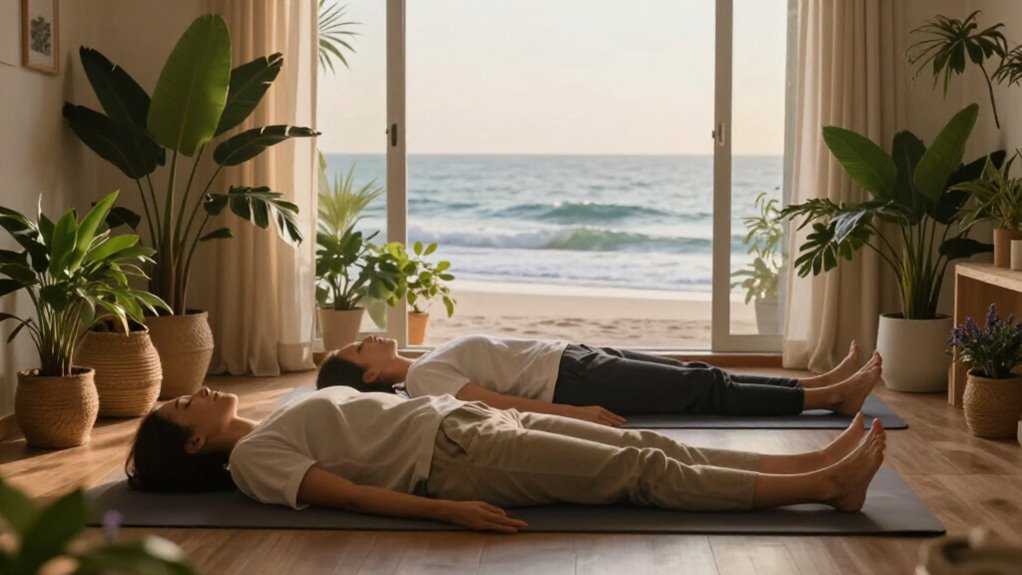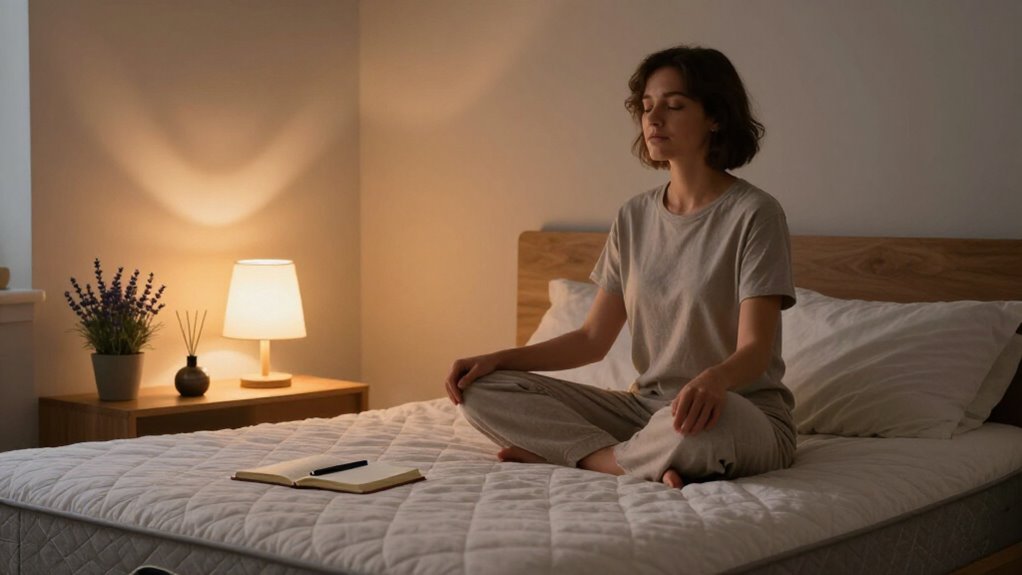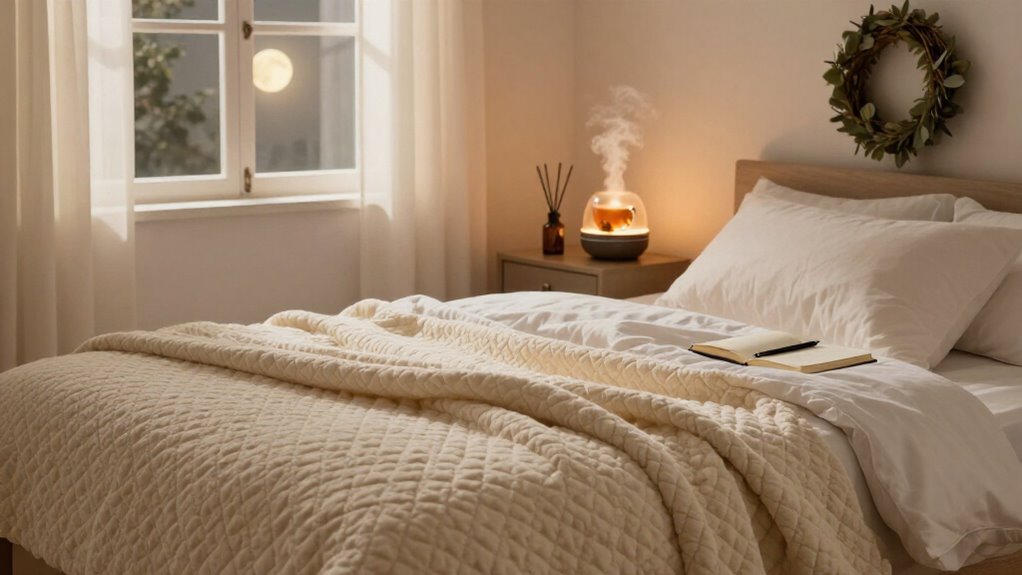
I used to toss and turn every night, anxiety eating me alive. Then I ditched the phone, brewed chamomile tea, and grabbed my weighted Corala Blanket—game changer, honestly. Deep breathing hit different once my nervous system finally chilled out. Brands like Calm and Headspace helped too, but that blanket? Total vibe. Now I actually sleep. You deserve that peace too.
Quick Takeaways
- Establish a relaxing nighttime routine with calming aromatherapy, herbal teas, and light stretching to promote tranquility before bed.
- Practice controlled breathing exercises like belly breathing, 4-7-8 breathing, or alternate nostril breathing to induce the body’s relaxation response.
- Engage in mindfulness meditation techniques, such as present moment awareness and guided imagery, to alleviate anxiety and promote mental clarity.
- Optimize the sleep environment by adjusting lighting, temperature, and sound to support circadian rhythms and melatonin production.
- Consider the use of natural relaxation aids, including herbal teas, aromatherapy oils, and calming music, to activate the parasympathetic nervous system.
Establish a Relaxing Nighttime Routine
Establishing a relaxing nighttime routine can be an effective way to calm anxiety before sleeping. Incorporating aromatherapy techniques, such as diffusing calming essential oils like lavender or chamomile, can promote a sense of tranquility.
Sipping herbal teas like chamomile or valerian root can also have a sedative effect, aiding in relaxation. Experts recommend establishing a consistent pre-bed ritual, such as light stretching, gentle meditation, or reading. Applying aromatherapy face oils as part of your skincare routine can provide additional calming benefits through both scent and skin absorption.
Practice Calming Breathing Exercises
Controlled breathing exercises can help alleviate anxiety before sleep. Practicing deep breathing or diaphragmatic breathing can induce the body’s relaxation response, lowering heart rate and blood pressure.
Controlled breathing exercises can help alleviate anxiety before sleep by inducing the body’s relaxation response.
Here are some calming breathing techniques to try:
- Belly breathing: Inhale deeply through the nose, feeling the abdomen expand. Exhale slowly through the mouth, allowing the belly to deflate.
- 4-7-8 breathing: Inhale for 4 seconds, hold for 7 seconds, exhale for 8 seconds. Repeat several times.
- Alternate nostril breathing: Close off one nostril and inhale through the other, then switch nostrils to exhale. Continue alternating.
- Resonant breathing: Breathe in and out at a rate of about 5-7 breaths per minute, creating a calming resonance.
Unwind With Mindfulness Meditation
Mindfulness meditation can be a powerful technique for calming the mind and alleviating anxiety before sleep. This practice encourages focusing awareness on the present moment, using techniques like guided imagery to shift attention away from worries.
Research by experts at top universities has shown mindfulness can reduce physiological signs of stress and promote relaxation. By pausing to observe thoughts and sensations without judgment, the mind can shift from a state of rumination to one of greater equanimity.
Regular mindfulness meditation may help cultivate the mental clarity and composure needed for restful sleep. Creating a soft lighting environment in your bedroom can further enhance this relaxation response and prepare your body for sleep.
Limit Stimulating Activities Before Bed

Winding down before bed is essential for promoting restful sleep. To limit stimulating activities:
- Avoid screen time (e.g., smartphones, tablets, computers) for at least 1-2 hours before bedtime, as the blue light can disrupt the body’s natural sleep-wake cycle and suppress melatonin production, making it harder to fall asleep.
- Minimize caffeine intake in the afternoon and evening, as it can take hours to wear off and interfere with sleep quality.
- Refrain from intense workouts or exercising close to bedtime, as the elevated heart rate and energy expenditure can make it harder to fall asleep.
- Disconnect from social media, news consumption, and stimulating conversations late in the evening, allowing your mind to relax.
Optimize Your Sleep Environment
A serene sleep environment is essential for achieving quality rest. Optimizing light and temperature can help calm the mind and body before bed.
Exposure to bright light signals the brain to stay awake, so dimming overhead lights and using blackout curtains can promote melatonin production for better sleep. Maintaining a cool room temperature between 65°F and 70°F encourages the natural body temperature drop that facilitates sleep. Heavy, room-darkening drapes block intrusive streetlights and early morning sun, creating a cave-like atmosphere that supports deeper, uninterrupted sleep cycles.
Minimizing disruptive sounds with earplugs, white noise machines, or sound-blocking apps can further reduce anxiety. According to sleep researcher Dr. Michael Grandner, these environmental adjustments support the body’s circadian rhythms for more restorative sleep.
Consider Natural Relaxation Aids
Certain natural supplements can offer gentle support for relaxation and sleep.
Natural supplements can provide gentle support for relaxation and sleep.
Consider these evidence-backed options:
- Herbal teas like chamomile, valerian, and passionflower contain plant compounds that may promote calmness and sleep.
- Aromatherapy oils like lavender and bergamot can elicit a relaxing response when inhaled. Face oils infused with calming botanicals can also support skin health while promoting rest.
- Calming music, gentle stretches, and nighttime journaling can activate the parasympathetic nervous system and prepare the body for sleep.
- Warm baths, guided imagery, and other natural remedies may also help soothe the mind and body before bed.
Impact of Stress on Sleep

Stress greatly and directly impedes sleep quality, with chronic exposure severely disrupting sleep patterns. High stress levels prolong the time required to fall asleep and fragment existing sleep cycles.
This physiological hyperarousal creates a bidirectional cycle, as sleep loss further activates the body’s stress response, increasing cortisol production. Individuals with high sleep reactivity are particularly vulnerable, experiencing drastic sleep deterioration when exposed to stress.
Effective stress management and improved sleep hygiene, such as relaxation techniques recommended by experts like Dr. Michael Grandner, can help break this detrimental cycle and restore healthy sleep.
Weighted Blankets for Better Sleep
Weighted blankets have gained popularity as a potential tool for improving sleep quality. These therapeutic blankets apply gentle pressure across the body, triggering a calming effect that may reduce anxiety and promote relaxation.
Some key weighted blanket benefits include:
- Improved sleep onset and duration
- Reduced feelings of stress and agitation
- Elevated mood and feelings of security
- Increased melatonin production for better sleep-wake cycles
When choosing a weighted blanket, experts recommend selecting a weight equal to 10% of your body weight, as this level of pressure has been shown to be most effective.
Leading brands such as Gravity and Baloo offer a range of high-quality options that function as top weighted sleep products for managing overnight anxiety.
FAQ
How Can I Manage Job-Related Stress Before Bedtime?
Managing job-related stress before bedtime requires a strategic interplay of mindfulness techniques and consistent bedtime routines. Individuals seeking power must prioritize tranquility through controlled breathing and progressive muscle relaxation to rise above the professional fray.
What Is the Best Time to Take Melatonin Supplements?
The ideal time to take melatonin supplements is 2 hours before the desired bedtime. The recommended dosage is 0.5-5 mg, as higher doses may disrupt sleep. Maintaining strong sleep hygiene is essential for maximizing melatonin’s effectiveness.
Is It Okay to Drink Coffee in the Evening?
Consuming coffee in the evening is not recommended, as the caffeine can disrupt sleep. Instead, explore caffeine alternatives and develop a soothing evening routine to promote relaxation and a restful night’s sleep.
How Can I Prevent Pets From Disrupting My Sleep?
Establishing a pet bedtime routine and creating a calming pet environment can prevent furry companions from disrupting one’s slumber, empowering the individual to reclaim their domain and achieve the restful sleep they deserve.
What Are the Signs of Sleep Apnea?
Hallmarks of sleep apnea include difficulty breathing during sleep, loud snoring, daytime fatigue, and restless sleep. Individuals seeking to enhance their performance must address these symptoms to achieve peak rest and rejuvenation.
References
- https://pmc.ncbi.nlm.nih.gov/articles/PMC10948653/
- https://pmc.ncbi.nlm.nih.gov/articles/PMC7045300/
- https://www.bcm.edu/news/how-stress-can-affect-your-sleep
- https://pmc.ncbi.nlm.nih.gov/articles/PMC10342613/
- https://www.bannerhealth.com/healthcareblog/teach-me/how-sleep-can-affect-stress
- https://med.stanford.edu/news/insights/2025/08/sleep-mental-health-connection-what-science-says.html