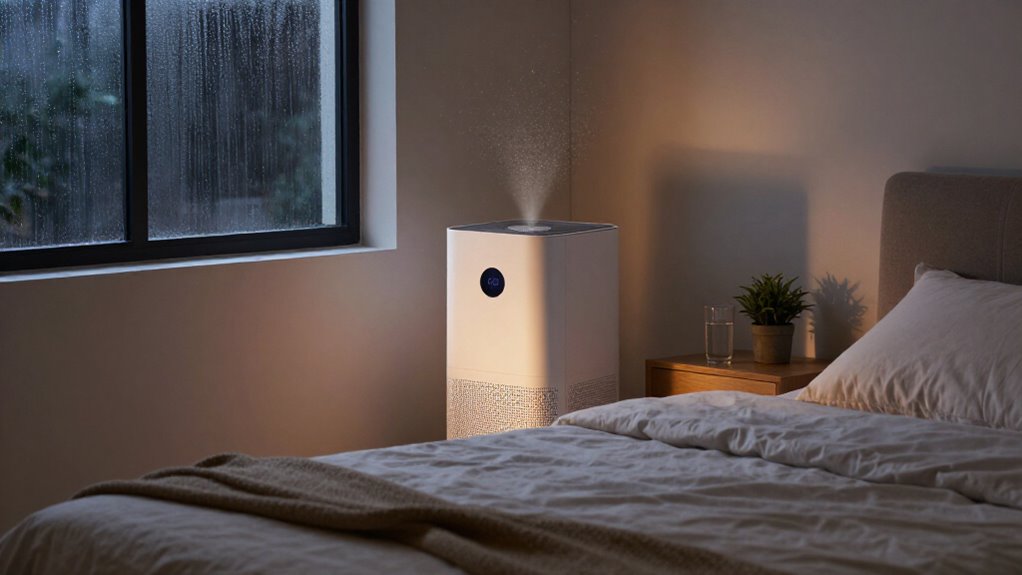
I struggled with brutal dry nights until I nailed the 30-50% humidity sweet spot. Turns out, my sinuses were wrecked, killing my REM sleep. Now? Game changer. Dyson and Honeywell gear helped, but honestly, pairing them with our Corala Blanket collection made the real difference—better moisture balance means deeper rest. Ever notice how humidity messes with your sleep quality? Don’t sleep on this.
Quick Takeaways
- Proper humidity levels (30-50%) are critical for sleep quality, as low humidity causes nasal irritation while high humidity promotes mold and dust mites.
- Excessive humidity disrupts sleep architecture by increasing arousal levels, reducing REM and deep sleep stages, and worsening sleep apnea symptoms.
- Investing in quality dehumidifiers and improving ventilation can effectively reduce humidity levels and create a more favorable sleep environment.
- Regularly monitoring indoor humidity with a hygrometer and making necessary adjustments are essential for maintaining the ideal humidity range.
- Integrating humidity regulation with temperature and airflow optimization is key to achieving a healthy and restorative sleep environment.
The Impact of Humidity on Sleep Quality
The quality of one’s sleep can be profoundly influenced by the level of humidity in the surrounding environment. Ideal sleep requires carefully controlling temperature and air circulation to maintain an ideal humidity range, typically between 30-50%.
Low humidity can cause dry nasal passages and sinus irritation, while high humidity promotes the growth of mold and dust mites that exacerbate allergies.
Research by the National Sleep Foundation shows that maintaining stable, moderate humidity levels supports more restorative, uninterrupted sleep. Proper humidity regulation is a critical component of a healthy sleep environment.
Achieving the Ideal Humidity Range for Comfortable Sleeping
Maintaining the ideal humidity range of 30-50% is essential for achieving comfortable and restorative sleep.
To optimize your sleep environment:
- Monitor humidity levels using a hygrometer, a device that measures indoor humidity.
- Utilize a humidifier or dehumidifier to maintain the recommended 30-50% humidity range.
- Position the humidifier or dehumidifier strategically in the room for even distribution of moisture.
The sleep essentials of temperature, airflow, and humidity work in harmony to promote high-quality sleep.
Brands like Dyson and Honeywell offer advanced humidity control solutions for the bedroom.
Proper humidity management supports the body’s natural sleep-wake cycle for enhanced rest and rejuvenation.
Consider using smart air quality monitors to track both humidity and overall bedroom air quality for more comprehensive sleep environment management.
Recognizing the Signs of Excessive Humidity in Your Sleep Environment
Excessive humidity in the sleep environment can manifest through several telltale signs. Mold growth, a common issue in damp conditions, can trigger respiratory issues and allergies. Elevated moisture levels may also lead to discomfort, with bedding feeling unnaturally damp.
Fluctuations in temperature can further exacerbate sleep disruption. According to sleep research by the National Sleep Foundation, ideal bedroom humidity falls within the 30-50% range. Levels outside this preferred window may contribute to poor sleep quality.
Recognizing these indicators of excess moisture can help individuals take proactive steps to improve their sleep environment, as recommended by experts like those at the American Academy of Sleep Medicine. For those struggling to maintain optimal levels, using cool mist humidifiers can help regulate bedroom humidity and promote healthier sleep conditions.
Reducing Humidity to Create a Restful Sleep Space
Optimizing bedroom humidity levels is an essential step in creating a restful sleep environment. Here are three ways to reduce humidity and promote quality sleep:
- Invest in a dehumidifier. Quality dehumidifiers effectively remove excess moisture from the air, helping to maintain an ideal humidity range of 30-50% for better sleep.
- Improve ventilation. Opening windows, using fans, and guaranteeing proper airflow can all help reduce indoor humidity levels and create a drier, more comfortable sleep space.
- Monitor humidity levels. Tracking bedroom humidity with a hygrometer allows you to make targeted adjustments and guarantee the environment supports high-quality, uninterrupted sleep.
Humidity Affects Sleep Architecture
High humidity levels impact the stages of sleep, affecting sleep architecture and quality.
According to research, higher humidity heightens arousal levels, especially in cooler temperatures, contributing to sleep fragmentation. This disrupts REM and deep (N3) sleep stages, reducing sleep efficiency.
Higher humidity heightens arousal levels, especially in cooler temperatures, disrupting REM and deep sleep stages and reducing sleep efficiency.
One percent increases in humidity are linked to a 1.02-fold higher odds of obstructive sleep apnea. Moisture buildup in the airways can worsen symptoms of sleep apnea.
Humidity also impairs thermoregulation, as trapped heat and moisture in pressure areas trigger micro-arousals.
Seasonal shifts in humidity and temperature alter NREM sleep stages.
Humidity regulation is vital for achieving restorative, high-quality sleep.
Dehumidifier Improves Sleep Quality
Using a dehumidifier can improve sleep quality. Dehumidifiers reduce excess moisture in the air, creating a more comfortable sleeping environment. This can benefit sleep health in three key ways:
- Reduced Allergens: Dehumidifiers lower humidity, discouraging the growth of dust mites, mold, and mildew – common sleep disruptors.
- Temperature Regulation: Drier air feels cooler, allowing the body to better regulate its temperature for quality slumber.
- Breathing Ease: Decreased humidity can minimize respiratory irritation and congestion, enabling uninterrupted breathing throughout the night.
Leading dehumidifier brands like Frigidaire and Honeywell offer models tailored for ideal sleep environments.
Research confirms these devices remarkably improve self-reported sleep quality.
Maintaining optimal humidity levels serves as one of the simple stress relief techniques that promotes restful sleep by reducing physical discomfort and environmental anxiety.
FAQ
How Does High Humidity Affect Allergies and Respiratory Issues?
High humidity can promote mold growth and dust mite proliferation, exacerbating respiratory discomfort and allergy triggers. This adversely impacts sleep quality and overall health, demanding a proactive approach to manage humidity levels.
Can Humidity Levels Impact Snoring or Sleep Apnea?
Humidity’s dance with the domain of sleep can lead to a symphony of snoring tendencies and breathing difficulties, as the air’s symphony becomes a raucous cacophony, disrupting the warrior’s slumber and sapping their power.
How Does Humidity Affect the Lifespan of Mattresses and Bedding?
Excessive humidity can degrade mattress materials and bedding over time, reducing their lifespan. Proper maintenance of these sleep environment components is essential to guarantee their continued performance and longevity in the face of humidity.
What Are the Energy Costs of Using a Dehumidifier Long-Term?
Dehumidifiers prove energy-efficient long-term, maximizing comfort and savings. Their long-term benefits outweigh the initial costs, ensuring a restful, rejuvenating sleep environment for the power-conscious consumer.
Can Humidity Changes Disrupt Circadian Rhythms and Sleep Cycles?
Yes, changes in humidity can disrupt circadian rhythms and negatively impact sleep quality, leading to suboptimal performance and diminished subjective well-being. Maintaining consistent humidity is essential for optimizing the sleep environment.