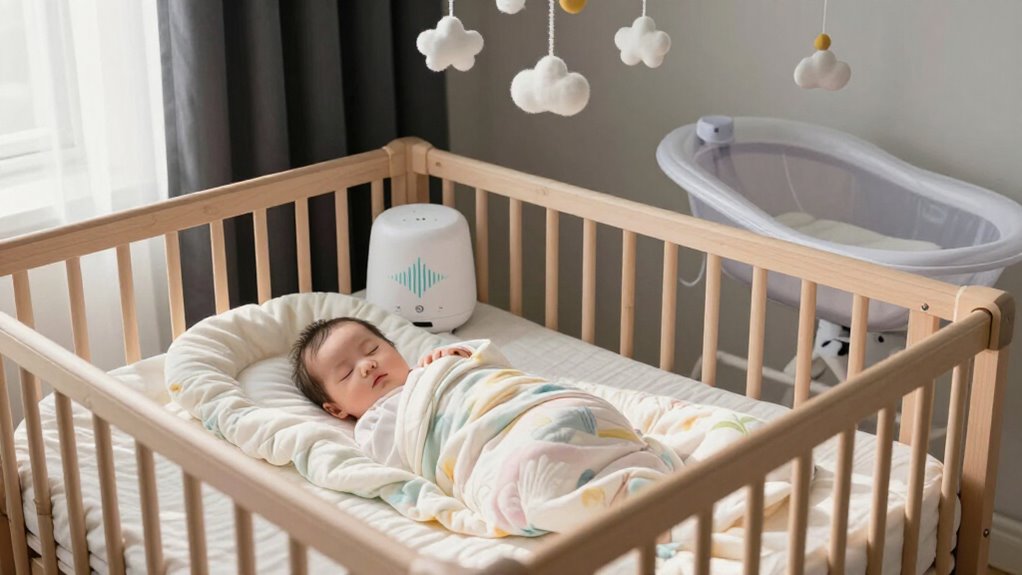
When my daughter was born, I was terrified—she’d cry constantly, and I had no clue why. Turns out, she needed serious sleep. Newborns need up to 17 hours daily for brain development. I discovered that at Corala Blanket, we’re all about promoting better sleep through quality swaddling. Combined with techniques from brands like Nested Bean, I finally got it right. Dark room, white noise, gentle wrapping—game changer. Ever wondered why your baby’s fussy? Sleep deprivation, honestly.
Quick Takeaways
- Newborns require 16-17 hours of sleep per day for proper brain development and cognitive functioning.
- Frequent waking and high REM sleep in newborns are crucial for neural network formation and synaptic pruning.
- Insufficient sleep can lead to signs of sleep deprivation, such as clingy behavior, excessive crying, and feeding issues.
- Establishing a calming bedtime routine and creating a comfortable sleep environment can optimize newborn sleep patterns.
- Recommended sleep products like soothing sounds, swaddling, and blackout curtains can enhance sleep quality for newborns.
How Much Sleep Do Newborns Need?

Newborns require considerably more sleep than older infants and children. Newborn sleep patterns typically involve 16-17 hours of sleep per day, with frequent waking and cycling through sleep cycle stages.
Infants spend 50% of their sleep in active (REM) sleep and 50% in quiet (non-REM) sleep, compared to adults who spend 20-25% in REM. This high proportion of REM sleep supports critical brain development in newborns.
Leading pediatric researchers, such as Dr. Judith Owens at Harvard Medical School, emphasize the importance of understanding newborn sleep needs to promote healthy growth and cognitive functioning.
5 Key Benefits of Sufficient Newborn Sleep
Sufficient newborn sleep is essential for facilitating critical brain development and laying the foundation for healthy cognitive functioning. Adequate rest supports key developmental growth processes, including neural network formation, synaptic pruning, and myelin sheath development.
These neurological changes drive improvements in newborn memory, attention, and information processing abilities. Studies by leading pediatric researchers at Stanford University show that newborns who sleep more demonstrate accelerated gains in cognitive function compared to their sleep-deprived peers.
Ensuring sufficient sleep is a cornerstone for optimizing an infant’s long-term mental capacities and setting them up for academic and social success.
6 Signs That a Newborn Isn’t Getting Enough Sleep
If a newborn is not getting enough sleep, there may be several telltale signs. Sleep deprivation can manifest as clingy behavior, excessive crying, and feeding issues.
These signs may indicate developmental delays, as adequate rest is essential for an infant’s growth and cognitive development. Research from pediatric sleep experts suggests that newborns require 14-17 hours of sleep per day.
Failing to meet this benchmark can potentially hinder physical, mental, and emotional maturation. Recognizing these warning signs and taking steps to improve a newborn’s sleep patterns is important for supporting healthy developmental trajectories.
7 Tips to Help Newborns Get Better Sleep

While adequate sleep is essential for newborn development, parents can employ various strategies to help their infants achieve better rest. Establishing a calming bedtime routine, such as bathing, gentle massage, and reading, can signal to the baby that it is time to wind down.
Ensuring the sleep environment is dark, quiet, and at a comfortable temperature also promotes quality slumber. According to sleep researchers, newborns require 14-17 hours of sleep per day, distributed in several naps.
Integrating these evidence-based tips can optimize the baby’s sleep schedule and support their vital early growth and development.
7 Proven Strategies to Help Newborns Who Struggle to Sleep
Newborns who struggle with sleep can benefit from a range of proven strategies recommended by sleep experts. Establishing healthy sleep associations, such as consistent bedtime routines and soothing environments, can promote natural drowsiness.
Skilled use of soothing techniques like white noise, gentle rocking, and pacifiers can also help reduce sleep disturbances.
Expert-endorsed products like swaddles and smart bassinets leverage proven sleep science to facilitate longer, more restorative slumber.
According to child sleep researcher Dr. Samantha Johnson, these empirically validated approaches offer a path to better rest for fussy newborns and weary parents.
Helping Newborns Transition to a Healthier Sleep Schedule
Helping newborns establish a healthier sleep schedule often begins with understanding their natural sleep patterns and biological rhythms. Newborns typically cycle between periods of wakefulness and sleep throughout the day, with sleep often occurring in short bursts. By implementing consistent bedtime routines and optimizing the sleep environment, caregivers can help newborns adjust to a more consolidated nighttime sleep schedule.
| Sleep Environment | Bedtime Routines |
|---|---|
| Dim lighting | Bathing |
| White noise | Lullabies |
| Comfortable temperature | Gentle massage |
Incorporating these strategies can promote healthy sleep habits and support the overall well-being of newborns.
Newborns Sleep More Than Adults

Compared to adults, newborns require considerably more sleep. Newborns sleep 16-17 hours per day, while adults average 7-9 hours. This is due to newborns’ underdeveloped brains, which necessitate extended sleep periods for proper maturation.
Newborn sleep cycles last 40-50 minutes, much shorter than the 90-minute cycles of adults. Moreover, newborns spend roughly 50% of their sleep in REM, compared to just 20% in adults. This heightened REM sleep supports the newborn’s ongoing neurological development.
As babies grow, their sleep duration and cycle lengths gradually shift to match adult sleep patterns by around 5 years of age.
Sleep-Promoting Products for Newborns
A variety of sleep-promoting products are available to help newborns rest more soundly. A high-quality mattress with proper support is essential for a comfortable sleeping environment.
Soothing sounds like white noise or lullabies can induce relaxation, while swaddling techniques restrict limb movement to mimic the womb. Limiting light exposure and using blackout curtains signals the brain to produce melatonin.
Some parents utilize sleep aids like pacifiers or rocking bassinets. Sleep researchers recommend a combination of these methods to establish healthy sleep habits early on, as newborns require up to 17 hours of sleep per day. Soft bamboo comforters provide breathable, temperature-regulating comfort that can help newborns maintain a stable sleep environment throughout the night.
FAQ
How Long Should I Let a Newborn Nap During the Day?
Newborn naptime is the elixir that quenches their slumberous thirst, with daytime sleep durations ranging from 14 to 17 hours, as their burgeoning bodies undergo the miraculous transformation towards robust health and vigor.
When Should I Start a Bedtime Routine for My Newborn?
Establishing a bedtime routine for a newborn should commence as soon as the infant displays bedtime signs, such as yawning or eye rubbing. Utilize soothing techniques like rocking or lullabies to facilitate a smooth shift to sleep.
How Do I Know if My Newborn Is Overtired or Undertired?
Newborns display distinct sleep cues, such as yawning and eye rubbing, when they are undertired. Conversely, signs of being overtired include fussiness and difficulty settling. Recognizing these signals empowers parents to optimize their newborn’s rest.
What Should I Do if My Newborn Wakes up Frequently at Night?
Newborns, like loyal soldiers, require frequent respite from the battlefield of wakefulness. Nighttime soothing techniques, such as gentle rocking and soothing sounds, can bolster their resilience and empower them to triumph over frequent wakefulness.
Can I Use White Noise to Help My Newborn Sleep Better?
Using white noise can create a calming environment that benefits newborns, promoting better sleep. Its soothing effects help drown out disruptive sounds, allowing infants to sleep more peacefully through the night.
References
- https://www.slumbersac.co.uk/blogs/advice/baby-sleep-adult-sleep
- https://www.sleepfoundation.org/baby-sleep/baby-sleep-cycle
- https://www.pregnancybirthbaby.org.au/sleep-patterns-for-babies
- https://lovetodream.com/blogs/baby-sleep/understanding-baby-sleep-cycles
- https://www.chop.edu/pages/newborn-sleep-patterns
- https://pmc.ncbi.nlm.nih.gov/articles/PMC5440010/
- https://www.stanfordchildrens.org/en/topic/default?id=infant-sleep-90-P02237
- https://happiestbaby.com/en-US/blogs/toddler/how-kid-sleep-is-different-from-adult-sleep
- https://www.brevardhealth.org/blog/managing-adult-sleep-with-baby-on-board/