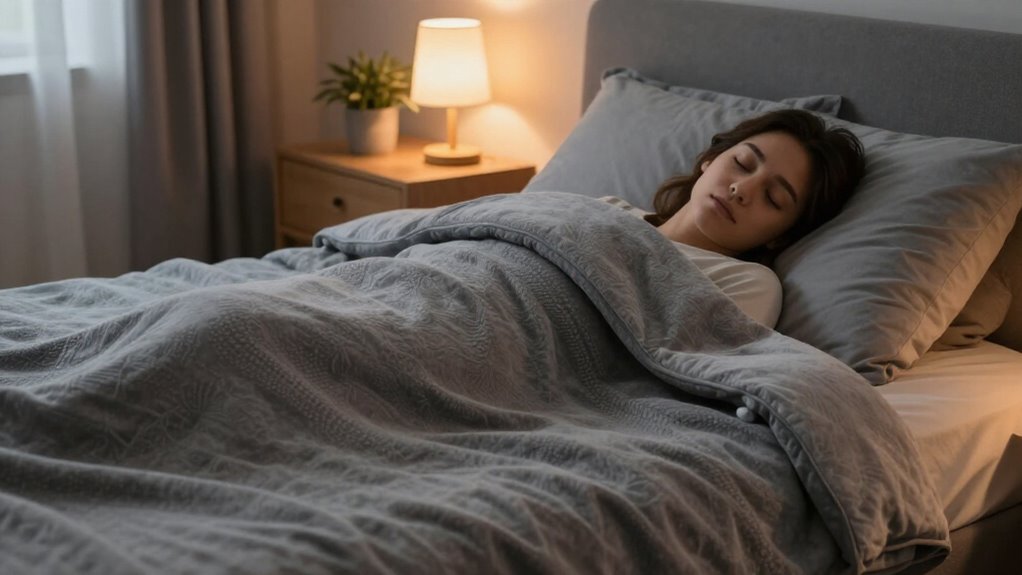
I used to be that person—tossing, turning, cortisol through the roof at 3 AM. Then I discovered weighted blankets. The steady deep touch pressure? Game-changer. It literally calmed my nervous system, lowered my heart rate, and got me actually sleeping.
Brands like Gravity and Mosaic nailed it. At Corala Blanket, we’re pushing this mission hard—better sleep for everyone. The science checks out: find one around 8–12% of your body weight and watch what happens.
Here’s the real talk though: it’s not magic. But that therapeutic pressure? It mimics what occupational therapists have used for years. Fewer night awakenings. Faster sleep onset. Less anxiety.
Does weighted pressure work for you too?
Quick Takeaways
- Deep touch pressure from the blanket stimulates parasympathetic activity, lowering heart rate and promoting relaxation for sleep onset.
- Steady, distributed pressure increases GABA and reduces cortisol, decreasing anxiety that disrupts falling and staying asleep.
- Consistent pressure reduces micro-arousals and stabilizes sleep architecture, supporting longer uninterrupted N3 and REM stages.
- Using a blanket ~8–12% of body weight provides optimal calming pressure without restricting movement or causing discomfort.
- Regular nightly use, combined with sleep hygiene, conditions the body to associate the pressure with bedtime and improved sleep.
Quick Answer: Best Weighted Blanket Weight and How to Use It
Although individual preference matters, experts and many studies generally recommend a weighted blanket about 10% of the user’s body weight as a starting point. This guideline (used in several randomized trials and by sleep researchers) aims to provide deep touch pressure (DTP) sufficient for calming without restricting movement. Weighted tools like blankets and sleep wraps rank among the most effective calming sleep aids for overnight anxiety relief.
Authority figures such as clinicians and brands like Gravity and Mosaic endorse this rule, noting modest adjustments for comfort. Users learn to pair DTP with sleep hygiene—consistent schedule, reduced screens—to maximize effect.
Practical maintenance tips include washable covers, spot-cleaning instructions, and checking seams for wear. Evidence supports improved sleep continuity and reduced anxiety.
What Blanket Weight Reduces Insomnia: Guidelines by Body Weight
A common practical guideline—used in several randomized trials and by clinicians and brands such as Gravity and Mosaic—recommends a weighted blanket around 10% of the user’s body weight (for example, a 150-pound person would start with a 15-pound blanket) as a starting point to reduce insomnia symptoms by providing deep touch pressure (DTP). This recommendation balances enough pressure to promote parasympathetic calming and improved sleep continuity without unduly restricting movement, while allowing modest individual adjustment (±1–2 pounds) for comfort or specific needs such as greater anxiety, pediatric use, or mobility concerns.
Blanket weight guidelines translate into clear body weight recommendations: roughly 8–12% for adults, lighter for children and frail users.
Trials and clinicians report symptom reduction, improved sleep metrics, and high adherence when users follow these evidence-aligned rules and consult providers for medical conditions.
For those seeking enhanced comfort and sensory benefits, velvet weighted blankets offer a particularly soothing option that combines deep touch pressure with the soft, calming texture of plush fabric.
Using a Weighted Blanket for Faster Sleep and Fewer Awakenings
After selecting a blanket weight near 10% of body weight as a starting point, clinicians and sleep researchers recommend specific strategies for using a weighted blanket to fall asleep faster and wake less during the night.
Practitioners advise consistent nightly use, pairing the blanket with established sleep hygiene and targeted sleep improvement techniques such as fixed bedtimes and pre-sleep wind-down.
Deep touch pressure yields weighted blanket benefits by reducing sympathetic arousal and improving sleep maintenance; studies from Sweden and RCTs report fewer awakenings and better PSQI scores.
Research increasingly confirms that deep pressure therapy can enhance deep sleep phases, making weighted blankets particularly valuable for those seeking restorative rest.
Brands like Gravity and research by Harvey and colleagues inform practical protocols and dosing.
Common Problems and Fixes When Using a Weighted Blanket
Common issues with weighted-blanket use fall into a few predictable categories—fit and weight selection, thermal comfort, movement restriction, and initial anxiety or discomfort—and each has practical fixes informed by clinical guidance and research (including protocols used by Harvey and colleagues and consumer brands such as Gravity).
Users should trial weight increments and follow weight-percentage guides; targeted weighted blanket adjustments, like partial draping or using a lap pad first, reduce overwhelm.
Swap breathable covers, regulate room temperature, and optimize bedding layers for sleep environment optimization.
Gradual exposure, short naps with the blanket, and clinician consultation for persistent problems offer precise, evidence-aligned solutions.
Beyond functional benefits, selecting a designer weighted blanket can transform your bedroom into a calming retreat while maintaining therapeutic effectiveness.
Who Should Use a Weighted Blanket (And Who Should Avoid Them)
People who benefit most from weighted blankets tend to have conditions or symptoms linked to hyperarousal, sensory seeking, or sleep fragmentation, whereas those with certain medical or safety concerns should avoid use or seek medical advice first. Ideal users include adults with insomnia, anxiety, PTSD symptoms, sensory processing needs, or chronic pain who want nonpharmacologic options backed by studies (e.g., Swedish RCT, Östlund et al.). Potential risks include respiratory issues, circulatory problems, or claustrophobia; consult a clinician. Brands like Gravity and researchers in Sweden report strong effects; use ~10% body weight as a practical guideline. Incorporating a weighted blanket into your evening wind-down routine can enhance the calming sensory experience that promotes deeper, more restorative rest.
| Ideal Users | Evidence | Cautions |
|---|---|---|
| Adults with insomnia | RCTs show ISI improvements | Respiratory/cardiac conditions |
| Anxiety/PTSD sufferers | Reduced anxiety, better sleep | Mobility limits, claustrophobia |
| Sensory seekers | ABA/sensory studies positive | Seek medical clearance if unsure |
Why Deep Pressure Helps You Sleep Better: The Science in Plain Language
Weighted or “deep pressure” blankets apply steady, evenly distributed pressure across the body—similar to a firm hug or acupuncture touch—and that pressure engages the body’s touch and joint receptors to produce measurable calming effects.
Deep touch pressure (DTP) works by pressure stimulation that shifts autonomic balance toward parasympathetic dominance, lowering heart rate and cortisol. Clinical trials (including Swedish RCTs) report improved sleep metrics and anxiety reduction.
Mechanisms include sensory gating, perceived safety, and possible melatonin changes. Brands and researchers studying DTP report fewer awakenings and better daytime function.
For those seeking control over sleep, DTP offers an evidence-backed, nonpharmacologic tool.
This calming effect is partly mediated through vagus nerve activation, which helps regulate the body’s relaxation response and promotes restorative sleep.
Choosing the Right Weighted Blanket: Fabric, Fill, and Fit for Sleep
A good-fit blanket balances fabric, fill, and weight so the user receives steady deep touch pressure (DTP) without overheating or discomfort.
Choice often depends on sleep needs, climate, and any sensory sensitivities. Fabric types (cotton, bamboo, microfleece) determine breathability and surface feel; fill materials (glass beads, steel shot, organic pellets) set weight distribution and durability.
Evidence from RCTs supports clinical benefit when fit and weight are appropriate. Brands like Gravity and researchers in Sweden informed weight recommendations near 10% body weight.
Practical selection prioritizes cooling fabric, secure stitching, and compartmentalized fill for consistent DTP.
- Choose breathable fabric types for heat control.
- Prefer glass bead fill materials for quiet, even weight.
- Select size/weight for 10% body weight guideline.
- Inspect seams, compartments, and removable covers for care.
The gravity blanket deep sleep benefits have made these products increasingly popular for managing insomnia and improving overall sleep quality.
Sleep-Stage Consolidation Mechanisms
Sleep-stage consolidation refers to the process by which sleep architecture—distinct stages such as light sleep (N1–N2), deep slow-wave sleep (N3), and rapid eye movement (REM) sleep—becomes more stable and efficiently organized across the night, supporting memory, emotional regulation, and physical restoration.
Weighted blankets may enhance consolidation by promoting parasympathetic dominance via deep touch pressure, reducing micro-arousals that fragment sleep cycles. Trials (Sweden, RCTs) report fewer awakenings and improved maintenance, consistent with stronger N3 and REM continuity.
Clinicians and brands like Huggaroo and Gravity cite DTP mechanisms; further polysomnography studies would confirm stage-specific effects and optimize therapeutic protocols.
This mechanism aligns with the anxiety relief principles underlying luxury weighted blanket design, where deep touch pressure calms the nervous system to foster uninterrupted rest.
FAQ
Can Weighted Blankets Affect Medication Needs for Insomnia?
Yes. He notes weighted blanket benefits can reduce reliance on prescriptions: studies show improved insomnia outcomes and mood, enabling some individuals to pursue insomnia medication alternatives under clinician guidance, empowering controlled tapering and nonpharmacologic strategies.
Can Pets Sleeping on the Blanket Change Its Effectiveness?
Yes. Pet interaction can alter pressure distribution and reduce deep touch pressure efficacy; material choice moderates odor, fur adherence, and grip. The observer asserts control by selecting robust blanket material and managing pet access to optimize benefit.
Is There an Optimal Nightly Duration to Use a Weighted Blanket?
Like clockwork, evidence suggests no rigid ideal duration; nightly use across full sleep periods yields greatest benefits. Observers report staying under a weighted blanket all night maximizes outcomes, with individual tailoring for comfort and safety.
Do Weighted Blankets Help With Jet Lag or Shift-Work Sleep Issues?
Yes—weighted blankets can aid jet lag relief and shift work adaptation by promoting parasympathetic calm, reducing anxiety and sleep fragmentation, and improving sleep quality; they empower users to stabilize rest, though effects vary and more research is needed.
Can Washing the Blanket Reduce Its Therapeutic Pressure?
Yes — washing can alter pressure redistribution if fill clumps or shifts. A powerful user insists on strict maintenance guidelines: gentle cycles, low-temp drying, occasional re-fluffing and professional repairs to preserve even weight and therapeutic efficacy.
References
- https://aasm.org/study-shows-weighted-blankets-can-decrease-insomnia-severity/
- https://onlinelibrary.wiley.com/doi/10.1155/2023/3109388
- https://pmc.ncbi.nlm.nih.gov/articles/PMC11539645/
- https://www.frontiersin.org/journals/psychiatry/articles/10.3389/fpsyt.2024.1333015/full
- https://www.uclahealth.org/news/article/weighted-blankets-can-help-with-sleep
- https://medicalxpress.com/news/2024-10-weighted-blankets-adults.html
- https://www.health.harvard.edu/mind-and-mood/anxiety-and-stress-weighing-heavily-at-night-a-new-blanket-might-help