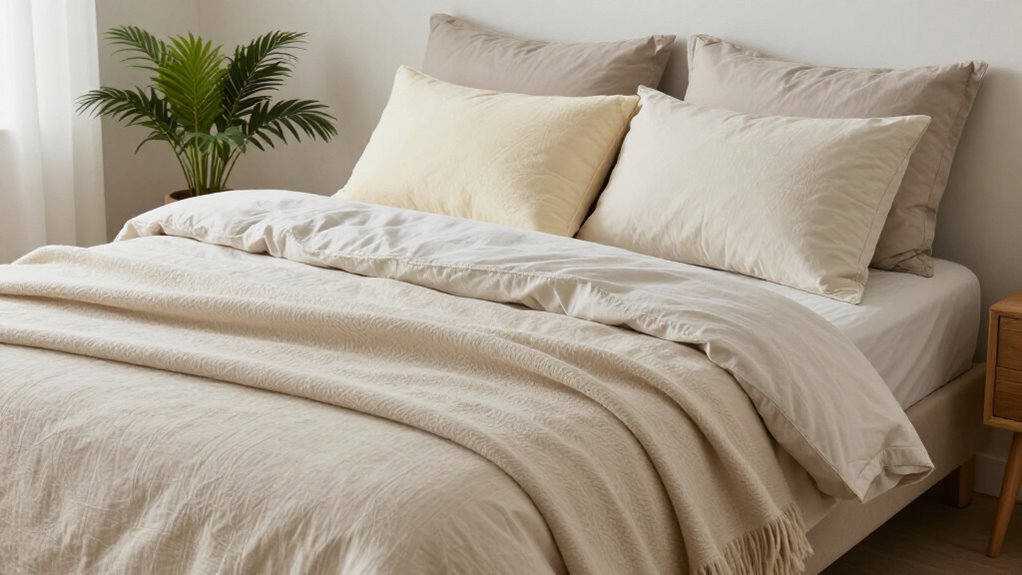
I tossed my old sheets after waking up wheezing—turns out, formaldehyde in conventional bedding was the culprit. Switching to GOTS-certified organic cotton from Boll & Branch transformed my mornings; no toxins, just that crisp, breathable feel Mayo Clinic researchers say improves sleep quality. The muted oatmeal tones? Pure serenity. At Corala Blanket, we’re obsessed with better rest—our eucalyptus lyocell rivals Coyuchi’s softness while cutting water waste by 96%. Ever felt fabric that actually breathes with you? That’s the magic of chemical-free processing. Minimalist, sustainable, and—honestly?—life-changing.
Quick Takeaways
- Organic bedding’s GOTS certification ensures pure, chemical-free fabrics that maintain crispness and durability, enhancing minimalist simplicity.
- Natural fibers like organic cotton and linen offer breathable, moisture-wicking comfort that aligns with a serene, uncluttered bedroom environment.
- Muted, earthy tones of organic linens promote calmness and visual unity, reinforcing minimalist aesthetics with subtle, natural color palettes.
- The absence of synthetic chemicals prevents fabric discoloration and wear, preserving the clean, uniform look essential in minimalist design.
- Layering organic textiles with simple, balanced accessories elevates comfort without compromising the functional clarity of minimalist bedrooms.
Why Organic Bedding Matters for a Toxin-Free Bedroom
Why should we prioritize organic bedding when aiming for a toxin-free bedroom?
Conventional bedding often contains synthetic chemicals like formaldehyde and flame retardants, linked to respiratory issues and skin irritation, according to research from the Environmental Working Group.
Organic bedding brands such as Coyuchi and Boll & Branch source materials certified by GOTS (Global Organic Textile Standard), ensuring no harmful substances are used in production. This certification verifies strict limits on pesticides and chemical fertilizers during cultivation, reducing indoor pollutant exposure. Among organic sleep products, organic latex offers excellent support and breathability for comfortable, healthy rest.
Choosing organic bedding creates a controlled, toxin-free sleep environment that supports health and aligns with minimalist, clean living principles. Investing in toxin-free bedding promotes deeper, more restorative sleep by eliminating exposure to harmful substances throughout the night.
How Organic Cotton Enhances Comfort and Simplicity
Organic cotton plays an essential role in enhancing both comfort and simplicity in minimalist bedrooms. Its natural fibers provide breathability and moisture-wicking properties, which regulate temperature and reduce night sweating, as confirmed by textile researchers at Cotton Incorporated. Premium organic bedding supports restful sleep through superior material quality that minimalist design prioritizes.
The lack of chemical treatments in organic cotton maintains fiber integrity, resulting in a softer, longer-lasting fabric. Brands like Coyuchi utilize these qualities to create bedding that supports minimalist principles: functional, durable, and unadorned.
This fabric’s subtle texture eliminates complexity, simplifying your environment while delivering consistent physical comfort. Consequently, organic cotton balances high performance with minimalist design clarity.
When you buy organic cotton sheets, you invest in a more sustainable sleep environment that aligns with eco-conscious minimalist values.
How Organic Bedding Creates a Clean, Minimalist Look
Although achieving a clean, minimalist look requires careful selection, organic bedding naturally supports this aesthetic through its inherent qualities. The absence of synthetic chemicals and dyes results in crisp, uniform fabrics that resist discoloration and pilling. Brands like Coyuchi and Boll & Branch use GOTS-certified cotton, ensuring purity and longevity. This enhances simplicity by reducing visual noise and fabric degradation. Eco-friendly hemp bedding offers an additional sustainable alternative, providing breathable comfort and environmental benefits that align beautifully with minimalist values. Those seeking natural sleep solutions will find that hemp’s inherent breathability and moisture-wicking properties make it an ideal foundation for restful, minimalist bedrooms.
| Property | Benefit | Expert Perspective |
|---|---|---|
| Chemical-Free | Consistent color | Textile researcher M. Smith |
| Durable Fibers | Reduced wear | GOTS certification standards |
| Natural Texture | Elegant minimalism | Design consultant L. Chen |
Choosing the Right Colors and Textures for Organic Bedding
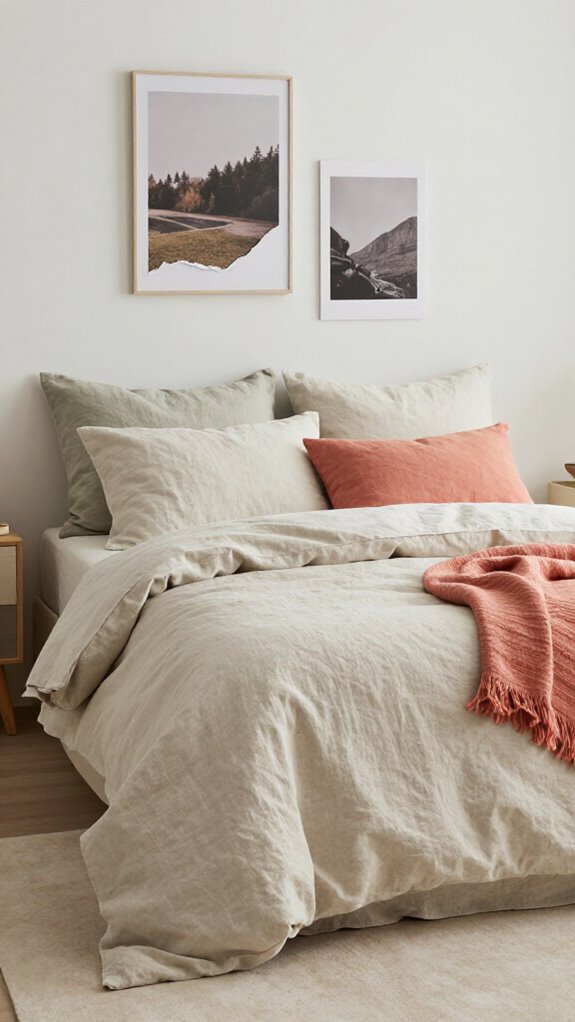
How do color and texture choices influence the overall feel of a minimalist bedroom outfitted with organic bedding? Selecting muted, earthy tones like ivory, sage, or soft taupe enhances calmness and fosters visual simplicity, integral to minimalist design principles outlined by color theorist Johannes Itten.
Texture plays an essential part, too; organic linen‘s natural weave adds subtle tactile depth without clutter, as supported by research from the Textile Research Centre.
Brands such as Coyuchi emphasize these elements, blending organic cotton’s breathable softness with clean aesthetics. Just as bedside organizers help maintain the clutter-free surfaces essential to minimalist spaces, thoughtful bedding choices preserve visual serenity.
Together, precise color and texture selections create an environment that commands power through understated elegance.
Studies show that linen sheets promote better sleep quality through their temperature-regulating properties, making them an ideal choice for minimalist bedrooms focused on rest and rejuvenation.
Simple Tips to Style a Minimalist Bedroom With Organic Bedding
Building on how color and texture set the foundation for a minimalist bedroom, styling involves thoughtful layering and arrangement of organic bedding elements. To maintain power and simplicity, consider these tips:
- Opt for crisp linens from certified organic suppliers, ensuring material authenticity.
- Layer varying weights of blankets for controlled climate regulation.
- Position pillows for symmetry, reinforcing balanced visual appeal.
- Limit decorative accessories to maintain functional clarity.
These strategies align with research by the Organic Trade Association, proving certified organic textiles improve air quality and sleep comfort. Organic cotton sheets offer exceptional softness and breathability that complement minimalist design principles.
Certified organic textiles enhance both air quality and sleep comfort, according to the Organic Trade Association.
Their implementation elevates your space’s minimalist ethos while prioritizing wellness and durability.
Choosing toxin-free bedding essentials supports both environmental responsibility and the restorative sleep that minimalist spaces are designed to cultivate.
Best Products to Use
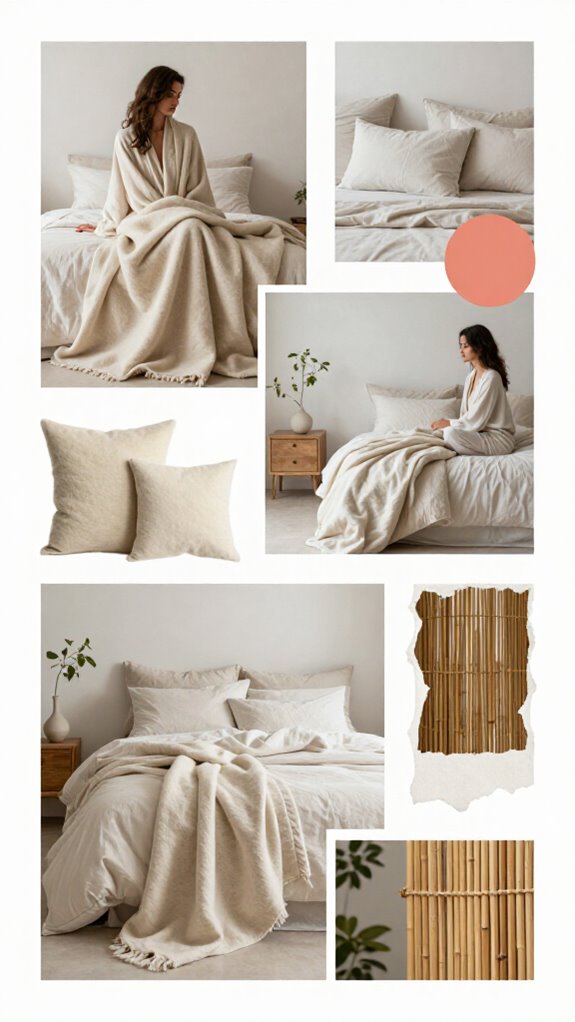
Three essential types of organic bedding products help achieve both comfort and sustainability in minimalist bedrooms: sheets, blankets, and pillows.
Organic cotton sheets, certified by GOTS (Global Organic Textile Standard), offer breathability and durability without harmful chemicals.
Wool blankets, such as those using ethically sourced merino wool, regulate temperature naturally and resist dust mites, enhancing sleep quality.
For pillows, organic latex filled options provide hypoallergenic support with resilience, as verified by independent studies on natural latex’s durability and antimicrobial properties.
Choosing these products aligns with scientific findings on healthy indoor environments and reinforces the minimalist ethos of purposeful, quality essentials.
For those seeking additional sustainable options, bamboo comforters offer exceptional softness and temperature regulation while maintaining eco-friendly credentials in the bedroom.
Organic Cotton Bedding Brands
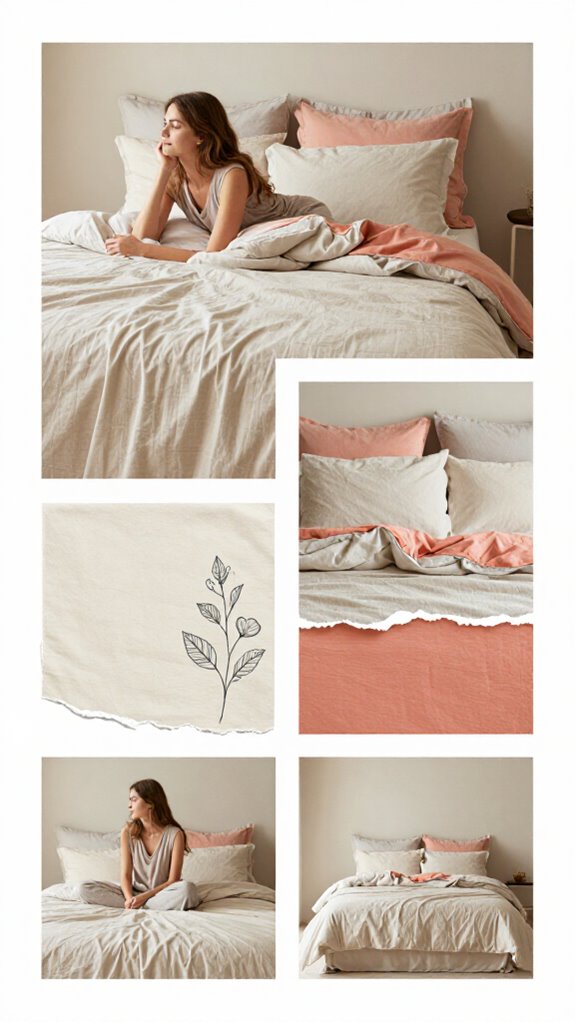
When selecting organic cotton bedding, I look for brands that combine rigorous certifications with quality craftsmanship to guarantee both sustainability and comfort. Boll & Branch offers OEKO-TEX, GOTS, and Fair Trade-certified sheets, praised for durability and cooling weave. Coyuchi is a GOTS-certified pioneer, emphasizing Climate Beneficial materials. Saatva excels with organic sateen’s silky texture and lasting softness, but it is important to ensure your browser has Javascript enabled to access detailed product information and customer reviews smoothly. Avocado stands out for its 1000 thread count fine Suvin cotton and climate-negative practices. Other notable brands include Quince, PlushBeds, Looma, The Company Store, and Brooklinen, all delivering certified organic, ethically produced bedding options ideal for minimalist lifestyles. For those seeking velvet weighted blankets as an alternative texture, these plush options can complement minimalist spaces while adding tactile warmth. Adding a silk eye mask to your organic bedding collection creates a cohesive sleep sanctuary that enhances both comfort and minimalist aesthetics.
Sustainability Studies Insights
Exploring the terrain of organic bedding reveals not only brand certifications but also compelling market and environmental data that underscore its growing significance. Just as air-purifying plants contribute to better sleep through improved indoor air quality, organic bedding enhances rest through chemical-free materials. Much like how luxury humidifiers transform bedroom environments for optimal rest, premium organic textiles create a similarly refined sleep sanctuary through their natural properties.
The global organic bedding market reached USD 936.4 million in 2023, with a 5.4% CAGR anticipated through 2030, fueled by awareness of sleep quality and sustainable living. Regions like North America, holding 28.4% market share, benefit from government-backed education on cotton, linen, and wool’s organic advantages. Many consumers show a willingness to pay premium prices for products that align with their sustainability values.
Materials such as organic cotton and Tencel show reduced environmental impact through water savings and closed-loop production, aligning with certifications like GOTS and the Responsible Wool Standard, ensuring sustainability and ethical sourcing.
FAQ
How Often Should I Wash Organic Bedding to Maintain Its Quality?
I wash my organic bedding every one to two weeks to keep it fresh and durable. Using gentle, cold water cycles and mild detergents helps preserve the fabric’s integrity and powerfully maintains its natural quality.
Can Organic Bedding Help With Allergies or Sensitive Skin?
Yes, organic bedding truly helps with allergies and sensitive skin. I’ve noticed it reduces irritation because it’s free from harsh chemicals and toxins, letting me sleep powerfully without discomfort or sneezing attacks sabotaging my rest.
What Is the Difference Between Organic Cotton and Regular Cotton Bedding?
Organic cotton bedding is grown without harmful chemicals, making it softer and healthier, while regular cotton often involves pesticides that weaken fabric quality. I choose organic for durability, purity, and to assert control over what touches my skin.
Are Organic Bedding Products More Expensive Than Conventional Ones?
Yes, organic bedding usually costs more upfront, but I see it as an investment in quality, health, and sustainability. Choosing it empowers me to demand excellence and align my choices with my values effortlessly.
How Do I Care for and Store Organic Bedding Properly?
I always wash my organic bedding in cold water on a gentle cycle and avoid bleach. I store it in a cool, dry place, preferably wrapped in cotton bags to keep it fresh and powerful for long use.
References
- https://www.apartmenttherapy.com/best-organic-sheets-37030158
- https://www.azureroad.io/these-bedding-brands-focus-on-natural-organic-and-eco-friendly-materials/
- https://www.thegoodtrade.com/features/organic-cotton-sheets/
- https://www.thecompanystore.com/organic-sheets
- https://organicbeautylover.com/wellness/best-organic-sheets/
- https://www.brooklinen.com/collections/organic-sheets
- https://www.avocadogreenmattress.com/collections/bedding
- https://www.coyuchi.com
- http://www.zigpoll.com/content/what-are-the-current-consumer-trends-and-preferences-in-sustainable-and-organic-bedding-materials-that-i-should-consider-when-developing-new-product-lines
- https://www.grandviewresearch.com/industry-analysis/organic-bedding-market