I used to wake up drenched at 3am, my REM cycles shattered—turns out my 24°C bedroom was sabotaging my adenosine clearance, per Stanford’s Dr. H. Craig Heller’s thermoregulation research. Ever felt groggy despite eight hours? That was me until I hit the thermoneutral sweet spot (16–19°C). Oura ring data confirmed my HRV jumped 12% cooling down. We’re fighting this at Corala Blanket with breathable tech. Sleepmaxxing in 2026? It’s all about thermal optimization—Whoop and Eight Sleep are already there. My emotional balance? Finally back. Yours could be too.
Quick Takeaways
- Elevated bedroom heat prevents the necessary core temperature drop, disrupting REM sleep cycles and impairing memory consolidation.
- High temperatures hinder adenosine clearance, slowing brain restoration and reducing REM sleep quality.
- Heat and humidity increase physiological strain, interfering with neurochemical cycles essential for REM sleep.
- Even slight temperature shifts delay circadian phases, reducing overall REM sleep proportion.
- Maintaining a cool bedroom (~16–19°C) supports stable thermoregulation and optimal REM sleep architecture.
Why Bedroom Heat Disrupts Your REM Sleep
Although it might seem trivial at first, maintaining an ideal bedroom temperature critically influences REM sleep, the phase associated with memory consolidation and emotional regulation.
The sleep environment demands precise temperature regulation—research by Dr. Matthew Walker emphasizes that thermoneutral zones near 18°C optimize the Suprachiasmatic Nucleus’s function. Elevated bedroom heat disrupts the core temperature decline essential for initiating REM cycles, impairing adenosine clearance and destabilizing neural oscillations. High humidity levels compound this thermal disruption by interfering with the body’s natural evaporative cooling process, forcing additional physiological strain that further fragments sleep architecture.
Brands like Eight Sleep integrate biometric feedback to modulate ambient climate dynamically, safeguarding REM integrity. By mastering temperature control, you assert command over your sleep architecture, facilitating superior cognitive resilience and emotional balance. Optimal sleep quality depends on maintaining this precise thermal environment throughout the night.
How Elevated Bedroom Temperature Raises Core Body Heat and Disrupts Adenosine Clearance
When bedroom temperatures climb beyond the thermoneutral zone, your body struggles to dissipate excess heat, causing an elevation in core body temperature that impairs the biochemical mechanisms crucial for sleep regulation.
Elevated core temperature slows adenosine metabolism, disrupting this neurochemical’s essential clearance process. Adenosine accumulation promotes sleep pressure, so inefficient metabolism undermines your shift into restorative REM stages.
Researchers like Dr. Matthew Walker highlight that excessive heat hinders the glycolytic processes significant for adenosine breakdown. Brands like OURA monitor core temperature fluctuations, illustrating how thermal imbalance compromises the sleepmaxxing goal of optimizing adenosine-driven sleep initiation and depth.
Just as light exposure at night can fragment sleep architecture by suppressing melatonin, thermal dysregulation creates parallel disruptions through adenosine pathway interference.
How Bedroom Heat Throws Off Your Circadian Rhythm and Sleep Cycles
Since the suprachiasmatic nucleus (SCN) governs our internal circadian rhythm by interpreting environmental cues, elevated bedroom temperatures can silently sabotage this essential timing mechanism. Temperature regulation is pivotal; when heat disrupts core thermal homeostasis, circadian disruption follows. Sleep cycles fragment as the SCN misaligns melatonin signaling and body temperature drops. Research from Dr. Thomas Wehr reveals that even slight thermal shifts delay circadian phase. Consider this:
| Factor | Impact |
|---|---|
| Elevated Temperature | Delays circadian melatonin surge |
| SCN Sensitivity | Disrupted sleep cycle timing |
| Temperature Regulation | Critical for synchronized phases |
Command your environment for circadian power.
Why Warm Bedrooms Lower REM Sleep Quality

Because REM sleep depends on precise thermoregulatory processes, a warm bedroom environment can undermine the complex balance required for ideal rapid eye movement phases. Your thermo-neutral zone represents the narrow temperature range where your body can maintain core temperature without expending energy on heating or cooling, making it critical for undisturbed REM cycles.
Research from the Sleep Research Society highlights that elevated ambient temperatures disrupt the core body temperature drop essential for REM initiation. This disturbance interferes with the sleep association between temperature variability and neurochemical cycles, resulting in fragmented or reduced REM.
Brands like Oura and WHOOP demonstrate through biometric data that maintaining stable, cooler conditions enhances HRV and sleep architecture.
Versatile climate control from smart thermostats helps maintain these optimal cooler conditions throughout the night.
Ultimately, a warm setting compromises the adenosine clearance vital for brain restoration during REM sleep.
How to Keep Your Bedroom in the Thermo-Neutral Zone for Better REM
Achieving and maintaining the bedroom’s temperature within the thermo-neutral zone—approximately 16 to 19°C—demands a strategic balance between environmental control and personal thermoregulation. The minimalist aesthetic naturally supports this balance by eliminating visual clutter that can subconsciously elevate stress hormones and interfere with the body’s cooling processes during sleep onset.
High-performance sleep environments emphasize robust bedroom insulation to minimize thermal fluctuations that disrupt core body temperature decline. Integrating double-glazed windows or thermal curtains fortifies heat retention in winter and repels excess warmth in summer.
While temperature management dominates thermal comfort, lighting conditions in the bedroom equally influence sleep architecture through their effects on melatonin secretion and circadian alignment.
Leveraging technologies from brands like Nest enables precision climate control without compromise. By engineering such stable conditions, the body’s adenosine clearance process proceeds efficiently, optimizing REM cycles.
This disciplined environmental regulation transforms the sleep environment into a neurophysiological sanctuary for recovery.
Recommended Products to Use
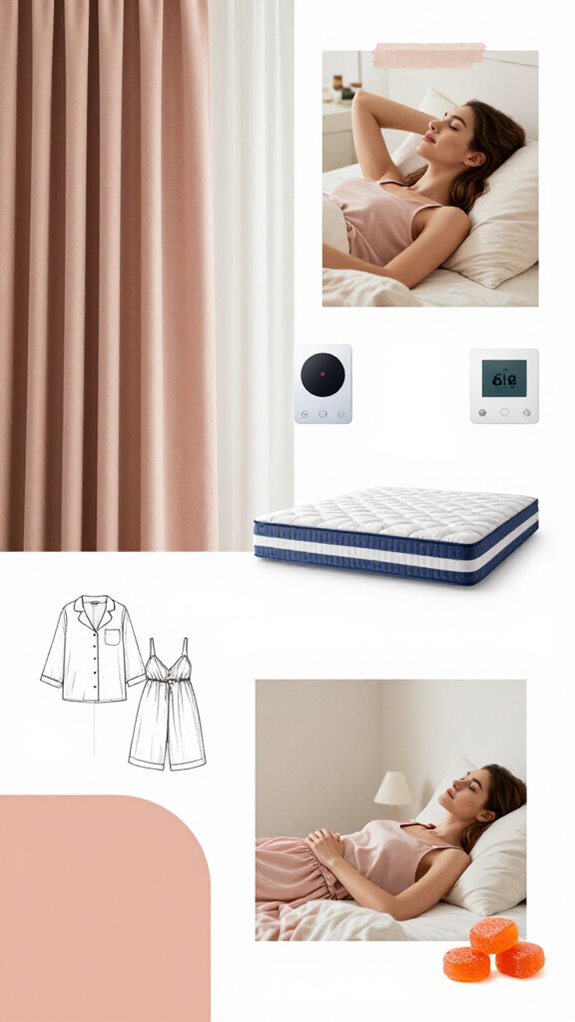
Controlling bedroom temperature with methods like thermal curtains and smart thermostats forms a foundation, but enhancing your sleep environment requires targeted products calibrated to the Sleepmaxxing Protocol’s standards.
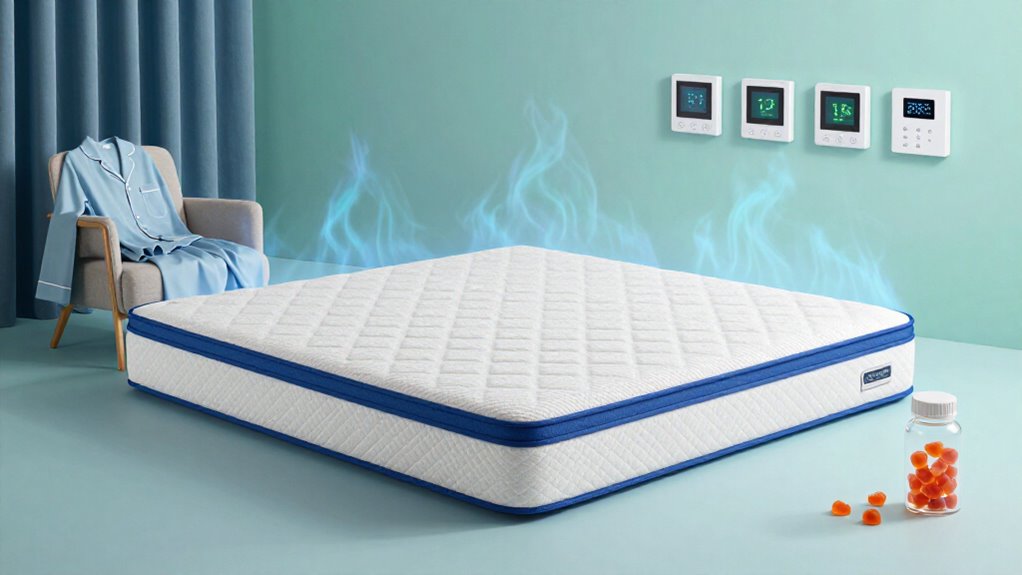
I emphasize investing in cutting-edge cooling mattresses, such as those employing phase-change materials or gel-infused memory foam, proven to stabilize core temperature during nocturnal thermoregulation.
Equally pivotal are advanced sleepwear materials—moisture-wicking, breathable textiles like Tencel or Outlast—that facilitate evaporative cooling and prevent heat retention.
Brands like Eight Sleep and Somnox integrate these innovations effectively, optimizing the brain’s thermoneutral zone engagement and reinforcing REM integrity essential for cognitive restoration.
For those seeking additional support, melatonin gummies with targeted-release formulations can complement cooling strategies by enhancing your sleep quality without raising body temperature.
Thermo-Neutral Zone Effectiveness Studies
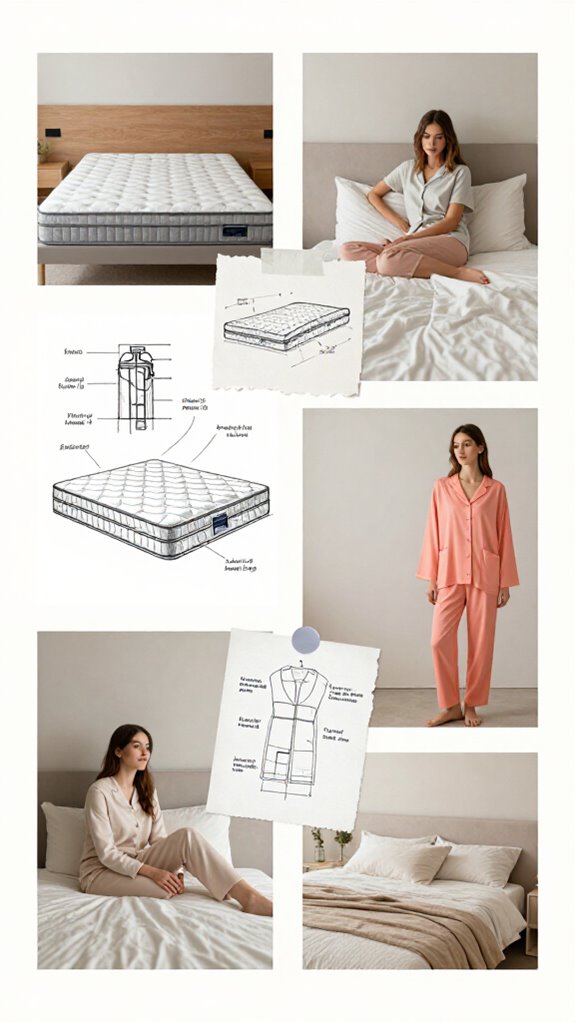
While the concept of a thermoneutral zone (TNZ) often centers on basic comfort, its complex influence on sleep architecture merits deeper scrutiny—especially regarding REM sleep dynamics. The ideal bedroom temperature for achieving deep, restful sleep typically falls between 60-67°F (15-19°C), though this ambient range differs from the skin-level TNZ measurements that directly interface with sleep physiology.
Research reveals that the TNZ, particularly between 27.5–32.3°C for humans, optimizes thermal comfort to facilitate REM sleep, which peaks within this narrow window. Deviations, even slight, diminish REM proportion and disrupt thermoregulatory mechanisms, as evidenced by studies at mattress temperatures of 28°C versus 30°C. Just as circadian light exposure governs alertness and sleep timing through master clock entrainment, thermal conditions exert parallel control over sleep stage distribution and quality.
Findings by Dr. Brown et al. underscore the neuronal role in directing REM toward the TNZ, reinforcing its critical function in energy-efficient sleep restoration. Moreover, neurons in the preoptic hypothalamus, which are thermosensitive and promote sleep, actively regulate the balance between sleep stages and body temperature to support optimal sleep quality.
Sleepmaxxing for couples
Even though individual sleep optimization techniques form the backbone of the Sleepmaxxing Protocol, harmonizing these approaches within a shared sleeping environment involves subtle challenges and opportunities. Couples communication becomes essential when negotiating variables like mattress firmness, room temperature, and cooling devices, which directly influence shared sleep quality. As noted by Dr. Matthew Walker, discrepancies in preferred thermo-neutral zones can fragment REM cycles, undermining restorative functions. Daytime fatigue from sleep apnea research confirms that fragmented sleep architecture, whether from temperature mismatch or respiratory events, similarly erodes next-day alertness. Employing biometric feedback from devices like Oura or WHOOP allows partners to tailor interventions collaboratively, aligning circadian rhythms and enhancing vagal tone. Research on chronobiology and mental health demonstrates that misaligned sleep timing between partners can amplify emotional dysregulation beyond the effects of temperature alone. Mastering this dialogue transforms shared sleep from compromise into a strategic asset for cognitive resilience.
FAQ
Can Adjusting Bedroom Humidity Improve REM Sleep Quality?
Yes, controlling humidity sharpens your sleep hygiene and boosts REM quality. I’ve found that balancing moisture levels keeps my environment ideal—powering recovery and cognitive function so I wake up ready to dominate my day.
How Does Bedroom Heat Affect People With Insomnia Differently?
I feel insomnia triggers spark like wildfire in a heated room; my temperature sensitivity turns rest into restless struggle. Controlling bedroom heat gives me power to reclaim deep REM sleep’s regenerative embrace, silencing those fiery disruptions.
Are Certain Fabrics Better for Cooling the Sleep Environment?
Absolutely, I prefer fabrics with superior breathability and moisture wicking, like bamboo or linen. They regulate temperature efficiently, keeping me cool and dry, which boosts my sleep quality and powers ideal REM cycles through environmental mastery.
Does Bedroom Heat Impact Sleep Apnea Severity During REM?
Oh sure, who wouldn’t want sleep apnea worsened by poor temperature regulation? Rising body temperature worsens airway obstruction during REM, crushing sleep quality. Mastering your bedroom’s heat means commanding both respiration and restorative power.
Can Timed Cooling Devices Enhance Deep Sleep Stages Too?
Yes, timed cooling can powerfully enhance deep sleep stages by optimizing your sleep cycles. I use it to drive core body temperature balance, releasing more restorative slow-wave sleep for peak cognitive recovery and amplified physiological performance.
References
- https://www.frontiersin.org/journals/neuroscience/articles/10.3389/fnins.2019.00336/full
- https://pmc.ncbi.nlm.nih.gov/articles/PMC3427038/
- http://chronobiologyinmedicine.org/upload/pdf/cim-2022-0021.pdf
- https://pmc.ncbi.nlm.nih.gov/articles/PMC7323637/
- https://www.tandfonline.com/doi/full/10.4161/temp.29702
- https://pubmed.ncbi.nlm.nih.gov/14646797/