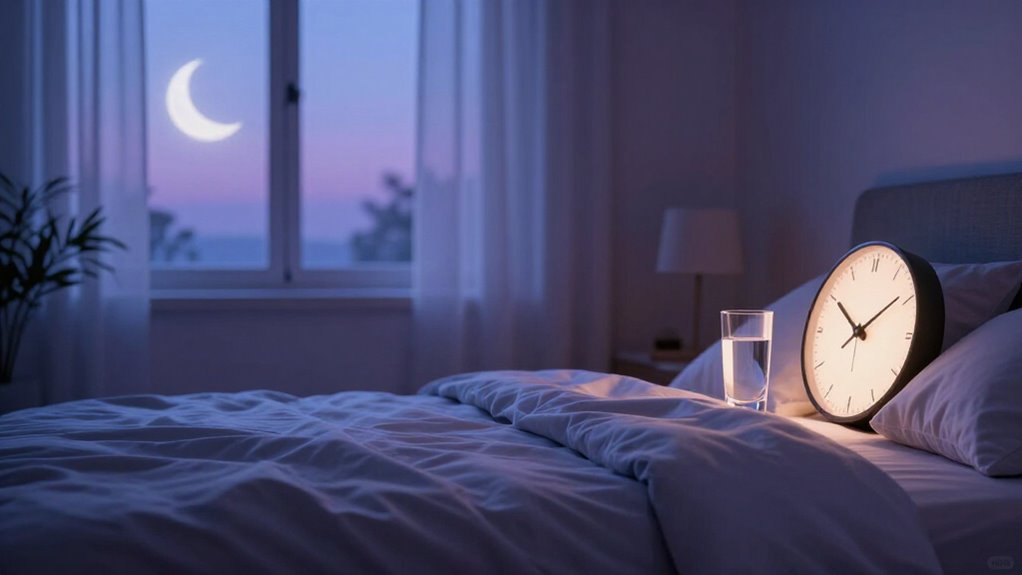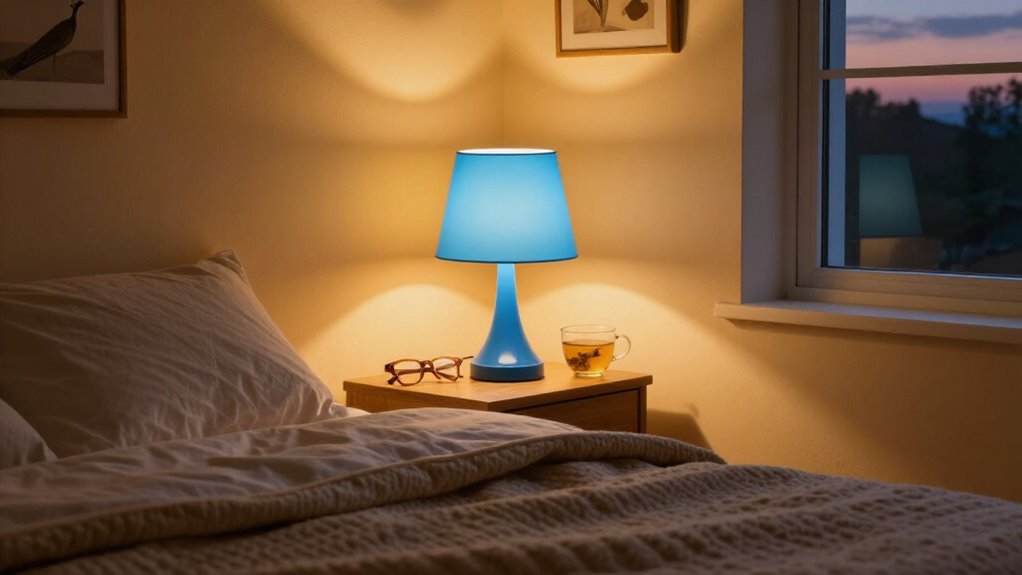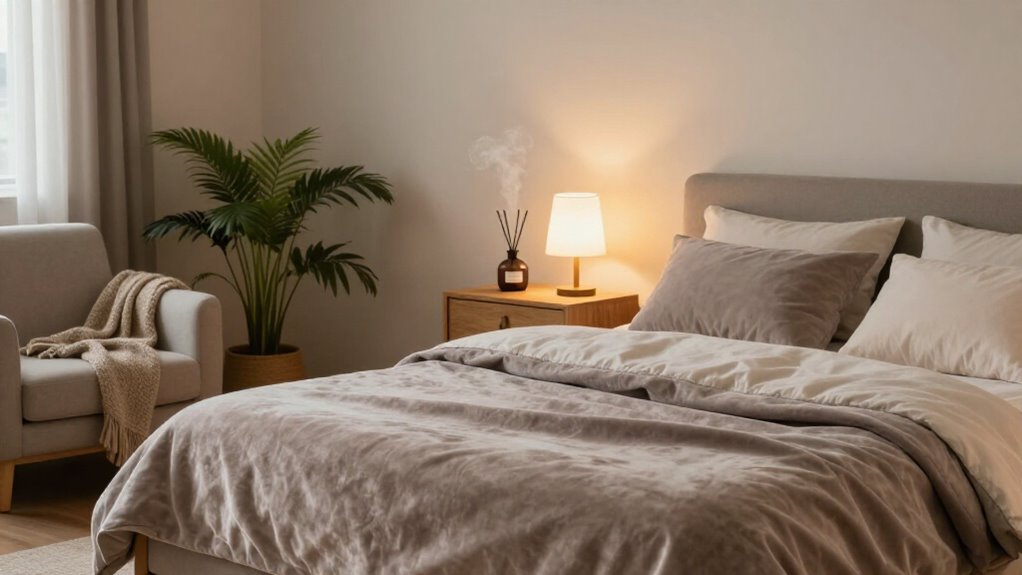
I used to toss and turn all night. Couldn’t figure out why I felt so wrecked. Then I repositioned my bed to face the doorway—game changer. That simple move? It killed my anxiety instantly.
Here’s what actually works. Soft blues and greens on your walls aren’t just pretty—they genuinely calm your nervous system. Pair that with a quality weighted blanket from us at Corala Blanket, and you’re golden. We’re obsessed with helping people sleep better, honestly.
The little things matter too. Blackout curtains block that sneaky light. Breathable fabrics like linen keep you from overheating. Even red-tinted lamps preserve your melatonin while you wind down.
Sure, it’s not magic. But layering these strategies? That’s when real rest happens. Brands like Parachute and Brooklinen get it. So do we. Your bedroom’s about to become your sanctuary.
Quick Takeaways
- Position your bed to view the doorway while lying down, promoting security and reducing sleep anxiety through visual awareness.
- Arrange matching nightstands and lamps symmetrically on both sides of the bed to create visual harmony and balance.
- Use light-blocking curtains combined with dim red lighting to preserve circadian rhythms and support uninterrupted sleep cycles.
- Install soundproofing elements like acoustic plasterboard and door sweeps to reduce outdoor noise by 27-46dB for quieter rest.
- Choose natural breathable fabrics like wool and linen, paired with weighted blankets, to enhance comfort and promote deeper sleep.
Position Your Bed in the Bedroom’s Commanding Spot
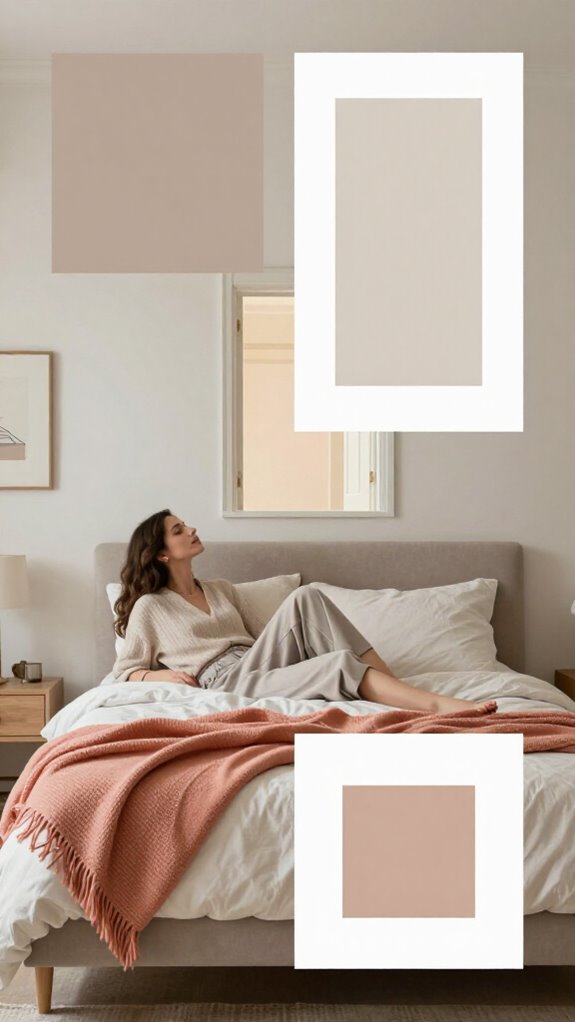
The commanding position refers to a bed placement that allows the sleeper to view the bedroom doorway while lying down, without the bed being in direct alignment with the door itself. This bed placement strategy promotes both security and relaxation by enabling visual awareness of room entrances from a resting state. Cooling your bedroom creates an ideal temperature environment that complements this sense of security for deeper, more restorative sleep.
Positioning the bed to observe the door without direct alignment supports healthy energy flow throughout the bedroom. When the bed faces away from or angles slightly from the doorway, it creates a sense of control essential for quality sleep. This arrangement prevents the “coffin position”—when beds sit directly in line with doors—which practitioners believe drains restorative energy. A solid wall headboard provides energetic support that complements the commanding position strategy.
The commanding position acknowledges that sleep quality depends partly on environmental psychology. By establishing clear sightlines to entry points, sleepers experience reduced anxiety and enhanced peace during rest periods.
Arrange Furniture Symmetrically to Feel Calm and Spacious
While the commanding bed position establishes security and visual awareness, symmetrical furniture arrangement complements that foundation by creating an environment where the mind naturally settles into calm.
Symmetrical layouts organize space through balanced furniture placement, positioning matching nightstands and lamps on either side of the bed. This visual harmony reduces mental clutter and enhances spatial perception, making rooms feel larger and less confined. Light and airflow through intentional lamp positioning further support the sleep stage transitions that occur as the body prepares for rest.
Design simplicity achieved through symmetrical arrangement supports psychological comfort by anchoring the bed as the focal point. Aligned elements create organized space that facilitates relaxation, while paired artwork and mirrored surfaces amplify the spaciousness illusion. Incorporating an ergopedic mattress base beneath your bed allows for customized positioning that maintains symmetrical aesthetics while providing personalized comfort adjustments. High-end sleep accessories such as premium bedding and temperature-regulating materials can elevate this symmetrical sanctuary into a true retreat for deeper rest.
Maintaining 24–42 inches on each bed side guarantees accessibility without disrupting restful aesthetics. When aligned with architectural features, these balanced furniture placements establish order that supports sleep readiness without appearing rigid or forced.
Choose Calming Colors That Promote Relaxation
Color selection markedly influences sleep quality and bedroom atmosphere, with research demonstrating that specific hues activate physiological and psychological responses conducive to rest. Non-toxic bedding materials complement these calming color palettes by eliminating chemical irritants that disrupt sleep. The minimalist design philosophy extends to color choices, favoring restrained palettes that reduce visual clutter and mental stimulation.
Color psychology guides shade selection for ideal sleep environments.
Blues rank highest for average sleep duration, reducing stress and lowering heart rate through associations with sky and sea. Light blue alleviates insomnia, while dark shades may evoke sadness.
Greens combine blue’s calmness with yellow’s warmth, promoting relaxation through nature connections. Sage green offers low-saturation tranquility.
Neutral tones—beige, soft gray, and warm taupe—create clean, sophisticated atmospheres supporting stress reduction.
Lighter purple shades like lavender accelerate sleep onset without overstimulation.
Soft pink alleviates anger and induces calm when used in muted forms, working effectively as accent pieces rather than wall colors.
Layer Bedroom Lighting to Support Your Sleep Cycle
Lighting profoundly shapes the body’s circadian rhythm—the internal 24-hour cycle governing sleep and wakefulness—by regulating melatonin production through the pineal gland. Blue light exposure in the evening hours directly inhibits melatonin secretion, making light source selection critical for sleep preparation. A layered lighting approach supports this biological process across different times of day.
Evening hours require minimal light intensity, ideally around 3 lux from four hours before bedtime. Bright lighting at 65 lux delays melatonin onset by approximately one hour, disrupting sleep timing. Dim red lights prove effective alternatives, as red wavelengths don’t suppress melatonin unlike blue light from standard LED sources.
Dynamic lighting systems offer advanced circadian support through artificial dawn sequences—gradually increasing from 0 to 209 lux over 35 minutes. Research shows this approach advances wake time by 20 minutes while increasing sleep duration and efficiency.
Complete darkness during sleep remains essential, as even moderate light exposure during rest disrupts sleep architecture and next-day insulin sensitivity.
Soft lighting fixtures designed with warm color temperatures and dimmable controls create the ideal ambient layer for evening wind-down routines, complementing task and accent lighting throughout the bedroom.
Select Breathable Fabrics and Natural Materials That Regulate Temperature
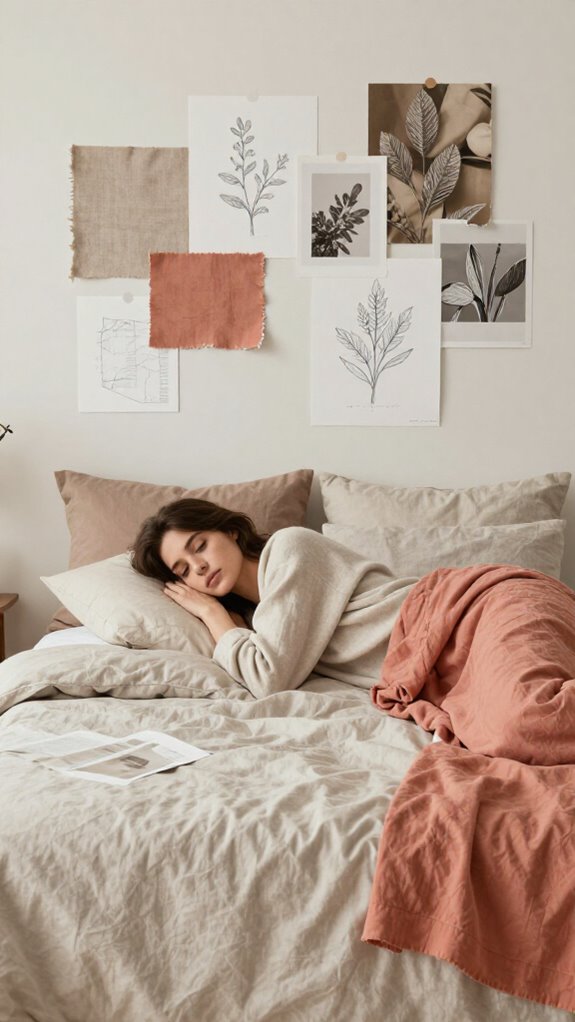
The fabric composition of bedding directly influences sleep quality by managing moisture and temperature throughout the night—two critical factors that affect sleep continuity and restorative cycles.
Fabric comparisons reveal distinct performance characteristics in moisture control and breathability.
Key materials for temperature regulation include:
- Wool ranks highest for moisture vapor release and airflow through crimped fibers, particularly beneficial for hot sleepers and night sweats.
- Linen absorbs and disperses moisture while trapping air for insulation, thermoregulating across seasons.
- Tencel-Lyocell adapts to humidity by wicking moisture away and offers antimicrobial properties for sweaty sleepers.
Cotton’s percale weave maximizes airflow, while bamboo provides silky softness with moderate moisture-wicking.
These natural materials prevent perspiration buildup, supporting uninterrupted sleep cycles and restorative rest throughout the night.
Eliminate Noise and Light to Protect Your Sleep Environment
While ideal bedding materials address internal temperature regulation, external environmental factors—specifically noise and light—equally determine whether sleep cycles reach completion.
Soundproofing techniques substantially improve sleep quality by reducing disruptive auditory stimuli. Closed windows provide a 27.8dB(A) median outdoor-indoor difference, while acoustic plasterboard achieves 36-46dB reduction. Underlayment reduces impact noise by 20-50dB. Door sweeps and automatic door bottoms further minimize sound transmission. Sound-absorbing curtains offer an accessible solution for dampening reverberation and reducing ambient noise levels in sleep spaces.
Light blocking curtains serve as essential barriers against environmental illumination that disrupts circadian rhythms. Research demonstrates that facade insulation interventions reduce indoor noise levels by 7dB on average, with highly annoyed respondents dropping from 43% to 15% post-intervention.
These combined soundproofing techniques and light control strategies establish the protective environment necessary for uninterrupted, restorative sleep. A feng shui aesthetic approach to bedroom arrangement further enhances this protective environment by promoting balanced energy flow and visual harmony.
Deep Pressure Stimulation Activates Parasympathetic Nervous System

Deep pressure stimulation activates the parasympathetic nervous system (PSNS), the body’s natural relaxation mechanism that counteracts stress responses and prepares the body for sleep.
Weighted blankets deliver this therapeutic pressure, sending calming signals to the nervous system that shift the body from sympathetic (fight-or-flight) to parasympathetic dominance.
The mechanism works through several pathways:
- Vagus nerve activation: Pressure stimulation triggers the vagus nerve to transmit signals that slow heart rate, reduce blood pressure, and decrease breathing rate.
- Stress hormone reduction: Deep pressure counters cortisol and other stress hormones, promoting muscular relaxation.
- Sleep onset acceleration: PSNS dominance enables faster sleep onset and deeper restorative rest.
Research supports weighted blanket effectiveness for improving sleep quality and reducing anxiety. Weighted sleep products are among the most effective tools for overnight anxiety relief, making them a valuable addition to any sleep-friendly bedroom setup. Many people choose to buy velvet weighted blankets for their combination of therapeutic pressure and luxurious softness that enhances the sleep environment.
FAQ
How Much Space Should I Leave Between My Bed and the Walls for Comfort?
Ideal bed placement requires 24 to 36 inches of wall clearance, depending on bed size. Twin and full beds need 24–30 inches from the foot to the opposite wall.
Queen beds benefit from 30–36 inches, while king beds require 36–42 inches to prevent a cramped feel.
This wall clearance facilitates easy movement, sheet changes, and safe emergency passage. Designers recommend prioritizing accessibility on frequently accessed sides, particularly for larger frames.
What’s the Ideal Bedroom Size for Optimal Sleep Quality and Relaxation?
Ideal bedroom dimensions balance adequate sleeping area with surrounding space for movement and airflow.
Experts recommend bedroom dimensions that allow 24–42 inches on each side of the bed, supporting the sleep environment’s physical and psychological needs.
Larger rooms reduce confinement feelings and enhance relaxation.
However, prioritizing proper bed dimensions—108 × 221 cm minimum—and maintaining cool temperatures (60–67°F) matters more than absolute room size for consolidating sleep quality.
Can I Use My Bedroom for Work or Exercise Without Affecting Sleep?
Using your bedroom for work or exercise creates unhealthy associations that compromise sleep quality.
Multifunctional spaces blur the mental boundary between rest and activity, making it harder to disconnect at bedtime. Research shows working in bed increases awake time and exercise-induced adrenaline conflicts with sleep onset.
Maintaining work-life balance requires spatial separation. Designate your bedroom exclusively for sleep, establishing clear zones within your home for distinct activities and supporting restorative rest.
How Does Bedroom Clutter Impact Sleep Quality Compared to Organized Spaces?
A cluttered bedroom functions like a crowded marketplace where the mind cannot find rest. Research from St. Lawrence University demonstrates that clutter effects notably impair sleep quality; the global PSQI score improved from 13.2 to 11.4 after decluttering habits.
Organized benefits include reduced anxiety and cognitive load. Hierarchical regression analysis shows decluttering predicts measurable sleep improvement, offering individuals belonging within peaceful, intentional spaces supporting restorative rest.
What Hidden Storage Solutions Work Best for Maintaining a Minimalist Bedroom?
Under-bed storage and multi-functional furniture form the foundation of minimalist bedroom design.
Rolling bins and pull-out drawers conceal seasonal items and clothing while maintaining accessibility.
Ottoman beds and storage benches eliminate visual clutter by hiding pillows and essentials within furniture itself.
These solutions preserve open floor space and wall clarity, creating an uncluttered environment that research associates with improved sleep quality and reduced mental fatigue.
References
- https://lifestylefurniturehomestore.com/blogs/news/why-your-bedroom-layout-affects-your-sleep-quality
- https://wibc.com/873588/bedroom-layout-sleep-study/
- https://mattressstarla.com/blogs/all-article/top-bedroom-design-trends-for-better-sleep-in-2026
- https://www.popsci.com/diy/bedroom-design-better-sleep/
- https://www.sleepfoundation.org/bedroom-environment/how-to-design-the-ideal-bedroom-for-sleep
- https://onsen.eu/en/blog-about-sleep/bedroom-design
- https://pmc.ncbi.nlm.nih.gov/articles/PMC6180994/
- https://www.unsw.edu.au/newsroom/news/2023/03/bedrooms–more-than-just-a-sleep-space
- https://www.povison.com/blog/decoration-ideas/sleep-better-with-feng-shui-complete-guide-to-ideal-bed-placement-in-any-room.html
- https://www.homesandgardens.com/interior-design/bed-placement-feng-shui-rule
- https://www.decorilla.com/online-decorating/bed-placement/
- https://www.anjiecho.com/holistic-spaces-blog/feng-shui-bed-position
- https://www.youtube.com/shorts/hIdWa7q6UkM
- https://pmc.ncbi.nlm.nih.gov/articles/PMC10965811/
- https://friendshipcreek.mckeebuilders.com/2024/05/29/how-room-layout-influences-comfort-and-functionality/
- https://theshopbydsi.com/blogs/resources/bedroom-balance-with-symmetry-and-asymmetry
- https://www.homesandgardens.com/interior-design/are-symmetrical-living-room-layouts-out-of-style
- https://starfurniture.com/blog/the-power-of-symmetry-achieving-visual-balance-in-every-room-of-the-home/
- https://www.acdesigndevelopmentcorp.com/post/the-importance-of-symmetry-in-interior-design
- https://sunset.com/home-garden/design/symmetry-in-interior-design