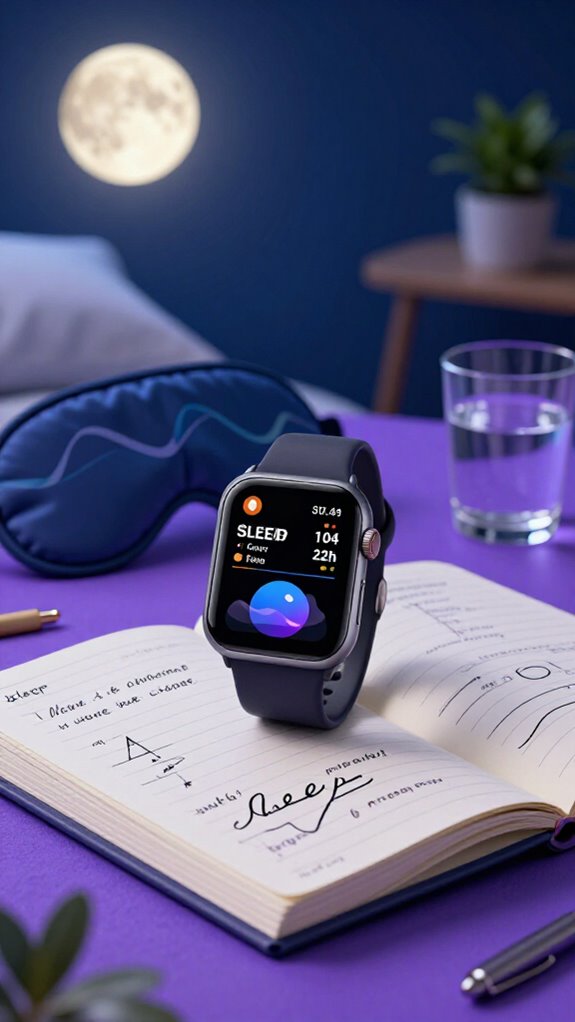
My Oura once told me I’d slept like a baby. I felt like roadkill. That’s when I learned: these gadgets are guesswork in a pretty package.
Motion sensors and wrist temperature don’t know your soul’s tired.
Ever stared at a “72 sleep score” at 2 AM? That’s orthosomnia, friend—chasing numbers instead of rest. Matthew Walker’s research shows this performance anxiety actually *wrecks* sleep architecture. Cheri Mah’s athlete studies? All about timing, not badges. Satchin Panda’s circadian work? Light and routine, not algorithmic praise.
The 2026 “sleepmaxxing” crowd is already optimizing themselves into exhaustion.
At Corala Blanket, we push *actual* recovery—weighted pressure, not data points. Because your nervous system doesn’t care about your leaderboard.
Ditch the verdict. Trust the feeling.
Quick Takeaways
- Smartwatch sleep stats estimate stages using motion, heart rate, and temperature, not EEG, so they are helpful signals, not definitive sleep diagnoses.
- Turning sleep into a score can create performance anxiety, making people obsess over optimization instead of actually resting.
- Over-checking metrics can increase arousal at night, and blue light or device interaction can further disrupt sleep.
- Sleep quality depends heavily on environment—lighting, sound, temperature, and comfort—factors wearables cannot fully capture.
- A better approach is to use tracker trends sparingly, combine them with subjective feelings, and break the feedback loop with simpler analog habits.
Why Smartwatch Sleep Stats Trigger Orthosomnia?
Why do smartwatch sleep stats so often backfire? I see smartwatch accuracy as useful, not absolute; firms like Oura, Fitbit, and Apple estimate stages from motion, heart rate, and temperature, not EEG.
That gap can invite tech reliance: when a device labels a night “poor,” you may doubt solid rest. Researchers such as Dr. Colin Espie note that sleep is partly subjective, and rigid scores can distort judgment.
I tell you to treat metrics as signals, not verdicts. Power comes from interpretation, not surrendering authority to an algorithm.
How Does Sleep Tracking Turn Into Performance Anxiety?
When a sleep tracker turns every night into a report card, I see performance anxiety start to take root. I watch you chase green scores, and sleep becomes a contest, not recovery. Blue light exposure from late-night screen checking further disrupts your natural sleep architecture, compounding the very problem you’re trying to solve. For those who develop persistent insomnia from this pattern, cognitive behavioral therapy remains the most effective evidence-based treatment to restore healthy sleep.
- Each metric can spark sleep anxiety: latency, deep sleep, awakenings.
- Brands like Oura and Fitbit frame nights as optimized output, which can intensify performance pressure.
- Researchers such as Barb F. Insel and Kelly Baron note that obsessive monitoring can heighten arousal.
I’d rather you treat data as a compass, not a tribunal. Confidence restores control; constant checking erodes it, one restless glance at a time.
What Sleep Scores Miss About Real Recovery?
Sleep scores can be useful, but they flatten a night of physiology into a single number, and that number often misses the kind of recovery that actually matters.
I look at heart rate variability, resting pulse, and how quickly you regain focus after strain. Those recovery viewpoints reveal more than sleep depth alone.
A score can’t tell you if stress hormones stayed high, if breathing was fragmented, or if you woke ready to perform. Researchers like Matthew Walker and companies like Oura and Whoop show trends, yet I treat them as signals, not verdicts.
Real recovery is operational, not cosmetic.
Why Does an Analog Bedroom Reduce Sleep Obsession?
Perhaps the strongest reason I favor an analog bedroom is that it breaks the feedback loop that keeps many people awake: no glowing sleep score, no overnight graphs, no temptation to check whether a bad night has become a personal failure. aesthetic nighttime rituals create the conditions for deep, restorative rest without digital interference. I see analog benefits in the way a calming environment lowers cognitive load and lets the brain stand down. Mechanical clocks tell time without demanding attention. Paper journals, like those used in CBT-I, record patterns without midnight analytics. Brands such as Loftie and research from Dr. Matthew Walker show simpler rooms can support steadier rest and quieter minds. For those who still need audio to drift off, high-fidelity sleep buds offer a middle path—delivering quality sound without the data-tracking that fuels sleep anxiety.
How Do You Break The Smartwatch Sleep Loop?
To break the smartwatch sleep loop, I start by treating the device as a source of limited data, not a nightly verdict. I keep one weekly check-in, then I compare trends with how I feel and function. That shift cuts orthosomnia and restores sleep quality. Analyzing sleep stages reveals how tracking data should inform rather than dictate rest habits.
I also use smartwatch alternatives: a paper log, a simple bedside clock, or a WHOOP-free routine. Researchers like Matthew Walker and sleep clinician Harvey B. Simon emphasize consistency, not fixation.
If a metric matters, I ask whether it changes behavior; if not, I discard it. Power comes from control, not constant monitoring.
Creating a sleep-friendly bedroom environment—cool, dark, and quiet—removes the need for data validation and lets your body lead.
Sleepmaxxing Backlash
The backlash against sleepmaxxing is really a backlash against turning recovery into a performance metric, and I see it most clearly in how people talk about their nights now.
I hear more people reject scores and chase Sleep quality through simpler cues. Many are discovering that sleep therapy machines offer a way to improve rest without the pressure of nightly data.
- They choose Tech fatigue relief by silencing alerts and ditching the wrist graph.
- They use a Digital detox after dusk, a tactic clinicians like Matthew Walker and brands like Oura now frame as support, not surveillance.
- They practice Mindful unwinding: dim light, steady breathing, and a quiet room.
- They return to analog sleep aids like white noise machines to create consistent, screen-free environments that don’t track or judge.
Power comes from regulation, not obsession.
Product Roundups
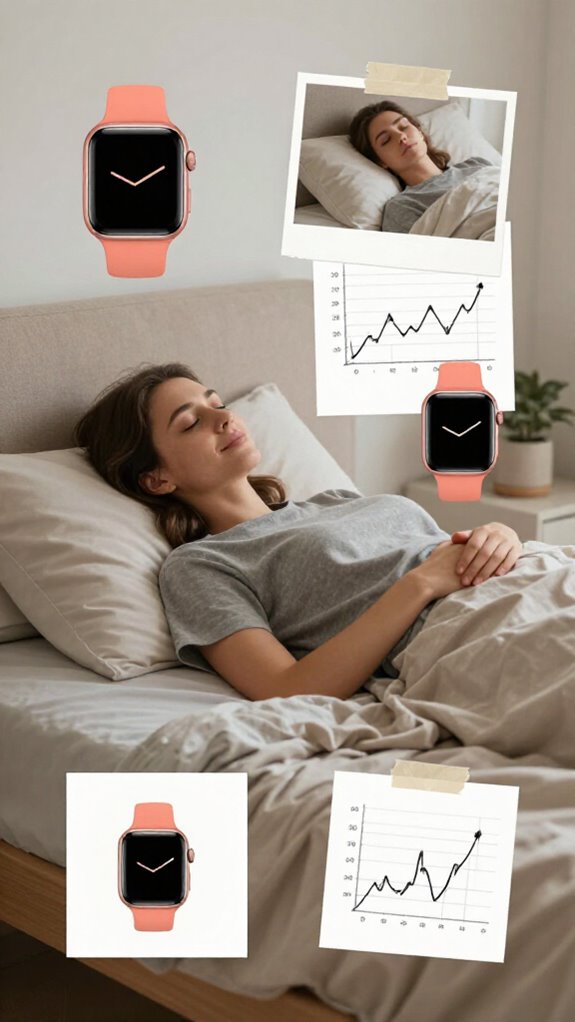
A good smartwatch sleep roundup has to sort through a lot more than brand loyalty because each device measures a slightly different slice of the night.
I’ve found that the useful question isn’t “which one is best?” so much as “best for what job?”
The better question isn’t which smartwatch is best, but what job it needs to do.
Apple Watch now pairs sleep duration, consistency, awakenings, and staging into its sleep score, with Series 11 also using a 24-hour battery profile.
While its staging accuracy still lands around 65% for NREM and REM, it tends to undercall deep sleep in 2026 evaluations.
Samsung, Pixel, Fitbit, Oura, and Garmin each trade product features for tracking accuracy.
The best smart watches share a common goal of helping users unlock better rest through data-driven insights.
Unlike wearables, dedicated smart bed control systems can offer more precise environmental adjustments for sleep optimization without the accuracy trade-offs of wrist-based sensors.
In a multicenter comparison of 11 consumer sleep trackers, performance ranged from 0.26 to 0.69 macro F1, showing just how much device variability can affect the sleep stats people trust.
Sleep Study Findings
In PSG comparisons, 1) Galaxy Watch 5 posted only −0.4% bias in sleep efficiency, yet staging still drifted. 2) Apple Watch 8 reached 86.1% light-sleep sensitivity, but just 50.5% for deep sleep; its REM numbers were stronger. 3) Oura, Fitbit, and Pixel Watch all showed distinct tradeoffs, and three-stage models outperformed five-stage ones. Soft ambient lighting helps establish consistent circadian rhythms that wearables cannot replicate.
For readers who want power, that means device accuracy is useful, but never absolute. Creating truly minimalist bedroom lamps can achieve what no wearable can—genuine environmental conditions for sleep.
FAQ
Can Smartwatch Sleep Data Diagnose Medical Sleep Disorders?
No, I wouldn’t trust smartwatch sleep data to diagnose sleep disorders; consumer devices have data limitations and limited diagnostic accuracy. I’d use wearable technology for trends, then seek medical applications and clinical testing for real answers.
Should I Remove Wearable Sleep Tracking Completely?
I wouldn’t remove it completely; I’d strip back wearable sleep tracking to spot trends, not chase perfection. If you’re feeling wearable fatigue or tracking obsession, I’d switch to occasional checks and reclaim control.
How Accurate Are Sleep Stage Estimates on Consumer Devices?
I’d say consumer devices estimate sleep stages roughly, but they’re weaker than clinical tools. I trust sleep data reliability for trends, not precision; consumer device accuracy usually improves awareness, not power, over nights and weeks.
What Nighttime Habits Improve Sleep Without Tracking?
I’d start with bedtime routines: dim ambient lighting, cut screen time, and shape a cool, quiet sleep environment. I’d add mindful relaxation, calming teas, pre sleep rituals, and a digital detox to guard your power.
Can Sleep Trackers Worsen Insomnia in Sensitive Sleepers?
Yes, I think sleep trackers can worsen insomnia in sensitive sleepers; they can trigger sleep anxiety, wearable interference, and data obsession. I’d trust personal awareness, protect your power, and let your body lead tonight.
References
- https://pmc.ncbi.nlm.nih.gov/articles/PMC10654909/
- https://thebettersleepclinic.com/blog/how-accurate-are-sleep-trackers-smart-watches-smart-rings
- https://www.sleepfoundation.org/sleep-news/new-research-evaluates-accuracy-of-sleep-trackers
- https://www.youtube.com/watch?v=ixcSYUb8xe8
- https://aasm.org/comparing-sleep-features-of-popular-smartwatches/
- https://www.hopkinsmedicine.org/health/wellness-and-prevention/do-sleep-trackers-really-work
- https://pmc.ncbi.nlm.nih.gov/articles/PMC11511193/
- https://www.youtube.com/watch?v=MHj9R9u5a8Y