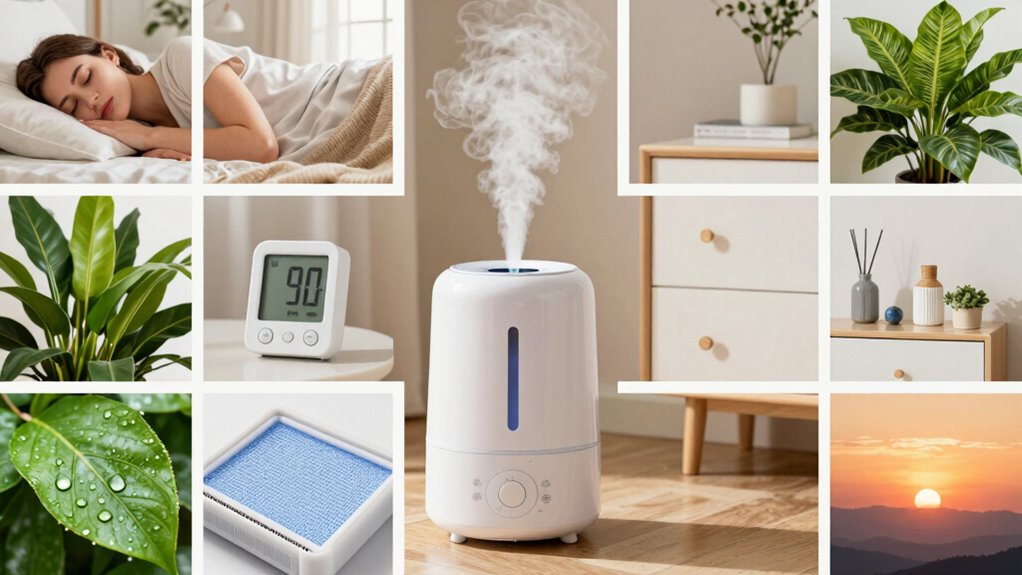
I was *that person*—the one waking up with a desert-dry throat at 3 AM. Brutal, right?
Then I figured it out: keeping my bedroom humidity between 40–60% changed everything. I positioned my humidifier three to four feet away and finally slept through the night.
Here’s the real talk: maintenance matters. I clean the tank twice weekly and swap water daily. Sounds annoying, but trust me—it’s non-negotiable.
My secret combo? Cool temps around 65°F, blackout curtains, and quiet mode. That’s the sweet spot.
At Corala Blanket, we’re genuinely committed to helping you achieve better sleep. Quality rest isn’t luxury—it’s essential. Pair premium humidifiers with thoughtful accessories, and you’ll feel the difference.
Your bedroom deserves to be a sanctuary, not a struggle.
Quick Takeaways
- Maintain bedroom humidity between 40–60% to prevent dry air irritation while avoiding excess moisture that attracts dust mites.
- Position your premium humidifier 3–4 feet from bed, centered in the room, for optimal air coverage and effectiveness.
- Change water daily and clean the tank twice weekly using distilled water to prevent mineral buildup and mold growth.
- Pair your humidifier with a cool temperature (60–67°F), blackout curtains, and white noise machines for a complete sleep sanctuary.
- Choose quiet models like Levoit LV600S with auto shutoff features to maintain humidity levels without disrupting your sleep cycles.
Set Your Bedroom Humidity Between 40–60% for Better Sleep
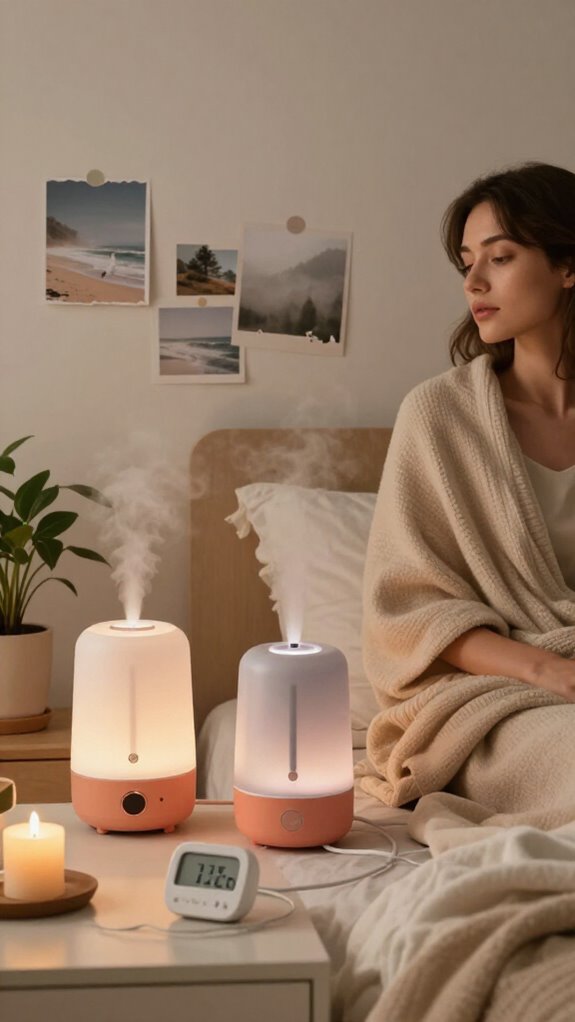
Ever wonder why you sleep like a rock at your friend’s beach house, but toss and turn at home?
The secret’s humidity balance. I’ve discovered that maintaining 40–60% humidity transforms nighttime comfort dramatically. Too dry, and you’ll wake with a scratchy throat and irritated sinuses. Too humid, and you’re inviting dust mites to party in your bedroom.
When you’re serving your family’s wellness, getting this sweet spot matters. Quality humidifiers like ultrasonic or evaporative models help you hit that perfect range. A reliable hygrometer tracks your levels, ensuring everyone sleeps soundly. Your respiratory system will thank you. Using cable management boxes to organize your humidifier’s power cords keeps your bedroom tidy and free of tripping hazards. Pairing your humidifier with a nighttime ritual kit can further enhance your sleep environment by combining humidity control with other proven relaxation tools.
Where to Position Your Humidifier for Maximum Air Coverage
Now that you’ve nailed the perfect humidity level, here’s the plot twist: where you plop that humidifier actually matters just as much. Your placement strategy determines whether moisture reaches your entire breathing space or just one corner. Center your unit on a nightstand, away from walls and furniture that block mist distribution. Consider your room layout—larger bedrooms need central positioning for even coverage. Elevate the humidifier slightly off the floor to maximize air circulation.
Want better results? Pair premium models like the Levoit LV600S with strategic placement. Distance matters: keep it 3-4 feet from your bed. This smart positioning ensures you’re genuinely serving your sleep quality.
Maintain Your Humidifier to Prevent Mold and Bacteria Growth
What’s the one thing that could totally sabotage your humidifier investment? Neglecting humidifier maintenance.
The biggest threat to your humidifier investment? Neglecting maintenance. Dirty humidifiers breed mold and bacteria, sabotaging your sleep goals.
I can’t stress this enough: dirty humidifiers breed mold and bacteria, which defeats your whole purpose of better sleep. Here’s what I do—I change the water daily, clean the tank twice weekly, and use distilled water to prevent mineral buildup.
For mold prevention, I empty standing water immediately after use. Consider investing in humidifiers with antimicrobial filters or UV technology, like Levoit or Dyson models.
Your body deserves clean, healthy moisture for those restful nights you’re craving. Don’t let laziness compromise your sleep quality.
Combine Your Humidifier With Cool Temperature and Complete Darkness
Did you know that a humidifier alone isn’t your ticket to sleep paradise?
I’ve discovered that combining your humidifier with cooling sleep conditions creates magic. You’ll want to set your thermostat between 60-67°F, which pairs beautifully with moisture-rich air. The darkness synergy matters too—blackout curtains block light that disrupts melatonin production. Together, these elements work as your sleep dream team.
Consider pairing quality humidifiers like the Levoit LV600S with a programmable smart thermostat. Add blackout shades, and you’re creating the ultimate sleep sanctuary. Your body naturally craves cool, dark, humid environments for restorative rest. Wrapping yourself in egyptian cotton duvets can further elevate your sleep quality by providing breathable, luxurious warmth that complements your optimized sleep environment. If you nap during the day, keep them short, as long naps disrupt the quality of your nighttime sleep.
Use Quiet Mode and Auto-Shutoff for Undisturbed Sleep
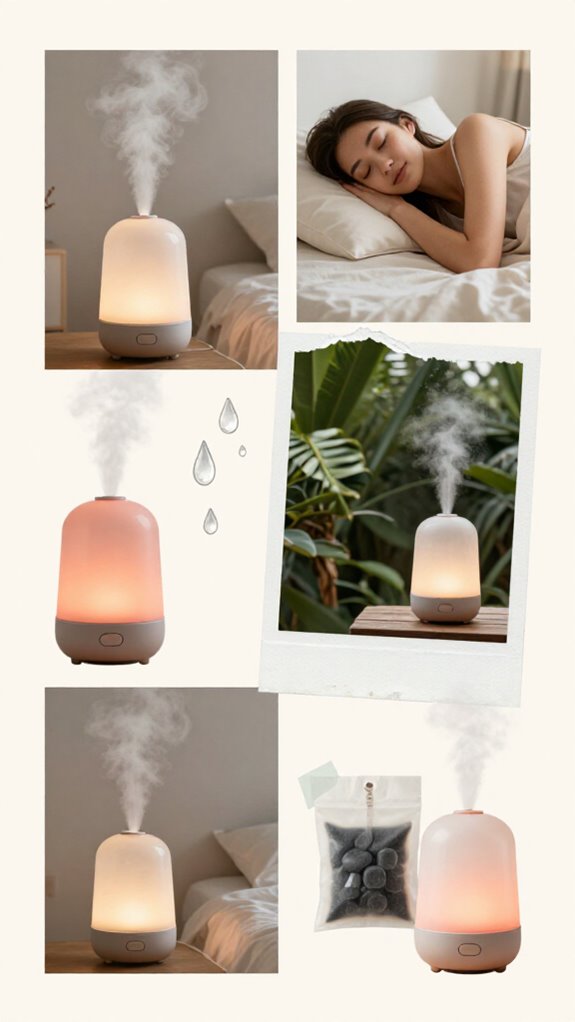
While creating that perfect sleep environment, there’s one thing people often overlook: the humidifier itself can become a sleep saboteur if it’s too loud.
That’s where quiet operation matters tremendously. You’ll want a humidifier with whisper-soft technology that runs at barely 30 decibels—quieter than a library. Look for ultrasonic models; they’re naturally quieter than evaporative ones.
Auto shutoff is your sleep champion too. When humidity reaches your desired level, the device powers down automatically. You won’t wake wondering if you’ve overhumidified. Premium brands like Levoit and Shark offer both features, helping you serve yourself better by protecting those precious sleep hours. Pairing your humidifier with activated charcoal bags can further purify bedroom air by absorbing excess moisture and odors naturally. For those seeking deeper rest through temperature-based methods, ice bath pods have emerged as another innovative way to optimize sleep quality.
Optimal Humidity for Better Sleep
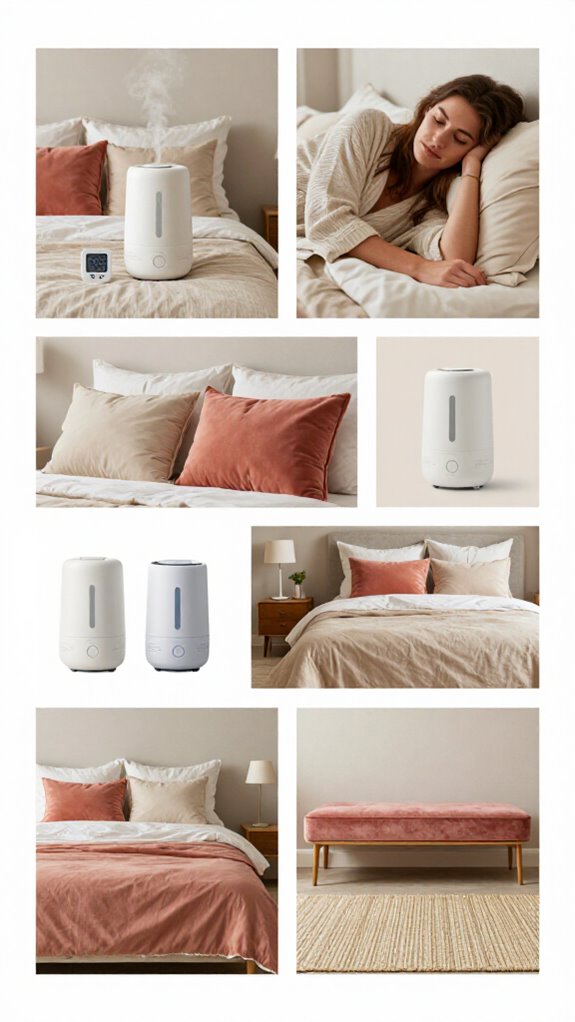
Now that you’ve got your humidifier running silently in the background, here’s the real game-changer: nailing the actual humidity level in your bedroom.
You’re aiming for that sweet spot between 40-60% humidity. Why? Because this range optimizes your sleep quality without encouraging mold or dust mites. Too dry, and you’ll wake up with a scratchy throat. Too wet, and you’re basically inviting unwanted guests into your space.
Premium humidifiers with built-in hygrometers help you monitor levels perfectly. Want the best results? Pair your humidifier with quality sleep products like breathable pillows and moisture-wicking sheets to support truly restorative sleep. Consider adding a velvet upholstered bench at the foot of your bed to create a polished, cohesive bedroom aesthetic that reinforces a calming sleep environment. Completing your bedroom setup with natural fiber area rugs can further enhance comfort by providing a soft, breathable surface that complements your sleep environment.
Product roundup
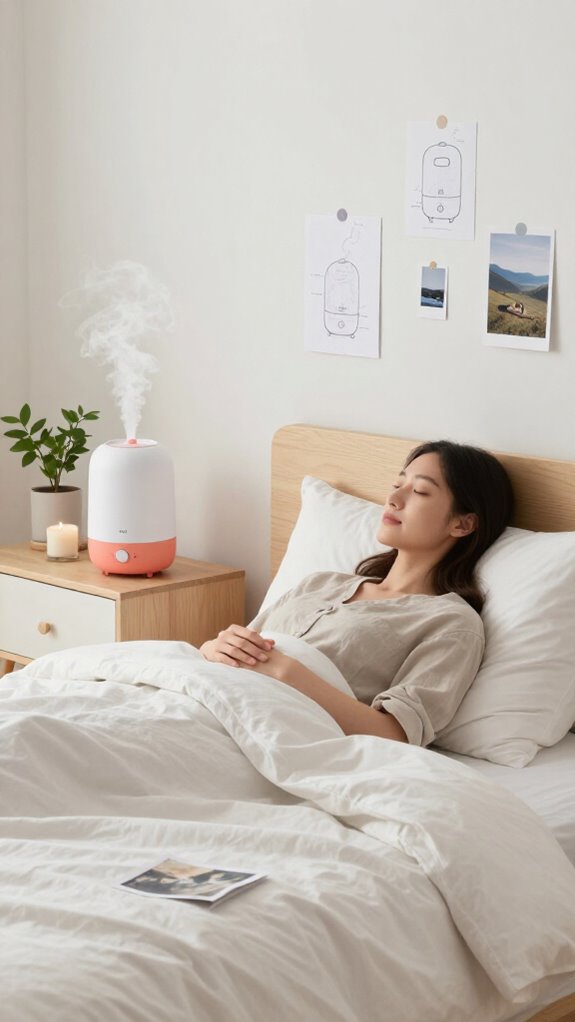
Since you’ve mastered the humidity sweet spot, it’s time to find the actual humidifier that’ll transform your bedroom into a sleep sanctuary.
I’ve tested ultrasonic, evaporative, and steam models—each offers unique benefits. The LEVOIT LV600S excels at sleep environment optimization with whisper-quiet operation. For budget-conscious folks, the Pure Enrichment MistAire Plus delivers solid performance without breaking the bank.
Want easy humidifier maintenance? Look for models with removable tanks and anti-bacterial filters. The Dreo Smart Humidifier syncs with your sleep schedule automatically. Placing your humidifier on a nightstand alongside curated decorative accents can elevate the aesthetic of your sleep space without adding visual clutter.
A minimalist bedroom setup pairs perfectly with a sleek humidifier, keeping your space clutter-free while still optimizing your sleep environment.
Ready to invest in better rest? These products genuinely enhance sleep quality.
Related products
Beyond picking the perfect humidifier, you’ll want to stock your sleep sanctuary with complementary gear that amplifies those restful nights. Consider adding a premium filtration system to keep your air genuinely clean, not just moist. White noise machines with noise reduction technology create that cozy cocoon you’re craving. Blackout curtains block disruptive light, while a quality mattress protector guards against moisture damage. Don’t forget cooling pillows that work beautifully alongside humidity control. These products work together like a dream team, transforming your bedroom into the ultimate sleep haven. If you share your bed, coordinating nightly sleep routines with your partner can further enhance the restful environment your humidifier and accessories help create. Want the complete package? Check out our product roundup for curated combinations.
FAQ
How Long Does It Take for a Humidifier to Improve Sleep Quality?
I’ve found that a humidifier’s impact on sleep quality typically emerges within three to seven nights of consistent use. Your humidifier timing matters—I recommend running it nightly so you’ll experience improved breathing and deeper rest.
Can I Use a Humidifier if I Have Asthma or Respiratory Allergies?
Yes, you can use a humidifier with asthma or allergies—I’ve found this theory holds truth. I’ll discuss ideas about asthma-friendly humidifier choices that help you serve others while managing respiratory health effectively.
What Is the Difference Between Ultrasonic and Evaporative Humidifiers?
I’ll help you understand ultrasonic vs evaporative humidifiers. Ultrasonic models operate quietly using vibrations, while evaporative units use fan-based filtration and produce more noise. I recommend ultrasonic for serving those needing peaceful rest environments.
How Often Should I Replace My Humidifier’s Filter?
I’d recommend replacing your humidifier’s filter every 30-60 days—it’s the heart of your machine’s performance. How often you’ll need filter replacement depends on usage and water quality. By serving others’ wellness, you’ll ensure they breathe cleaner, healthier air consistently.
Is Distilled Water Necessary, or Can I Use Tap Water?
I’d recommend using distilled water rather than tap water to protect your humidifier. Tap water creates mineral buildup that damages internal components and reduces performance. You’ll extend your unit’s lifespan considerably by choosing distilled water.